Commercial Fire-Damage Roof Repair
After a fire, we assess visible roof damage, protect openings, and plan repairs around structural review, suppression water, equipment access, and operations.
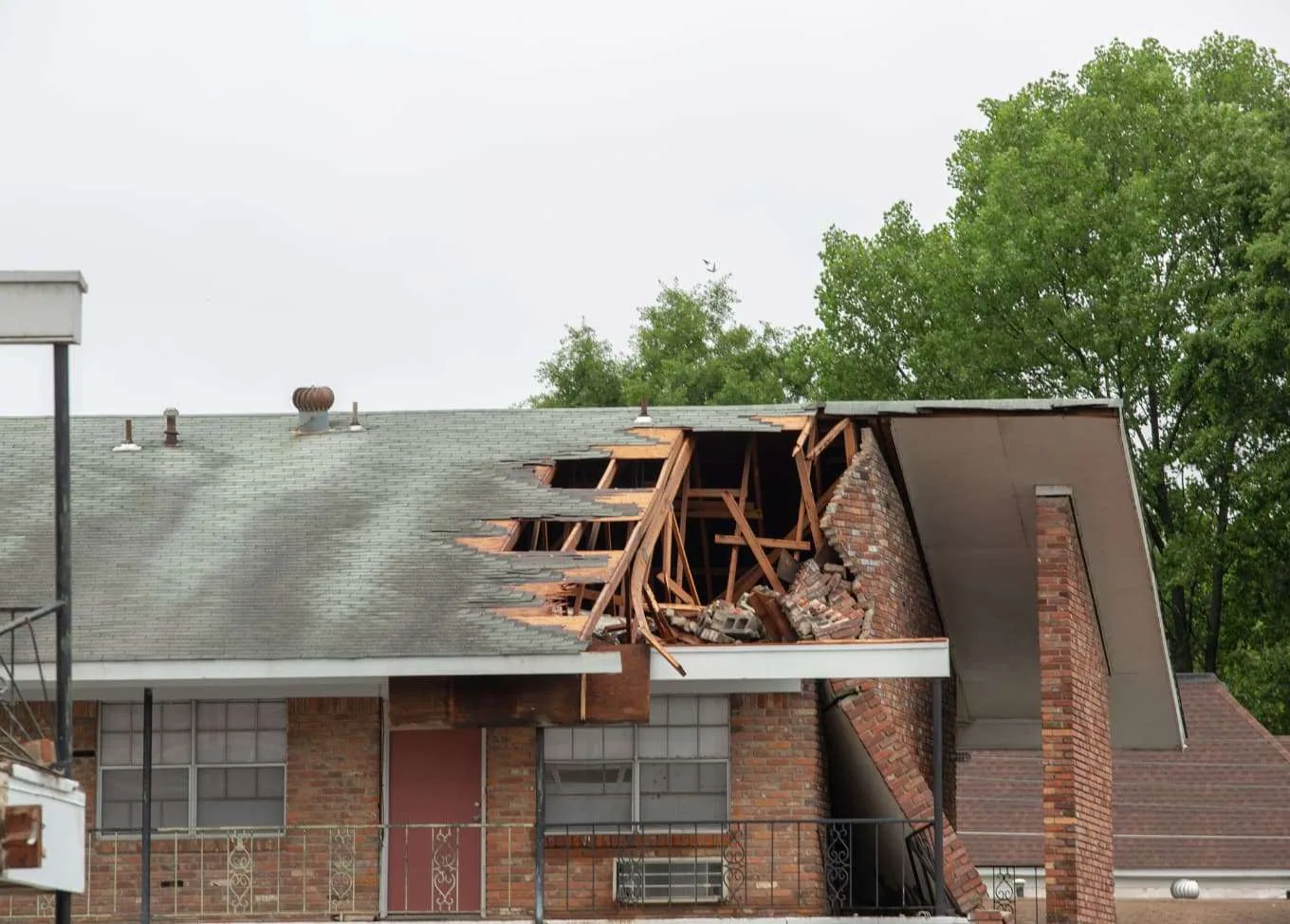
An exposed roof opening after a fire cannot wait for a normal delivery window. The first roofing decision is how to protect the building without covering evidence or entering an unsafe area. We coordinate with the owner and qualified incident or structural professionals, then inspect accessible roof zones for heat effects, membrane damage, failed flashing, and water from suppression. The repair scope separates temporary protection from permanent work. For Fontana warehouses, manufacturing properties, healthcare buildings, and retail sites, access and resumption of operations are part of the sequence, but the actual damage must be established at the property.
Entry follows the release
Fire-damaged roofs can include weakened deck areas, unstable equipment, hot surfaces, smoke residue, or openings that are not safe to cross. We do not treat a roof as available until the owner and appropriate safety or structural contacts confirm access. Then we define the work zone, roof route, ground-level protection, and any area that remains closed. If emergency crews or investigators need the scene preserved, their instructions govern when repair work may begin.
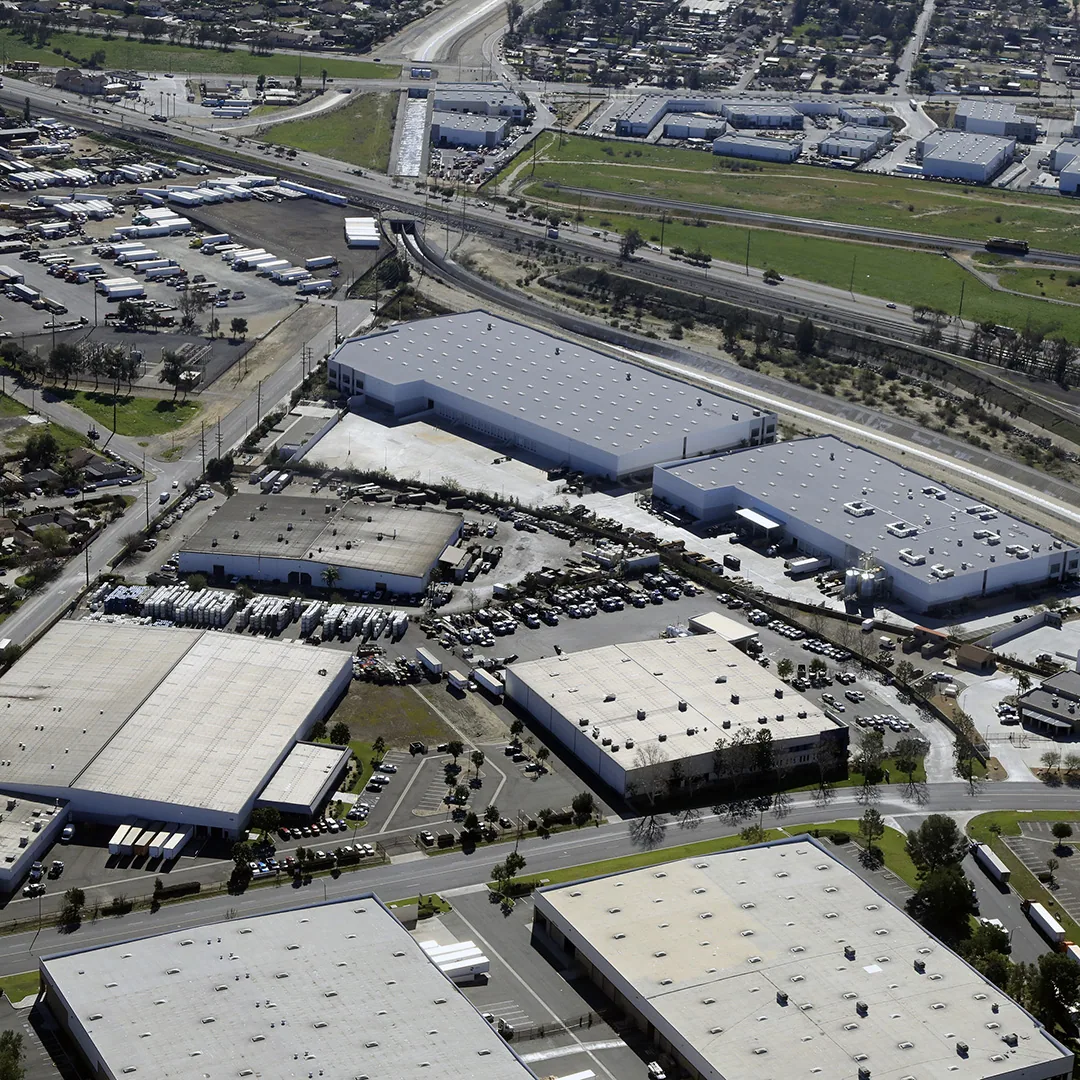
Fontana's industrial districts include warehousing, trucking, and manufacturing uses, where large operating areas can have multiple access controls. We ask who controls the roof hatch, what equipment can reach the damaged area, and where temporary protection can be staged. A commercial emergency response can address a roof opening once access is released. The first visit records visible roof conditions and access limits; structural capacity remains with the qualified reviewers.
Heat and water leave different evidence
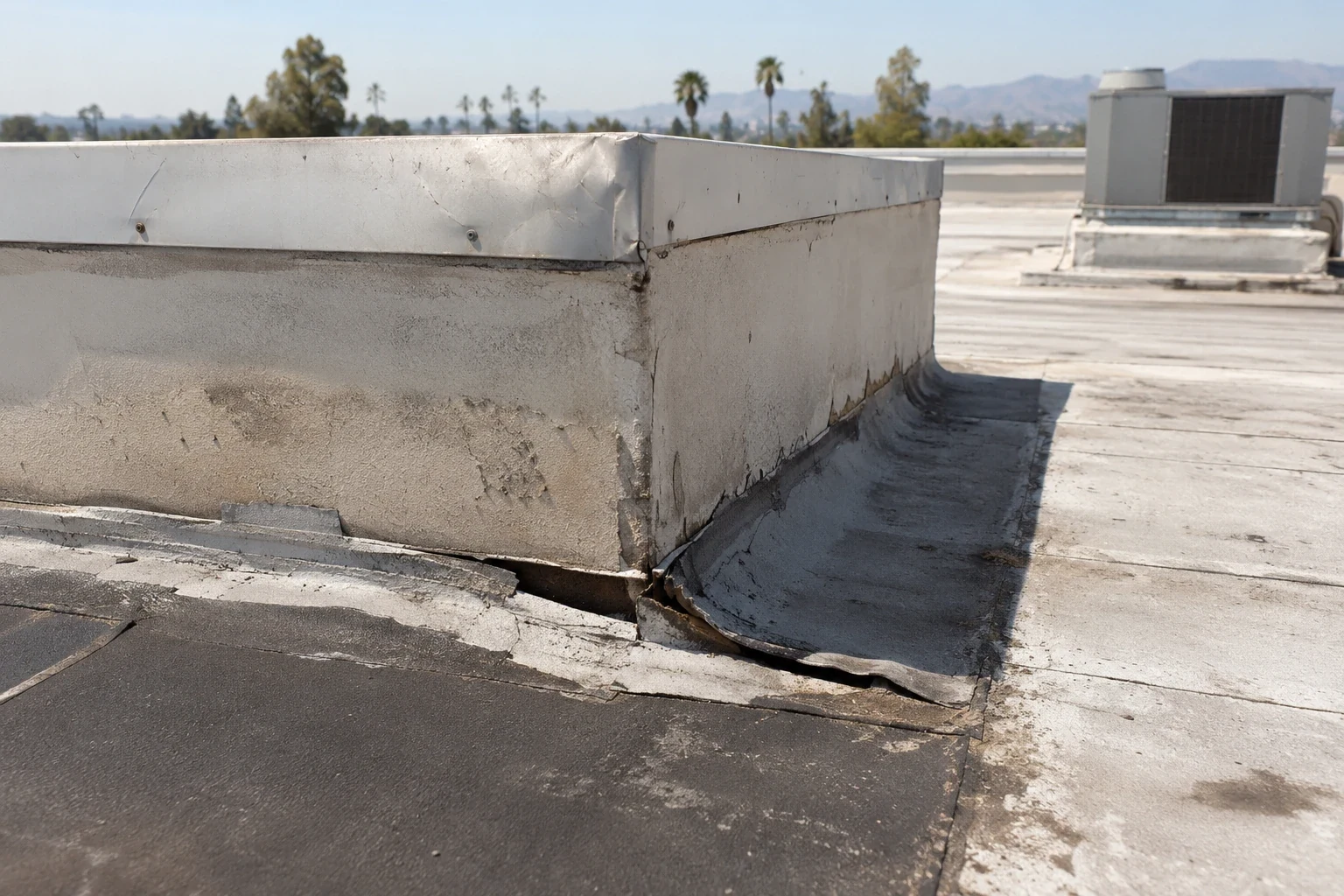
Fire can affect membranes, insulation, flashings, penetrations, curbs, and roof edges, while suppression water may enter through openings or drainage paths. We document discoloration, deformation, burn-through, split seams, displaced details, and visible water movement where access permits. Not every mark establishes loss of capacity or hidden damage. We identify areas for additional evaluation and keep those questions separate from the repair work supported by visible conditions. This protects the sequence. A report should name the observation date and access limits, because rain, cleanup, or temporary cover can change what a later visit can see.
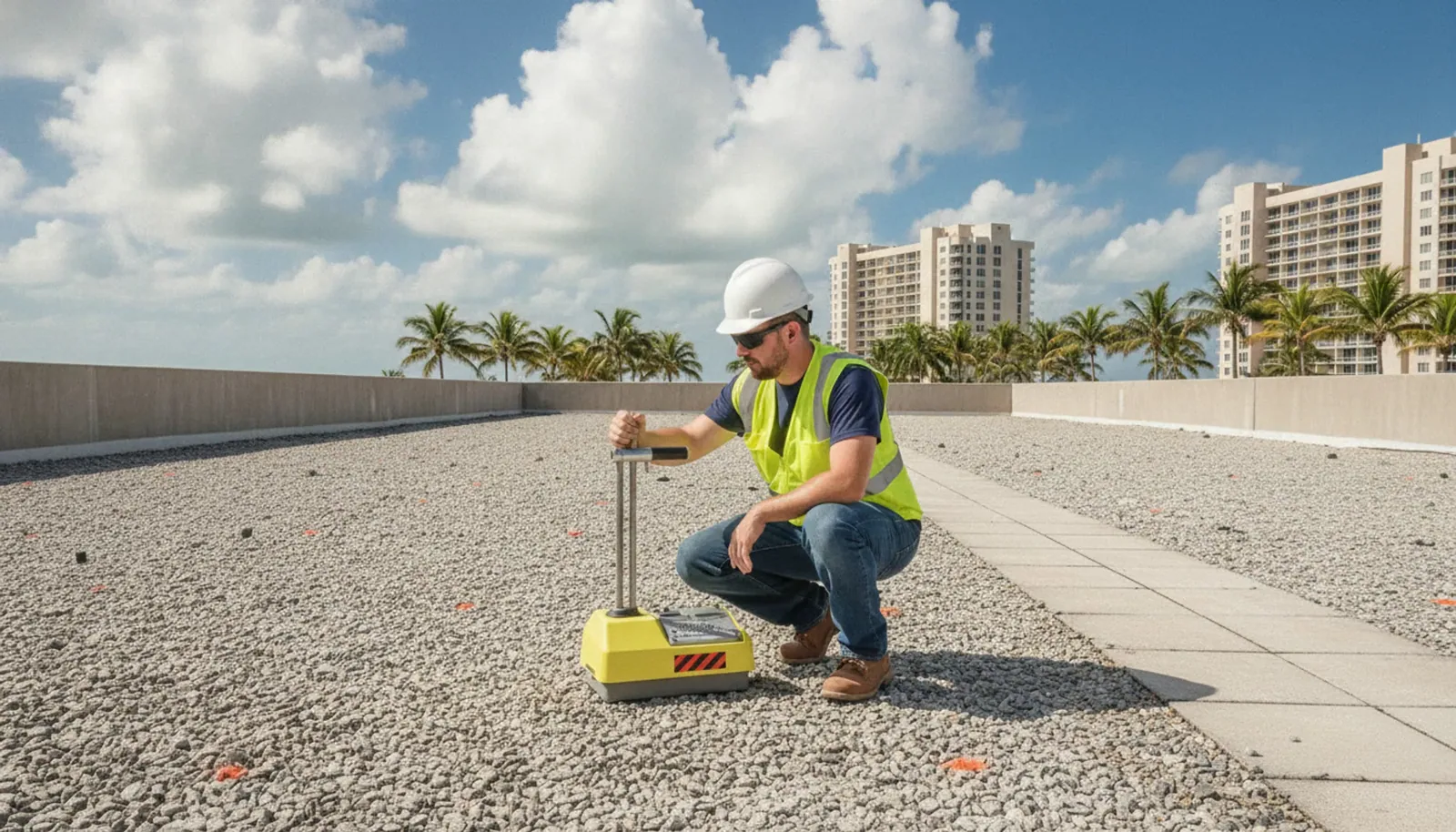
Fontana forecasts regularly include summer highs above 100°F. After a fire, hot roof surfaces add a scheduling constraint to a roof already affected by heat and water. We select safe work windows and protect open areas during inspection and repair. If water remains inside the assembly, moisture surveying may help define a suspect area when surface and assembly conditions support the method. We identify the tested locations and distinguish preliminary observations from completed test findings.
Temporary cover must be controlled
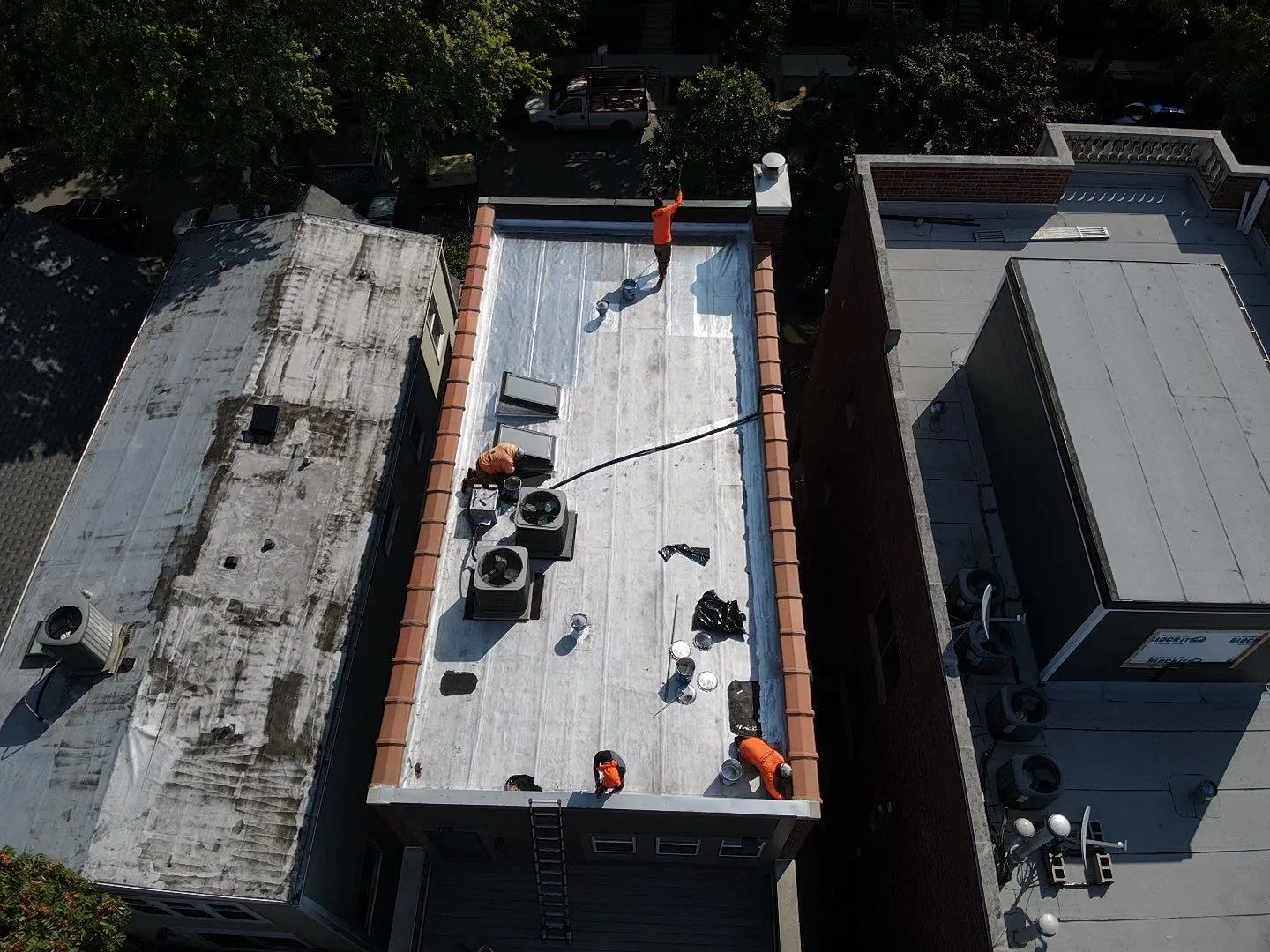
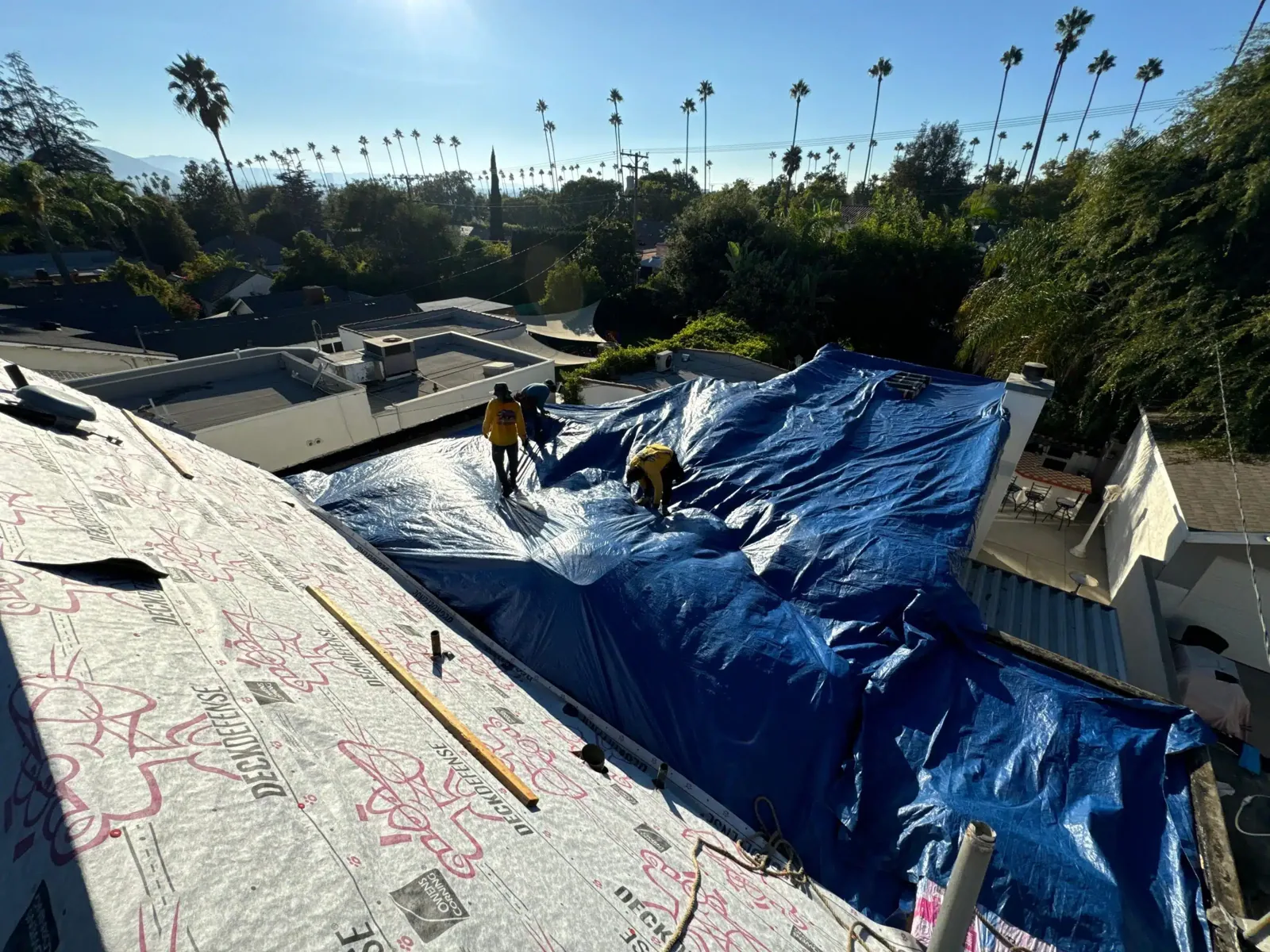
Temporary protection limits additional weather entry but has to be secured and compatible with the damaged area. We define where a cover can bear, how edges will be held, and which openings stay available for inspection or drying. Improvised weight or fastening can create new damage or interfere with later repair. The scope states the area protected and the next check needed, including who can confirm that temporary work remains in place.
Fontana's industrial properties may sit near freight activity in the Southwest Industrial Park or Jurupa Industrial Park. A Jurupa Industrial Park repair visit may require coordination around loading, truck paths, and equipment movement. At a more constrained commercial property, roof access and tenant protection may matter more than material staging. In either case, the cover plan should state how crews reach the roof and how operations below remain protected.
Permanent work follows the evaluation
Once the damage area and required evaluations are clear, we define the permanent repair. The scope may involve removing compromised membrane, checking substrate conditions, replacing insulation or cover board, restoring flashing, and tying compatible materials into the existing assembly. The actual sequence depends on the system, extent of damage, and whether the deck or structure requires separate work. We coordinate roof work with any structural evaluation rather than covering an unresolved concern.
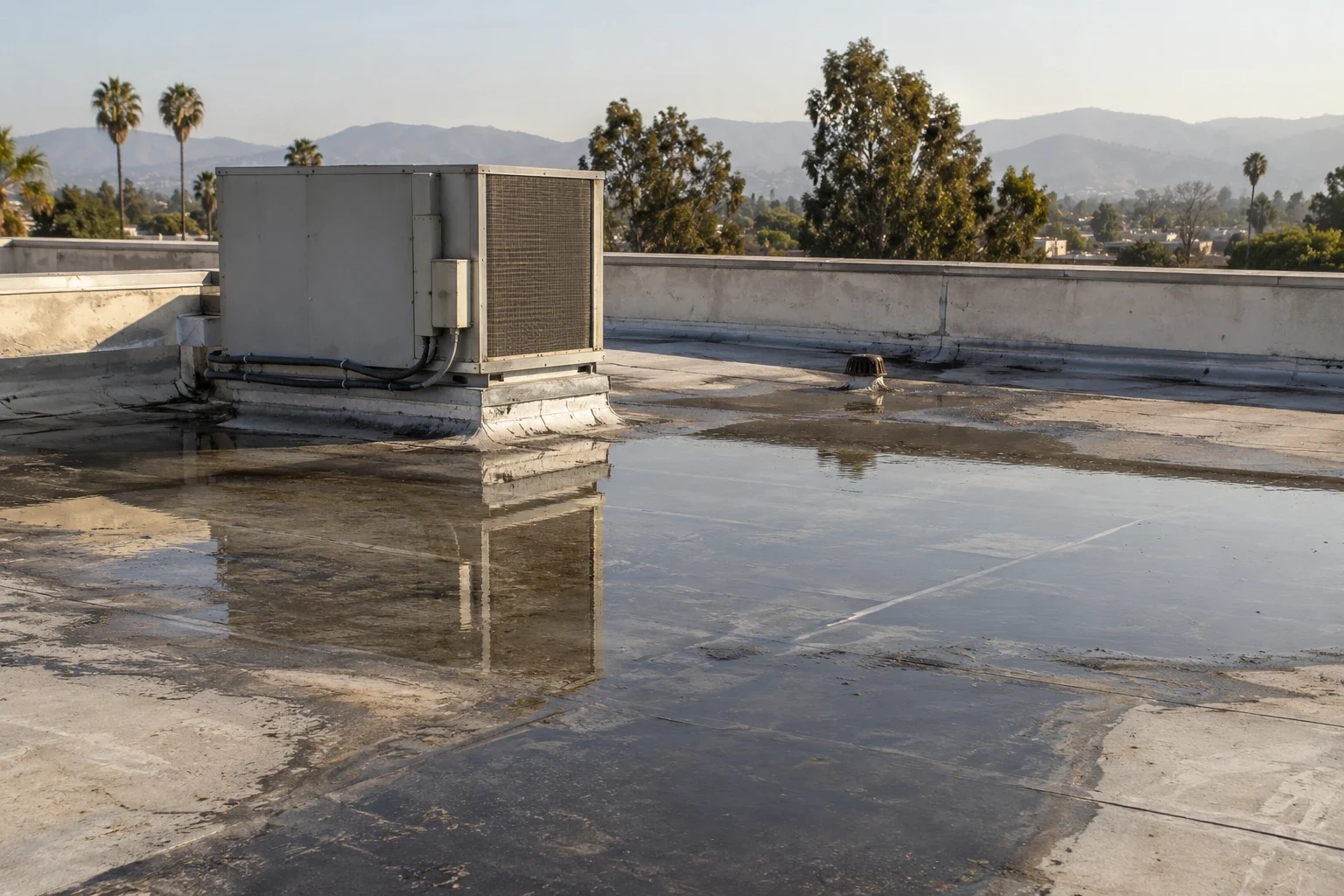
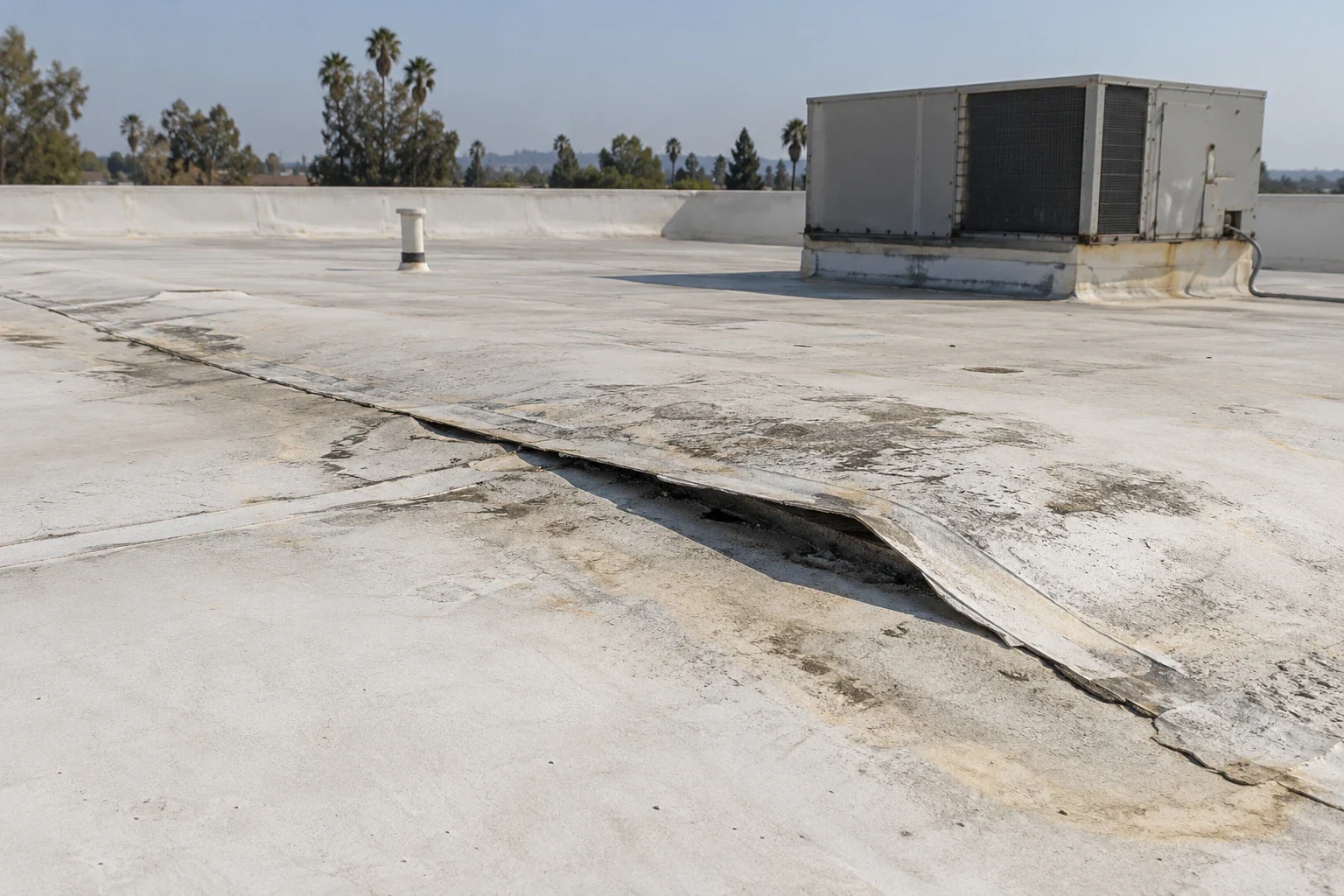
Suppression water and fire debris can affect drains and scuppers, so drainage should be checked before the roof is closed. If water entry continues, ponding water repair or a separate leak scope may be needed. We also inspect nearby seams and details that connect to the damaged area, without treating unaffected zones as damaged. If heat or suppression water has left a visible split at a lap, a seam failure repair scope should identify the transition and test any adjacent tie-in before the membrane is closed. A damaged penetration can call for a separate flashing repair with its own material and access requirements. Cost and timing depend on access, extent, material availability, disposal, testing, and the number of tie-ins required.
The closeout supports operations
For an occupied building, repair completion needs a clear handoff. We identify which roof areas are restored, which remain under evaluation, and whether temporary protections or access restrictions continue. Photos, materials, and repair boundaries help the owner coordinate with facilities, tenants, insurers, and restoration teams. Any unresolved recommendation stays separate from completed work so operations do not assume the entire roof has been cleared.
Closeout also records any portion left untouched, the reason it was excluded, and whether a follow-up inspection is required. That distinction matters when part of a property returns to service before the entire roof project is finished. The owner can keep restoration and roofing scopes coordinated without losing the boundary between them. If additional work is approved later, the crew can start from a recorded area and known tie-in rather than reopen completed work unnecessarily.
Fontana's commercial corridors include Sierra Avenue, Valley Boulevard, and Foothill Boulevard in Downtown Fontana. A customer-facing building there may need reopening and access coordination in parallel with roof repair. In a warehouse near I-10 or I-15, freight operations can determine lift placement and delivery timing. We plan the sequence with the actual site contact. Schedule a fire-damage roof assessment after access is released, and provide the incident timeline and any investigator or structural restrictions.
Frequently Asked Questions
Can roof repairs start before the building is released?
No. Safe access and any investigation restrictions must be confirmed first. We can review the available information and discuss temporary protection, but crews should not enter a roof zone that the owner or qualified safety contacts have not released.
Does a fire-damaged membrane always need replacement?
No conclusion follows from the event alone. We document visible damage, identify conditions that require further evaluation, and scope repair or replacement only after the affected assembly is understood. Heat, water, deck condition, system compatibility, and the extent of damage all matter.
Can suppression water affect roof insulation?
It can enter through damaged areas or follow drainage paths, but the extent must be checked. We identify visible water entry and may recommend an appropriate moisture evaluation. We do not call concealed insulation wet or dry without evidence from a suitable inspection or test.
How do you keep the building protected during repair?
We define temporary cover, roof openings, interior protection, material staging, and daily closeout. The scope states what remains exposed and names the person checking temporary protection. If operations continue below, we coordinate the work zone and safe access with the site contact.
What information speeds the first visit?
Provide the incident date, access release, roof plans if available, known affected areas, suppression-water history, and contact for the insurer or restoration lead. Restrictions from investigators or structural reviewers should be shared before mobilization so the repair sequence respects them.