Commercial Roof Inspection
Get a documented commercial roof inspection in Fontana with assembly findings, photos, moisture limits, drainage notes, and repair priorities for planning.
A service appointment has a better starting point when the roof access window and decision deadline are known. In Fontana, CA, we inspect commercial roof assemblies and document the conditions that affect repair, maintenance, recover, or replacement planning. The field review covers accessible membrane, seams, flashings, edges, penetrations, drains, equipment, and prior repairs. We identify each roof zone so the owner can connect photographs to an actual location instead of receiving a general condition label. Inspection findings can guide procurement or capital planning, but they do not certify hidden conditions that were not opened. The report records what was seen, what could not be checked, and which follow-up test would change the recommendation. That record gives a property manager a usable basis for comparing the next work package and setting a handoff with other trades.
Prepare the inspection route
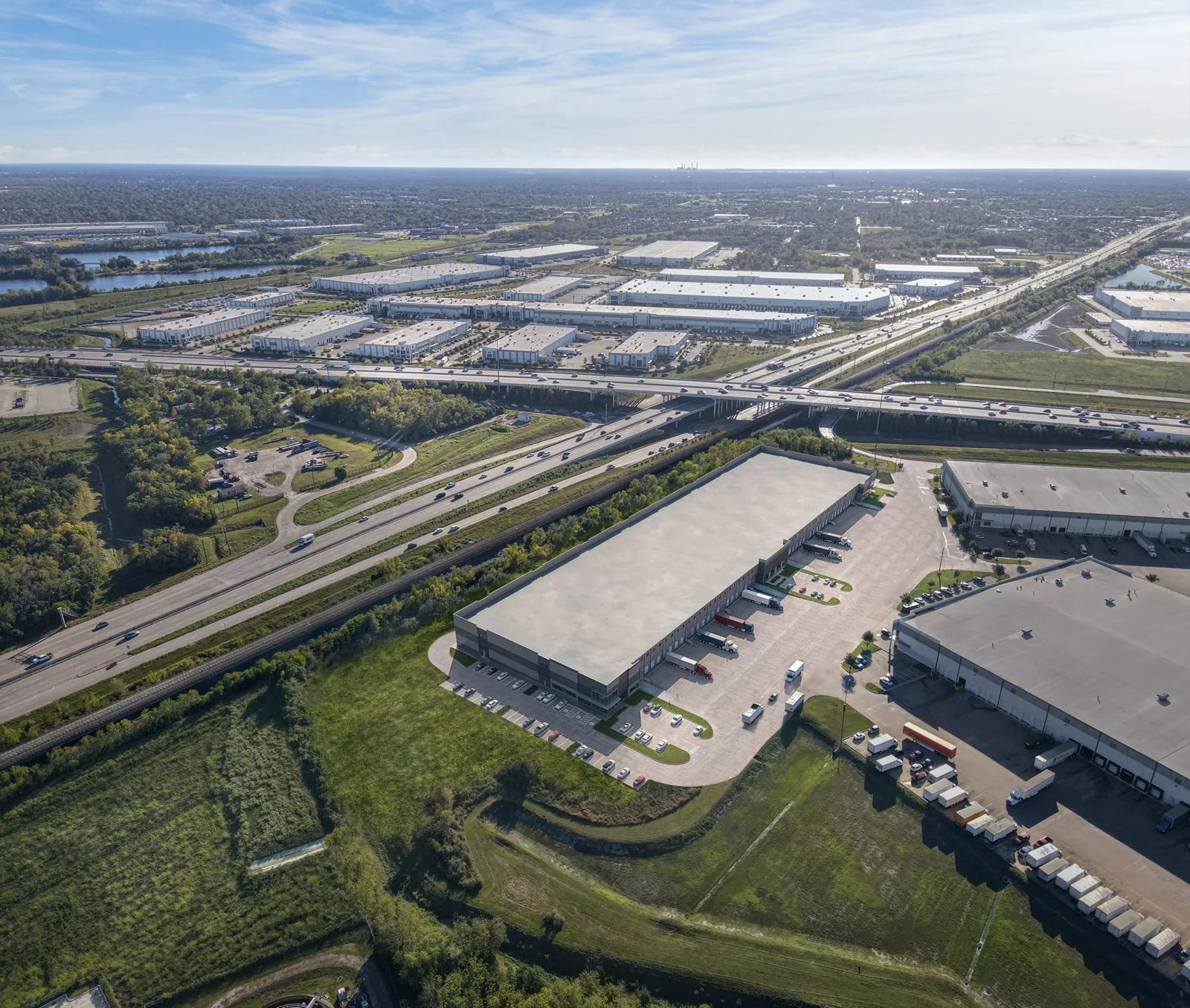
Before arrival, we confirm roof access, fall-protection requirements, occupied areas, escorts, and any limit on photography or movement around equipment. The facility team identifies known leaks, past repairs, roof additions, and any areas where opening or stepping is restricted. On a distribution building, truck traffic and dock activity may affect where ladders, lifts, or a drone operator can work. The owner provides receiving and staging instructions for the specific building.
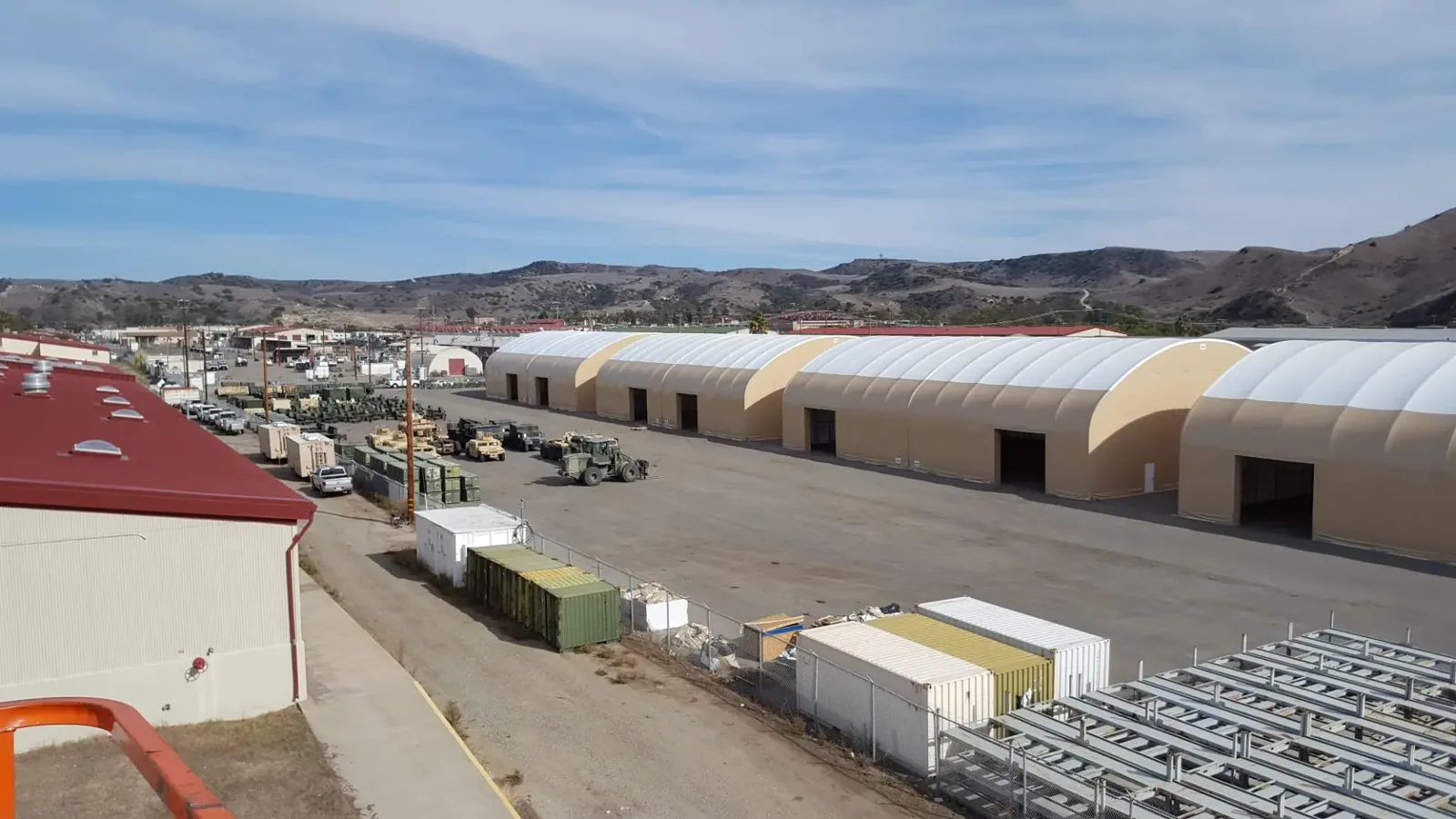
Fontana's industrial areas include warehousing, trucking, distribution, and vehicle storage. At a Southwest Industrial Park property, we coordinate gate access and staging with the facility contact before the inspection begins.
Map roof conditions by zone
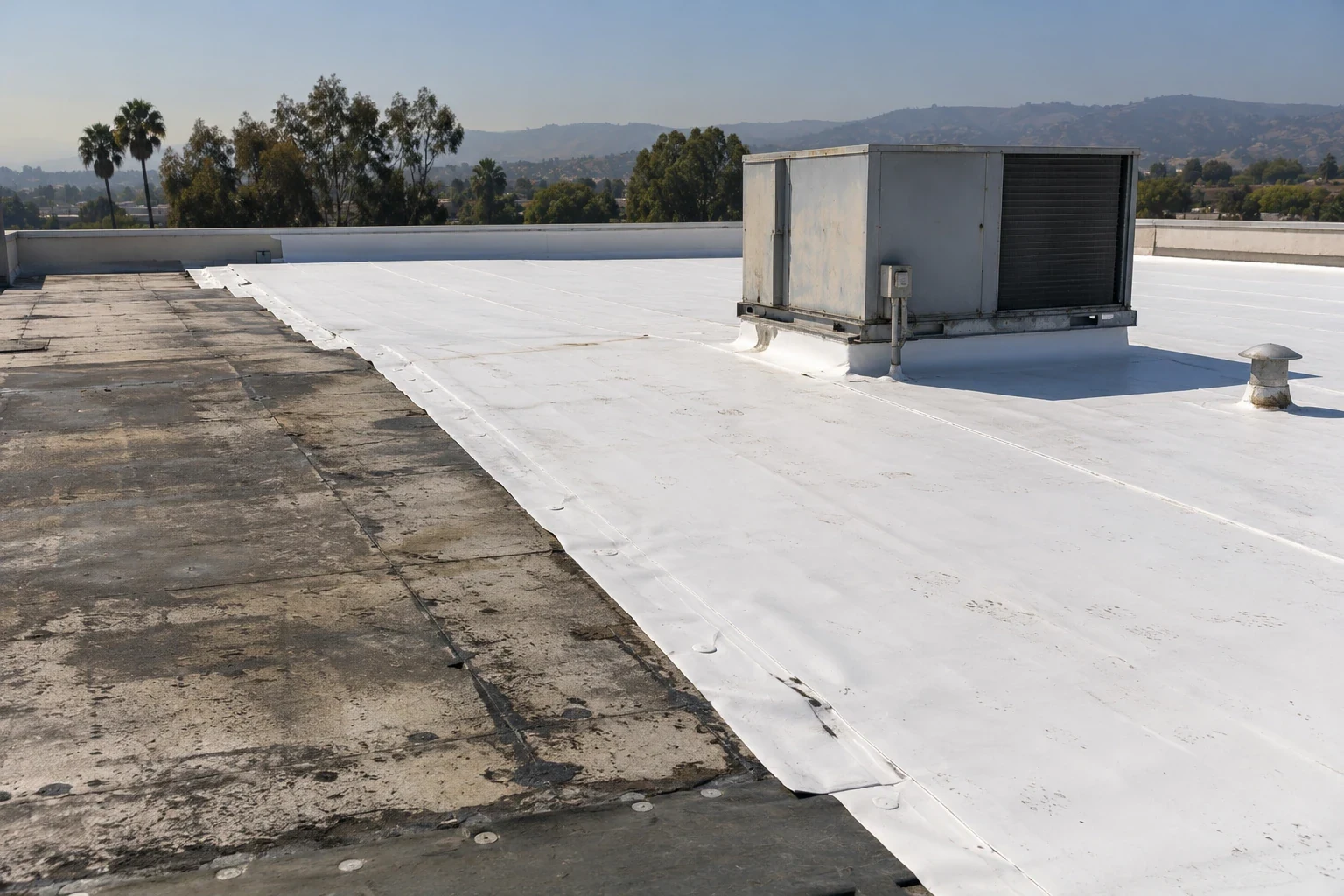
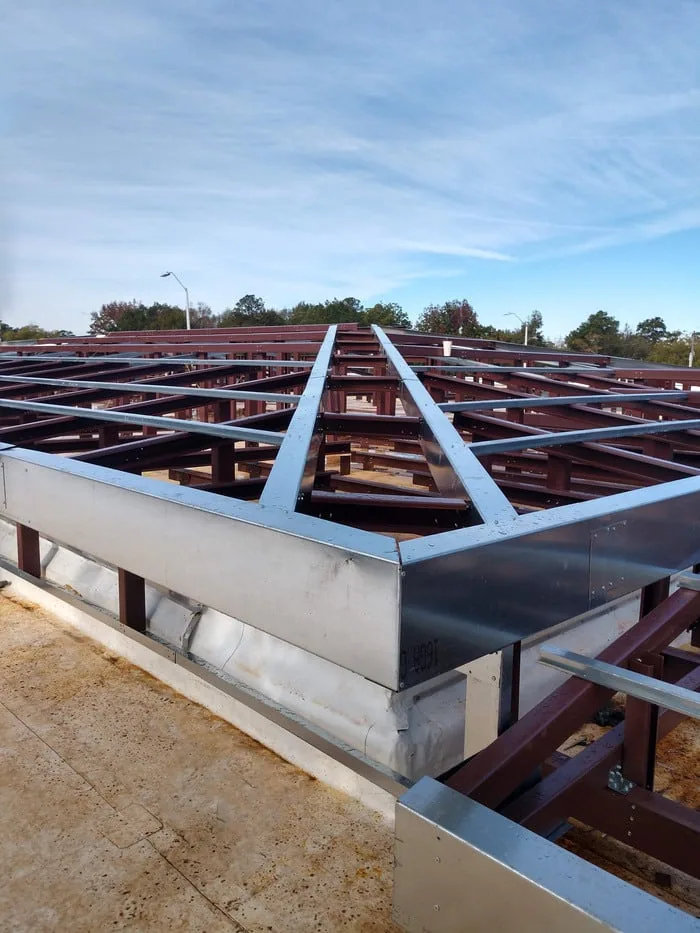
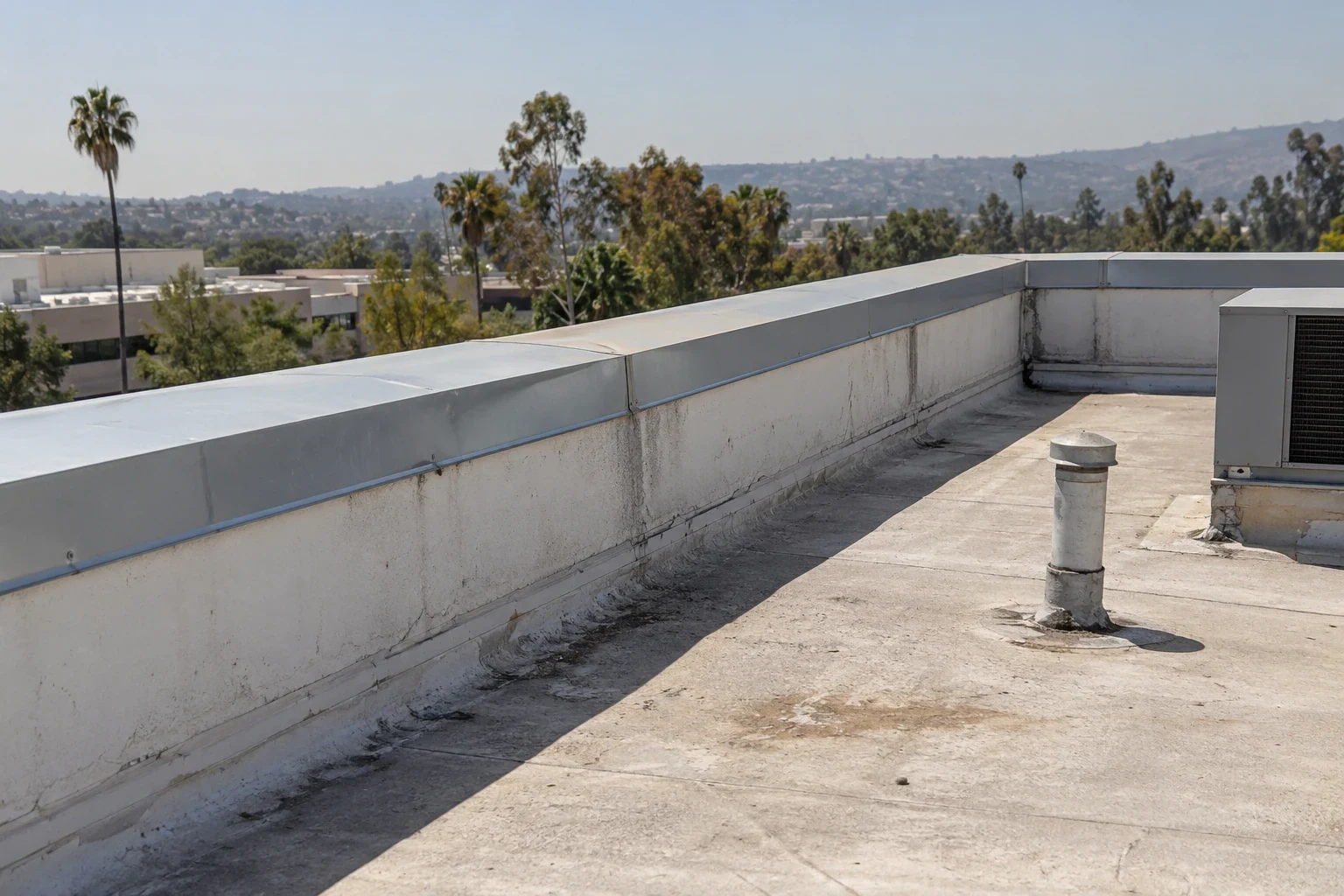
On the roof, we identify the visible system, changes in assembly, drainage features, wall transitions, and places where mechanical or electrical work crosses the membrane. We photograph each condition with a roof reference and describe its limits. A blister, open seam, puncture, loose edge, or failed flashing may need repair, but one condition does not establish failure across an entire zone. Where rooftop equipment restricts visibility, the report states what remains out of view rather than assume the concealed material is sound or damaged. We measure each roof plane separately and mark assembly changes at additions, equipment screens, and parapet transitions. That map keeps follow-up testing and repair quantities tied to the area that needs them.
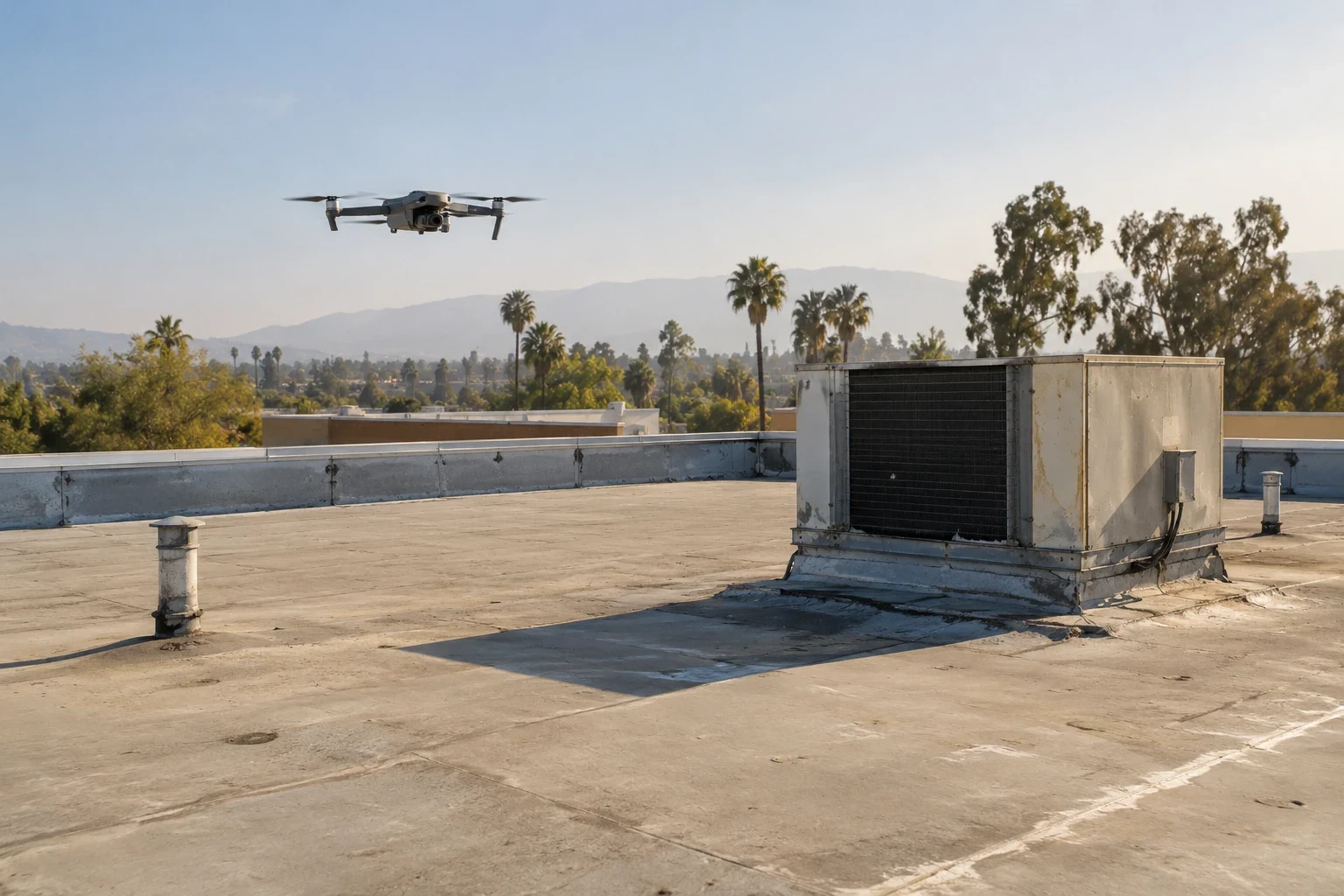
We compare field observations with available drawings, maintenance logs, and interior leak reports. That helps locate differences between records and the roof as it exists today. A drone image set can add an overview for a broad or hard-to-access roof, while a hands-on inspection remains necessary at details that require close contact or testing. Both tools have limits, and the report identifies which method supported each observation.
Separate readings from confirmation
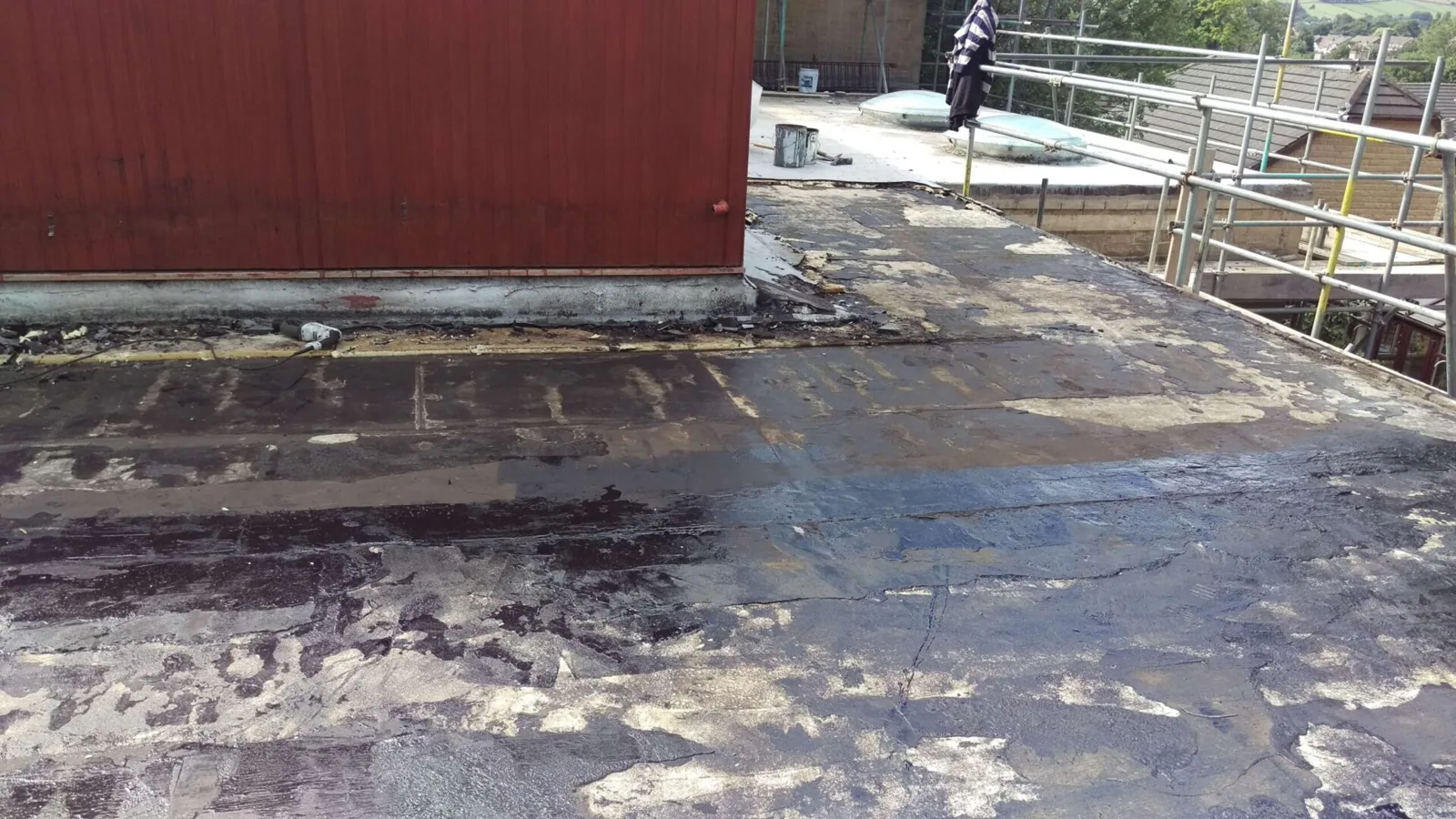
Moisture can move beneath a membrane before it appears inside, and an interior stain may be offset from the entry point. We compare reported locations with drainage, seams, penetrations, and roof transitions. Infrared readings may identify patterns for testing when the conditions support the method, but a temperature difference alone does not prove a wet insulation quantity. we record the time, environmental conditions, and areas tested, then recommend direct confirmation if the next decision depends on concealed material.
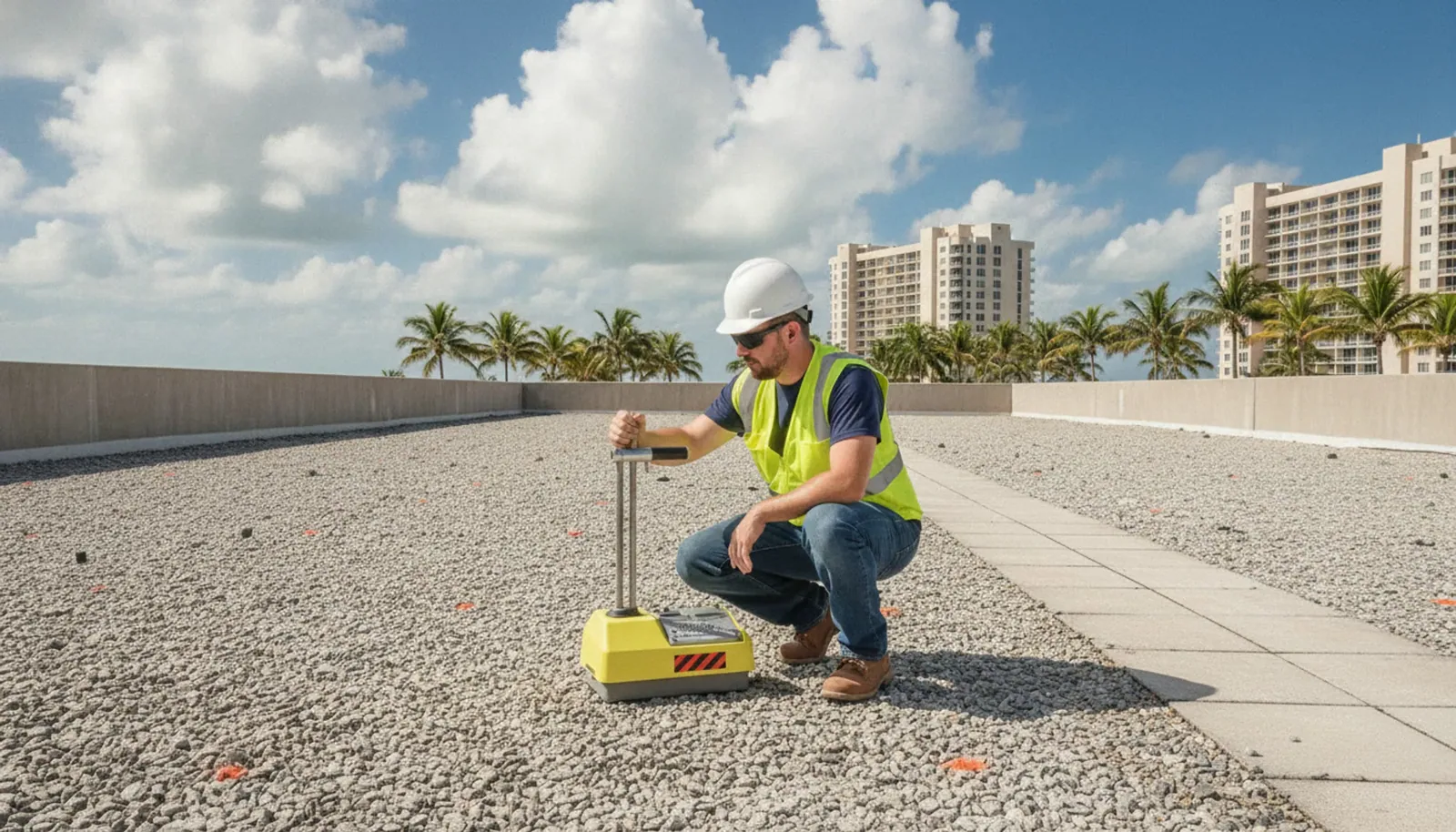
A moisture survey can add test locations and core cuts to the inspection plan. Each opening needs owner approval, a measured location, and a closure procedure. A finding from one test point should not be stretched across an unexamined roof. The report can separate confirmed wet material, an area that merits further testing, and sections that were visually reviewed without opening the assembly.
Connect findings to the next work
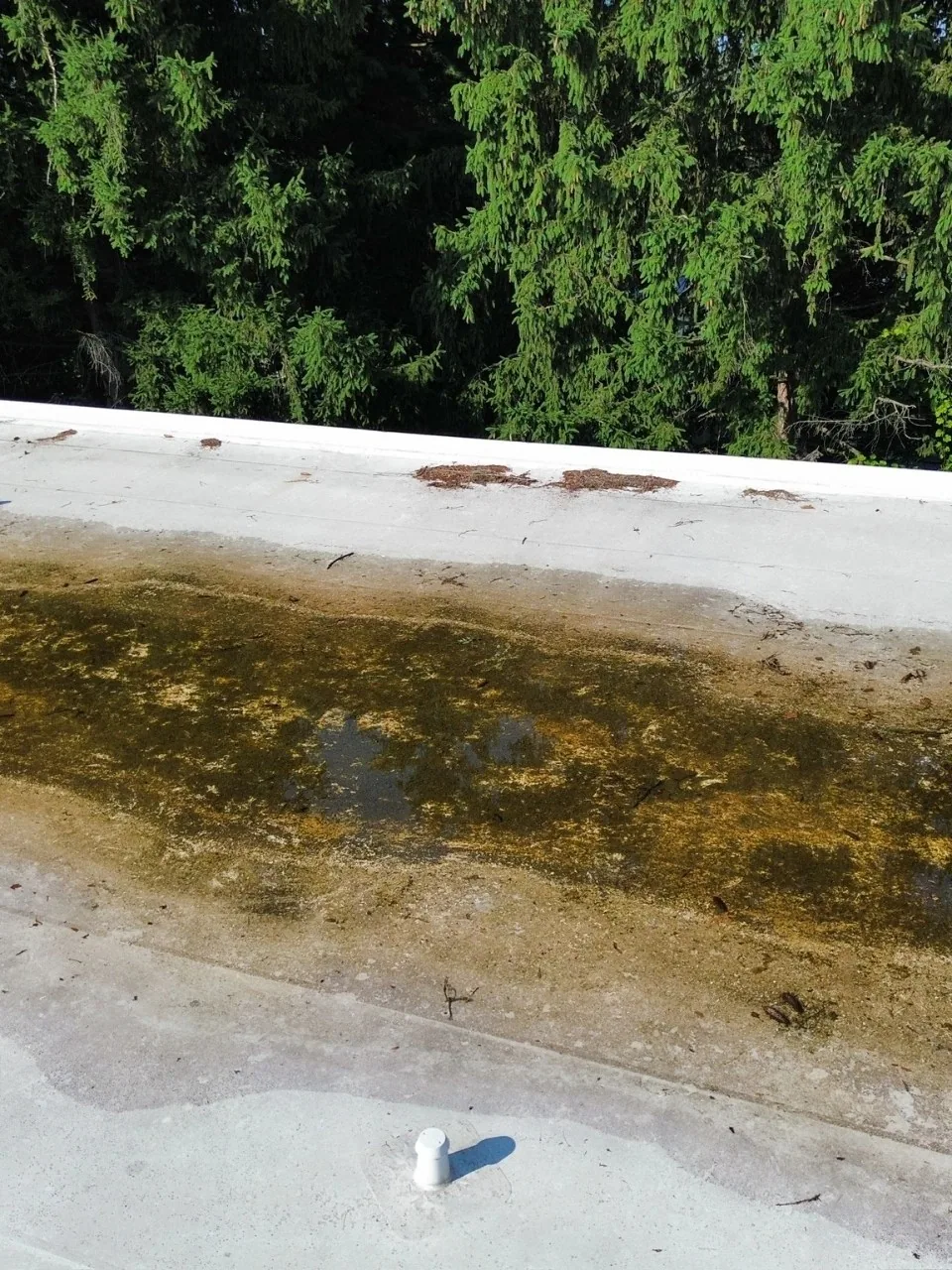
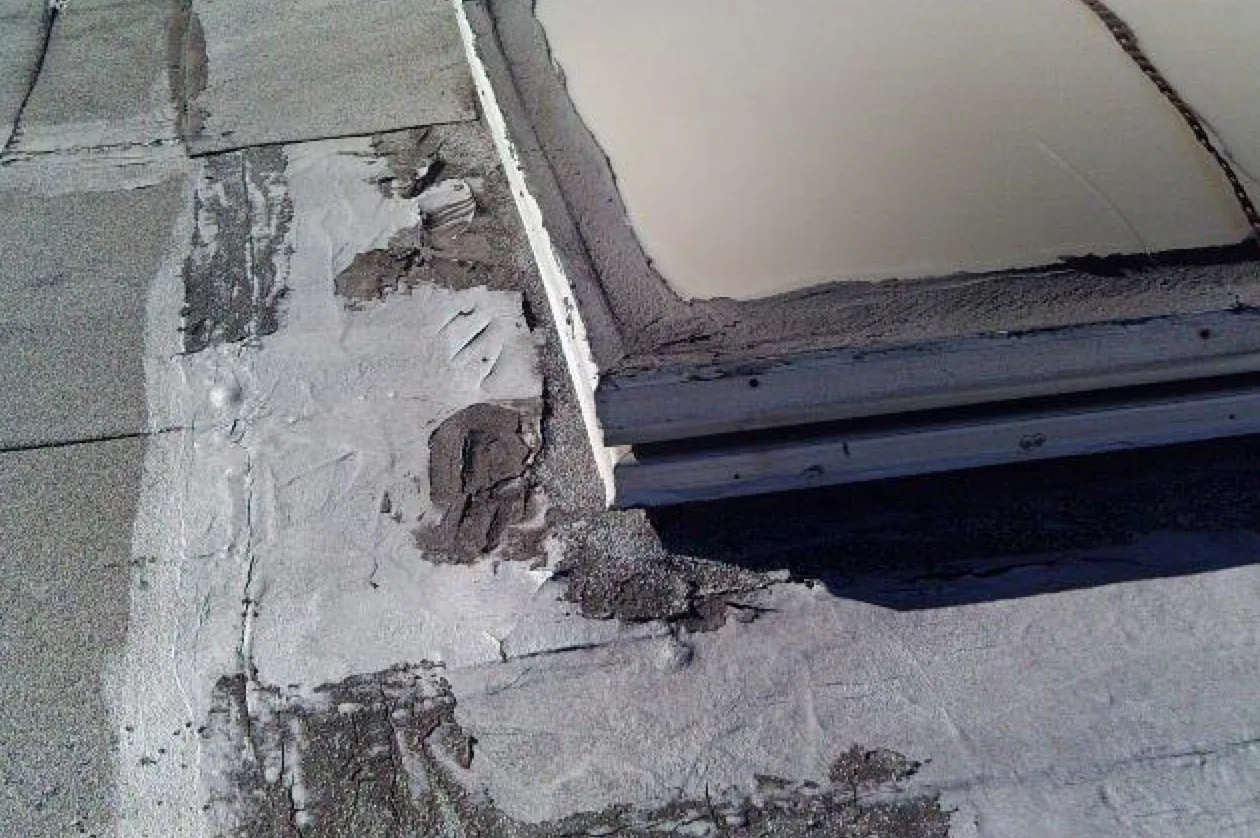
The report groups issues by practical response: immediate protection, defined repair, planned maintenance, monitoring, or a broader assembly review. We show why a detail belongs in a work scope and what will happen if it is deferred. For example, a drain obstruction differs from a low area caused by insulation or deck movement. Correcting the inlet alone may not resolve the underlying drainage path. The recommendation states what can be completed now and what measurement, test, or trade decision is still needed.
Fontana’s nearby San Bernardino climate record shows a hot summer and cooler-season rainfall, with little normal precipitation in midsummer. Those seasons affect how an owner plans access and application work, but current weather and roof condition set the day’s limit. A repair estimate can address a confirmed detail, while recover review or replacement planning can compare wider options when findings warrant them.
Make the schedule usable
A survey on a live property still needs a work zone. We coordinate the visit around production, receiving, medical services, tenant traffic, and access windows identified by the owner. When a roof opening or test cut is approved, the report assigns who will protect the interior and how the assembly will be closed. For a site near the Mira Loma Industrial Complex or Fontana Promenade, the area's broad land-use pattern can frame the discussion, but the project contact supplies exact operating rules.
Fontana’s interstate, state-route, and rail connections can inform later procurement. For the inspection itself, the facility contact sets arrival, lift, and staging rules before any repair or replacement is scheduled. We identify likely staging, lift, and access needs early enough for the owner to coordinate them. The report should not prescribe a construction calendar before quantities, procurement, and building restrictions are known.
Give the owner a decision record
A useful inspection record includes roof-zone references, photographs, observed assembly, accessible defects, moisture-testing limits, drainage notes, and recommended next actions. We call out areas that were blocked or not examined and identify assumptions that remain open. Where a repair is recommended, the record names the detail and the preparation needed at the receiving surface. For planned work, it lists the access, protection, and trade coordination likely to affect the price and schedule.
For permitted roof work, Fontana uses California’s current building-code cycle with local amendments; the application date and project scope determine which energy provisions must be reviewed. we record code questions for the project team to confirm rather than promise an approval. Share existing roof drawings, leak reports, maintenance history, and decision deadlines before scheduling. We can then use the field visit to answer the question the owner needs resolved, whether that is a repair boundary, a moisture test, or a comparison of options. If the next step involves a permit or energy review, the owner can route those findings to the design team before releasing procurement.
Frequently Asked Questions
What does a commercial roof inspection include?
We review accessible membrane, seams, flashings, edges, drains, penetrations, equipment, prior repairs, and reported leak areas. The report connects photographs to roof zones and explains what could not be inspected.
Can the inspection tell us whether insulation is wet?
A visual review cannot confirm concealed moisture. Infrared patterns may help choose test points, and direct checks can verify material condition where that result affects the repair or replacement decision.
Will the report provide a repair price?
The inspection establishes observed conditions and likely scope boundaries. Pricing follows when quantities, access, materials, protection, and any needed testing or trade work are defined.
Should we provide old roof drawings?
Yes. Drawings, maintenance logs, warranties, and leak reports help us locate prior assemblies and changes. We compare them with the accessible roof and identify discrepancies rather than assume the records are current.
Can you inspect a roof during normal building operations?
Usually, if the owner establishes safe access and the visit can avoid restricted areas. We coordinate ladders, equipment, occupied zones, and approved openings before the inspection begins.