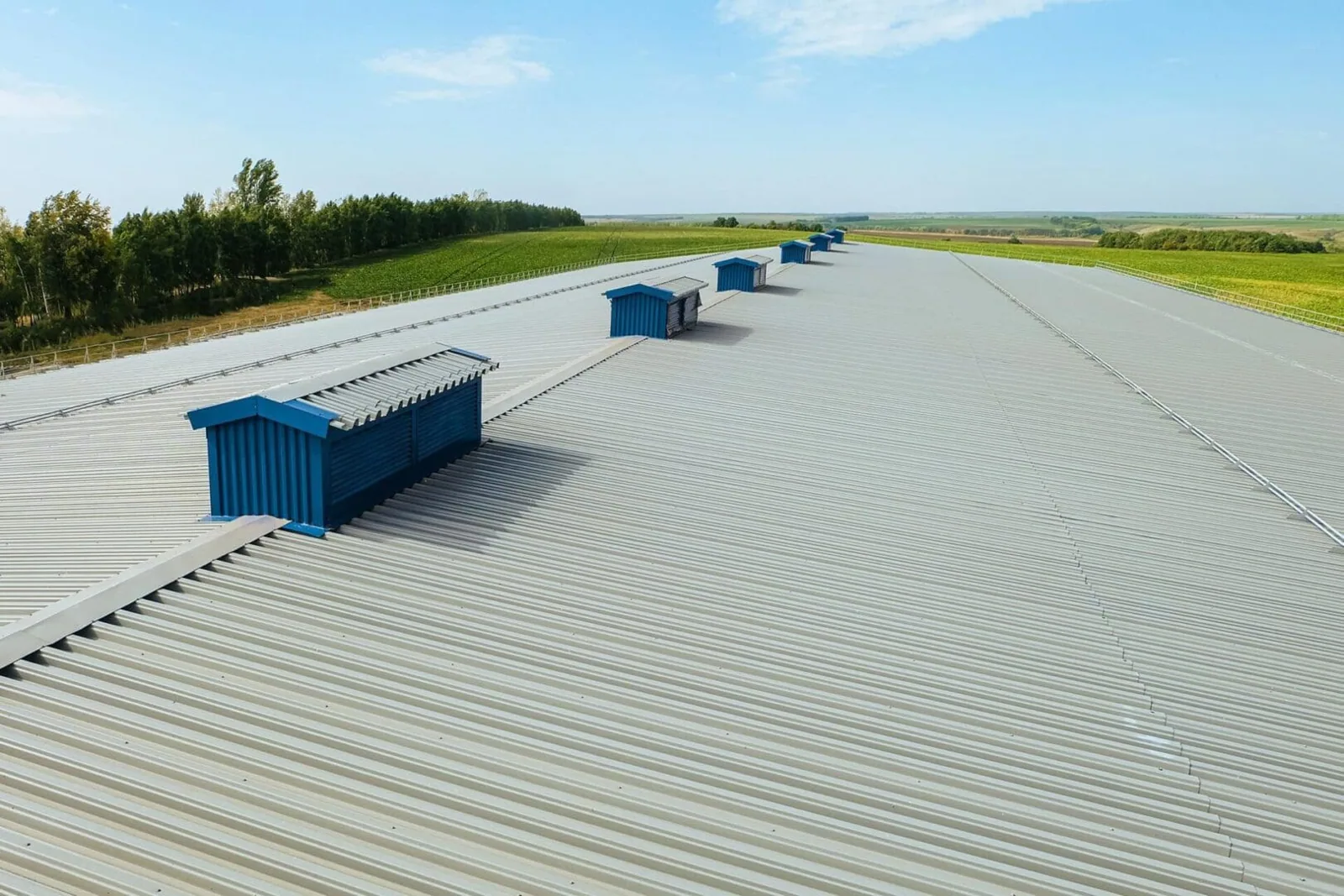
Commercial Ponding Water Roof Repair
Resolve standing water on Fontana commercial roofs by checking drainage, low areas, membrane condition, and the access and timing of repair.
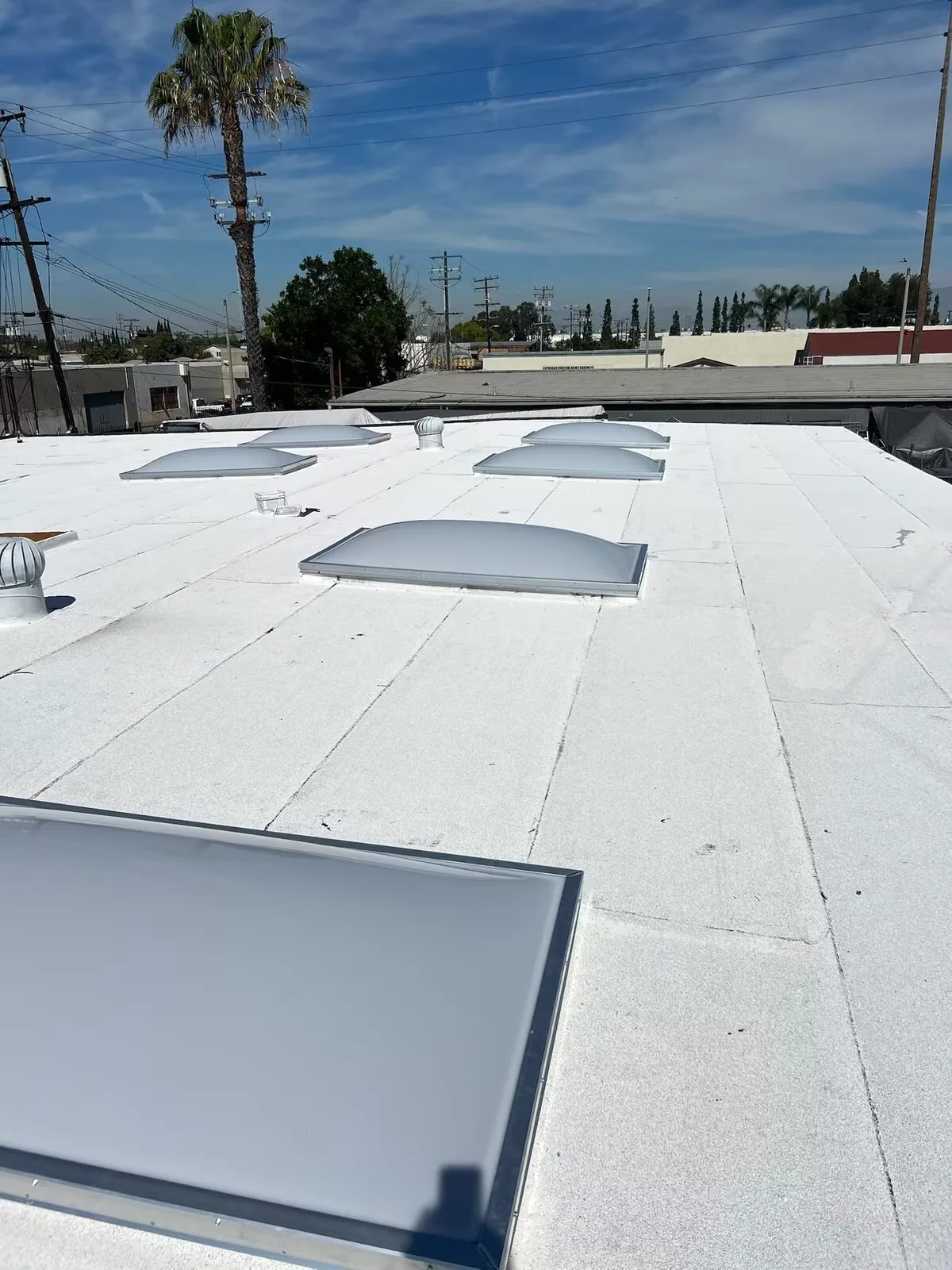
A drain basket cleared during production still needs a safe access window before a crew can inspect the roof around it. Ponding water repair starts with the drainage path, not a coating spread across the low area. We check drains, scuppers, strainers, roof slope, nearby seams, and evidence of recurring water. The observed pattern helps distinguish a blocked outlet from a low spot or broader drainage limitation. In Fontana, heat can dry a roof before a visit and hide the route water took, so photographs and timely access help preserve the condition that needs explanation.
Water marks tell a route
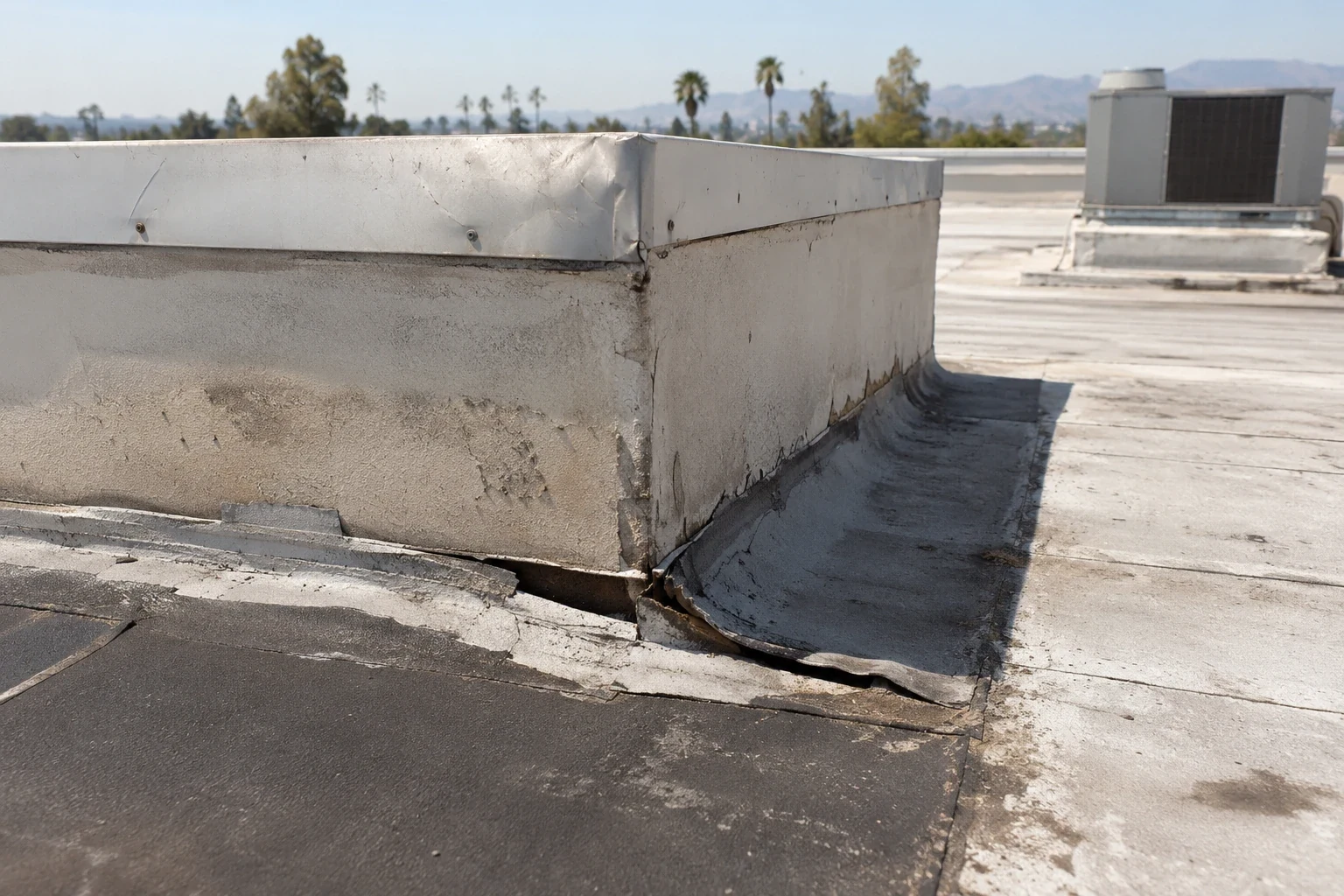
We look for water lines, sediment, debris, algae, displaced ballast where present, soft areas, seam exposure, and marks around drains and equipment curbs. Standing water may result from blocked drainage, a low area, an uneven surface, or a condition that requires separate evaluation. It is not enough to see a puddle once and assume the roof's slope or structure has failed. We record the location, weather context, outlet condition, and whether water appears to remain after normal drainage time.
Fontana's Inland Empire summers can exceed 100°F. The nearby San Bernardino climate record places most rainfall in cooler months, so inspecting soon after a reported rain can help preserve the drainage pattern and leak route. A roof inspection can record the drainage route and identify whether a separate opening or structural review is warranted.
The outlet and low area connect
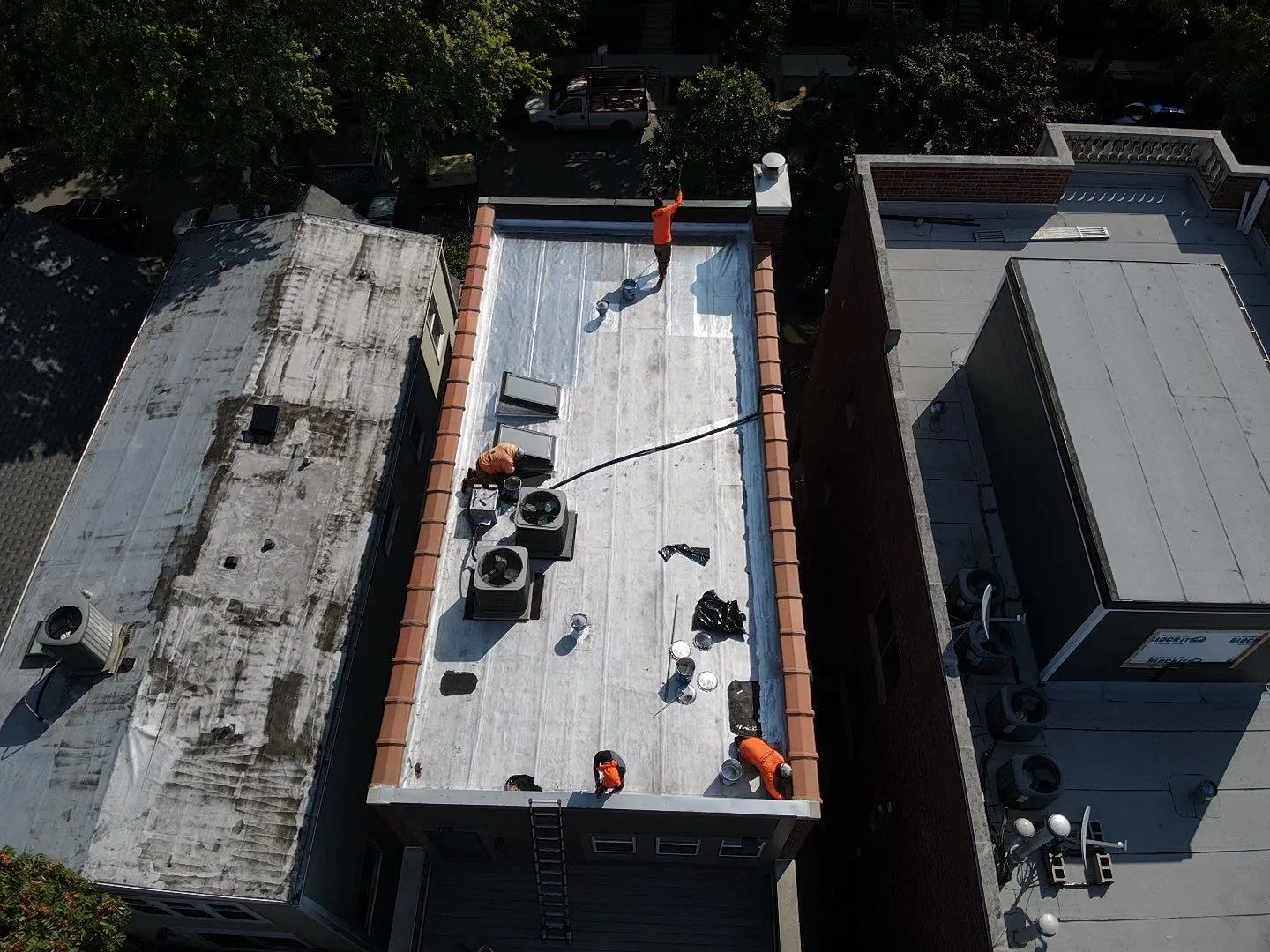
A drain cannot clear water if debris blocks its inlet or if the roof surface does not direct flow to it. We check the strainer, bowl, sump, drain piping access where available, and nearby membrane. Scuppers, gutters, and overflow paths also need review. If water bypasses a clogged drain and reaches a roof edge or penetration, the leak may appear elsewhere. The repair should correct the underlying cause that the inspection confirms, not just the visible pool.
Where the outlet is clear but the water remains, we map the low area and examine whether the roof surface or insulation may be uneven. A surface repair could address localized damage; a broader correction may require taper, drainage redesign, or assembly work. Before adding slope, we review existing layers, drainage capacity, attachment, and code requirements. If the membrane has punctures or open seams within the wet zone, puncture repair and seam repair may be part of the same scope.
Fontana access shapes the work
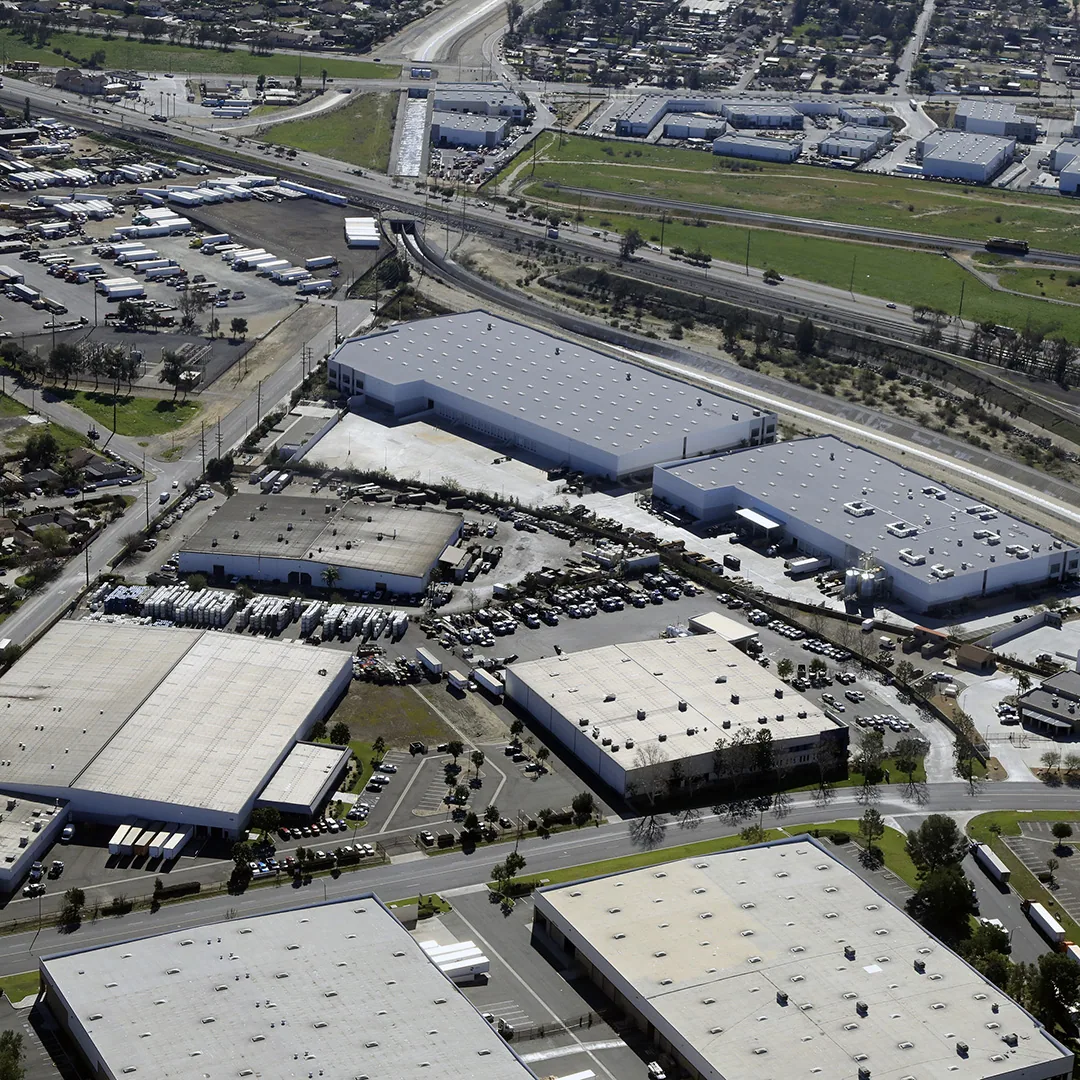
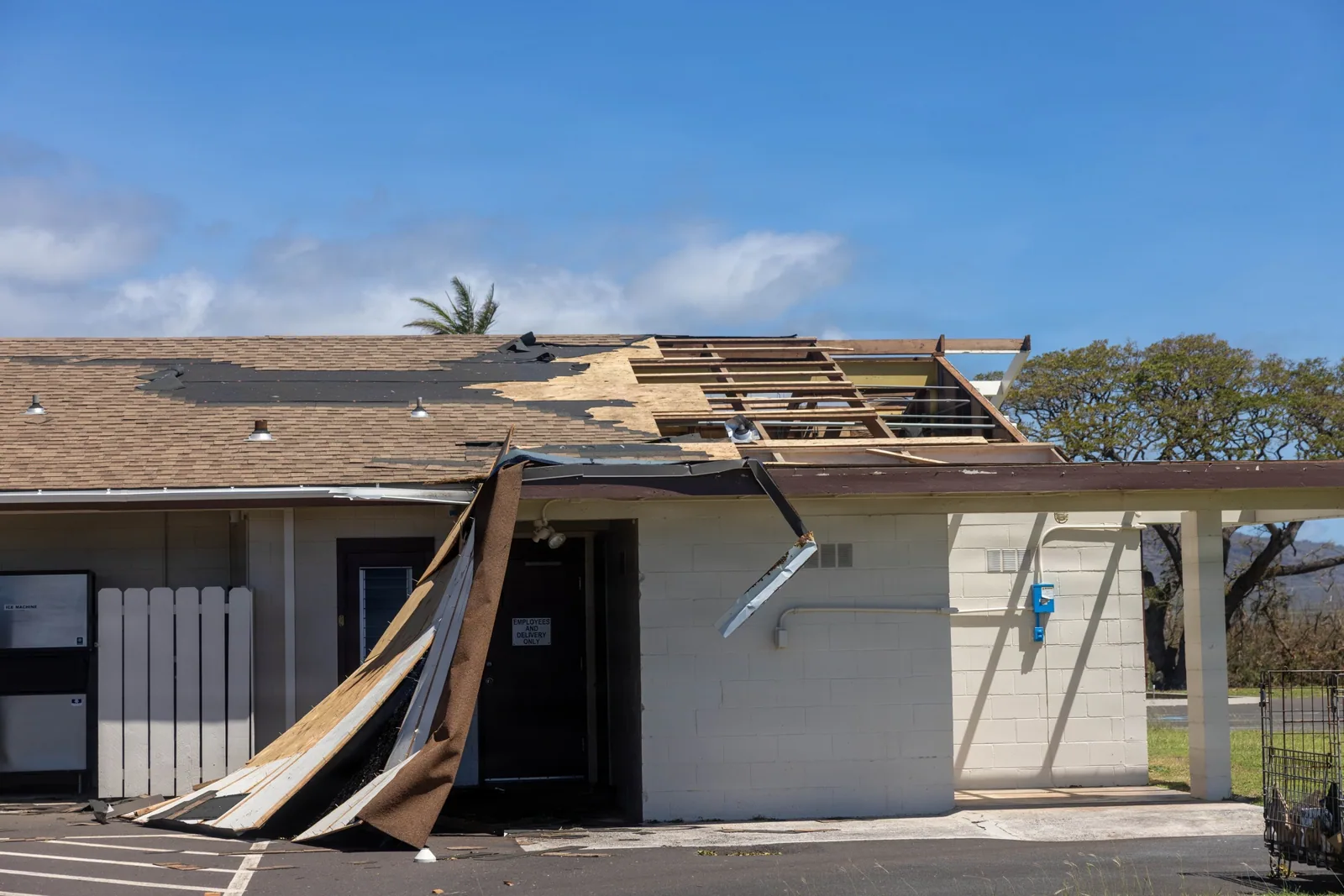
Industrial properties in Fontana may have freight activity, equipment movement, and controlled access around the building. The Southwest Industrial Park and Jurupa Industrial Park plan areas include trucking, distribution, and vehicle storage uses. A lift or material delivery must respect the property's actual truck lane and staging rules. Downtown Fontana's Sierra Avenue, Valley Boulevard, and Foothill Boulevard corridors bring different constraints, including parking, tenant access, and customer movement.
We plan the drain route inspection, debris removal, and any roof opening around the site's operating hours. If a drain line requires access below, facilities staff may need to identify the correct interior area. A Jurupa Industrial Park visit can use the plan area's broader industrial context while confirming site-specific entry and staging details. After a drainage correction, a follow-up check can confirm that water moves toward the intended outlet and that the repair remains sealed.
The correction matches the cause
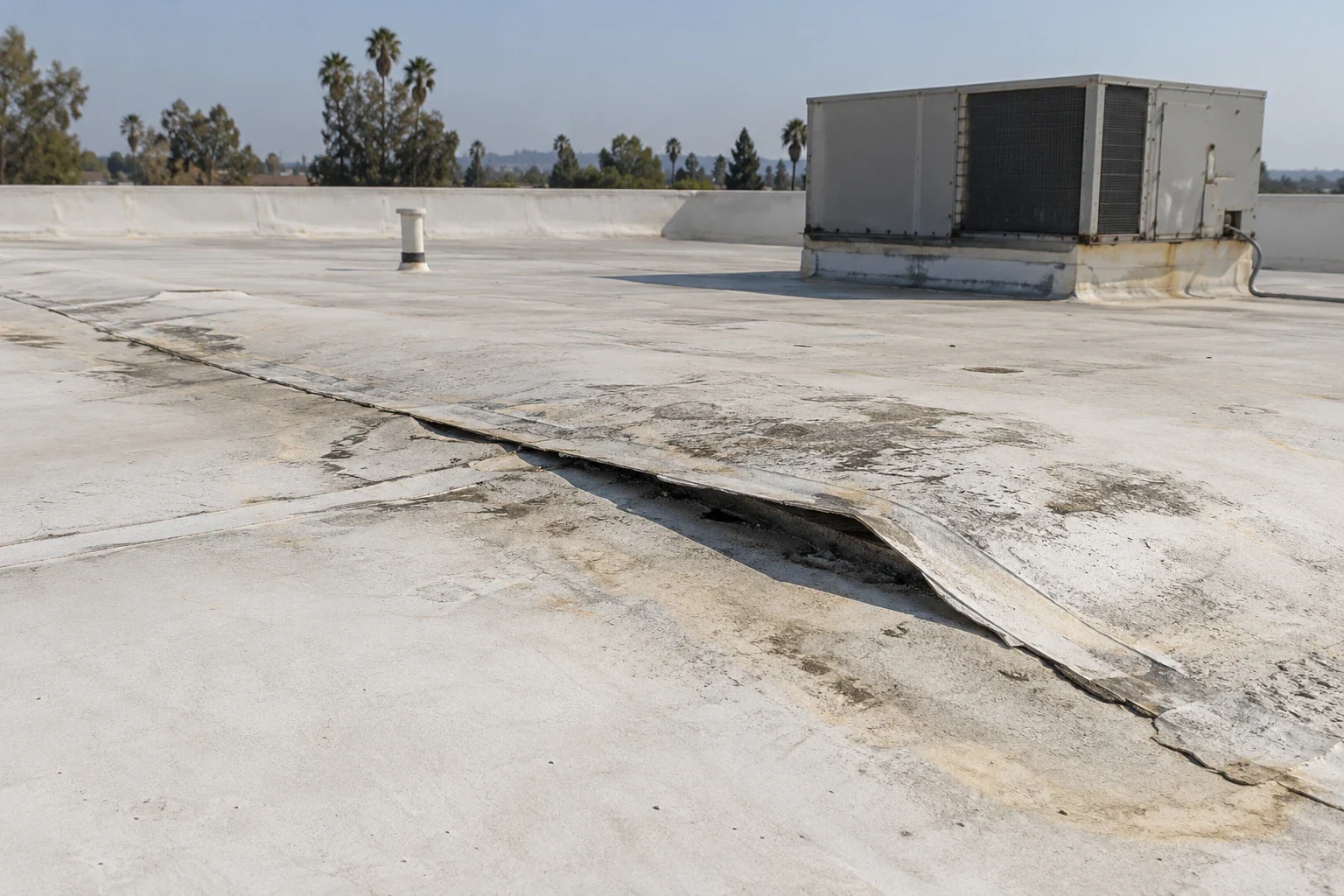
Simple debris removal or strainer replacement differs from repairing a damaged drain bowl, resetting a membrane termination, or correcting a low roof area. We identify the action and area before work starts. A membrane repair around the drain must maintain a watertight connection, preserve the drain opening, and tie into sound material. If the insulation is wet or the substrate is compromised, the scope may need to open that assembly and replace affected components. Before a broader drainage correction, we establish which outlet serves the area, where the water begins to collect, and whether the low point changes across adjoining roof zones. That prevents a correction at one drain from pushing water toward another detail. We also check overflow provisions and keep clear of any structural question that belongs with a qualified engineer.
Cost and timing depend on roof access, outlet condition, debris volume, whether interior coordination is needed, and how much membrane or insulation must be disturbed. For a building that remains occupied, we plan protection below the work zone and keep an open area covered at the end of the shift. A roof drain and scupper repair scope can address the outlet, while insulation and cover board work may be needed if the assembly has sustained damage.
The next rain tests the result
After repair, we document the drain, low spot, membrane tie-in, and any remaining water pattern. If the work corrected an obstruction, a later check after rainfall can confirm the flow path. If the roof has a persistent low area, the owner may need a broader drainage or capital decision. We distinguish what the repair resolved from conditions outside its boundary. Keep the record with drain cleaning dates, photos, and interior leak observations. Recurring ponding should not be closed as fixed merely because debris is gone. The closeout identifies whether the work restored an outlet, repaired a seam, or changed the slope, since each result needs a different follow-up check.
Fontana's high summer temperatures can dry a roof quickly, so photos taken during the reported condition may help explain its extent. Keep a log of the location and time water was observed, whether drains were clear, and any interior impact. For repeat complaints, record how long the pool remains after rain; that timing helps distinguish a brief drainage delay from a recurring low point. Schedule a drainage assessment with that information and the roof plan if available. We will define a repair route, access window, and check after work that fits the property.
Frequently Asked Questions
How long must water remain before it is called ponding?
The evaluation considers the roof system, design, drainage details, and how long water remains after normal drainage. We compare the observed pattern and drainage conditions with the roof system before identifying a repair condition. A recurring pool deserves an inspection, especially when it reaches seams or penetrations.
Could a blocked drain be the only problem?
It may be, but the surrounding low area, outlet, overflow path, and membrane still need review. If debris removal restores flow and the roof is intact, the repair may be limited. If water continues to collect or enters the building, a broader scope is needed.
Can you add a coating to fill the low spot?
Coating is not a substitute for a drainage correction. We first identify the cause, confirm the existing assembly and slope, and check that the substrate and coating are suitable. A design change may require taper or drainage work rather than adding material to a pool area.
Should we worry about the building structure?
Standing water can raise a structural question, but a roofing contractor does not infer structural capacity from appearance alone. If the roof shows deflection or other concern, we recommend that the owner involve a qualified structural professional and control access until reviewed.
Can drains be cleared while the facility operates?
Often the visit can be scheduled around operations, but roof access, interior access, lift placement, and debris handling must be coordinated. We identify the work zone and protect activity below it before clearing or repairing a drain.