Manufacturing Plant Roofing
Manufacturing plant roofing in Fontana, CA: working around process equipment and shifts, choosing membranes for real rooftop exposure, leak tracing and sealed phases.
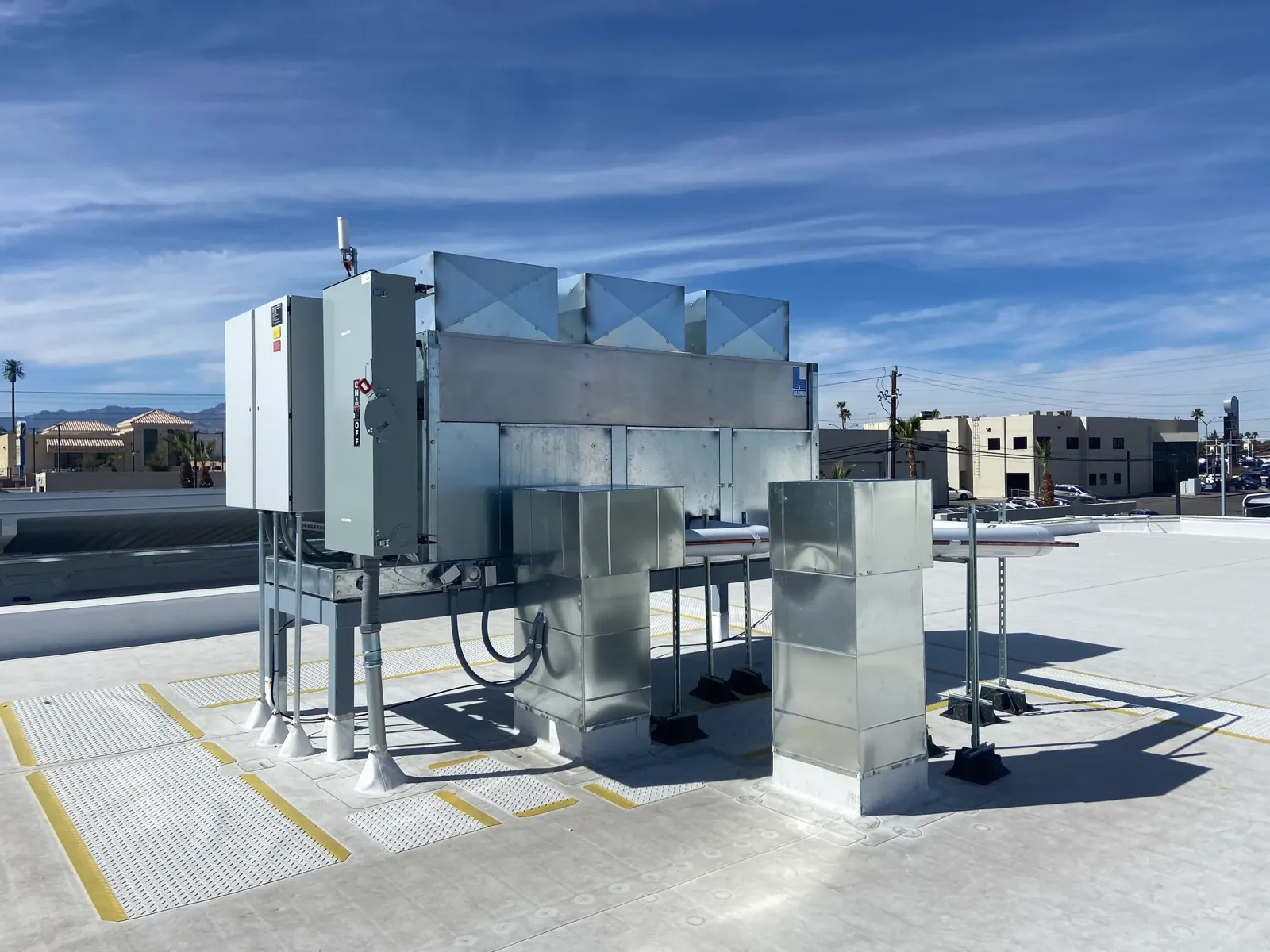
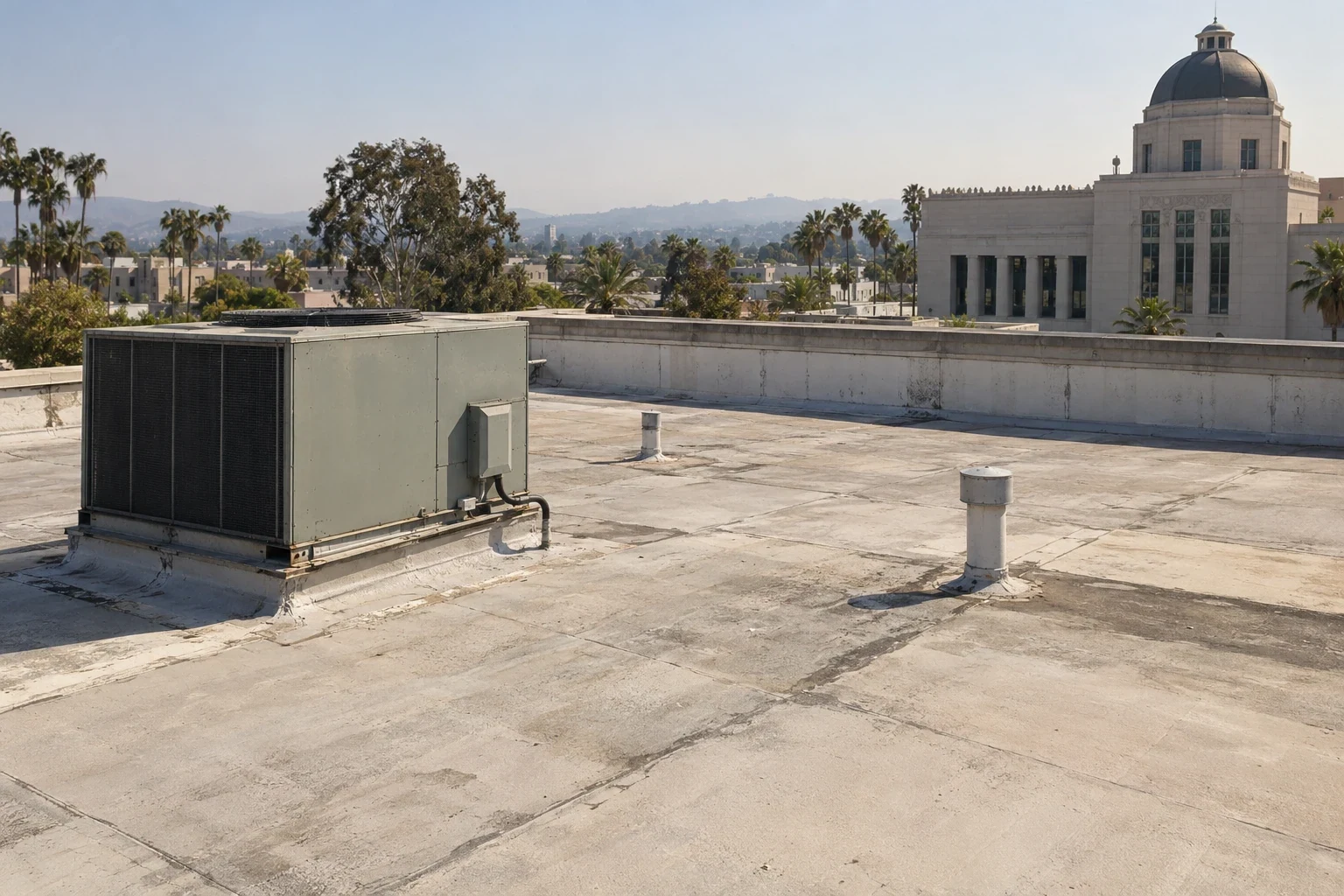
A roof detail next to process equipment may need the plant's maintenance team to clear access before roofers can build the permanent flashing, and that often decides which phase can go first. Commercial Roofers Fontana assesses manufacturing plant roofing in Fontana, CA, by comparing the roof's real condition with how the plant runs and services its equipment. The owner gets a measured repair or larger option with the prep and protection spelled out, instead of an assumption that getting on the roof means equipment can be shut down.
Manufacturing is an important part of Fontana's economy, alongside transportation and logistics. Each plant gives us its own production, material and operating information. We ask about what happens near the affected part of the roof and inspect the installed roof before choosing a method. Knowing a building is a factory tells us nothing about chemical exposure, roof material or existing defects, so the price follows actual records and findings, with structural or equipment decisions assigned to the right people.
Identify the process contact and roof relationship
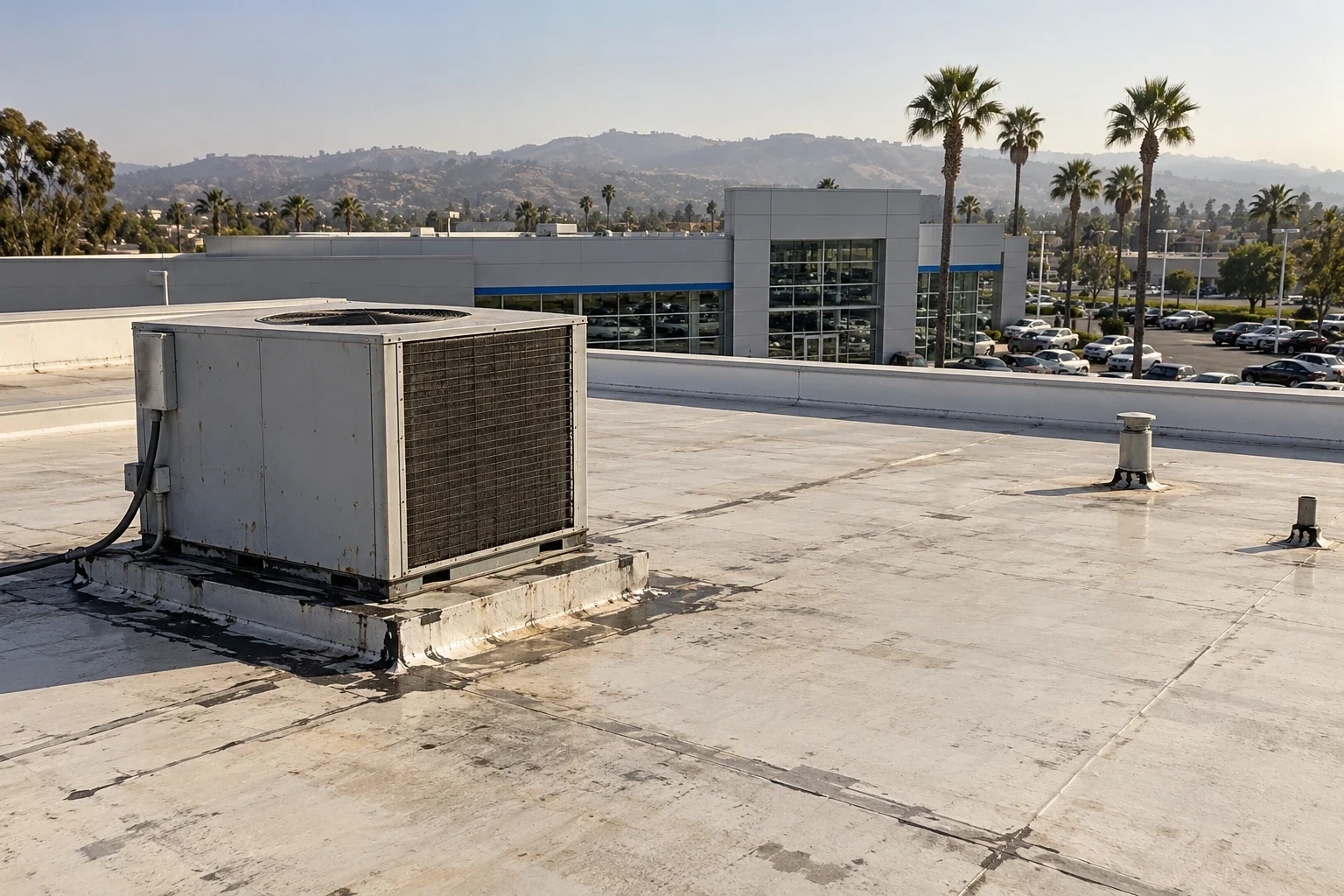
The operator explains what equipment or process sits near the proposed work zone and who can arrange maintenance access, equipment moves or shutdowns. We compare that with roof drawings and equipment dimensions instead of guessing from what the unit does. A new unit can fit its spot and still leave too little curb height for proper flashing, so we settle that before the unit is set and the detail becomes hard to reach.
Coordinating roof work at process equipment keeps structural, mechanical and electrical work with qualified contractors. The plant sets approved shutdown windows and who restarts equipment when a change is planned. Roofing keeps working air intakes clear under the approved plan, and neither roof access nor a material delivery approves a shutdown or proves the roof can carry a new support.
Use actual exposure information for material selection
We ask the plant about residue, exhaust and rooftop maintenance near each roof area, then compare that with the membrane and any coatings we can see. The type of substance, how concentrated it is and how often the roof sees it all affect whether a product will hold up, and that should be checked against the product's actual documentation with expert input where needed. Being an industrial plant is a reason to ask those questions, not proof that every roof section gets the same exposure.
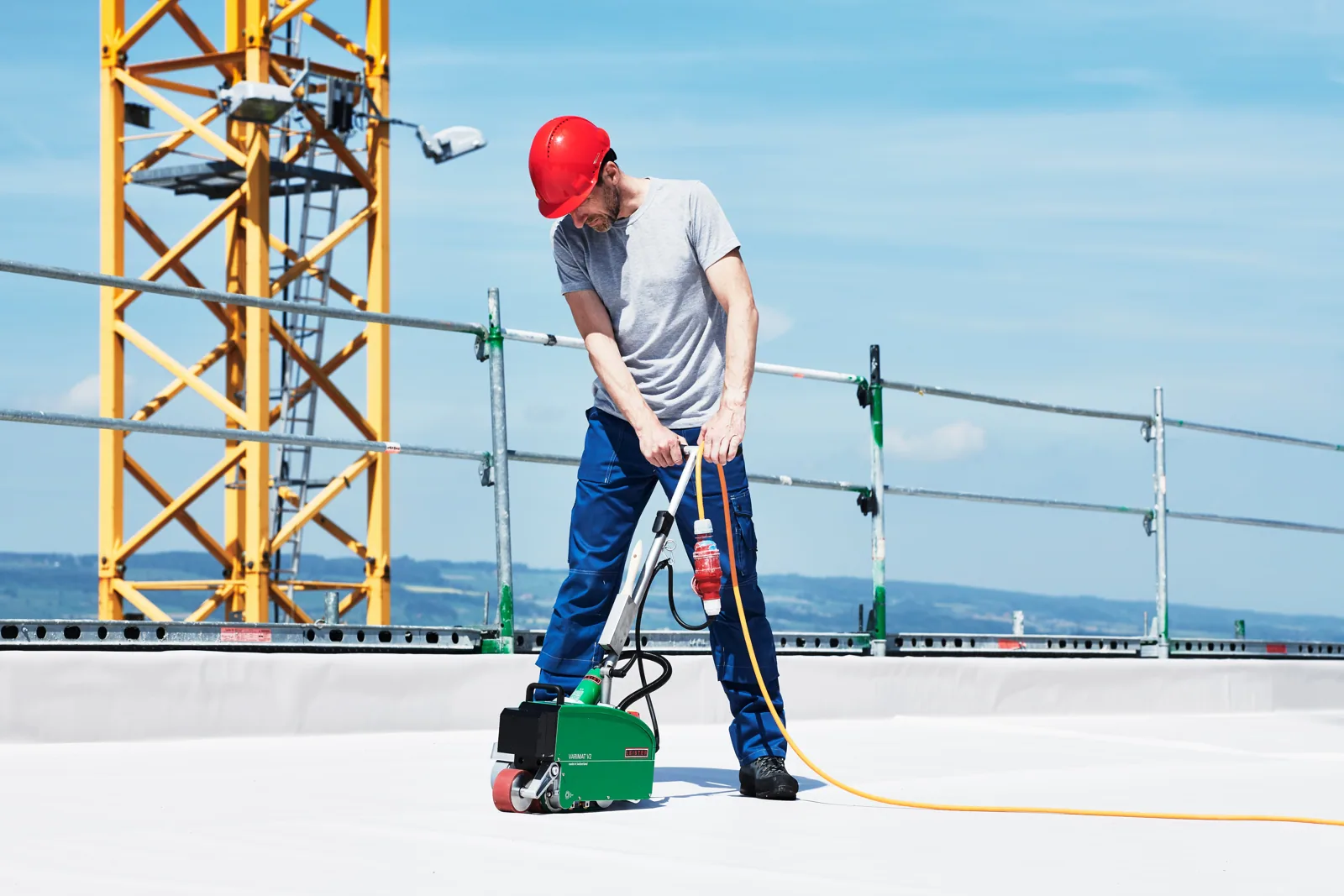
A proposed PVC roof needs product-specific components and an exposure review, not a blanket claim that it resists grease or chemicals. Other membranes and coatings have their own prep and installation rules. We spell out the prep and flashing work each option includes, and any open exposure question is answered before anyone orders a material whose suitability is still unknown.
Locate the assembly findings against the work zone
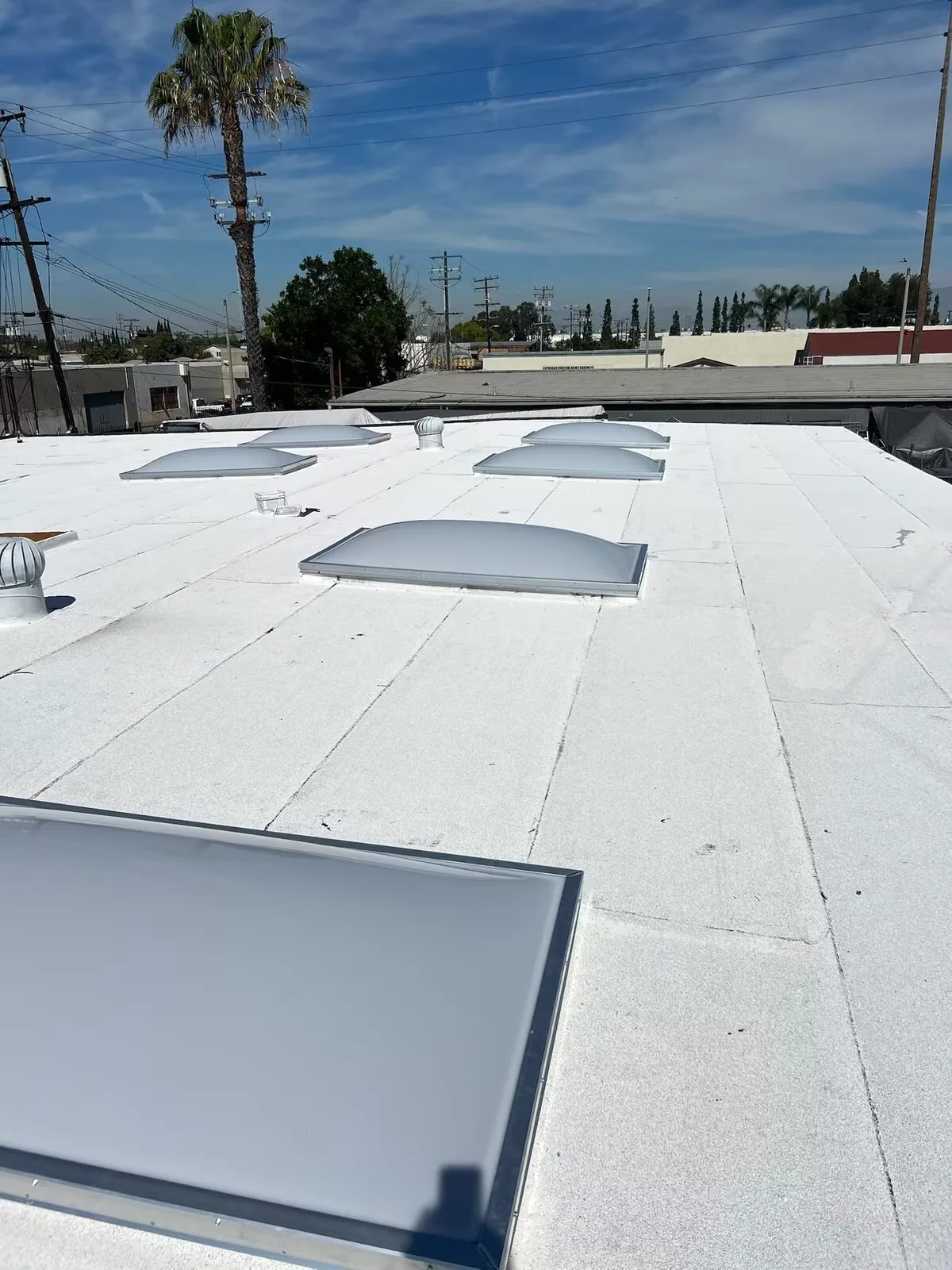
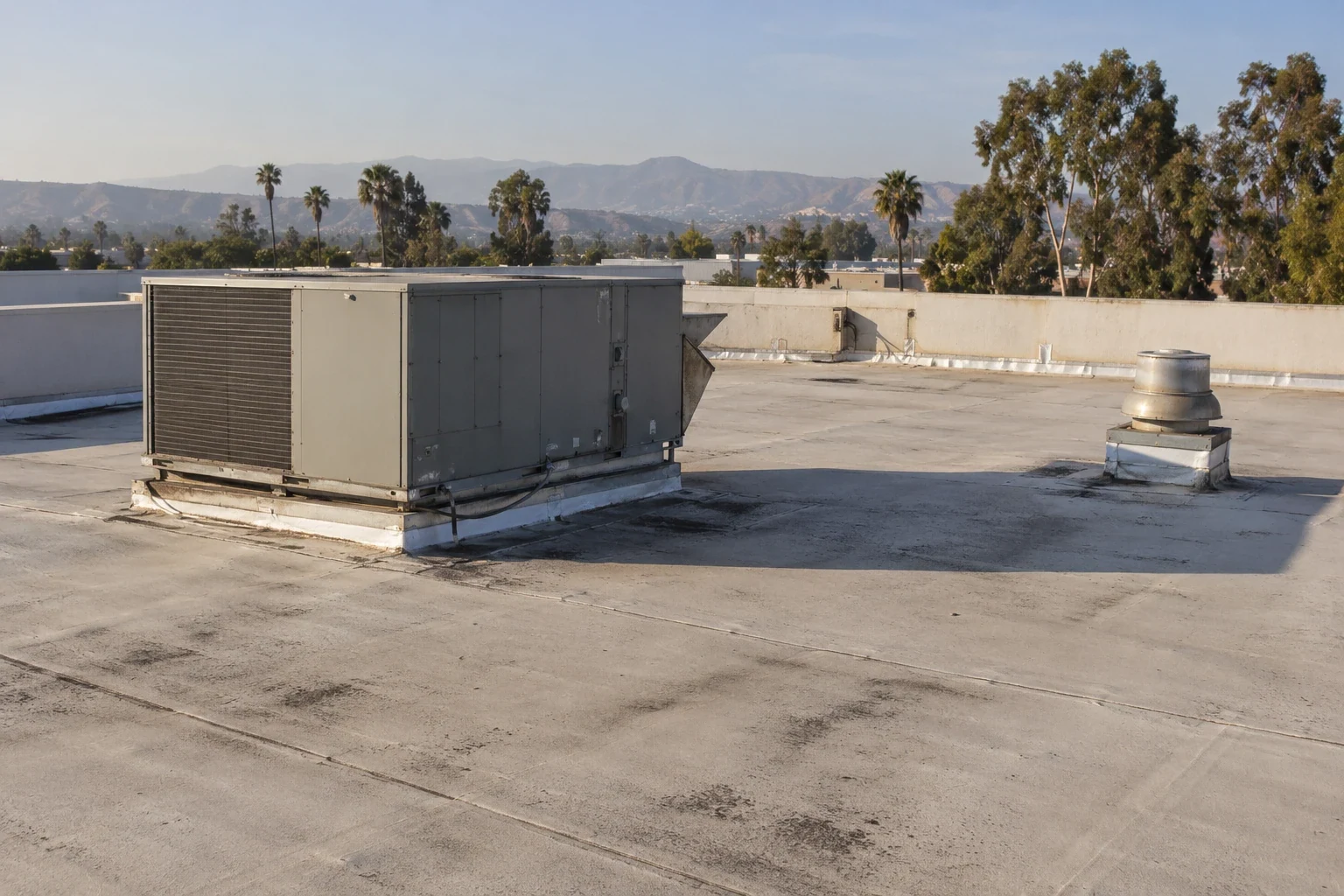
A plant roof inspection compares installation records with the membrane, old repairs and edge details we can reach, and notes areas where equipment or layers are different. Photos show each finding with enough context to return to it after prep, and we note any areas we could not reach before a larger price relies on them. A plant's floor area or headcount cannot show its membrane, layer age, or roof area, so we measure the actual roof and inspect its build-up.
A permanent repair needs compatible prep and sound roofing around it, which can mean cleaning, cutting out or rebuilding beyond the visible hole. The price explains that work instead of assuming a bigger patch fixes every nearby detail. A wall or equipment problem above the roof is listed separately when the roof repair cannot fix what the flashing has to tie into.
Distinguish the occurrence from its mechanism
The leak report from inside should record when it happened, where, and what the process or maintenance crew was doing, and we keep our roof findings separate. We compare the water path with roof and equipment information rather than guess the cause from timing. A drip on a dry day does not prove condensation, and a bad seam nearby may need repair while an indoor or wall source is still unresolved. Our recommendation names the roof repair we can support and what still needs checking.
A refrigerated building can involve different operating and insulation questions, and a warehouse may handle stored goods differently. Those comparisons help frame questions without assuming this plant runs the same way or has the same roof. The plant contact tells us what happens below the work so protection and access fit this building, not a method copied from a neighboring property.
Investigate the decision affecting construction extent
Where hidden conditions could change whether we repair or recover, we agree on testing for that specific decision, with locations marked and same-day patching arranged before any cut is made. Cores show the layers and condition at each spot, and keeping or removing a larger area takes enough evidence to cover it. Fastening and structural questions go to qualified professionals when the chosen system needs more than a core can tell us.
Infrared scans can point to areas worth coring under the right conditions, once surface finishes and equipment effects are accounted for, and we confirm with cores. A scan pattern alone does not give a wet-insulation quantity. If approved tear-off uncovers more damage, we locate it, measure the fix and get owner approval on cost and protection, so the original boundary stays clear instead of quietly growing.
Coordinate the actual facility approach and shift
At a plant in the West End Specific Plan Area, with its industrial, office and commercial mix, current access and process contacts are needed before material handling is planned. The operator confirms receiving, staging and what is running under each roof section, and equipment moves and debris may need separate routes. Repeated setups or restricted shutdown windows are priced next to the prep instead of assumed from a description of the district.
For a plant in the Jurupa Industrial Park area, the surrounding trucking and warehouse traffic says nothing about that plant's processes or roof. Each facility keeps its own records and permissions before crews and orders are coordinated across several buildings. Fontana's summer heat makes it worth checking roof surface and product limits each day, and a delayed prep task changes the next step instead of a booked shift being treated as proof the roof is ready.
Retain the plant roof and service acceptance record
Final roof heights are checked at curbs, walls and drains, and any curb or drain adjustment is assigned where flashing room changes. Cleaning drains and rebuilding them are separate jobs, and slope or drain changes are measured and reviewed. The project follows its permit and assembly requirements, including energy code items and allowed alternatives. A new membrane does not cover connected piping or structural work that was left out of the agreed scope.
Before a phase opens, the prep work, protection and a permanent stopping point all need to be ready. Closeout ties prep photos, installed components, approved changes and seam checks to their roof locations, while process equipment and interior sign-off stay with other trades. Care and warranty information guide later service, and any future leak is reviewed fresh against roofing and plant activity since then before a cause or repair is assigned.
Frequently Asked Questions
Does being a factory tell you what the roof is exposed to?
No. We get current process information from the plant and inspect the roof. Whether a product will hold up depends on the real exposure and the product's documentation, not on the type of industry.
Can roof access approve shutting down equipment?
No. The plant and its qualified service teams control any shutdown. We confirm the approved window and who restarts equipment before roofing depends on it, and structural sign-off stays separate.
What should the plant's leak report include?
When it happened, where, and what the process or maintenance crews were doing. We compare that with roof findings without deciding it was condensation or a roof leak based on timing alone.
Can one core support keeping the existing roof under a new one?
Not alone. A core shows one spot, so the full area needs enough testing. Fastening and structure may also need an engineer's review before the old roof is approved to stay.
What belongs in closeout besides the finished membrane?
Located prep and flashing details, seam checks and the system's care requirements. Roofing completion is kept separate from restarting process equipment or any other trade's sign-off.