School Districts
Coordinate Fontana school roof repairs, campus access, summer scheduling, student protection, and district-wide condition records.
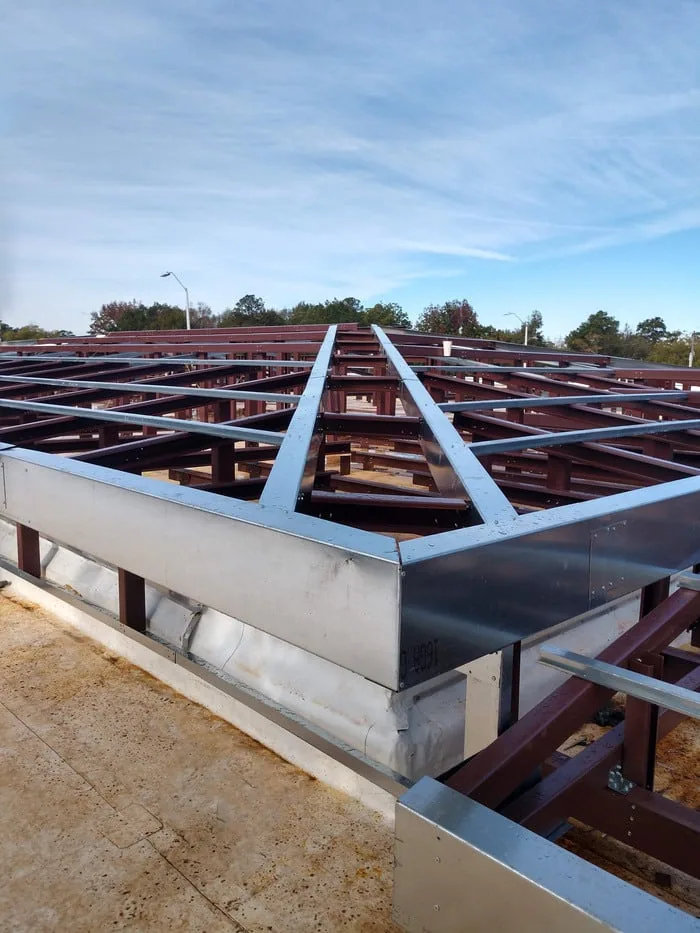
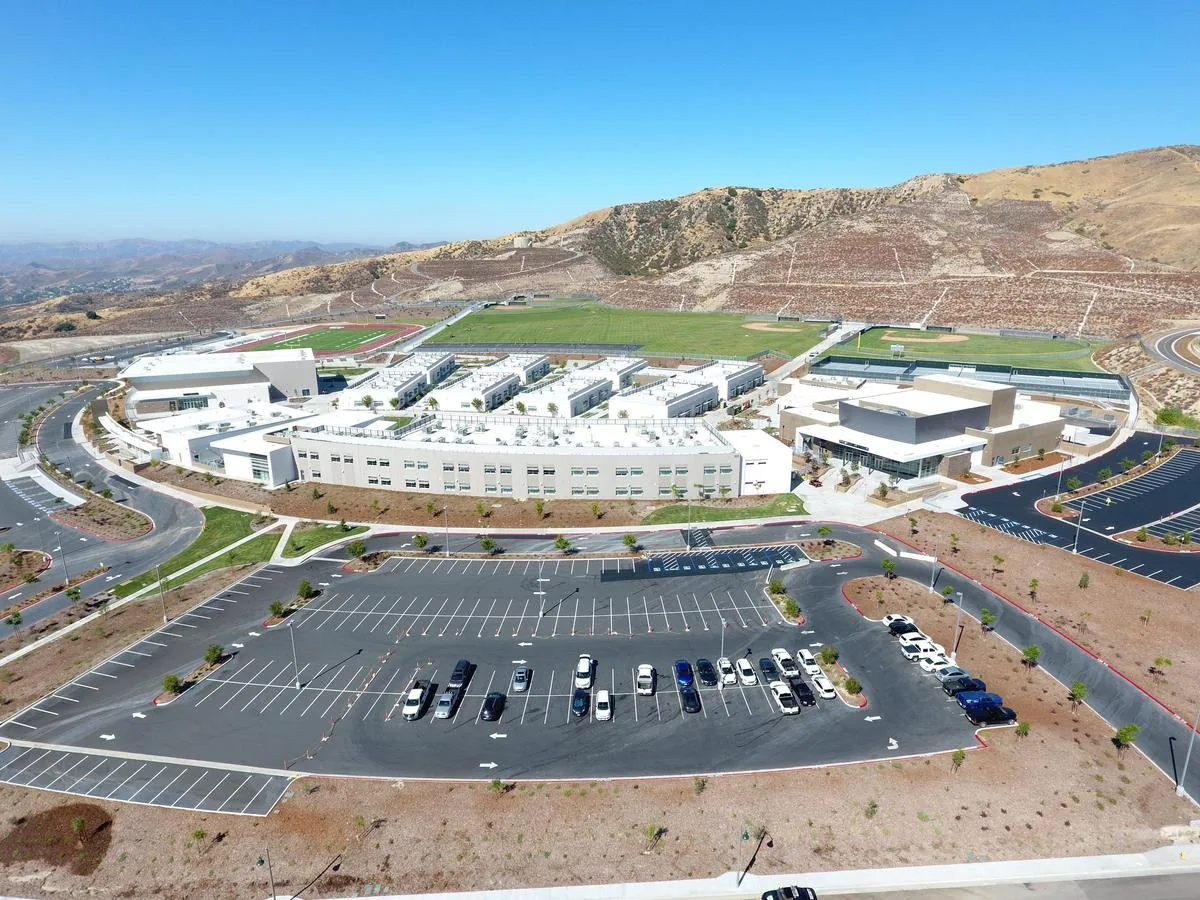
A roofing delivery cannot cross the student drop-off lane during the morning arrival period, so district work starts with campus access and the calendar that governs it. Commercial Roofers Fontana plans commercial roofing for school districts in Fontana, CA, by identifying roof zones, site contacts, protected routes, and the sequence that can fit school operations. The scope separates immediate repair from broader renewal and names the handoff needed before an area returns to use.
Fontana Unified School District and city services add education properties to the local institutional mix. A building-specific roof inspection identifies each campus's assembly, repair history, and condition. Each facility needs its own inspection and access plan. Fontana summer heat also affects roof work timing, which can make the school break useful for some phases, subject to procurement, approvals, and site readiness.
Campus routes decide where work can stage
Before scheduling, we confirm the district contact, gate procedure, delivery point, staff access, and routes that must remain open. Drop-off, pick-up, food service, and maintenance movement affect lift and pallet placement. We map these limits to roof zones and identify any restricted window. The campus contact confirms which dates and hours are available.
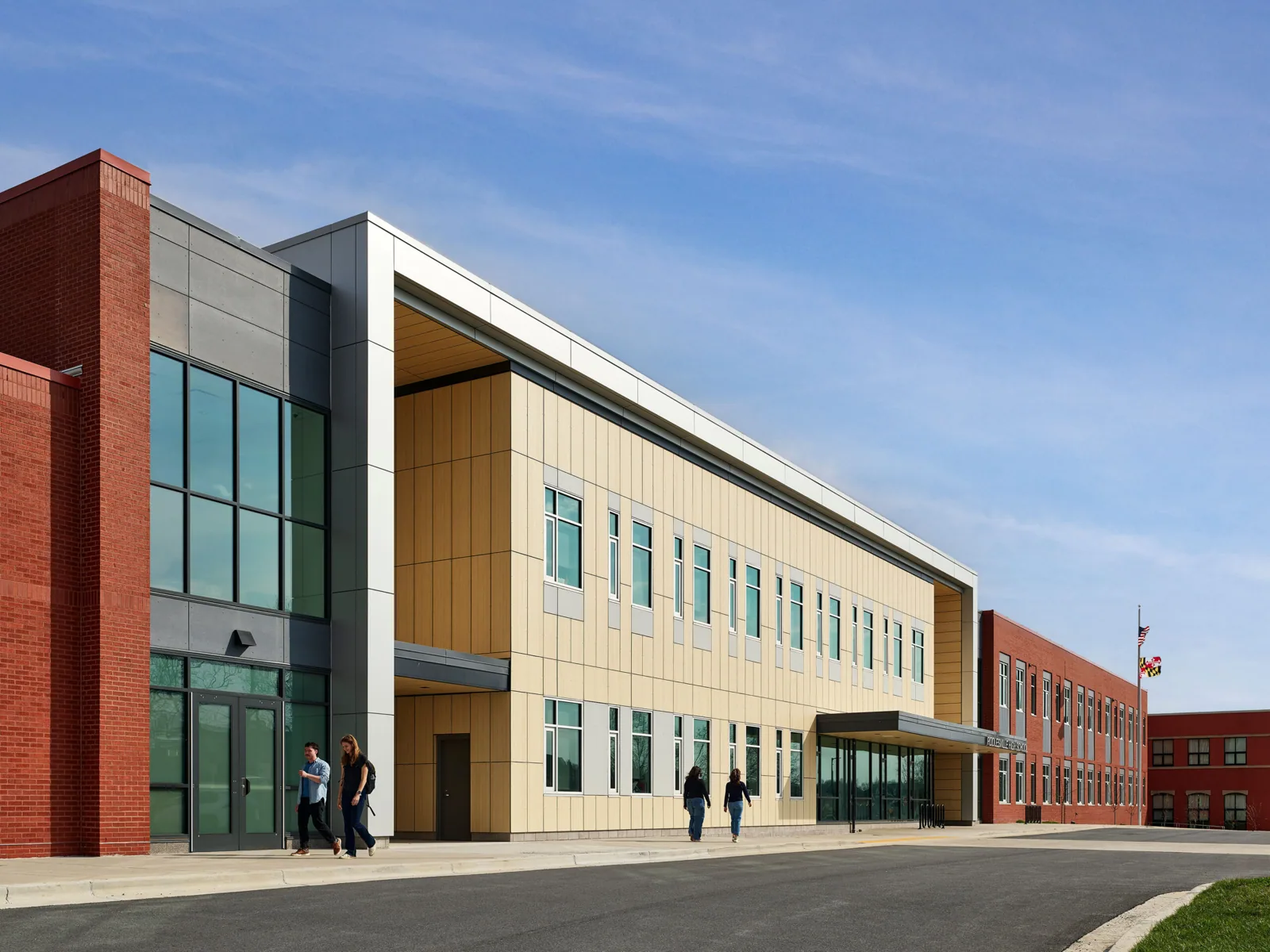
School buildings may have separate wings or additions. A campus addition can have different membrane, drainage, and tie-in details from its original building, so we inspect each accessible roof section. The scope states the included building or zone, material arrival, and how staff and students stay clear. If access changes, the sequence is reviewed before a roof opening.
School roof work accounts for occupied rooms and campus movement. A public agency roofing program may involve more approval steps, while district access remains specific to each school. Identify the construction approver and daily access contact before mobilization.
Map each concern to a building area
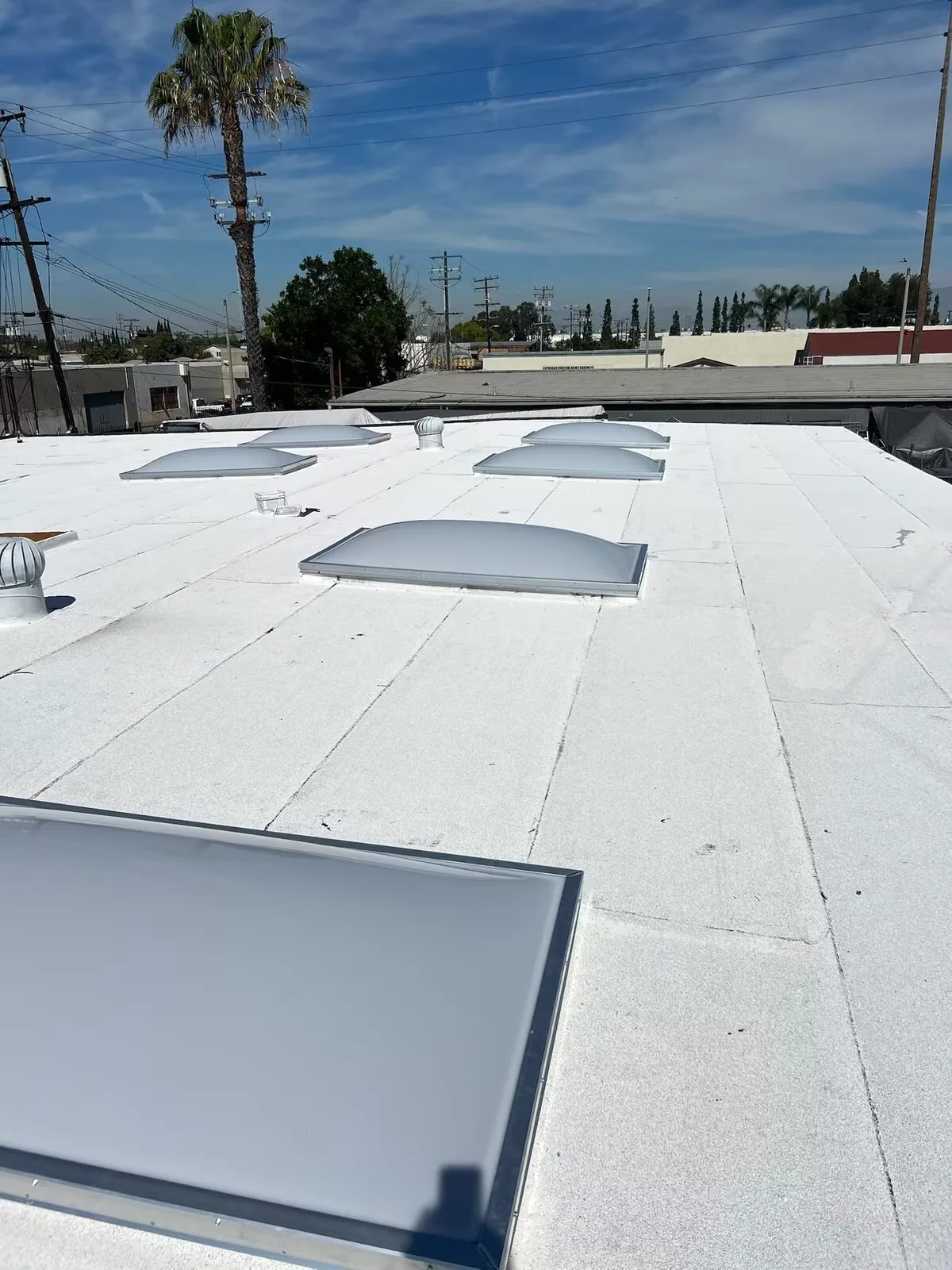
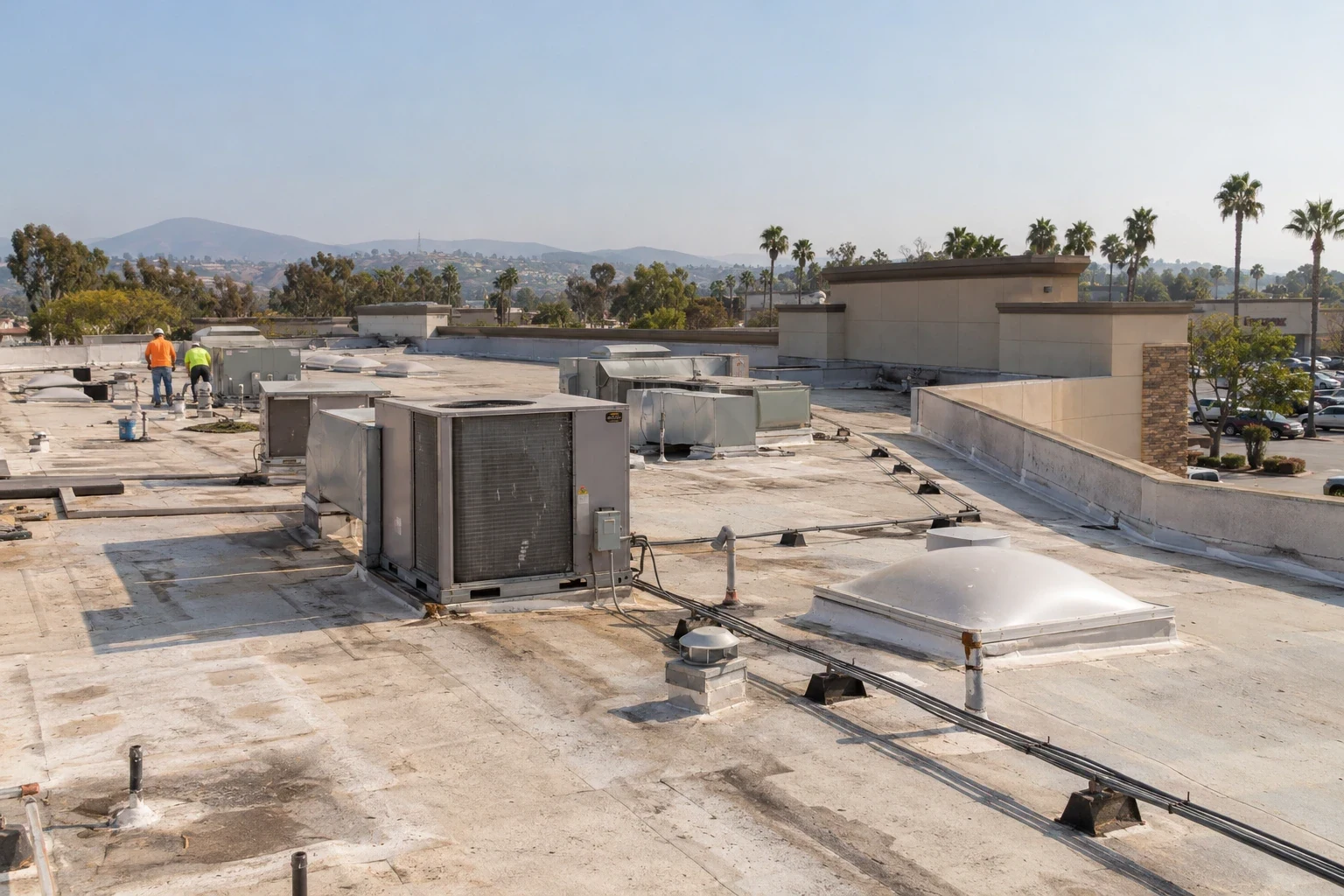
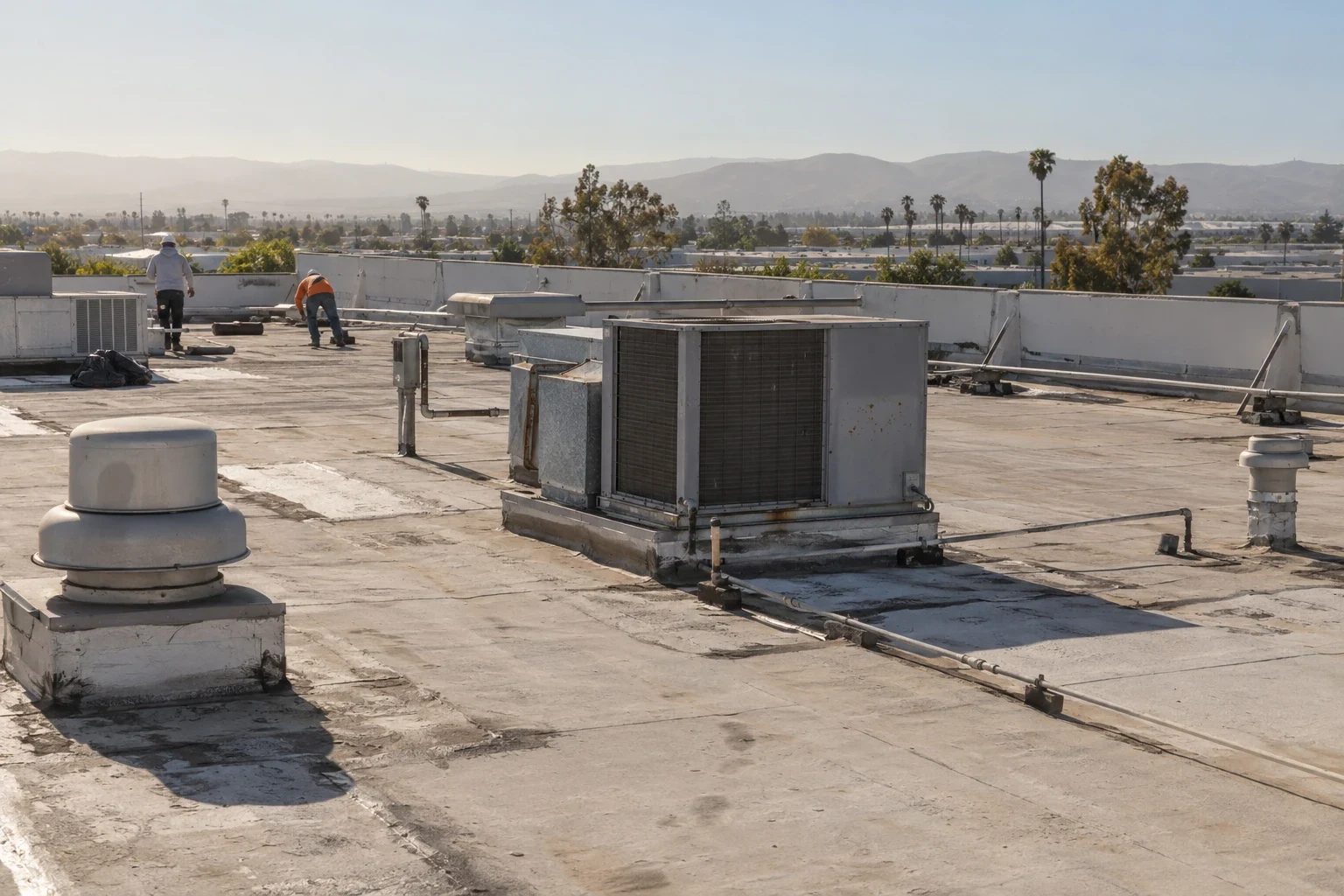
A classroom ceiling mark or maintenance ticket gives a starting point, not a full diagnosis. We compare it with roof drains, seams, curbs, skylights, flashings, and interior observations. Photographs tied to a roof plan help staff locate the concern. The report states what was visible, whether access was limited, and what further examination may be needed.
A commercial roof inspection documents accessible conditions and follow-up needs. If suspected moisture could change repair or replacement, the next investigation defines the sample area and how an opening will be protected and closed. A surface pattern does not quantify wet insulation; the report distinguishes indication, confirmed material, and uninspected area.
District teams can prioritize active leakage and retain a separate list for planned work. We scope each complaint to the school and roof zone inspected, then compare additional buildings only when the district authorizes a wider review.
Compare repairs with complete renewal scopes
A repair scope identifies location, correction, access, protection, and closeout. Recover or replacement needs assumptions for removal, insulation, substrate, drainage, curbs, edges, and tie-ins. We identify active areas and how a concealed condition will be measured and approved before added work proceeds. This lets the district compare alternatives on a common basis.
A contained roof repair may address a local seam or flashing failure if surrounding material supports it. If findings indicate broader deterioration, a replacement scope states removal limits, assembly details, and protection around school activity. A coating or recover names its receiving condition and exclusions.
The proposal can set an allowance and written approval process for concealed findings, including location, photographs, and added quantities. That gives the district a review point before the zone expands.
Use the school calendar with heat constraints
Districts should factor in Fontana's occasional extreme-heat advisories and summer forecasts above the 100°F mark. Work periods should account for safe access, material handling, and tasks suited to earlier hours. A school break may reduce occupancy, but does not remove delivery, inspection, or approval needs. We confirm the calendar and closure sequence with the district.
Education and civic properties are part of Fontana's institutional mix. A campus may be scheduled near other public work, but it does not inherit another property's condition or access plan. Fontana is connected by I-10, I-15, and SR-210, but those regional routes do not set a campus gate’s allowed delivery hours. The district contact confirms entry timing for each school.
Downtown Fontana has a 389-acre redevelopment area spanning portions of Sierra Avenue, Valley Boulevard, and Foothill Boulevard. At each school, we confirm the gate, vehicle path, notification process, and contact who releases and accepts the roof area.
Show quantities and approvals clearly
District review is easier when the scope separates roof construction from coordination. We identify measured areas, equipment, delivery, protection, removal, materials, drainage, edges, disposal, and closeout. The schedule shows dependencies such as roof plans, security approval, calendar, and staging route. Any restricted hour belongs in the sequence.
A roof capital plan can group repairs, investigation, and renewal by building. Property management teams use similar site records, while the district follows its procurement process. Each entry names the school, condition, action, status, and next decision so site and district summaries remain distinct.
We clarify scope differences before material commitment. A revised quantity or added condition receives its own record and approval, making schedule changes traceable.
Return the campus with a useful handoff
Closeout records the school and roof zone, installed materials, details repaired, approved changes, photographs, and remaining observations. The authorized contact can share it with facilities staff. Recommendations not included in construction remain separate so an open issue is not mistaken for completed work.
Planned roof maintenance can revisit drains, seams, flashings, and equipment interfaces. Each campus should retain its own map and access notes, while a district summary tracks status. Findings stay distinct from approved repairs.
Before returning the area, we confirm the opening is closed, tools and material are removed, protection is accounted for, and the facility contact accepts the handoff. The record shows what changed at that school, which approvals were used, and which observations remain for the next inspection. A facilities lead can route it to the person responsible for follow-up.
Plan a district roof review
Schedule an inspection or scope review and share the school contact, calendar, roof plan, access requirements, leak reports, and routes that must stay open. We will map findings, state limitations, and return a scope with the work zone, delivery sequence, protection, and handoff. For multiple schools, provide separate site contacts.
If water enters a school, service coverage extends through nights and weekends, holidays included. Immediate correction can be separate from a district capital decision.
Frequently Asked Questions
How should a district prepare a school for roof access?
Identify the authorized contact, gate and check-in process, calendar, student and staff routes, delivery point, and areas that must stay clear. We confirm these before setting the work zone. Required approval for roof access or an opening should be settled in advance.
Can roof work be planned during summer break?
A break can reduce occupancy, but the window still depends on approval, procurement, delivery, weather, and readiness. We set start conditions and closure points with the district contact, who confirms campus activities.
Does one school's leak indicate the same issue at every campus?
No. We document the roof where the condition was reported. Similar buildings can have different systems, repairs, and drainage. A summary may identify patterns, but each finding stays tied to its observations.
What should a replacement proposal include for a school?
List removal limits, receiving layers, insulation, drainage, curbs, edges, tie-ins, access, student protection, and closeout. Explain how concealed findings will be located and approved so the district can compare complete scopes.
How do hot days affect a school roof project?
Fontana summer forecasts can exceed 100°F, affecting safe access and material handling. We coordinate work and deliveries with campus operations and state how each zone closes before nearby areas return to use.