Commercial Roof Repair
Repair commercial roof seams, flashings, drains, and edge details in Fontana with a located work boundary, compatible materials, and a phased closeout.
A repair crew needs a clear work zone before a membrane is cut. In Fontana, CA, we locate the reported leak or visible defect, inspect the surrounding assembly, and mark the area that can be corrected without making an unsupported promise about concealed layers. The roof may have one membrane type, several previous patches, and different details at a later addition. A repair scope should name each one. We record the condition, compatible preparation, material, tie-in, and closure method, then set access and staging around the building’s operating plan. That approach is useful in the Inland Empire’s industrial areas, where delivery lanes and work hours may affect where material can be received. It also gives an owner a basis to compare localized work with a larger restoration or replacement when several conditions point beyond one repair.
Locate the defect and its limits
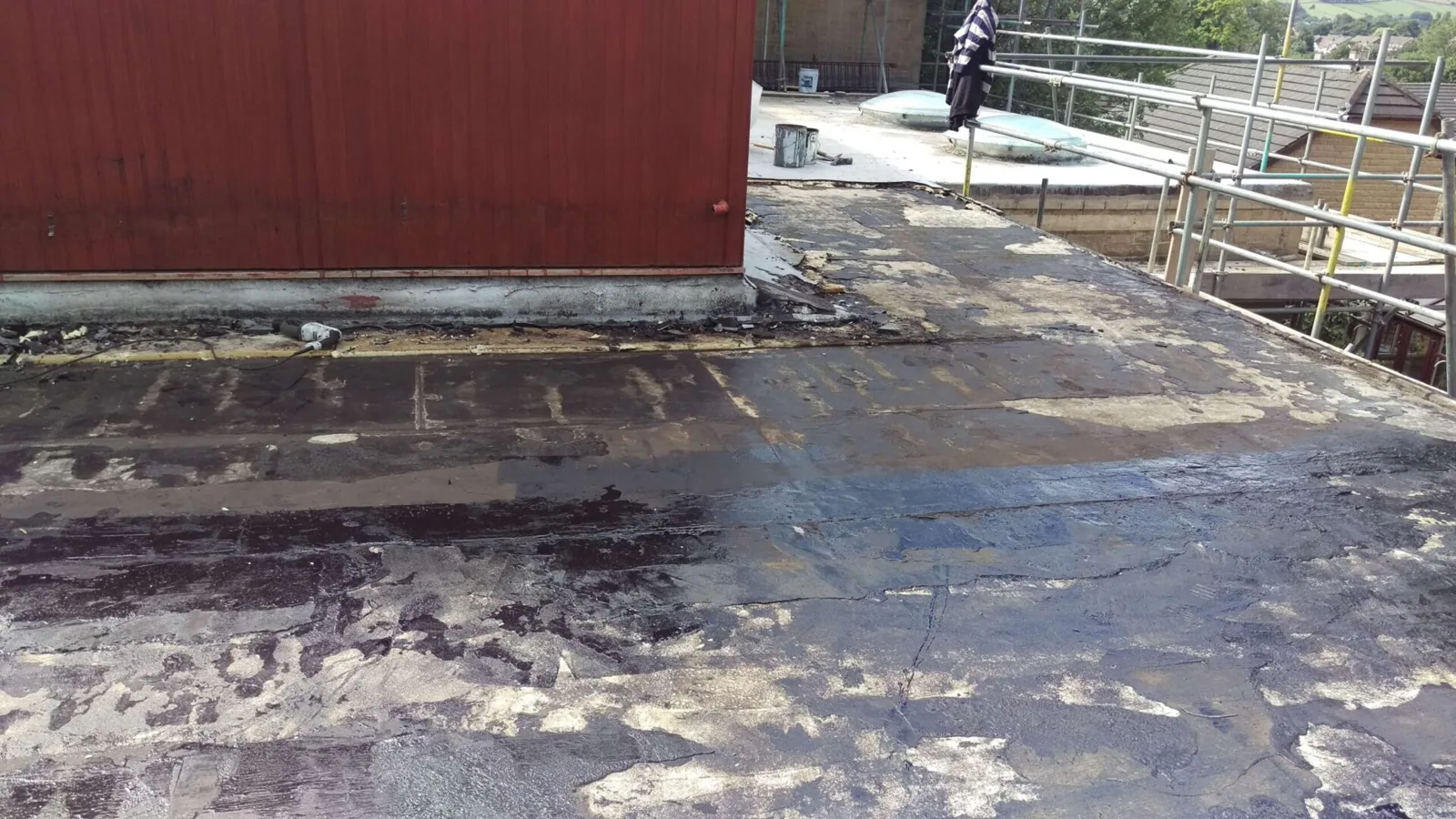
We compare the reported interior location with roof-level conditions, including laps, penetrations, curbs, drains, walls, and perimeter metal. Water can travel below a membrane before it appears inside, so the visible mark does not define the repair boundary on its own. We photograph the surrounding surface and note whether prior material or coating changes the connection. If moisture extends beyond the visible defect, we identify test locations before enlarging the opening. The inspection record shows what was accessible, what we observed, and what remains uncertain.
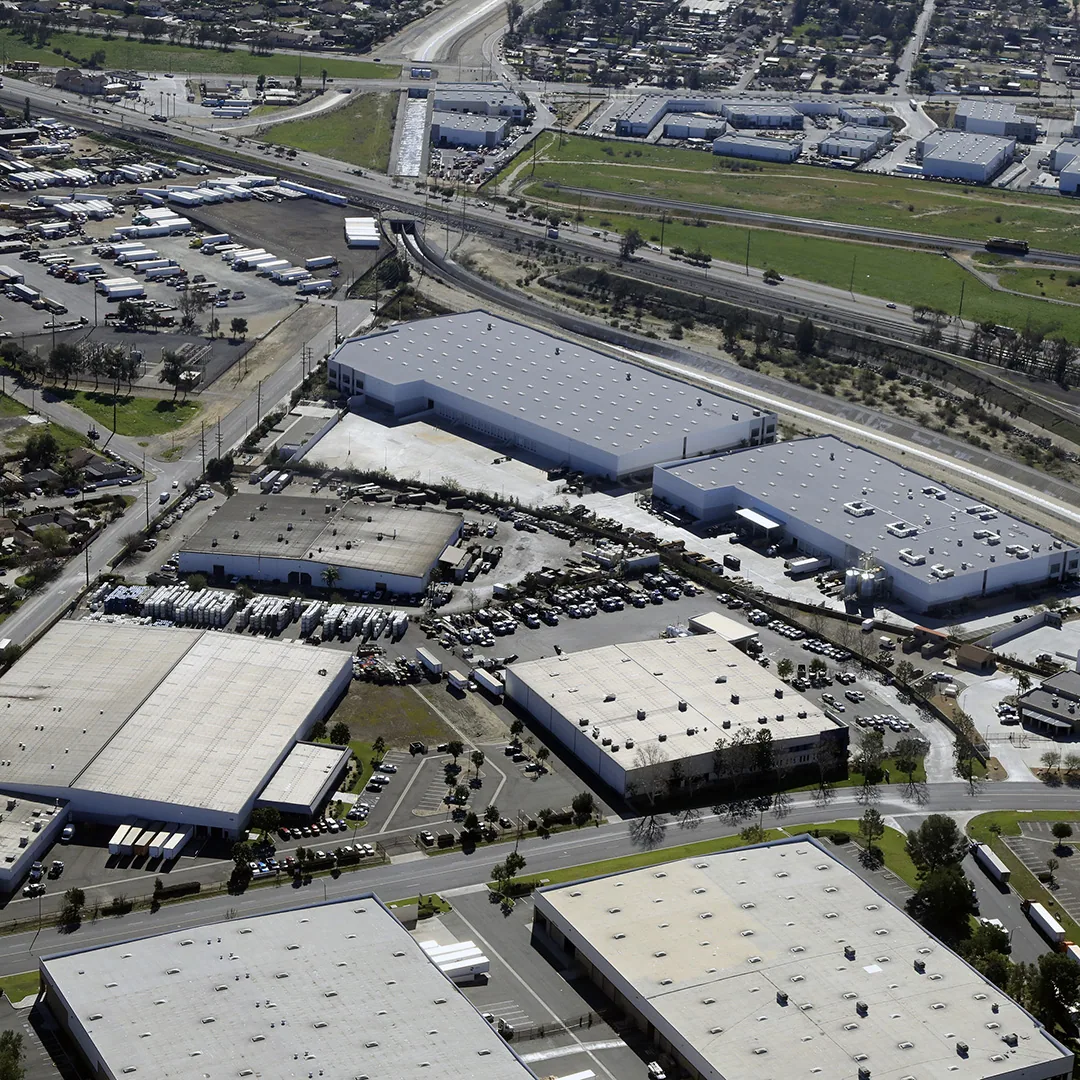
Fontana's Southwest and Jurupa industrial areas include trucking, warehousing, distribution, and vehicle storage. At an active site, loading access and overhead protection become part of the repair sequence, with the facility manager confirming vehicle routes, receiving hours, occupied areas, and work-zone limits.
Match the repair to the roof system
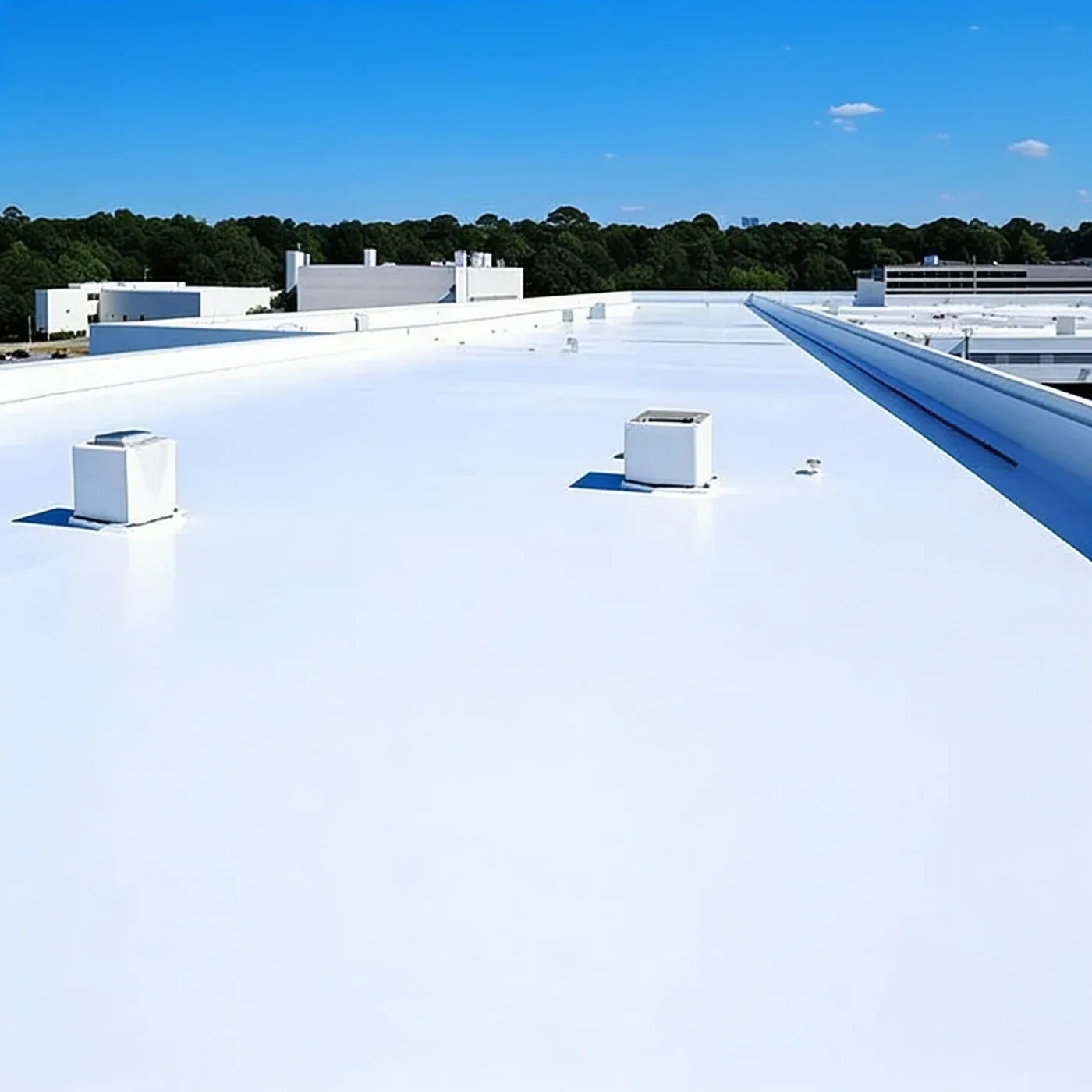
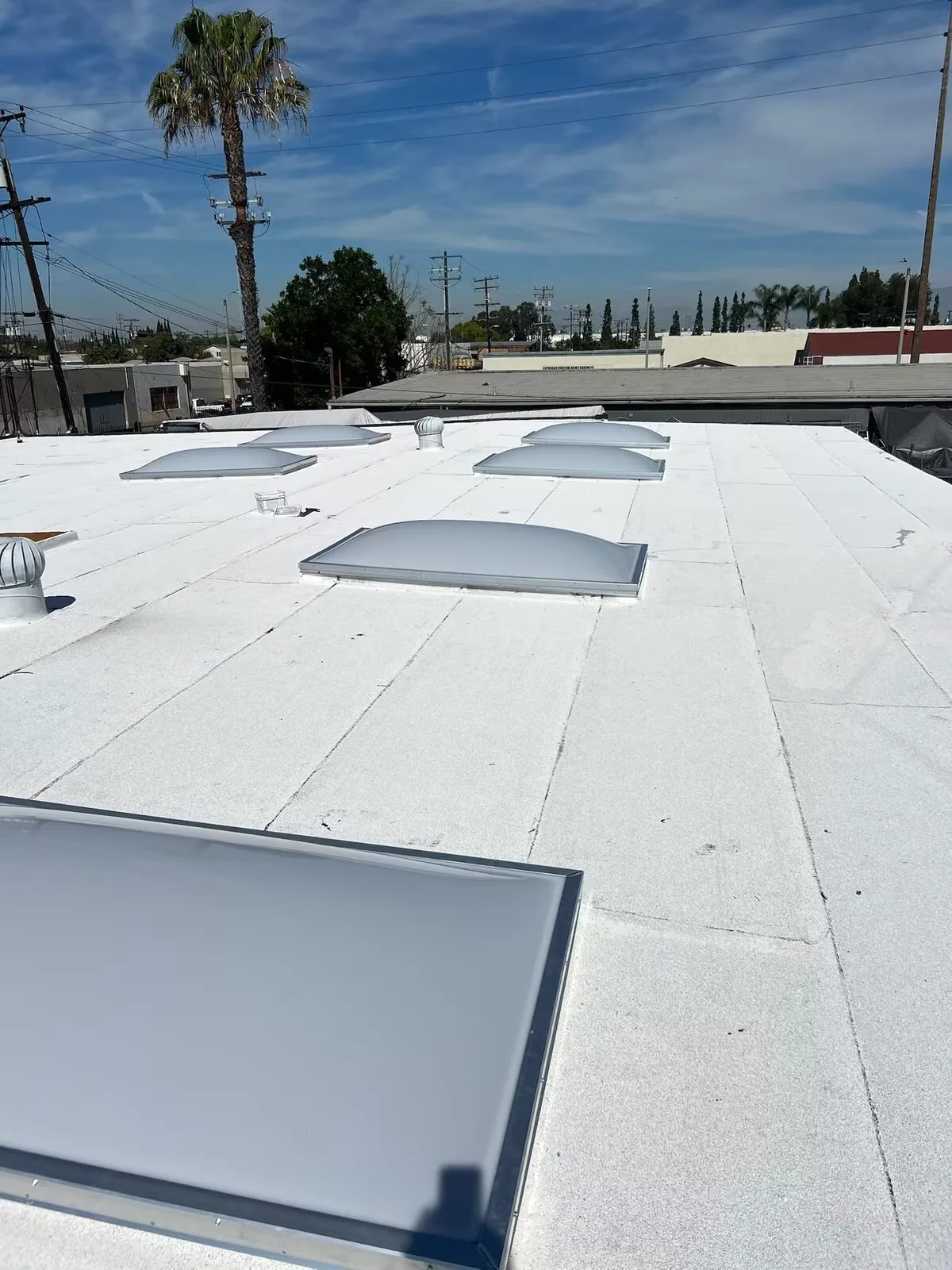
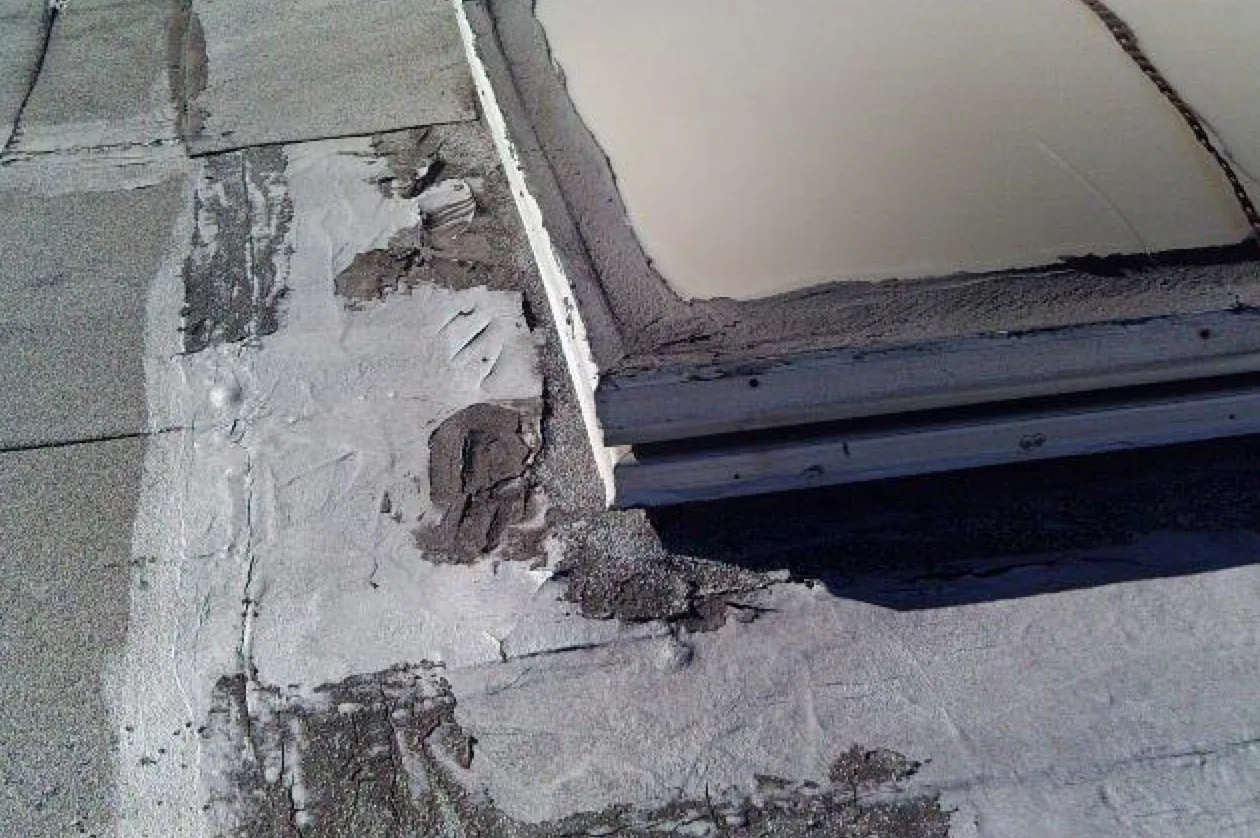
A patch must bond to the material beneath it. We identify whether the field is TPO, PVC, EPDM, modified bitumen, built-up roofing, metal, or a coating before selecting preparation and repair materials. Cleanliness, oxidation, reinforcement, and the condition of the receiving surface affect whether a seam can be welded, adhered, sealed, or mechanically secured. A generic sealant over an incompatible edge may hide an opening without restoring the assembly. We use a detail that matches the existing system or define the transition where a different material is needed.
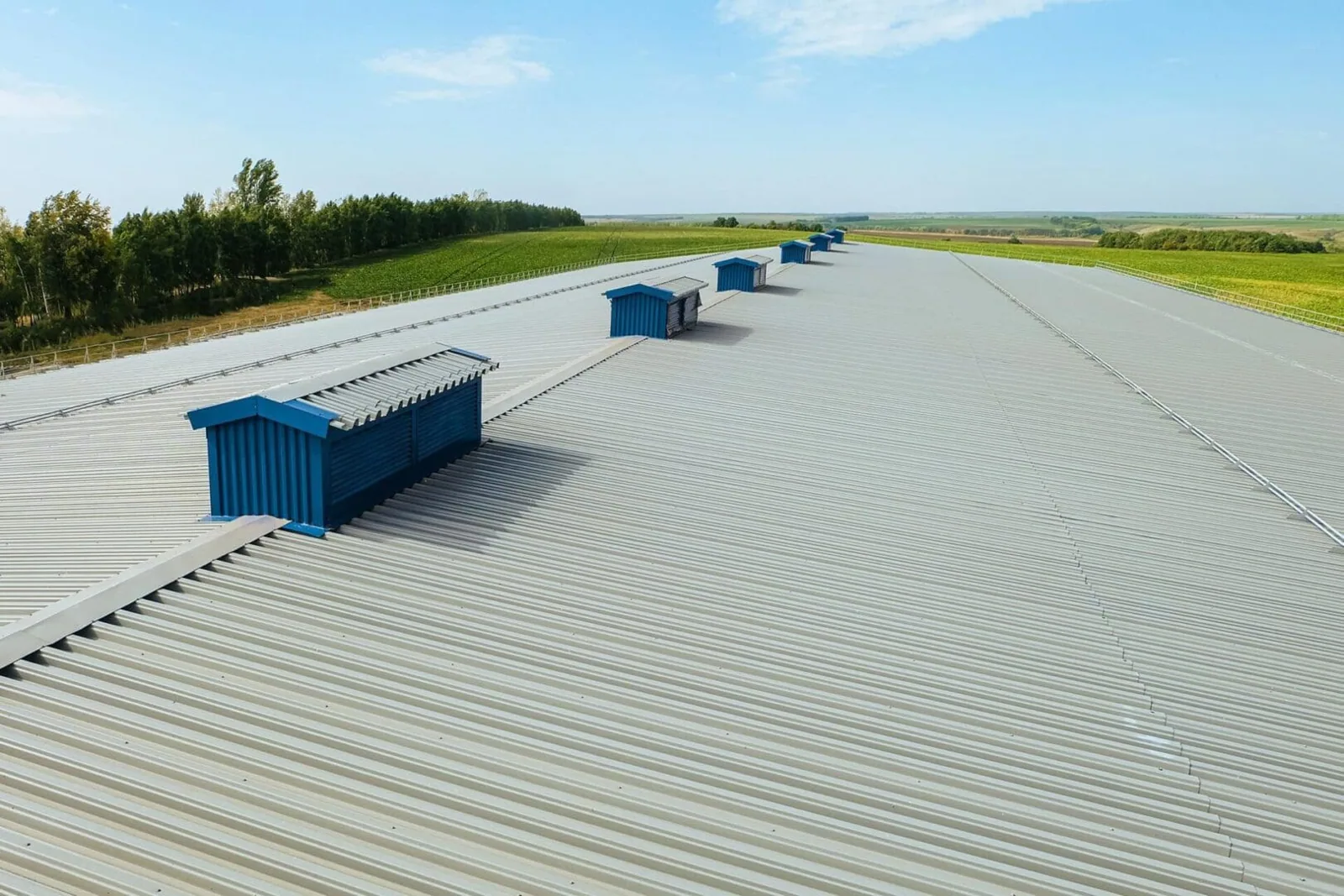
At a metal roof, movement, fasteners, panel laps, and flashing connections need their own checks. On a membrane roof, we examine the field seam and the way the repair ties into the surrounding sheet. If a coating is present, we verify adhesion and surface preparation. A TPO membrane repair and a standing-seam metal detail do not use the same procedure, even when both address a leak in the same building.
Follow the water before closing
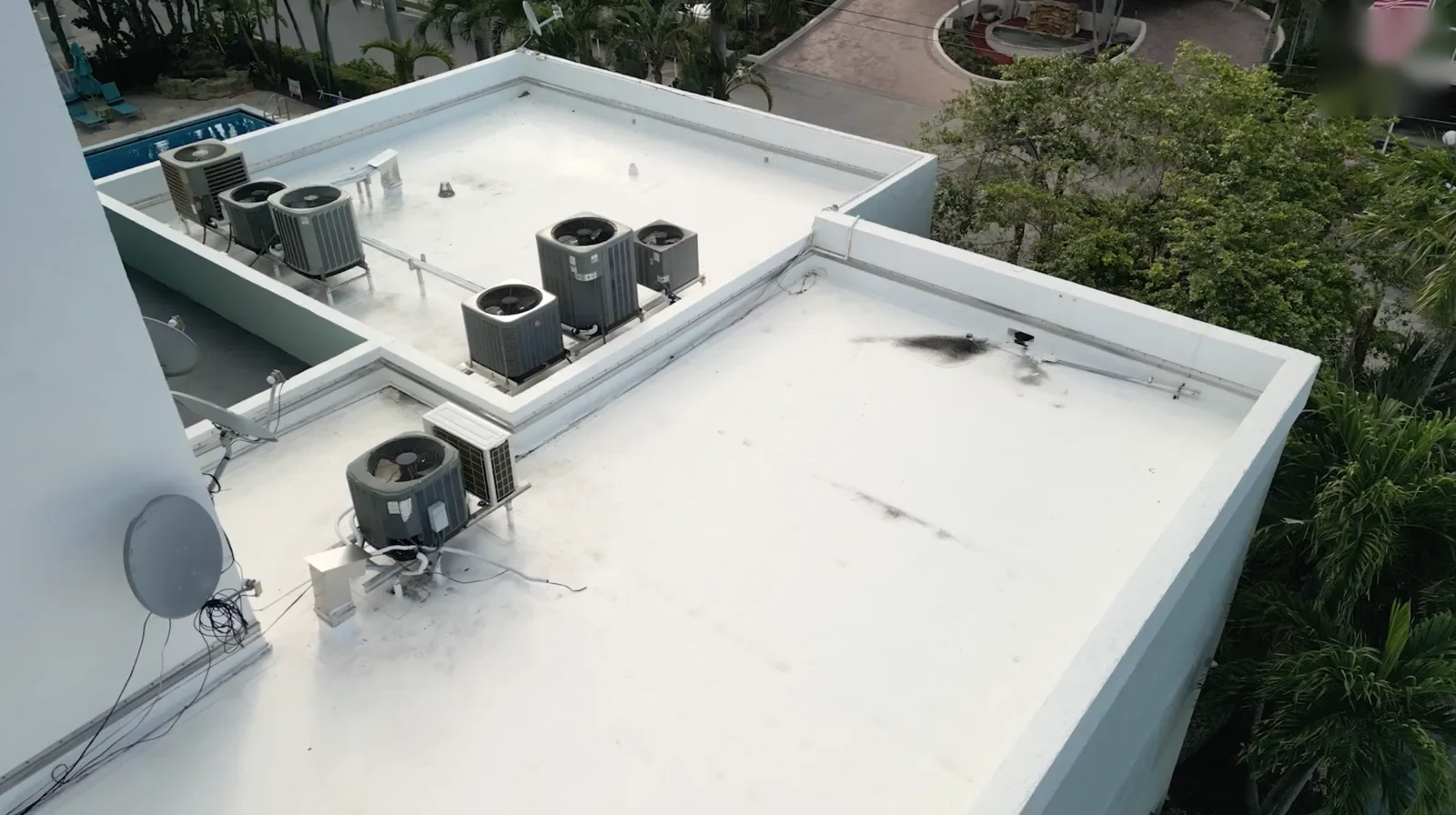
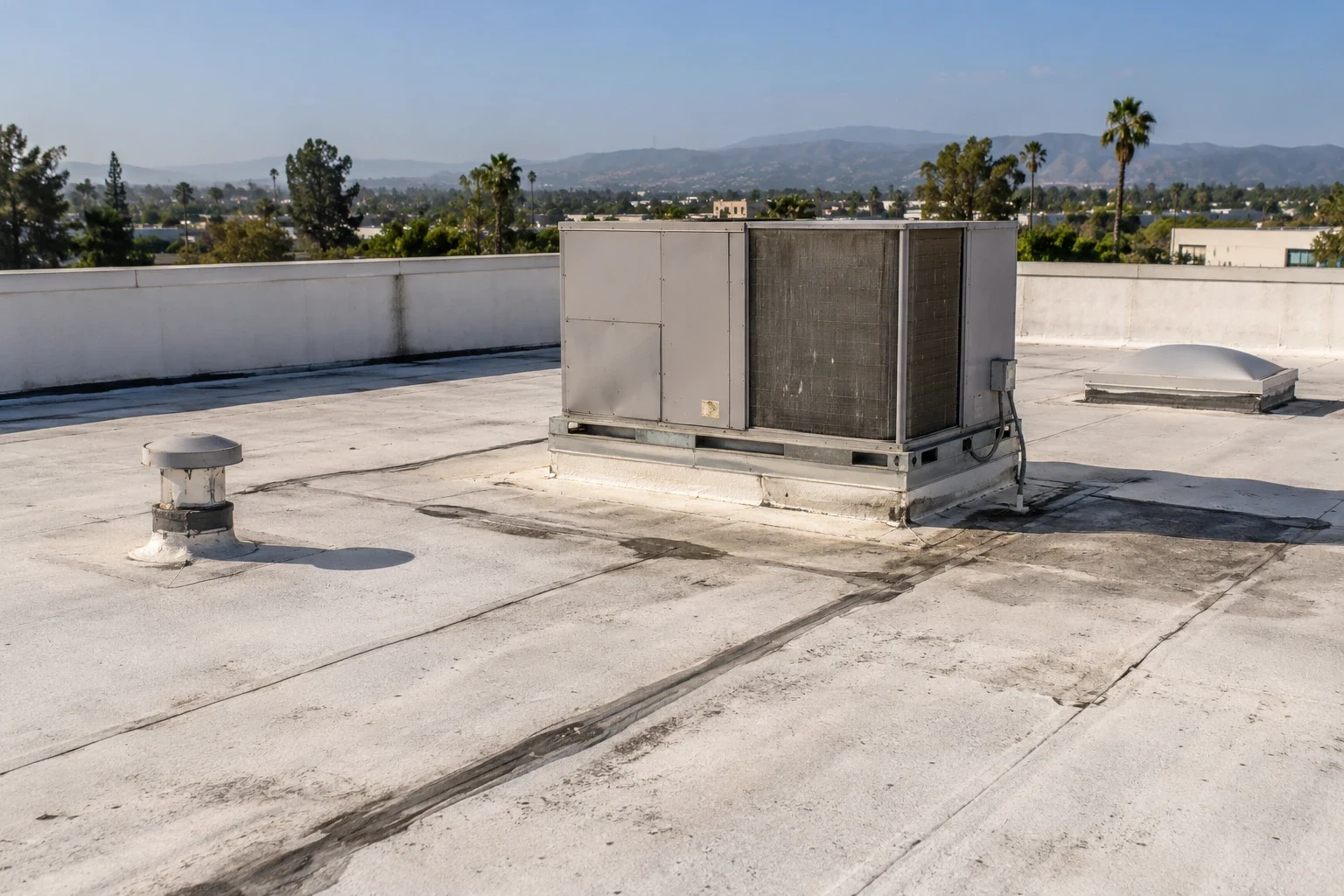
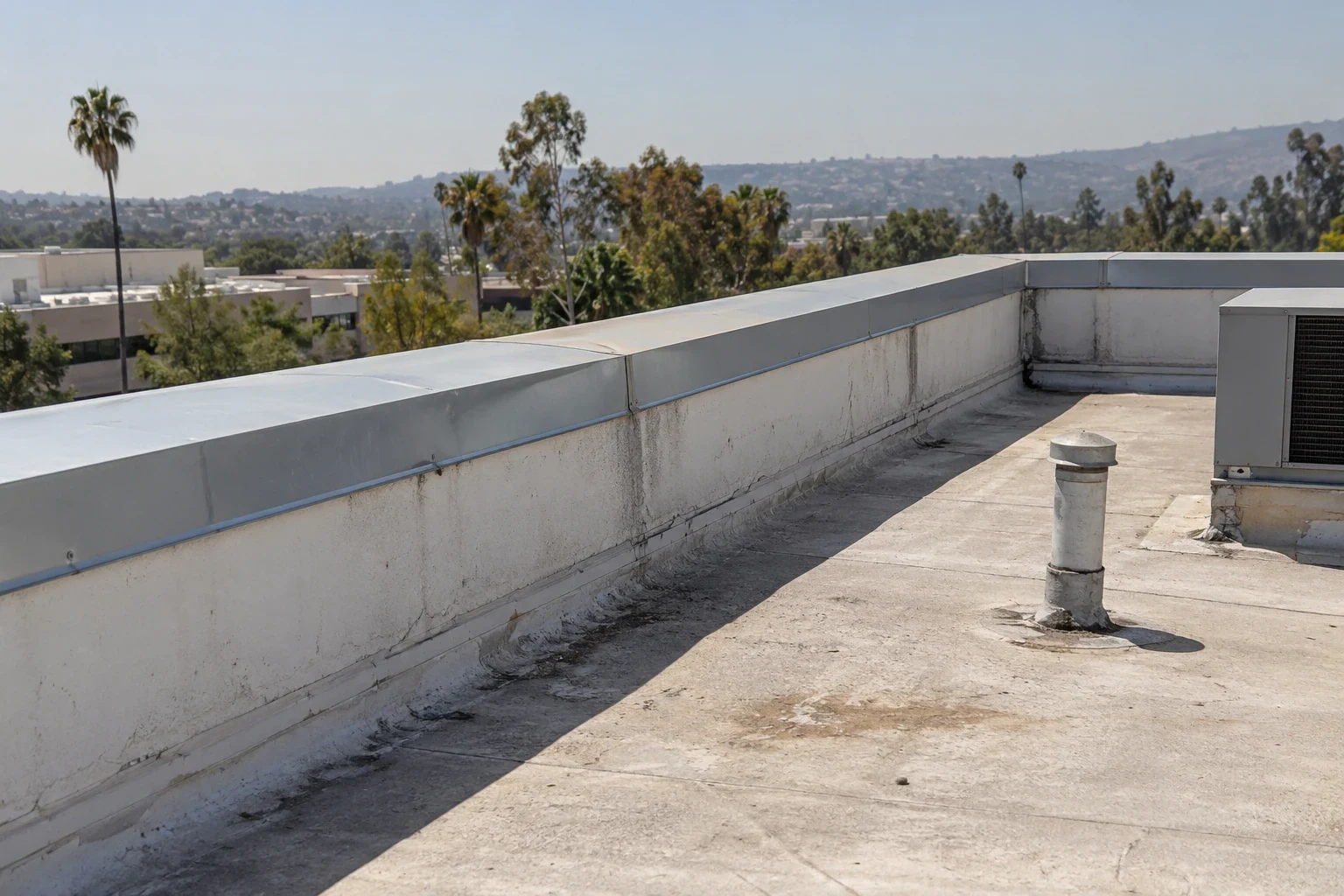
A repair at a seam will not solve water entering through a nearby curb or drain. We trace the path across the roof and check whether ponding, debris, a damaged overflow, or a wall transition is contributing. The scope separates the direct repair from drainage work or trade work that needs another owner. If the reported problem is below a unit, we inspect curb flashing and nearby penetrations before assuming the membrane field is responsible. We also confirm whether indoor ceiling or insulation work is part of the roofing scope.
Fontana’s climate is hot in summer, and cooler-season rain provides a different test of roof drainage. We compare the immediate forecast with surface condition and product application limits. Before leaving an open area, the crew applies temporary protection and checks that runoff can reach the intended outlet. The drain and scupper scope can define a separate correction when the outlet or overflow itself is part of the problem.
Protect operations below the repair
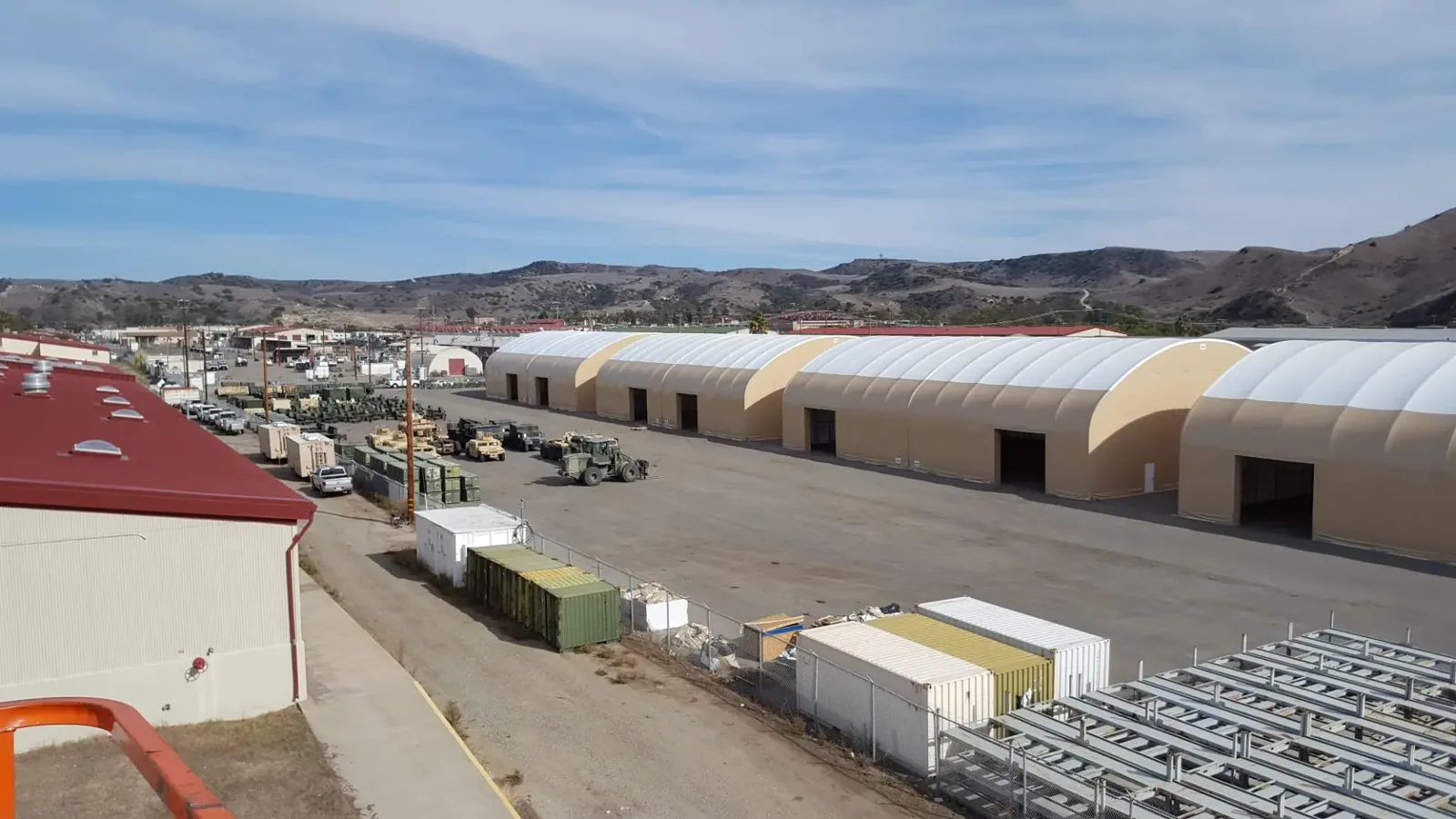
Repair access has to fit the building below. We coordinate ladders, lifts, deliveries, and debris removal with the contact who manages the property, then identify areas that must remain clear. In a distribution facility, a temporary no-entry zone can affect truck turns or a dock approach. In an office or healthcare setting, the affected ceiling area may need separate interior protection. The work plan states who provides that protection, which entrance stays open, and how the crew will reach the roof without crossing an active handling route.
The region’s road and rail links support goods movement through Fontana, but the property controls the gate, receiving hours, vehicle route, and staging instructions. An address in the Southwest Industrial Park or beside the Sierra Commercial Corridor gives us a regional orientation, not the facility’s specific loading rules. The occupied-building plan can stage work by zone and name the handoff to maintenance or mechanical trades. For locations in the Jurupa Industrial Park area, confirm actual receiving rules before a truck is dispatched.
Price the complete repair task
Labor depends on access, preparation, repair size, material compatibility, roof height, and how many details must be disturbed to reach sound material. The estimate should also state temporary protection, testing, cleanup, and the limits of the repair. If removal exposes wet insulation or a damaged deck, we stop at the approved boundary, document the finding, and request direction before adding work. That keeps a concealed condition from becoming an automatic change in scope. The owner can decide whether to authorize the added quantity, defer it, or compare a wider option.
We state when work can begin, which access window is needed, and how weather affects the application. Summer heat can change the hours suited to some products, while a wind event can affect temporary protection and rooftop materials. A condition report preserves photographs and locations for later review. It should distinguish a repaired detail from nearby areas that were inspected but not included in the agreed work.
Leave a repair record the next crew can use
After the repair, we record the preparation, material, fasteners or seams, tie-in, and final condition of the work zone. The owner receives photographs and a marked roof location, plus any maintenance or observation item that remains. If the building has other open defects, the closeout lists them separately rather than implying they were included. That record helps facilities staff direct future service and compare new water reports with the repaired section.
For a Fontana property, send the leak location, recent rain or operating circumstances, access rules, assembly records, and trade contacts. If water is entering now, request urgent roof response so immediate protection can be considered while the permanent repair is scoped. For repeated defects or broader moisture, compare the recover assessment or a full replacement comparison with the repair locations already identified.
Frequently Asked Questions
Can you repair only the area where water appeared inside?
The interior mark helps us orient the inspection, but water may travel through the roof assembly. We check nearby seams, penetrations, curbs, drains, and wall transitions before setting the repair boundary.
Will sealant work on any membrane or metal roof?
No. The repair material and preparation must match the existing system and receiving surface. We identify the roof type and test or inspect compatibility where needed before specifying the tie-in.
What happens if the repair opening shows wet insulation?
We document the location and extent that can be observed, then follow the approval process in the scope before expanding removal. Added work is measured and explained separately.
Can repair work be scheduled around warehouse deliveries?
Yes. The owner can identify receiving hours, truck paths, staging limits, and zones that cannot close. We use those constraints to set access, delivery sequence, and end-of-shift closure.
How do I know whether repeated repairs justify replacement?
We compare repair locations, moisture findings, attachment, deck condition, and drainage as a whole. The report states which areas are supported for repair and which findings warrant a recover or full replacement comparison.