Downtown Fontana
Plan commercial roof repair, replacement, and maintenance in Downtown Fontana, CA, with access, drainage, occupied-site phasing, and work zones defined.
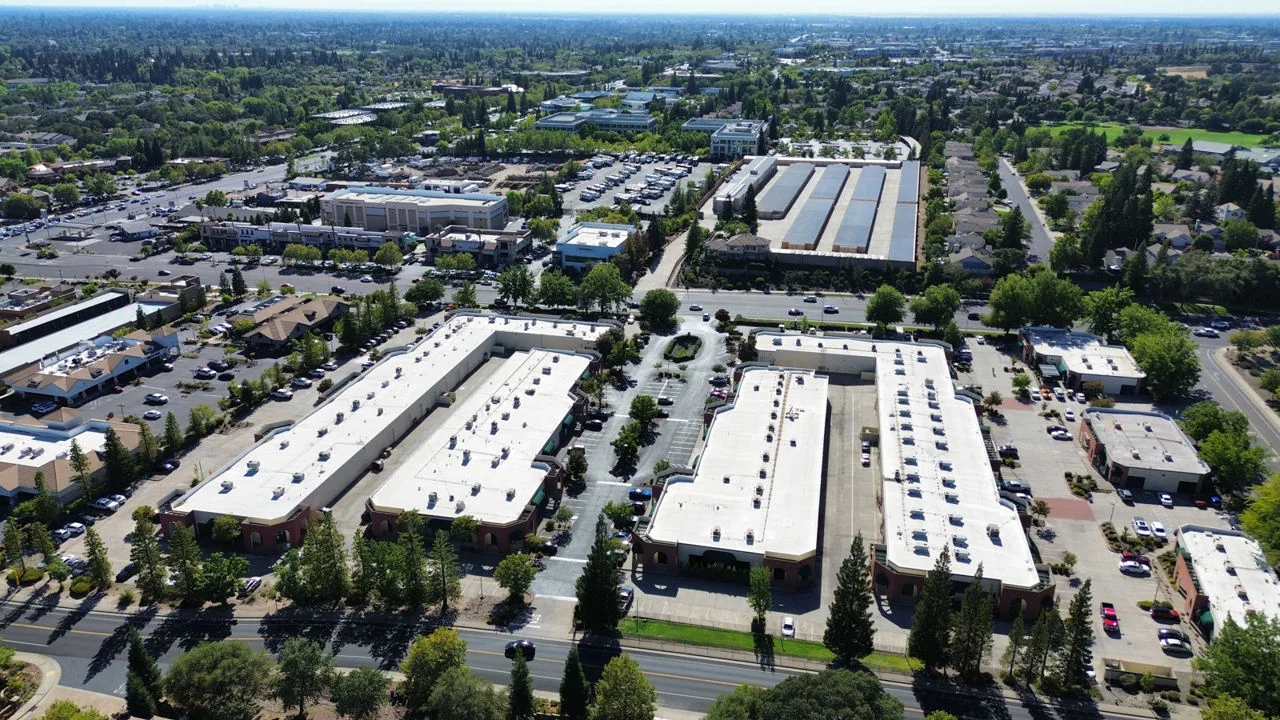
Foothill Boulevard, Sierra Avenue, and Valley Boulevard serve commercial corridors in Downtown Fontana, where roof work must fit traffic, deliveries, and occupied buildings. We inspect the roof assembly and operating constraints before setting a repair or replacement sequence in Fontana, CA. The route plan, roof access, and close-in boundary are part of the scope so a work zone can be understood before material is delivered.
Commercial properties along these corridors connect with regional routes I-10, I-15, I-210, and SR-60. Traffic, loading, and frontage access can affect delivery timing, so we inspect each building's drainage, equipment interfaces, and approved site route before setting the work sequence.
Plan access around local operations
A roof project near an active commercial corridor may share curbside space, parking, delivery lanes, or pedestrian access with daily business. We confirm the approved delivery hours, truck approach, unloading area, hoist location, and alternate path for customers or staff before setting a sequence. The property controls its own access rules; our work plan shows how roof material and debris move through the designated route.
On an occupied building, the first roof opening should match the crew's ability to complete and protect that area within the shift. We identify interior zones below the work, sensitive equipment, ventilation requirements, and any temporary closure for a service entrance. If roof access changes during the day, the owner receives a handoff with the affected path and time window. That keeps the roof scope connected to how the building stays open.
A phased reroofing plan for an occupied building can set the sequence across suites or operating areas. At properties extending toward the Sierra commercial corridor, we still base staging on the individual site's approved route and frontage conditions.
Separate the leak from its cause
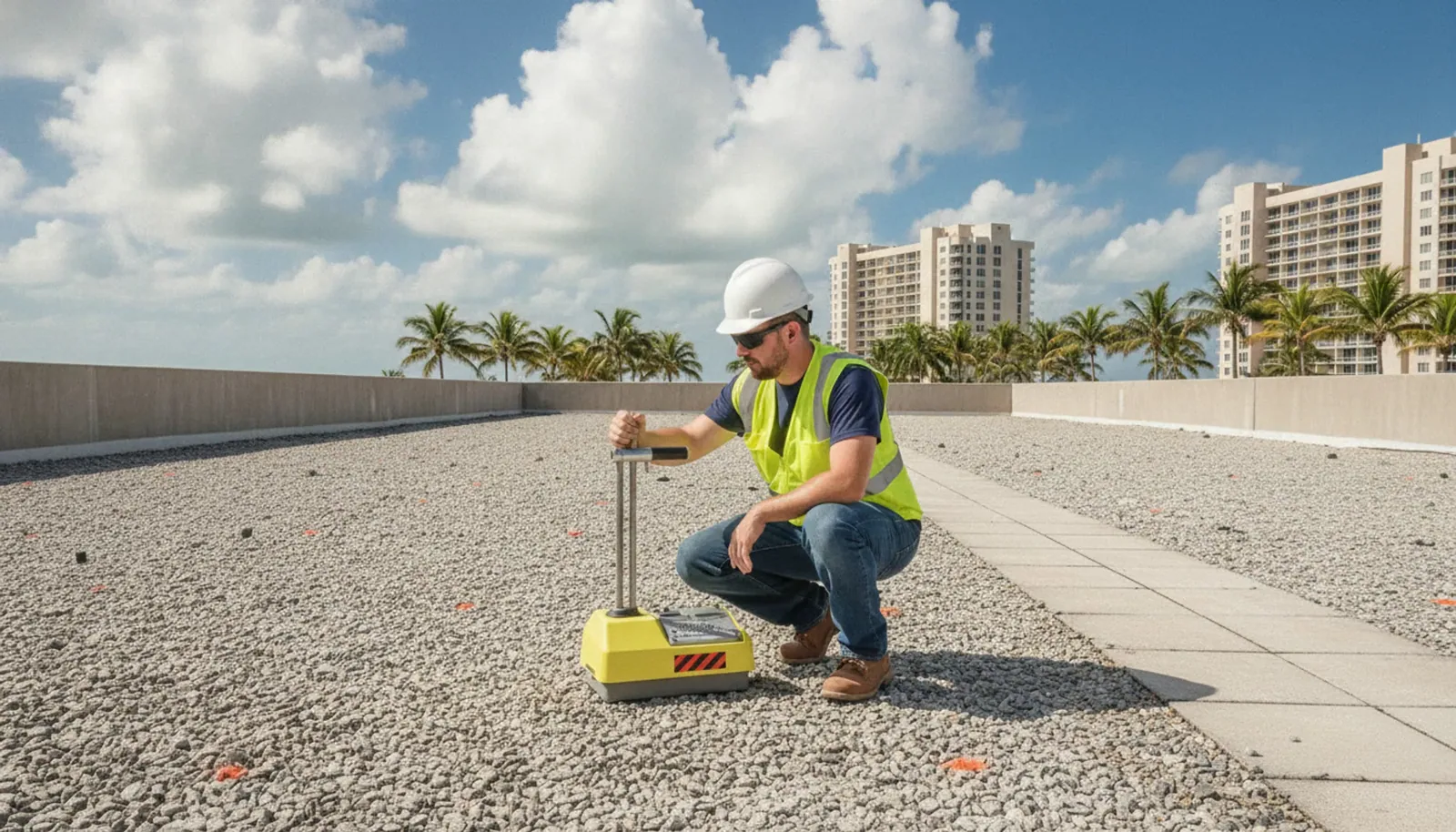
Water can travel beneath roofing before it appears on a ceiling, so an interior stain does not establish where the roof failed. We check membrane seams, flashing, drains, parapets, curbs, and prior patches along the likely route. Test openings or moisture scans can help locate wet insulation when visual inspection is not enough. Findings are mapped to roof zones, with untested areas kept separate from confirmed conditions.
For an isolated defect, a commercial roof repair with a defined tie-in can correct the sheet, flashing, or edge condition and describe what remains. If water entry occurs in different areas or moisture has spread through the assembly, a larger scope may be more appropriate. Our roof inspection with photographs and mapped findings documents the starting condition and the next decision, while infrared moisture testing can identify locations for confirmation.
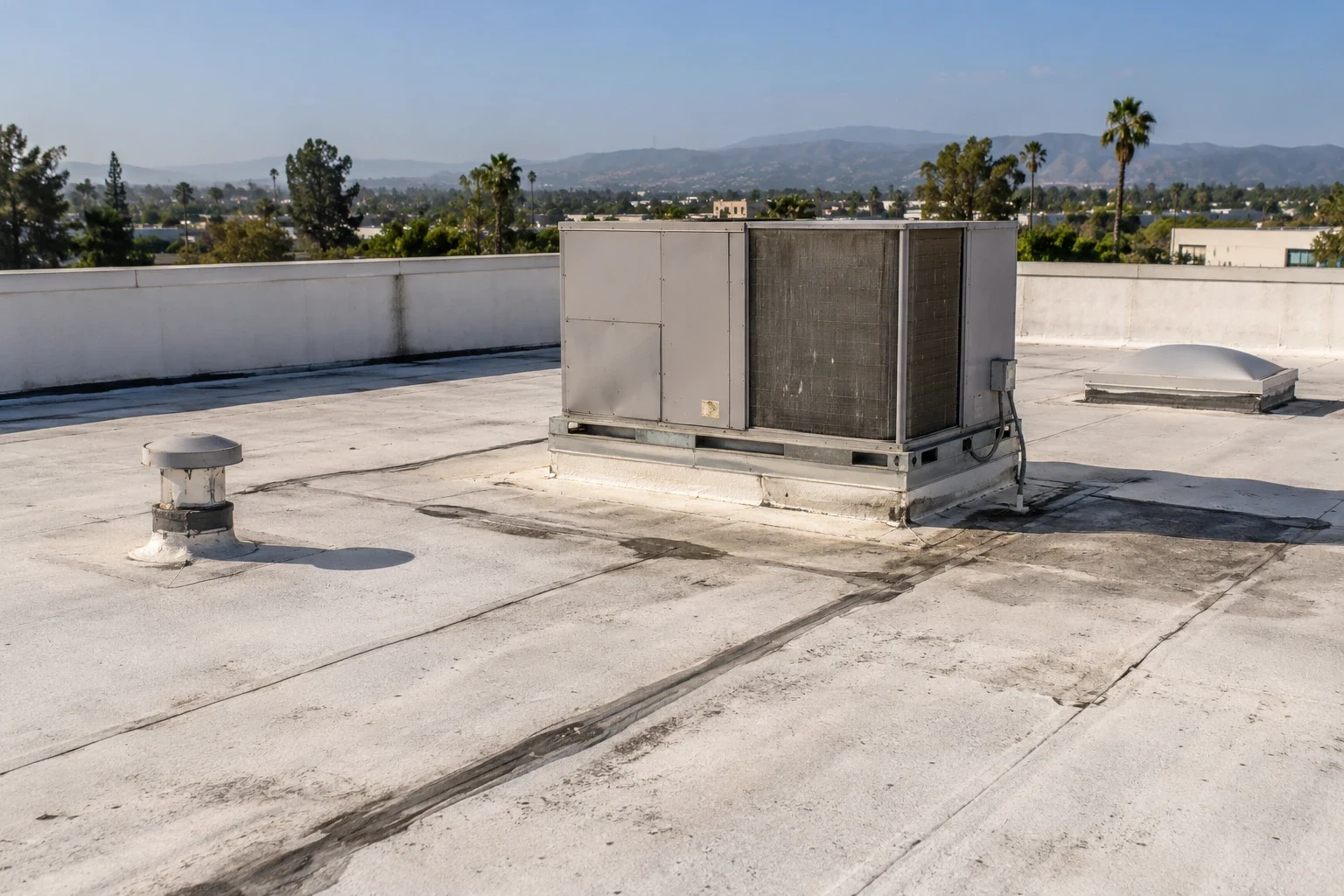
Maintenance also includes outlets and perimeter details. Debris or a damaged drain connection can keep water on a roof even after a membrane patch. We inspect the water path from field to outlet and identify whether plumbing work falls outside the roofing quantity. A small correction can be scheduled with larger work when access is already arranged.
Set a complete replacement boundary
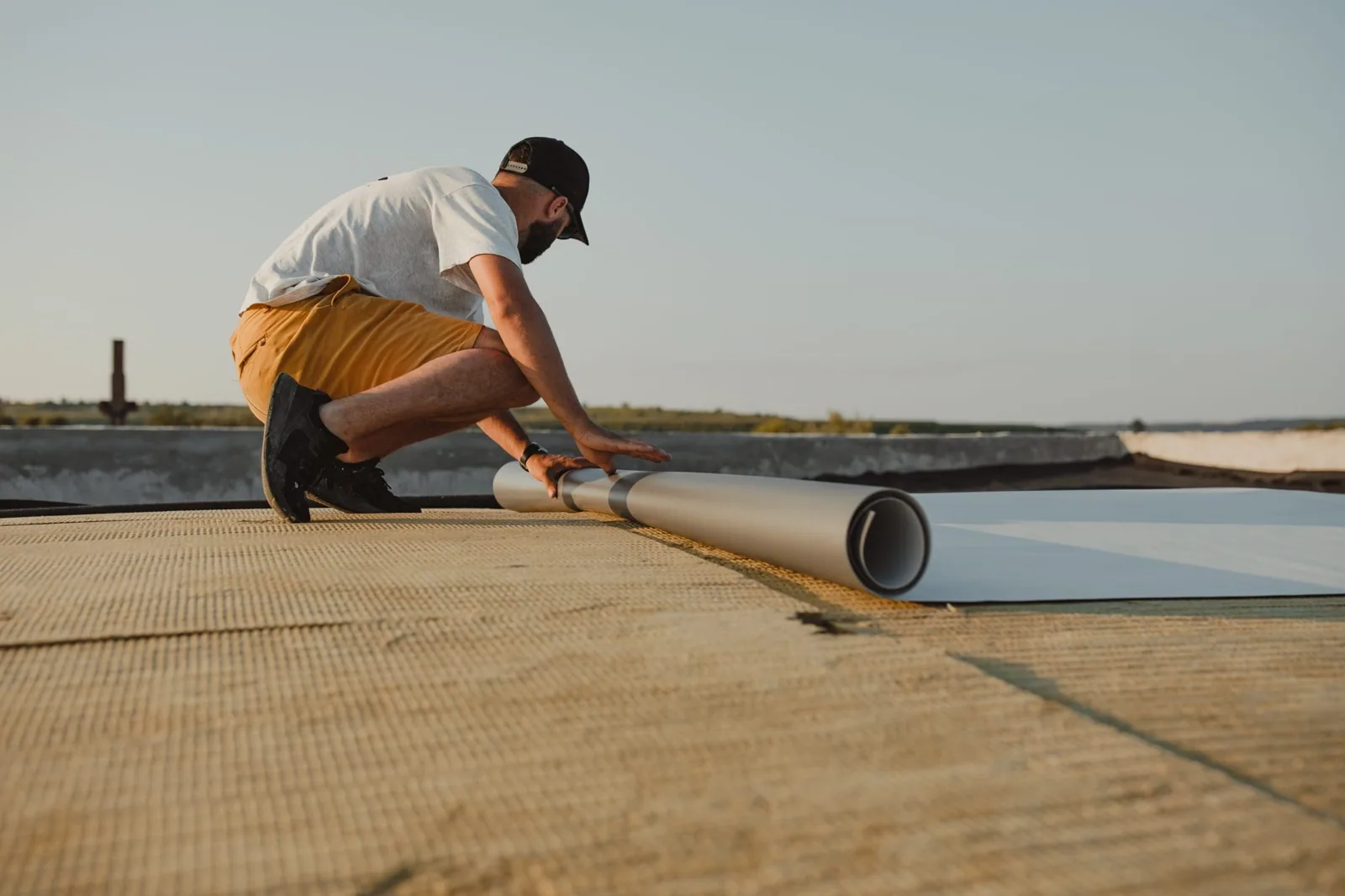
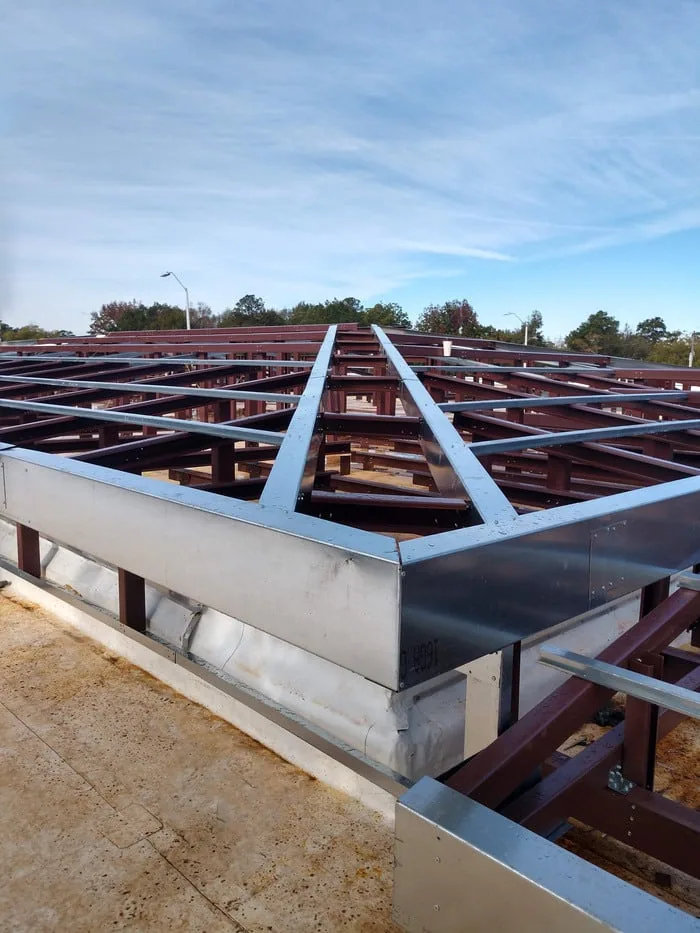
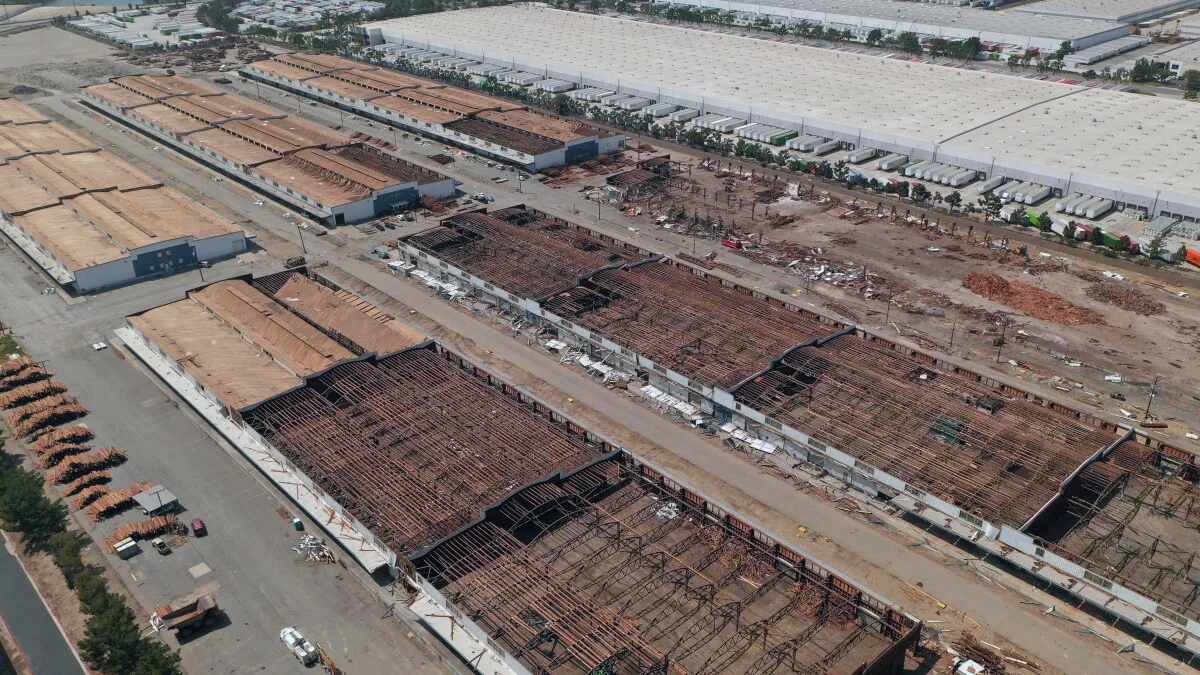
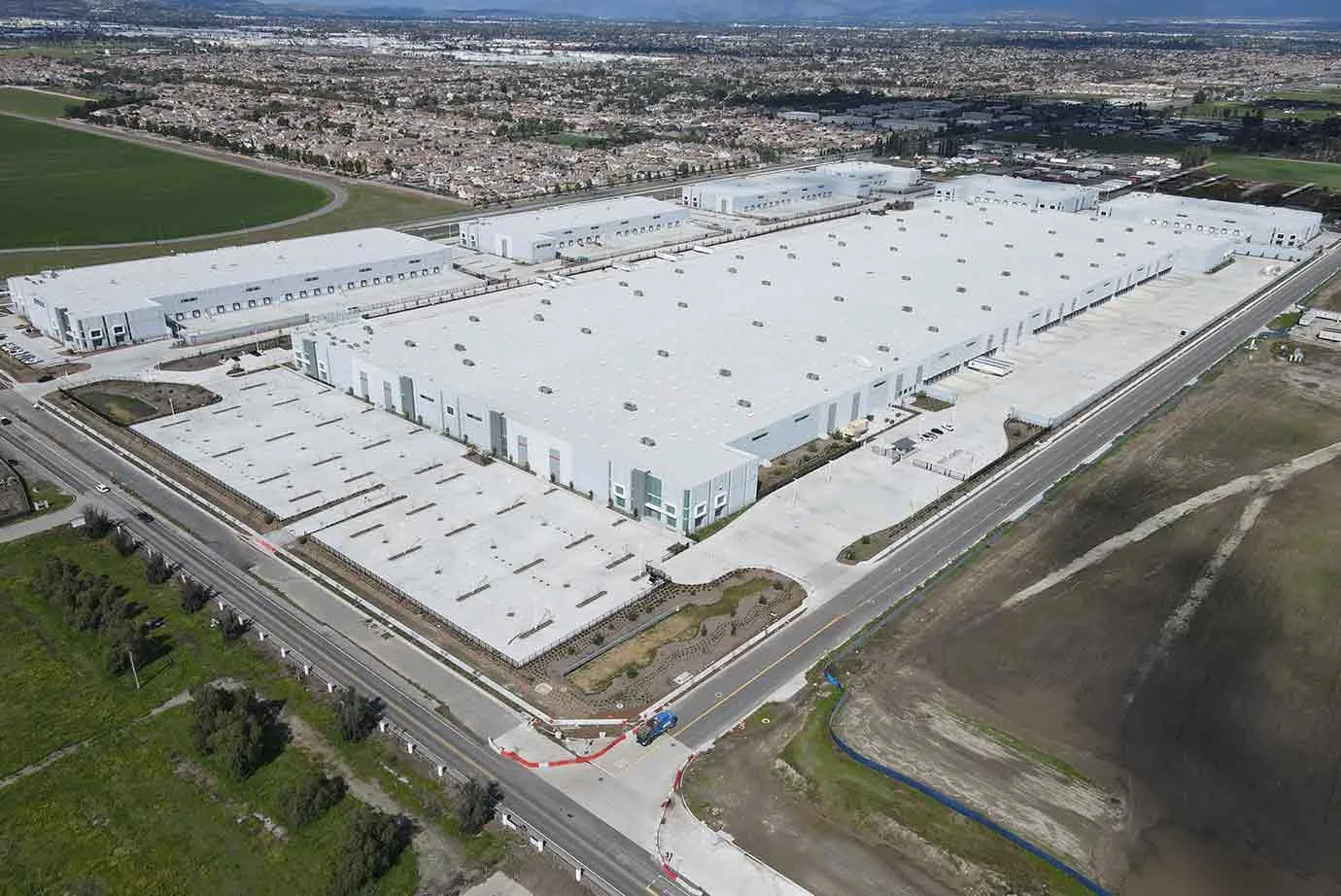
A replacement scope identifies which existing layers come off, what deck condition is expected, and how new insulation and membrane meet curbs, walls, and drains. We review roof height at doors and equipment, the condition of the substrate where accessible, and any assembly that was added during earlier repairs. Selective removal may be appropriate in one zone while a different section needs full replacement. The estimate states those boundaries rather than applying a uniform assumption to the entire roof.
Drainage design remains part of the assembly. Added insulation can change the finished height of a drain or parapet, and a roof area that already holds water needs a separate slope decision. A replacement plan with specified tear-off limits describes the membrane, insulation, flashings, and details included. When a property needs new drain or overflow work, drain and scupper coordination shows where the roofing connection ends and plumbing work begins.
Delivery, noise, weather protection, and debris removal are sequenced with the operating schedule. Before mobilization, we establish the first work zone, daily close-in detail, and the handoff if concealed damage changes the quantity. That lets the owner make a decision with a clear scope and timing effect.
Choose the work window
Downtown Fontana summer forecasts often include highs above 100 degrees and occasional extreme-heat advisories. Sun-exposed work surfaces can affect safe access and material handling. We consider current conditions when planning lifts, inspection time, and installation sequence. A planned pause still needs a protected roof edge and a clear route to an outlet.
Rain is concentrated in cooler months in this regional climate. Before removing roofing, we confirm the daily opening limit, temporary cover, and tie-in detail for a weather change. If rain enters the forecast, the work zone can be reduced so the crew can close exposed areas in time. The owner knows which roof section is active and what protection will remain by shift end.
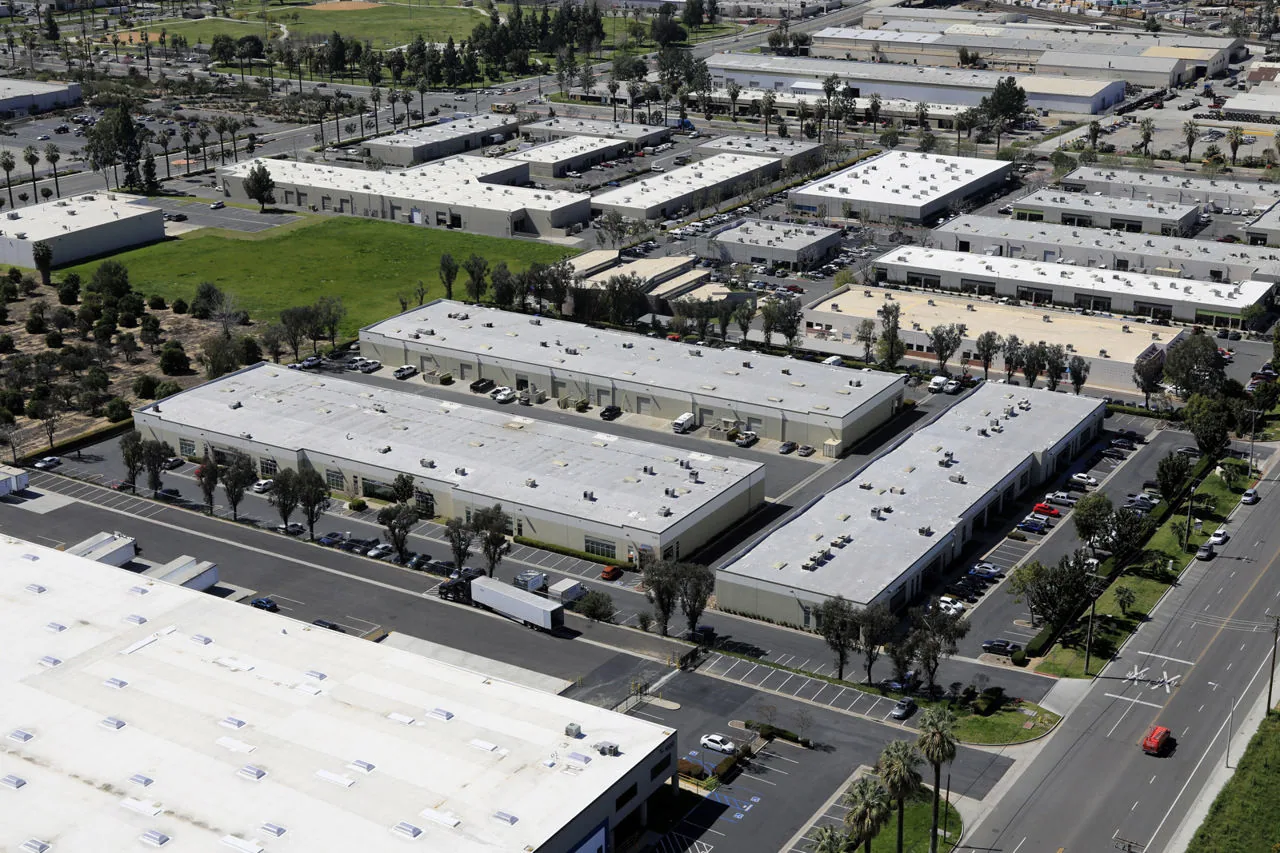
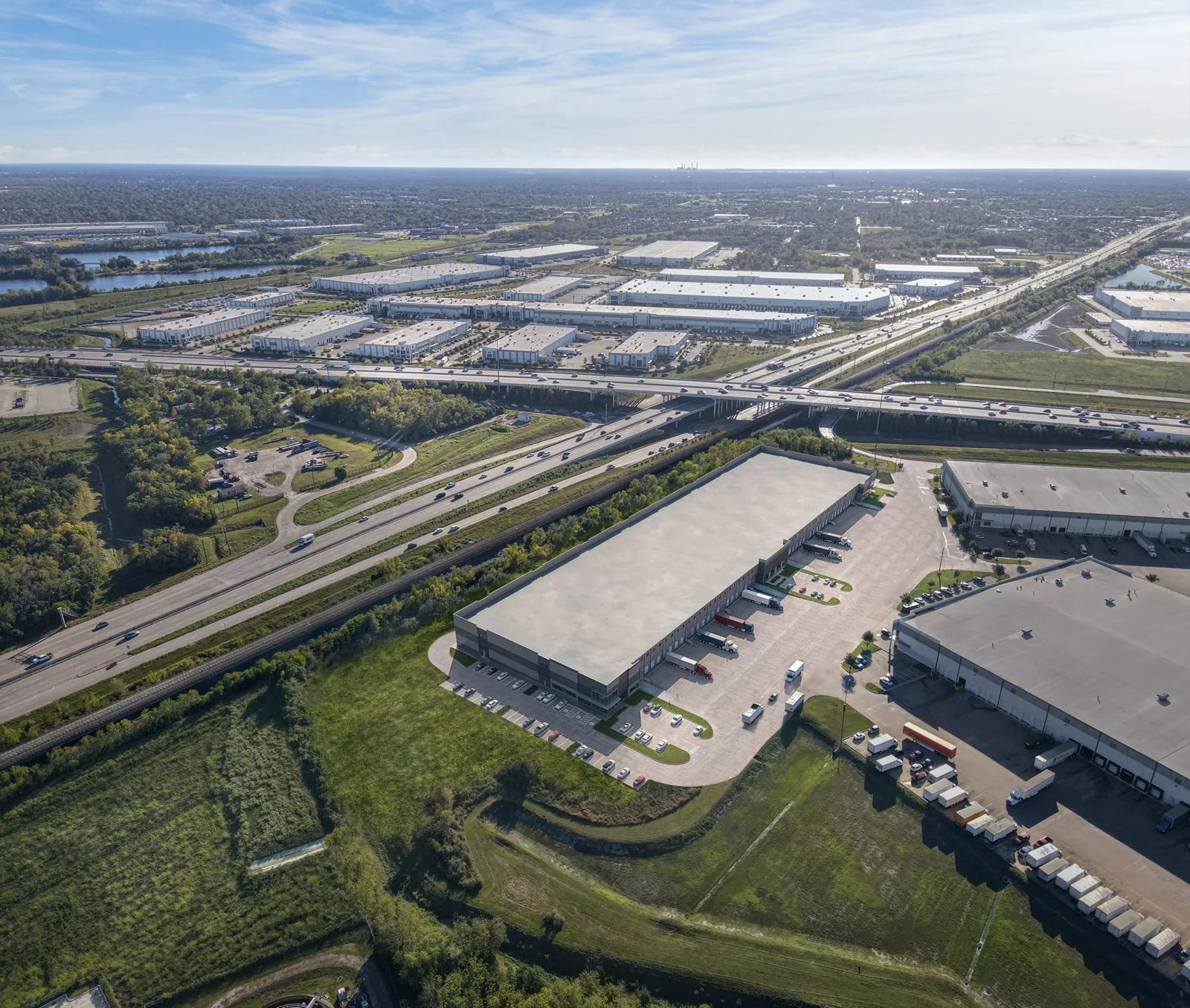
Nearby industrial districts add a second scheduling factor. The Southwest Industrial Park includes trucking and distribution uses, while Downtown Fontana's commercial corridors require their own delivery and pedestrian coordination. We confirm operating requirements for each property rather than applying one staging plan across the city.
Leave a useful roof record
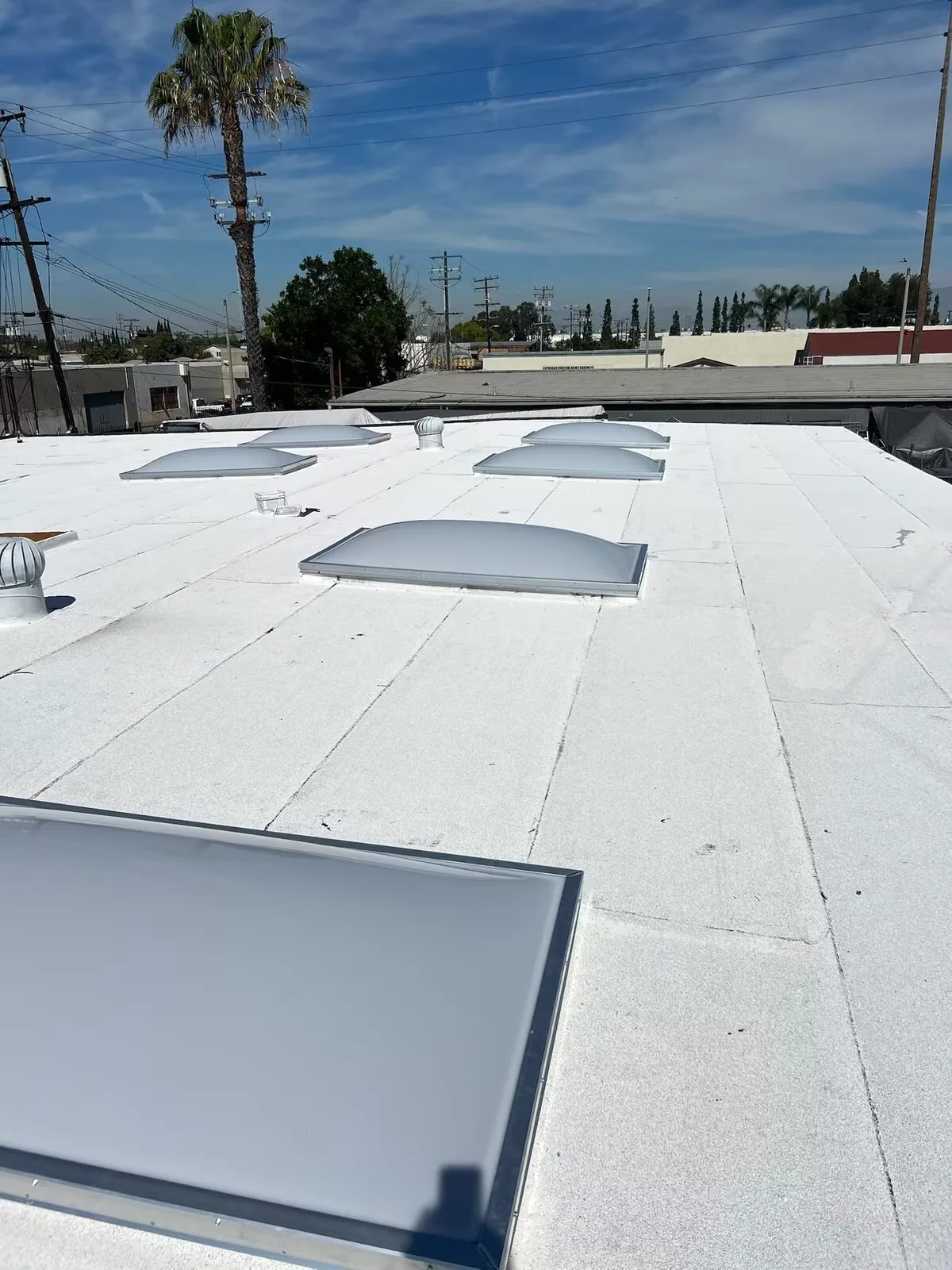
At closeout, we record repaired or replaced areas, installed layers, checked flashings, drain connections, and any condition outside the approved scope. Photos and marked roof zones help the facilities contact understand what changed and where future inspection should return. Any unresolved item is described with its location and the next access or trade decision it requires.
A property manager overseeing several corridor buildings can use consistent zone labels and closeout details to compare conditions without assuming each roof needs the same project. Downtown Fontana's storefronts, offices, and other commercial properties can have different access windows and assemblies, so the record remains tied to the individual building. We coordinate maintenance with the property's calendar and keep routes clear for service teams.
For a site near Sierra Avenue, Valley Boulevard, or Foothill Boulevard, the local street context helps identify delivery and frontage needs. The roof inspection still determines the assembly, repair quantity, and work sequence. Owners can provide available roof plans, leak locations, business hours, and delivery rules before the visit so the inspection can focus on the relevant areas.
Frequently Asked Questions
Do you serve commercial buildings along Sierra Avenue and Foothill Boulevard?
Yes. We coordinate inspections and roof work in Downtown Fontana's commercial corridors, then confirm the property's access, delivery, and operating conditions. An inspection determines the roof system, condition, and appropriate scope.
Can roof replacement be phased while businesses remain open?
Often, when access and building conditions allow work to be divided into manageable areas. We plan roof openings, interior protection, deliveries, and customer routes with the owner. Each phase includes an end-of-shift weather closure and a handoff for any area affected by noise or access changes.
How do you trace an active leak in a Downtown Fontana building?
We inspect the roof above and around the reported interior condition, including seams, penetrations, flashing, drains, and past repairs. Moisture testing or a controlled opening may be needed to verify concealed conditions. The report links findings to specific zones and separates confirmed defects from areas that need additional testing.
Does summer heat change commercial roof repair timing?
High surface temperatures can change safe access and the handling or cure conditions for roofing materials. We review the current forecast and site conditions, then set the work window and protection plan. A smaller opening may be scheduled when completing a broad area before the heat window closes is not practical.