Commercial Roof Flashing Failure Repair
Repair Fontana roof flashing at curbs, walls, penetrations, or edges with compatible materials, safe access, a defined tie-in, and documented closeout.
A warehouse loading lane cannot be blocked while a failed curb flashing is being opened and repaired. The access plan has to protect truck movement and provide a stable route to the detail. We inspect the flashing, adjoining membrane or metal, and visible substrate, then determine how far the repair can extend without leaving a weak tie-in. In Fontana, this work often intersects with warehouse, manufacturing, healthcare, and retail operations, each with a different access window. The repair scope names the exact detail and boundary, not just the general roof area.
The water path starts at a detail
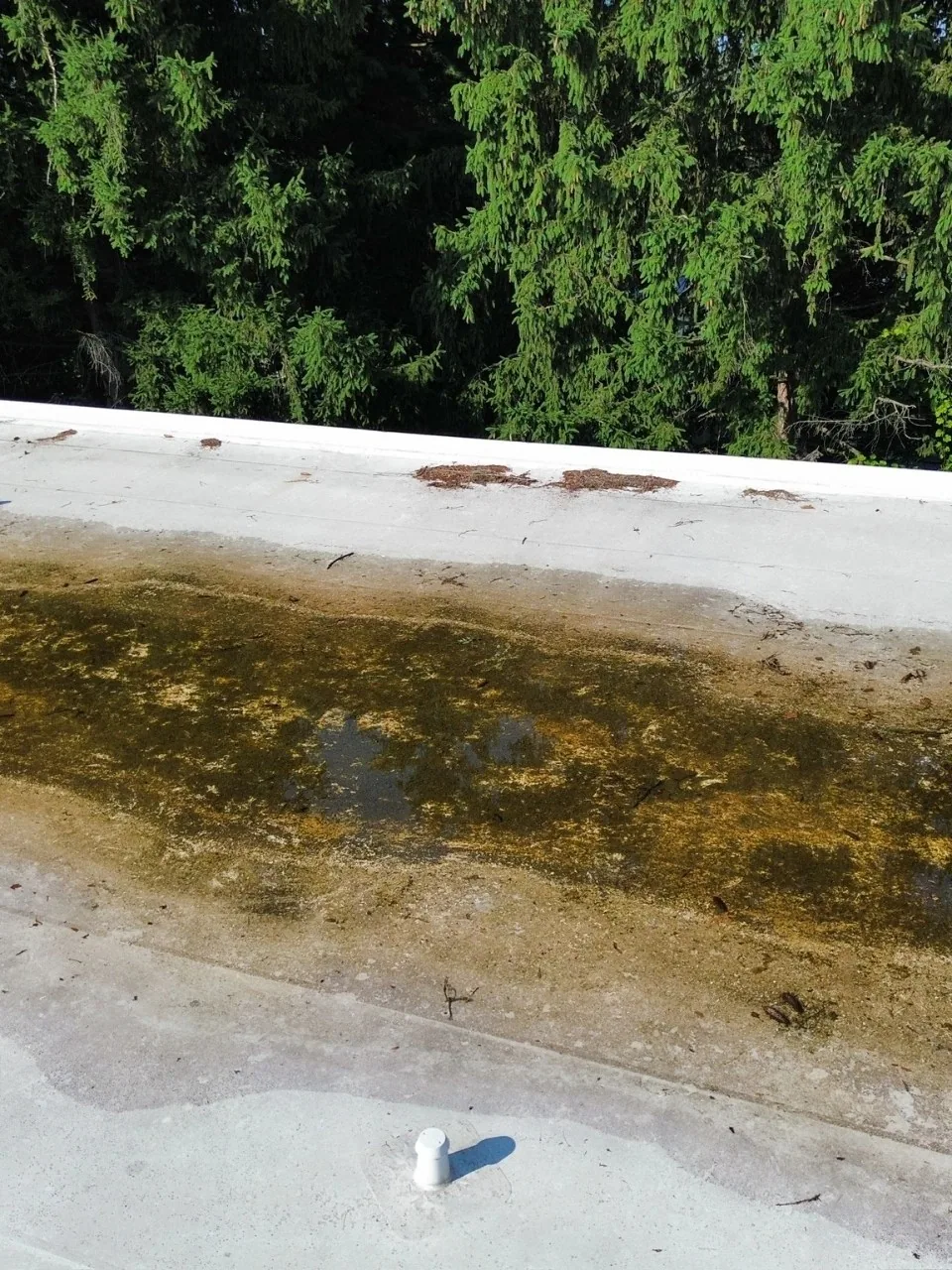
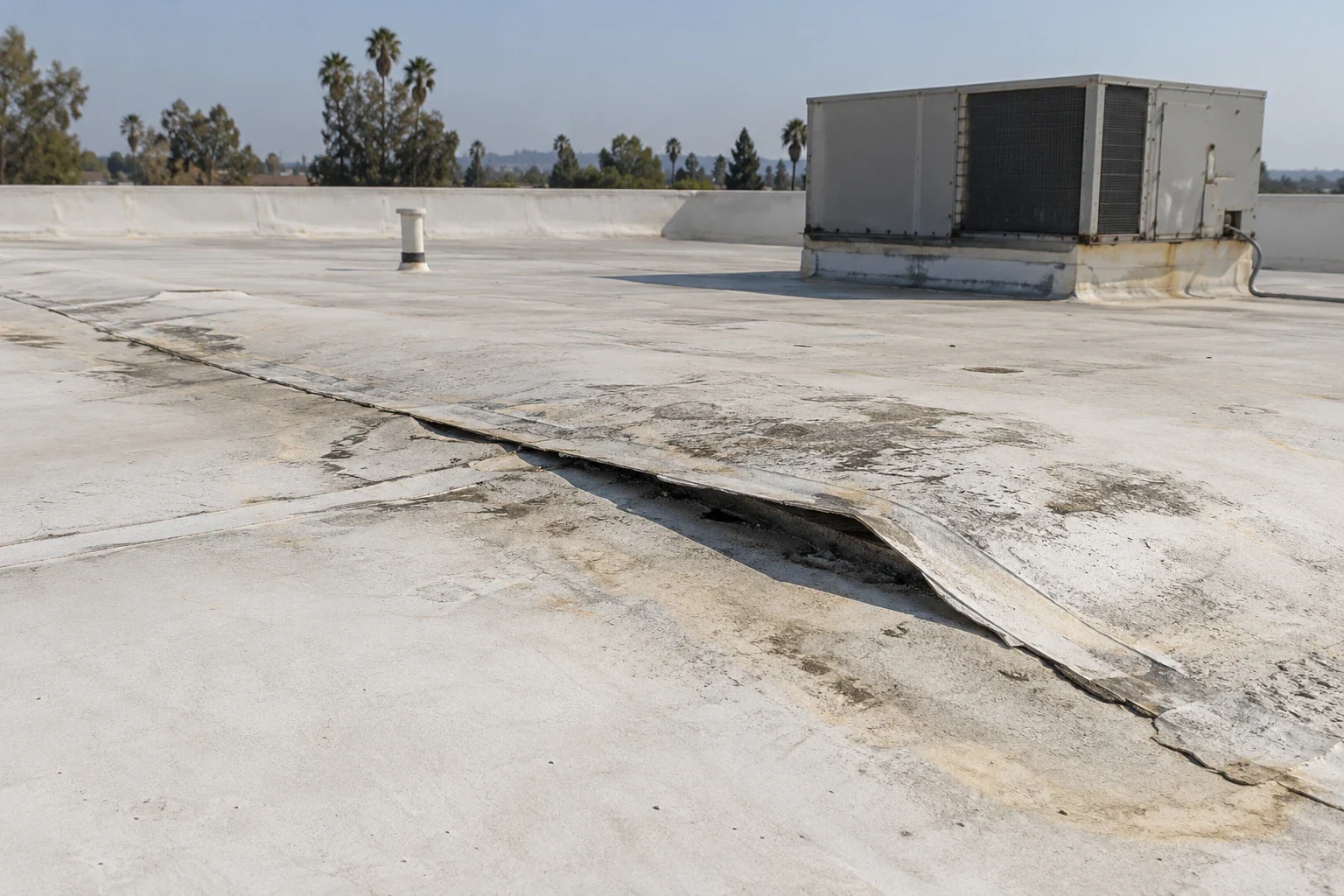
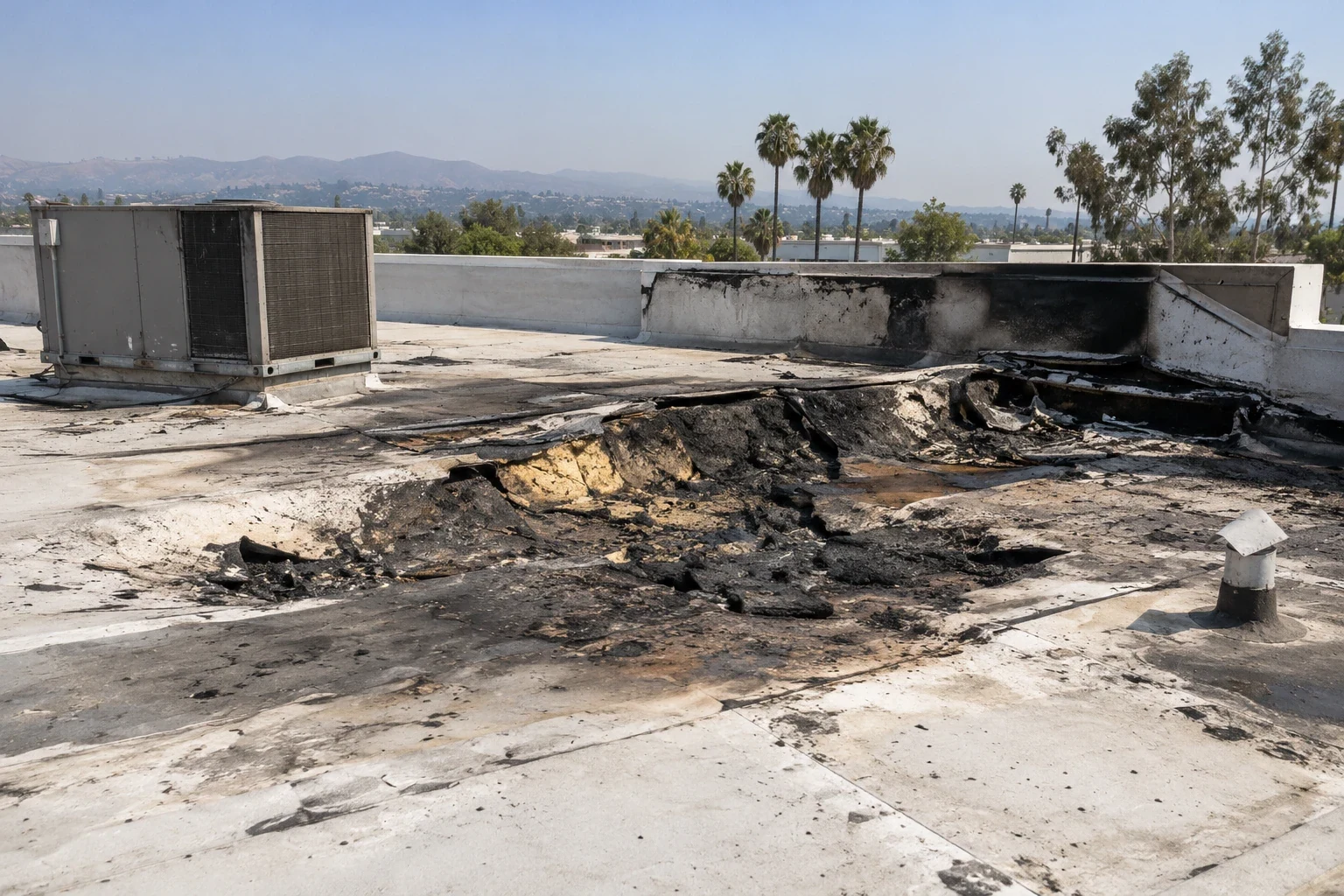
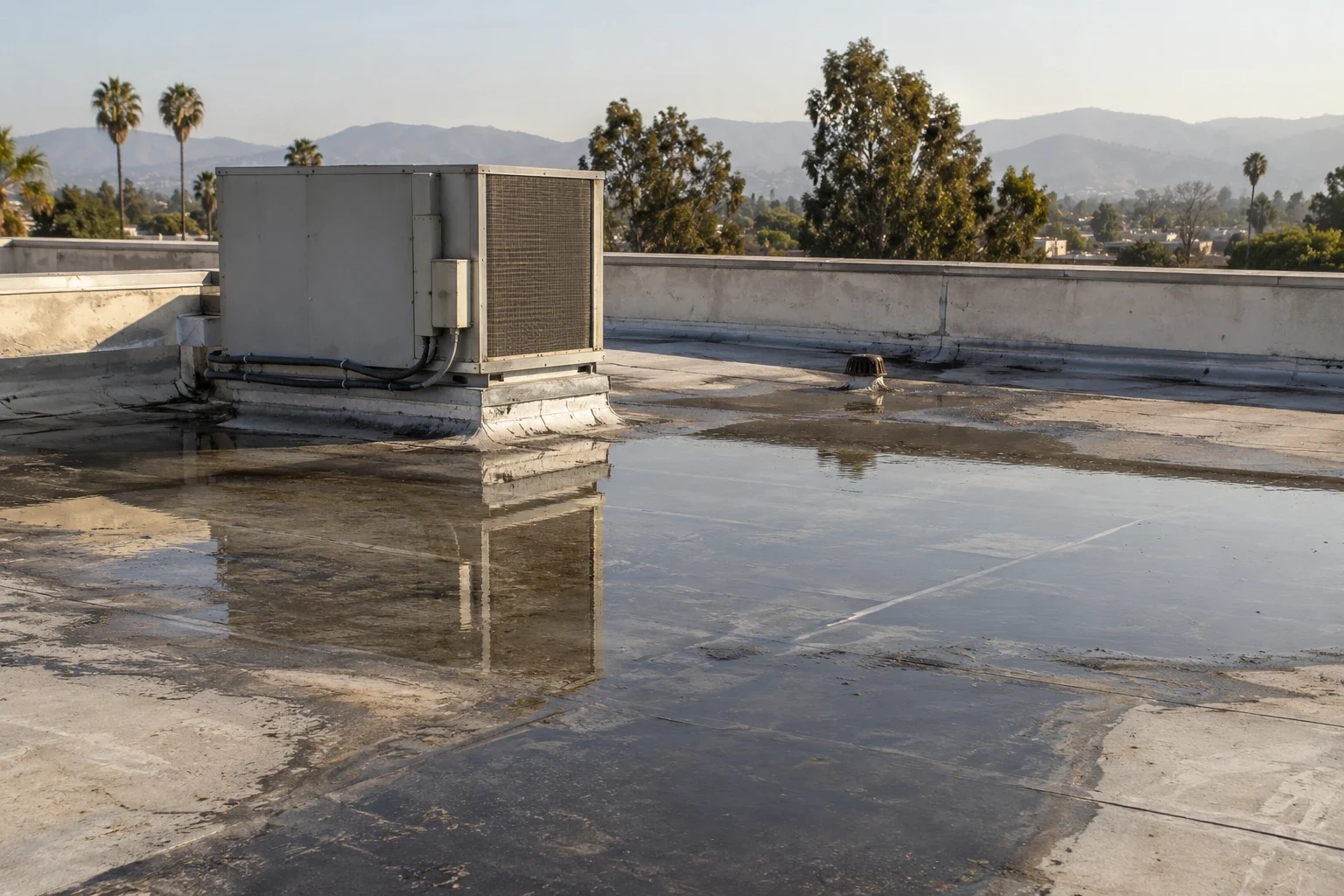
Flashing failures often appear at a penetration, curb, wall transition, drain, or perimeter edge where materials meet and movement occurs. We look for open laps, split sealant, loose termination, lifted membrane, corrosion, or water staining below. The stain location may be some distance from the entry point, so we trace the likely path across the roof and check connected details. A patch placed only over the interior symptom can leave the original path open.
Fontana forecasts regularly include summer highs above 100°F. Repeated heat can stress exposed materials and make repair timing important, but the specific failure still needs inspection. We check the material, attachment, compatibility, and condition of the adjoining field before selecting the repair. A commercial leak repair visit can locate the entry area and separate active water protection from permanent flashing work.
The tie-in determines the repair limit
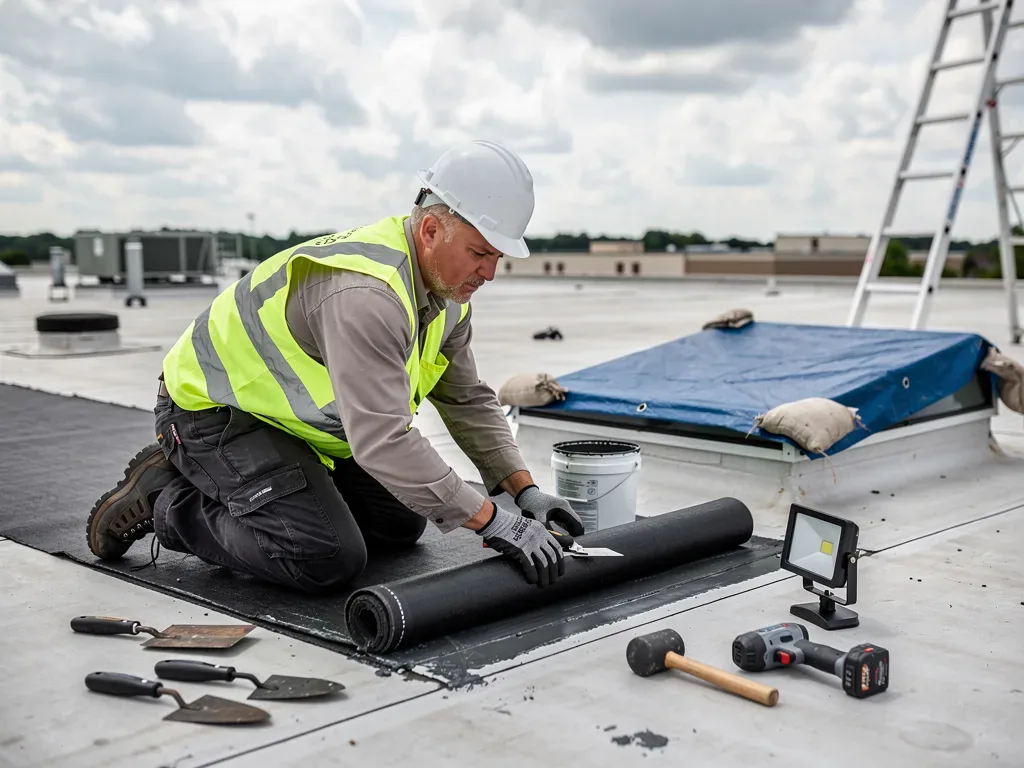
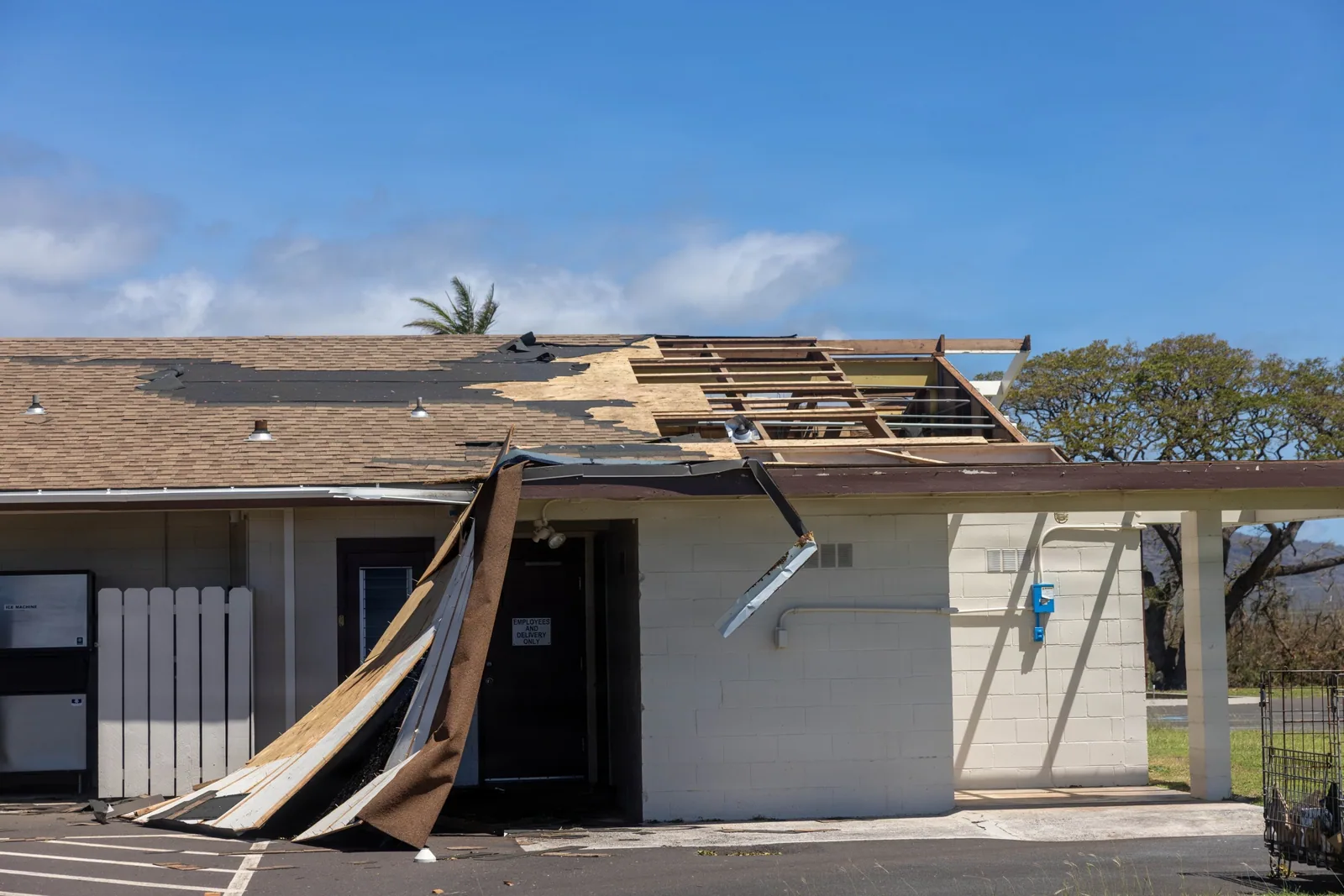
A durable repair has to connect to sound material. We remove loose or failed components within the approved scope, prepare the substrate, and install compatible flashing or membrane details. The termination may require a new bar, counterflashing, or other mechanical detail depending on the wall and system. If the substrate is wet, corroded, or deteriorated, simply sealing the surface may not solve the condition. We identify that limit and obtain approval before expanding the work.
Some details involve several components: curb corners, pipe supports, rooftop equipment, edge metal, coping, and adjacent membrane seams. We record which interfaces are included so the repair does not stop at a nearby crack while leaving the connected transition open. If a seam itself is separated, a seam repair may be needed in addition to flashing work. The chosen material and sequence must suit the actual roof assembly. At a corner or raised curb, we check whether the flashing rises high enough, terminates securely, and returns to a sound membrane surface. A small visible gap can connect to a larger loose area once the detail is opened. We define that boundary before ordering materials, and we stop for owner approval if the substrate or adjacent field changes the scope.
The work zone protects operations
On Fontana industrial properties, a loading apron or truck path may determine where a lift can stand and when materials can be moved. The city's Southwest Industrial Park and Jurupa Industrial Park plan areas support trucking, warehouse, distribution, and vehicle-storage uses. Those regional uses do not establish the layout at a particular roof, so we confirm the site-specific travel path and ground protection with the operator. We identify any door, equipment, or tenant area beneath the flashing repair.
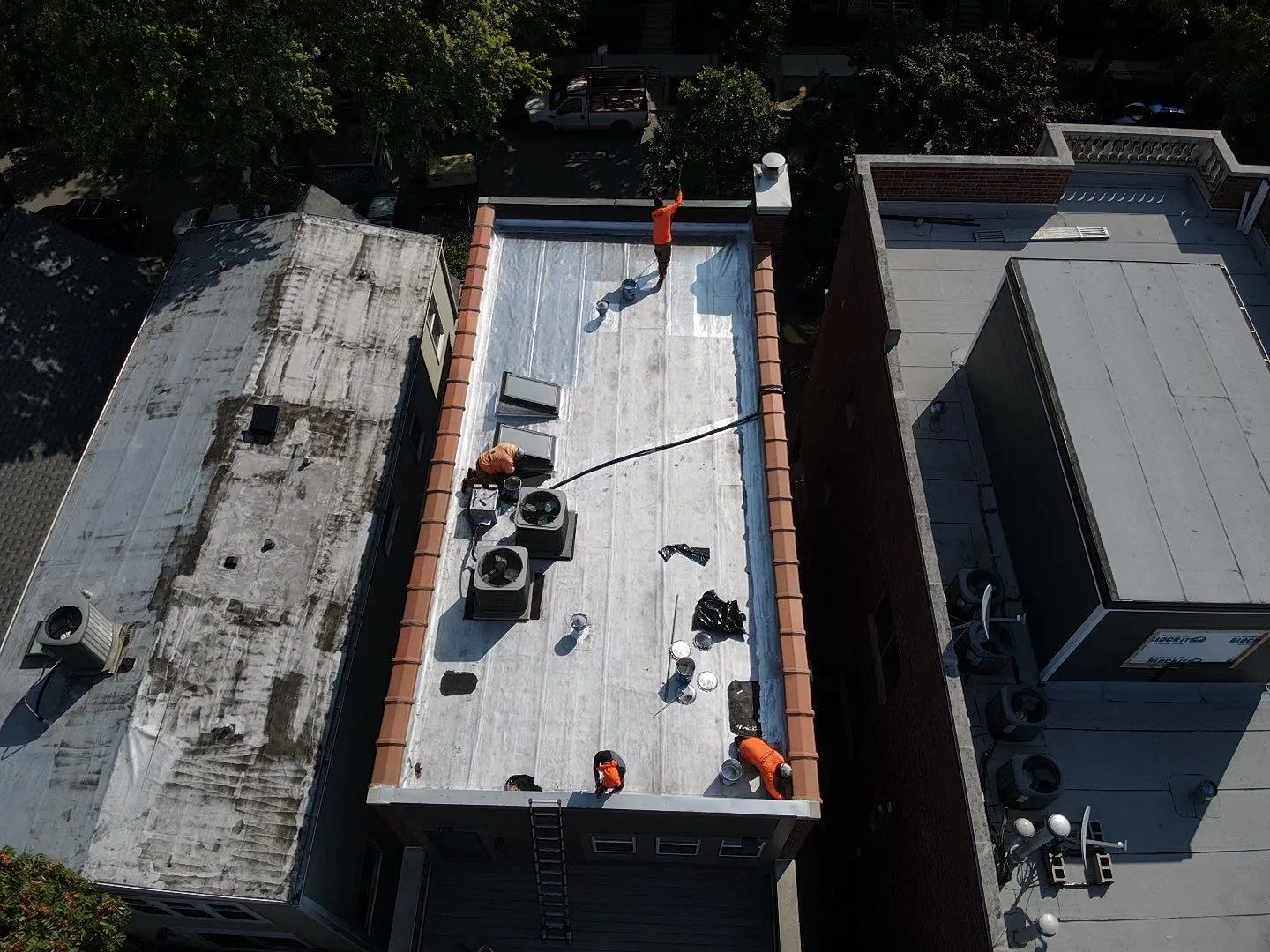
In Downtown Fontana, commercial activity along Sierra Avenue, Valley Boulevard, and Foothill Boulevard can make customer access and parking the controlling issue. A Downtown Fontana repair visit may need a smaller staging footprint and clear pedestrian routing. In either setting, the work plan covers roof access, drop zone, material handling, open-roof protection, and daily closeout. That keeps the crew's tie-in sequence connected to the activity below.
Scope and timing follow the detail
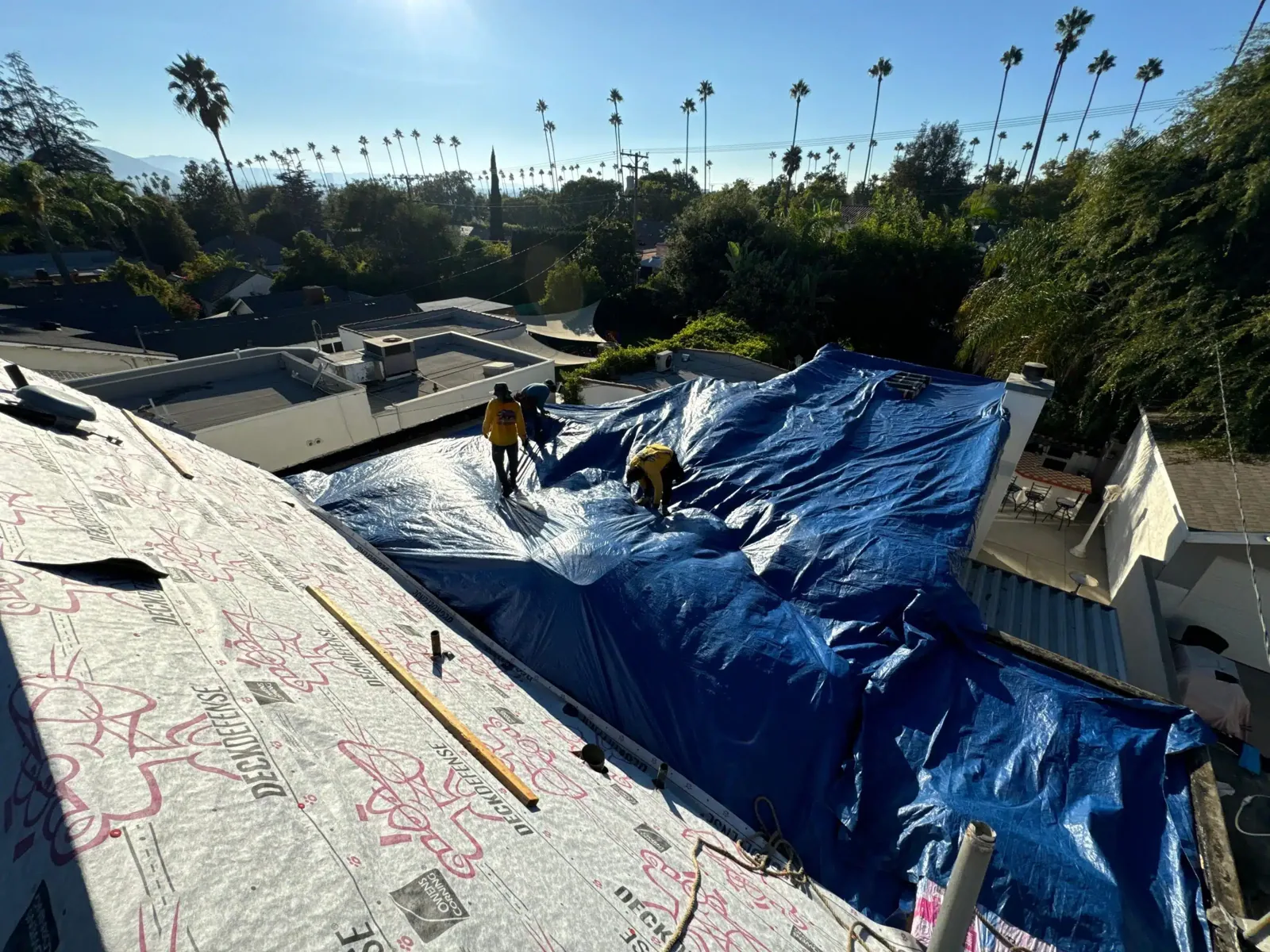
Repair cost depends on the number of details, access method, height, substrate condition, system compatibility, and how much adjacent material must be removed to reach a sound tie-in. A simple exposed termination differs from a multi-sided curb with equipment conflicts. If a leak is active, temporary protection may be scheduled first, followed by permanent work once materials and access are ready. We state what is included and what needs separate authorization, especially when damage continues below the visible flashing. A cost review can separate mobilization and access equipment from material and detail labor, then show which added condition would change the price. That gives the property manager a clear approval point before a concealed problem expands the repair.
Fontana's I-10 and I-15 freight corridors influence delivery planning for some properties. In summer heat, we also consider the safe window for exposed-surface work and the product instructions for installation. A repair can often be phased so the building remains in use, but the owner needs to know which area will be open and what protection is required. For related membrane damage, puncture repair or heat and UV damage repair may need a distinct scope.
A completed detail has a record
Before closing the work area, we check the installed termination, adjacent seam, and water path addressed by the scope. Photos and a concise closeout identify the location, materials used, and any remaining observation. If water entry persists, the next step may involve an additional roof zone or an opening to inspect concealed layers. The owner should not be left guessing whether the repair addressed a curb, pipe, edge, or wall transition.
A planned inspection can reduce the chance that a developing detail issue waits until it interrupts operations. Fontana's broad industrial base and commercial corridors create different ways to access roof edges and penetrations, so the inspection route should reflect the property. Schedule a flashing repair review with the roof system information, leak location, and site contact. A condition report can preserve the exact roof-zone finding and closeout status for later maintenance. We will define the work zone, material tie-in, and closeout before mobilization.
Frequently Asked Questions
Can you seal the flashing without removing it?
Sometimes a limited repair can restore a sound detail, but only if the existing flashing and substrate remain suitable. Loose material, failed attachment, corrosion, or water beneath the surface can require removal and reconstruction. We inspect the transition before setting the repair boundary.
Why is the leak showing inside the room rather than near the flashing?
Water can travel along the roof assembly or framing before it becomes visible inside. We trace the roof path from the affected interior area toward penetrations, walls, seams, and drainage details. Finding the entry point is more useful than covering only the interior stain.
Will the same material work on every roof?
No. The repair must be compatible with the existing assembly, substrate, and detail. Membrane type, metal, coating, attachment, and termination all affect the material choice. We confirm the system and tie-in before proposing a permanent repair.
Can work happen during business hours?
That depends on access, lift placement, delivery activity, tenant protection, and the extent of the open work area. We coordinate a safe work zone and identify the building activities that need a temporary route or time adjustment. The repair plan should state how the area will be secured at day's end.
What should we send before the inspection?
Send the roof plan if available, leak location, prior repair records, roof system information, and any access limits. A loading or tenant contact helps us choose a route and staging window. If the leak is active, record when it appears and what temporary protection is in place. Include any hours when lifts or roof entry are restricted. Share gate and escort details as well.