Commercial Roof Recover
Assess a Fontana roof for a recover by checking moisture, attachment, layers, drainage, details, code requirements, and access before adding a new system.
A second roof layer changes every elevation it crosses. In Fontana, CA, the added membrane must meet drains, curbs, skylights, walls, and edge metal without trapping water or creating an unworkable step at an entrance. We first identify the existing layers, attachment, substrate, and areas where moisture may have changed the assembly. Then we compare the recover with selective removal and full replacement using the conditions that can be supported by inspection. A recover can reduce tear-off and keep more of the building enclosed, but it is not a shortcut around wet insulation or weak attachment. The owner needs a scope that states which areas can remain, where material will be removed, and how each new transition will be closed. That decision is made before the material order and work-zone schedule.
Confirm what can remain
The existing surface must provide a stable base for the new work. We check whether the membrane is bonded or mechanically attached, identify visible repairs and coatings, and look for blisters, open laps, movement at the edges, and soft areas. The assembly record helps, but the roof itself decides whether those layers are still suitable. We also verify how many roof coverings are already present and whether the planned system can be fastened or bonded through the existing construction.
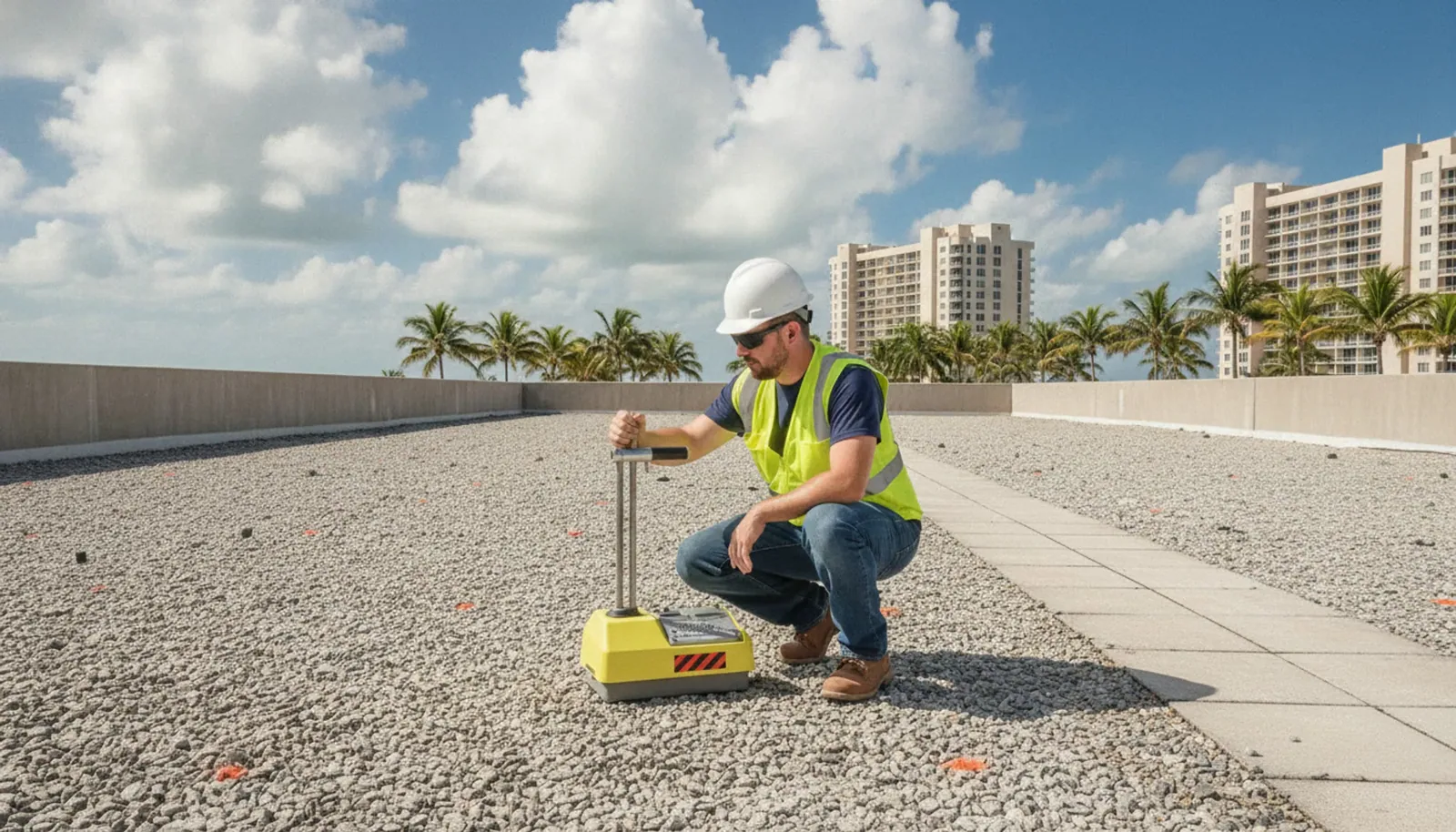
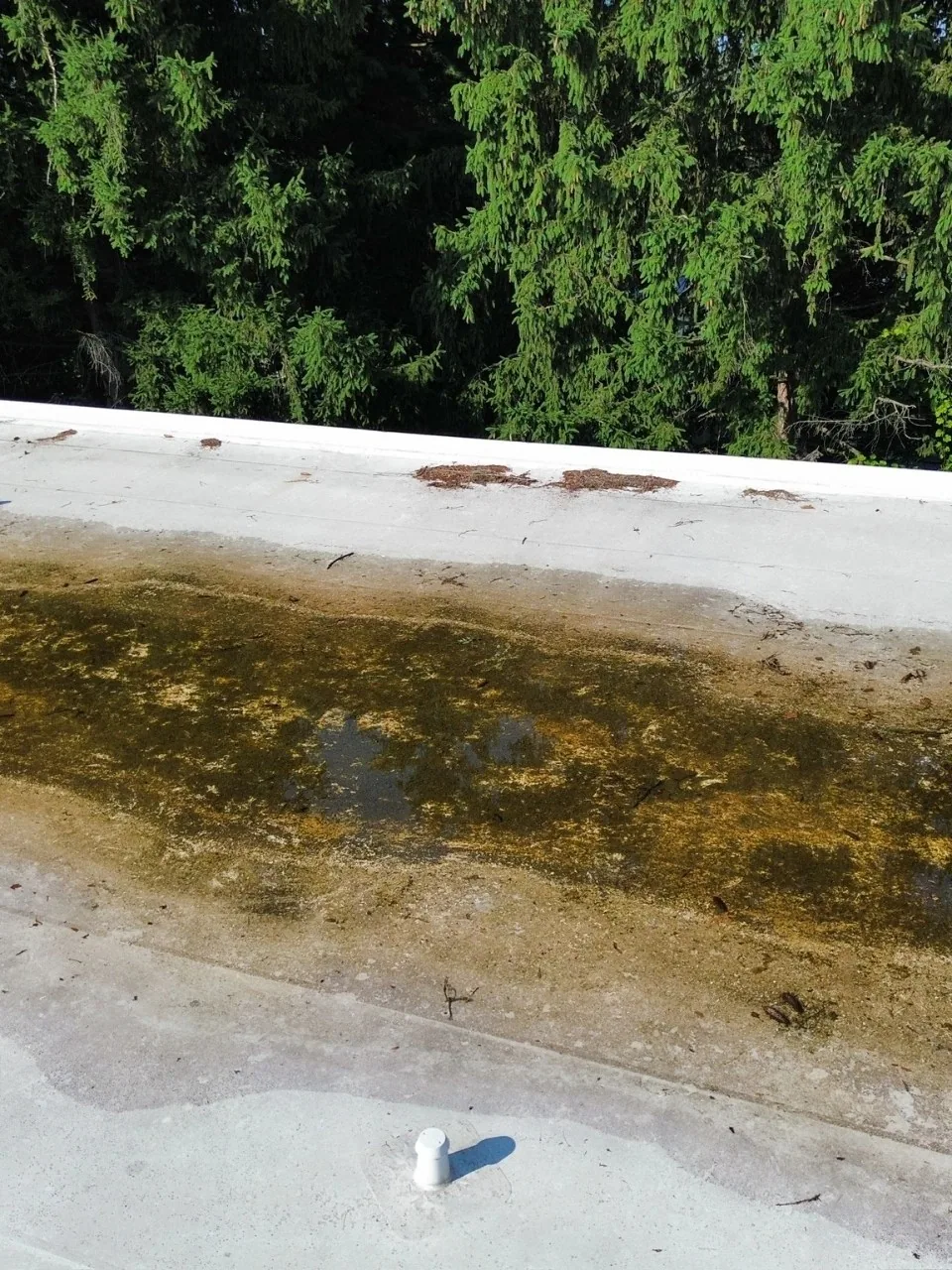
Concealed moisture can rule out a recover even when the top sheet appears intact. We compare interior reports, infrared patterns, drainage locations, and field observations to choose test areas. Direct checks establish what material and condition are below the surface. A moisture survey and core-cut plan can define wet sections for removal instead of placing a new assembly over material that should not stay.
Check the new roof height
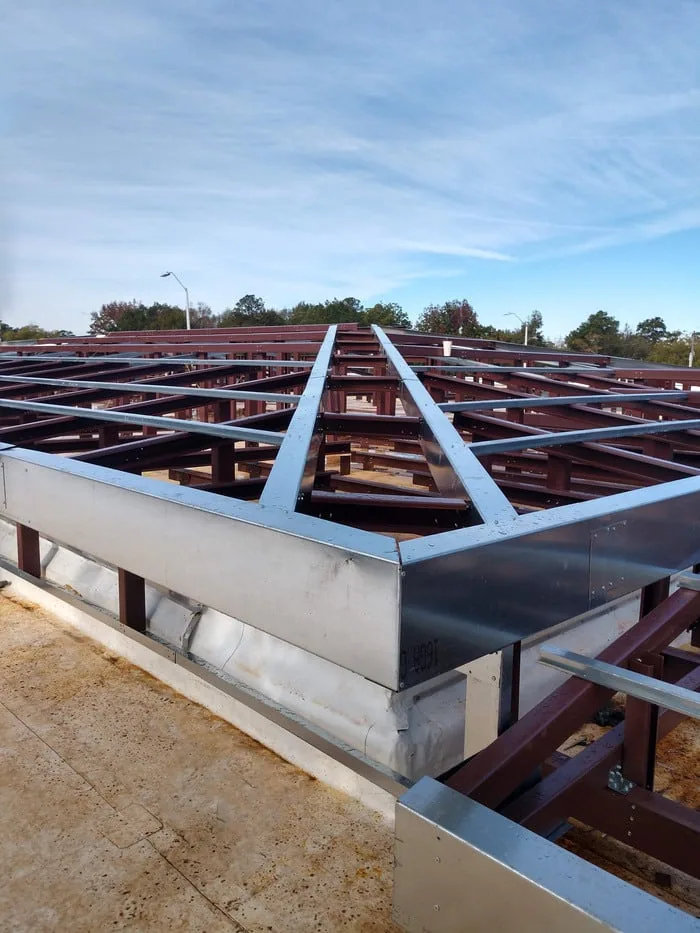
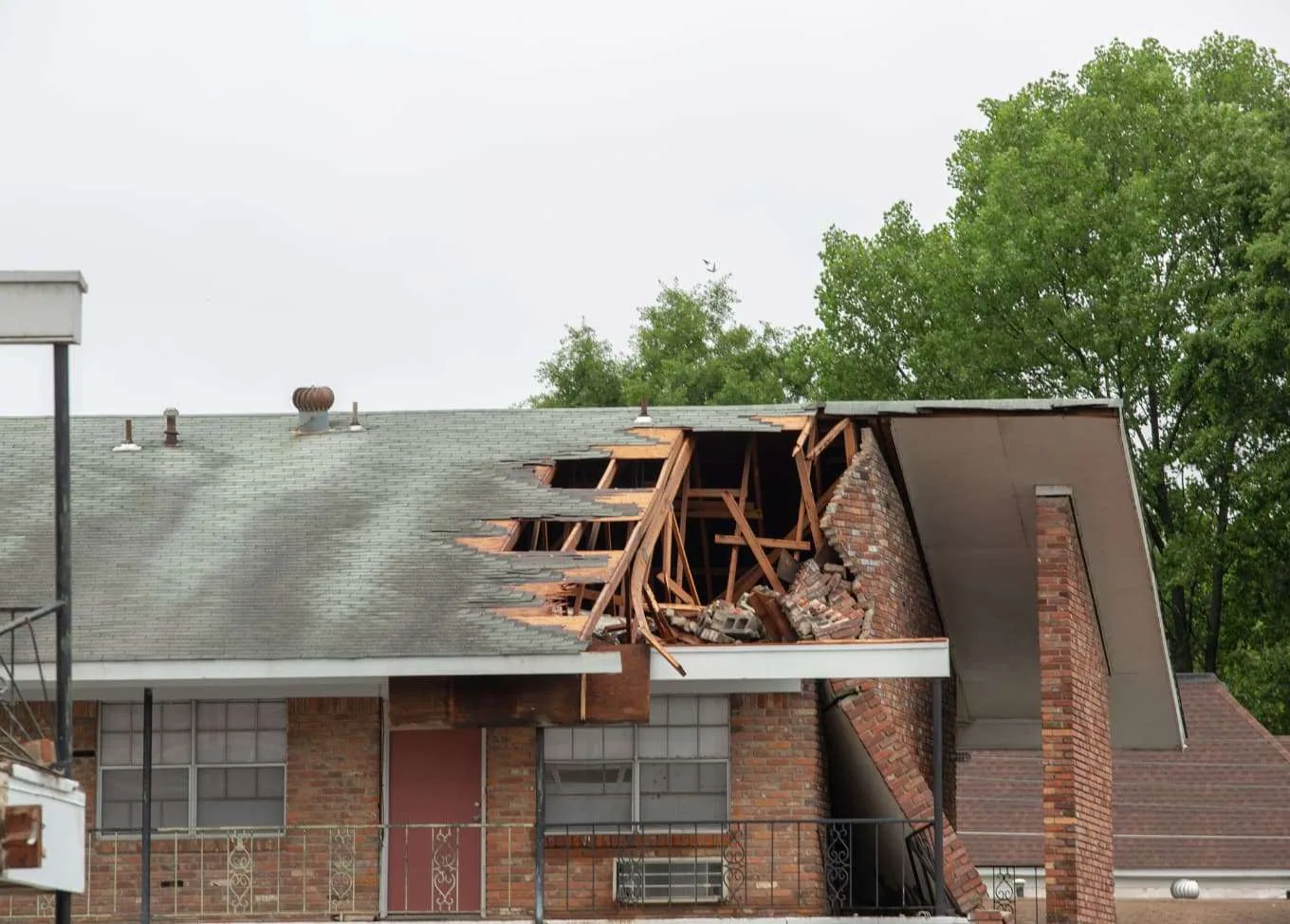
An added board and membrane raise the roof at drains, overflow openings, equipment curbs, and parapet edges. We measure these relationships before deciding how the recover will finish. A drain bowl that sits below the new surface can leave a lip where debris collects. A curb that becomes too low can complicate flashing or restrict equipment access. We include any needed drain extensions, edge changes, or curb work in the assembly scope so the final height is intentional.
Fontana adopted the 2025 California Building Code and related state code provisions, with local amendments. The permit and energy-code review depends on the work scope and the application date. We identify requirements that could affect insulation, assembly attachment, fire classification, or roof edges before approving a product. A cover-board and insulation review lets the owner compare the finished elevation as well as thermal and attachment needs.
Do not carry a drainage defect forward
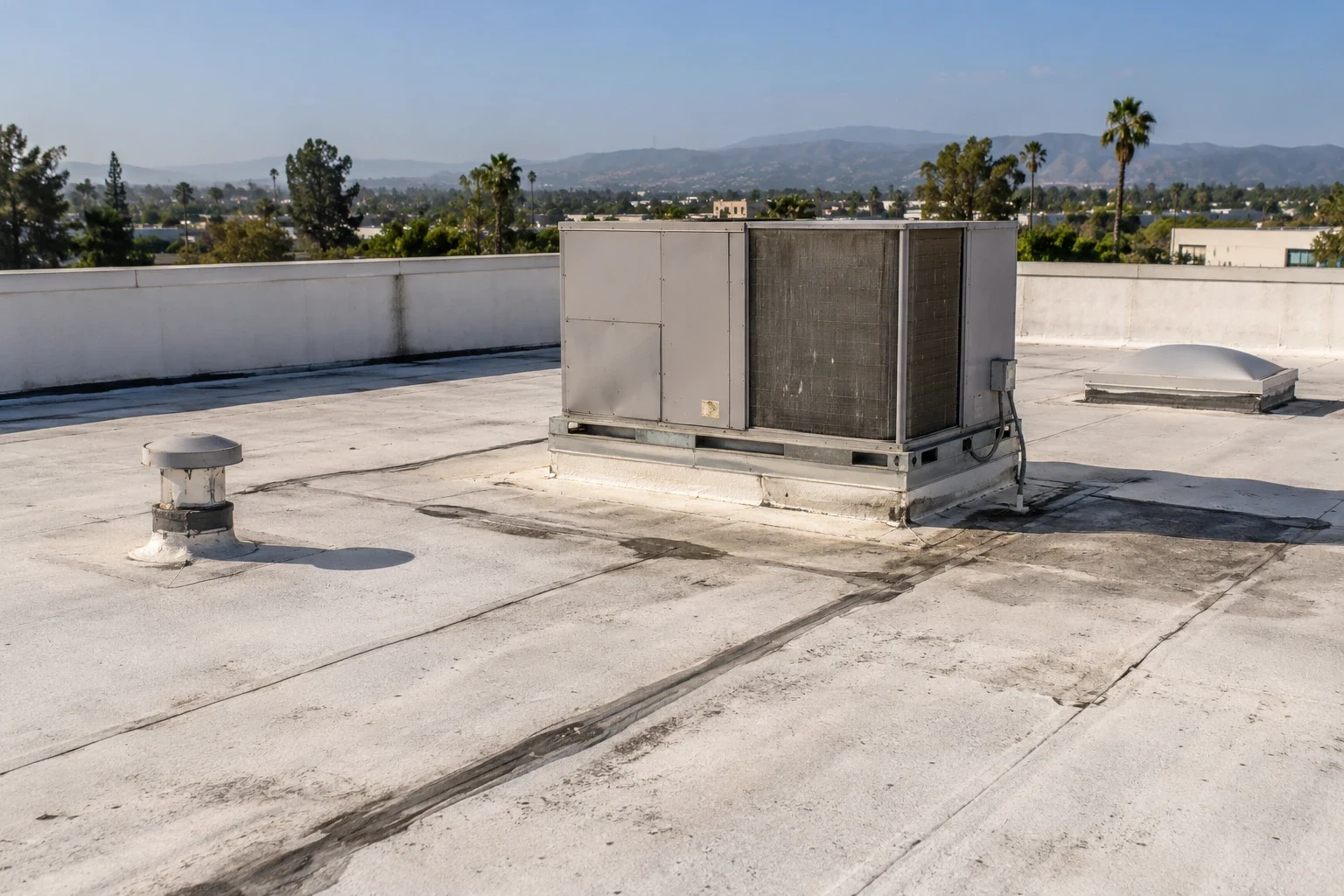
Water that remains after a normal storm can point to a blocked drain, low insulation, deflection, or a combination of conditions. A recover does not create positive drainage by itself. We map drains, scuppers, overflow routes, ponding areas, and roof transitions, then compare that map with the intended tapered insulation or surface corrections. A drainage fix should identify the water path to the outlet, not simply cover the area where water is visible.
Winter rain is more common than midsummer rain in the nearby San Bernardino climate record. That pattern helps with seasonal planning, but a working roof still needs a temporary closure plan for each exposed shift. The crew stages only material that can be protected and details drains before the new sheet covers them. Where a recover cannot correct the existing drainage limitation, a replacement scope may provide more control over the complete build-up.
Plan the recover by roof zone
The work plan divides the roof into areas that can be prepared, attached, flashed, and closed within the available access window. We note staging lanes, delivery order, waste handling, building entrances, and the hours when equipment or tenant activity restricts movement. Fontana's Southwest Industrial Park includes trucking, warehousing, and distribution uses. Before a recover begins, the property contact identifies the truck route, receiving window, and a staging point that leaves active lanes clear.
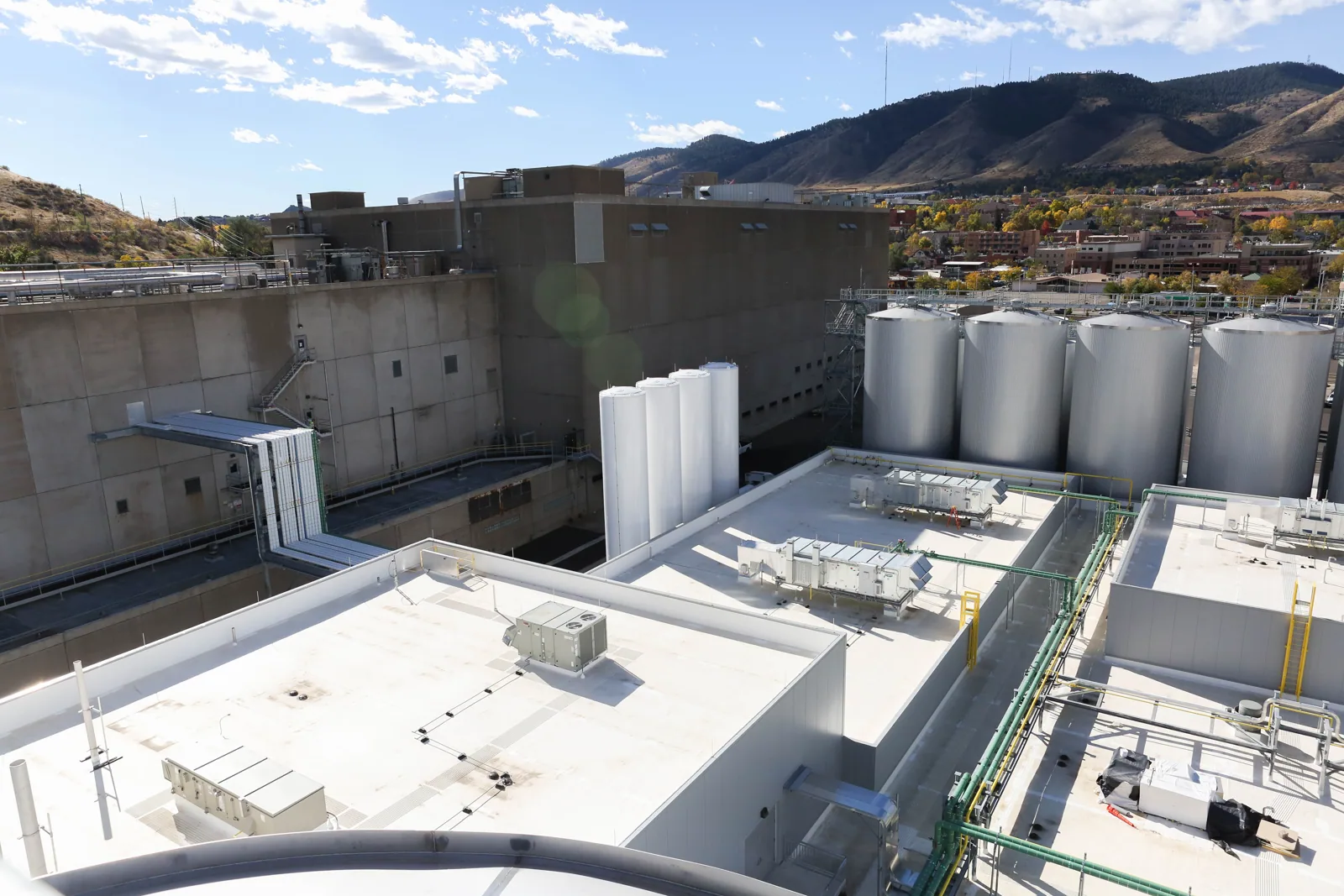
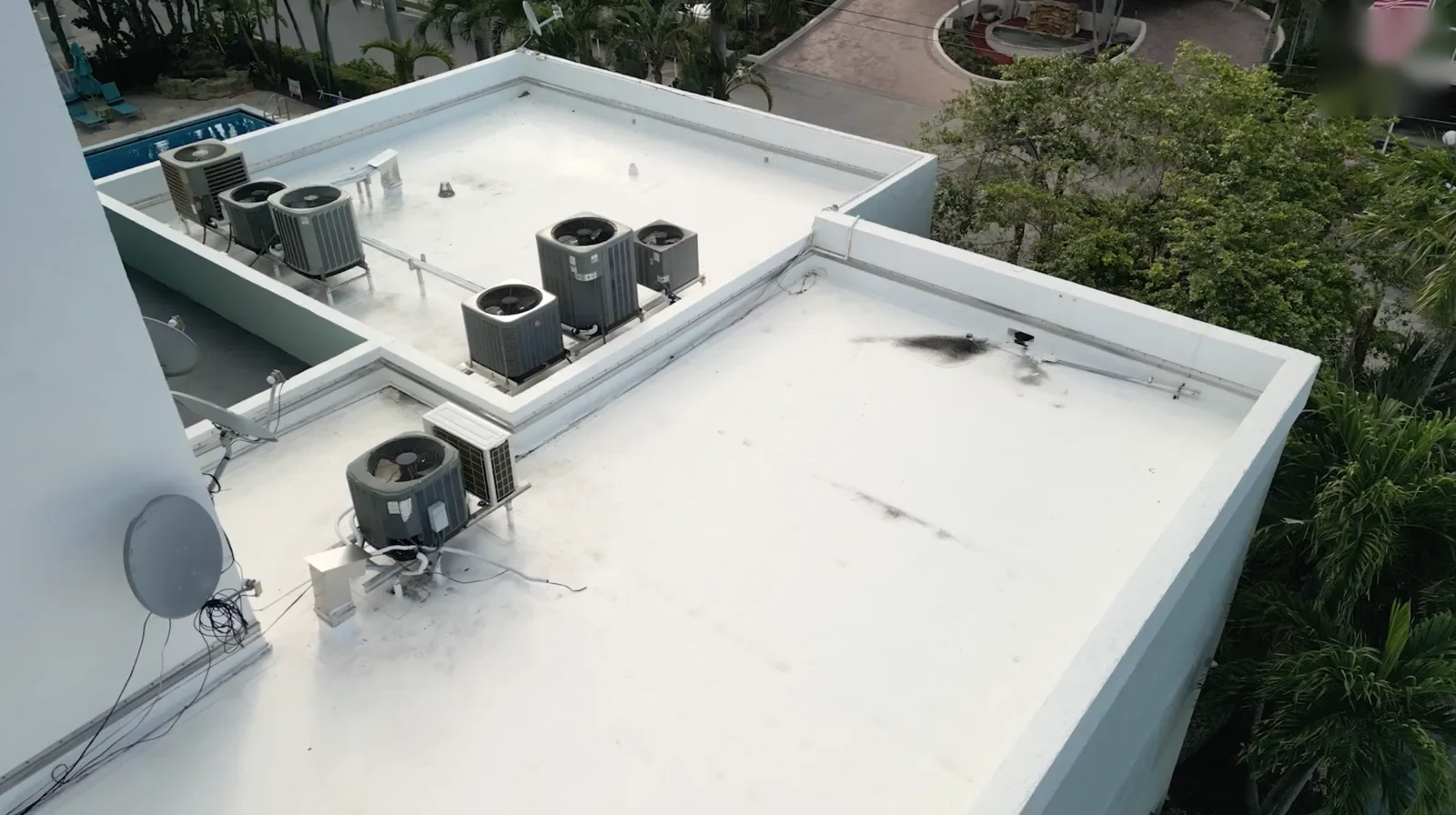
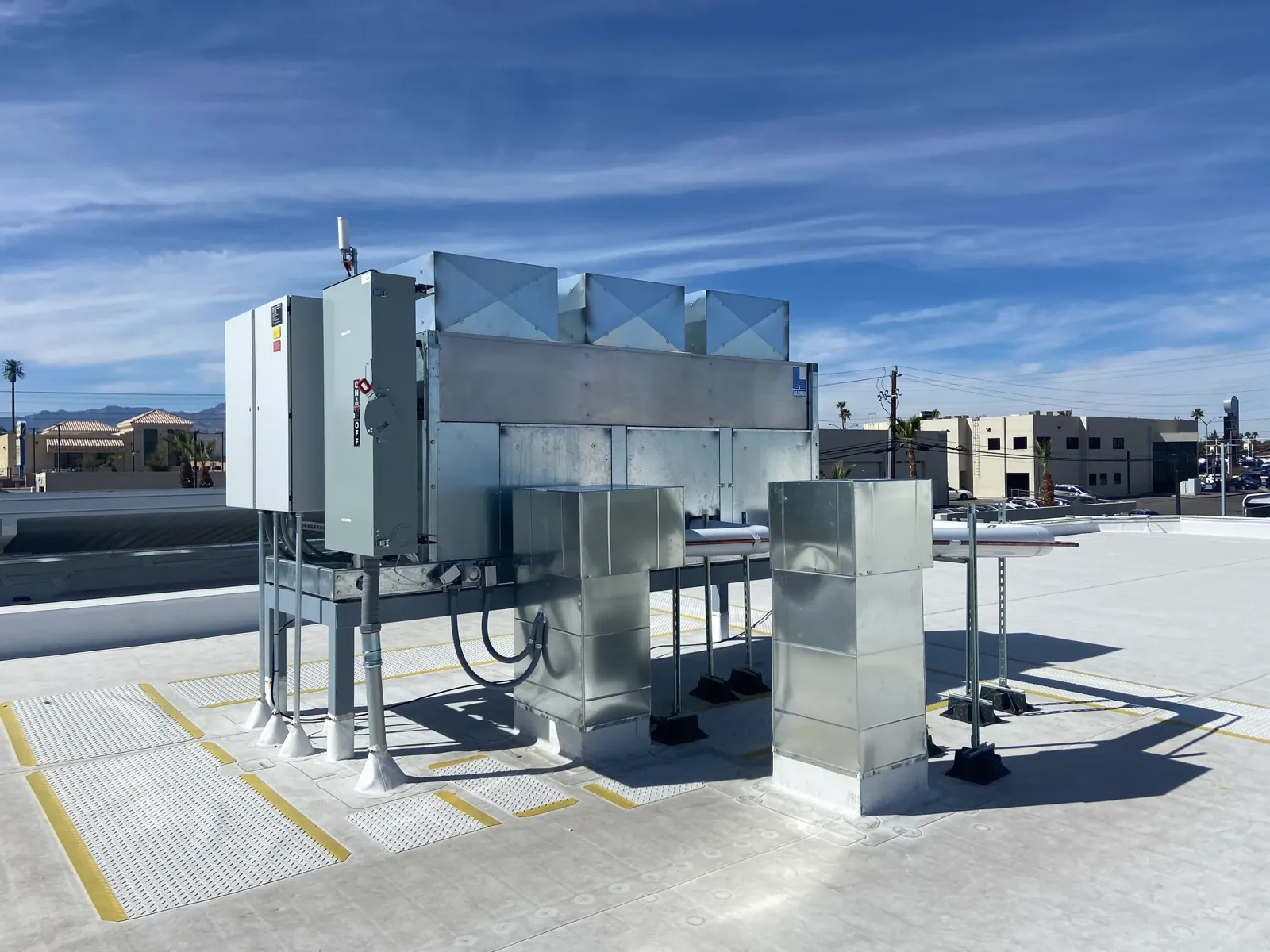
Recover work still interrupts rooftop equipment and creates trade boundaries. We confirm whether HVAC units can remain in place, which curbs need adjustment, who disconnects or resets equipment, and how abandoned penetrations will be closed. The occupied-building phasing plan identifies each zone and its temporary protection. We coordinate tie-ins with the general contractor before the new surface reaches them, avoiding cuts through completed work. The daily sequence also keeps required ground-level fire lanes open beside staging.
Select materials for the receiving surface
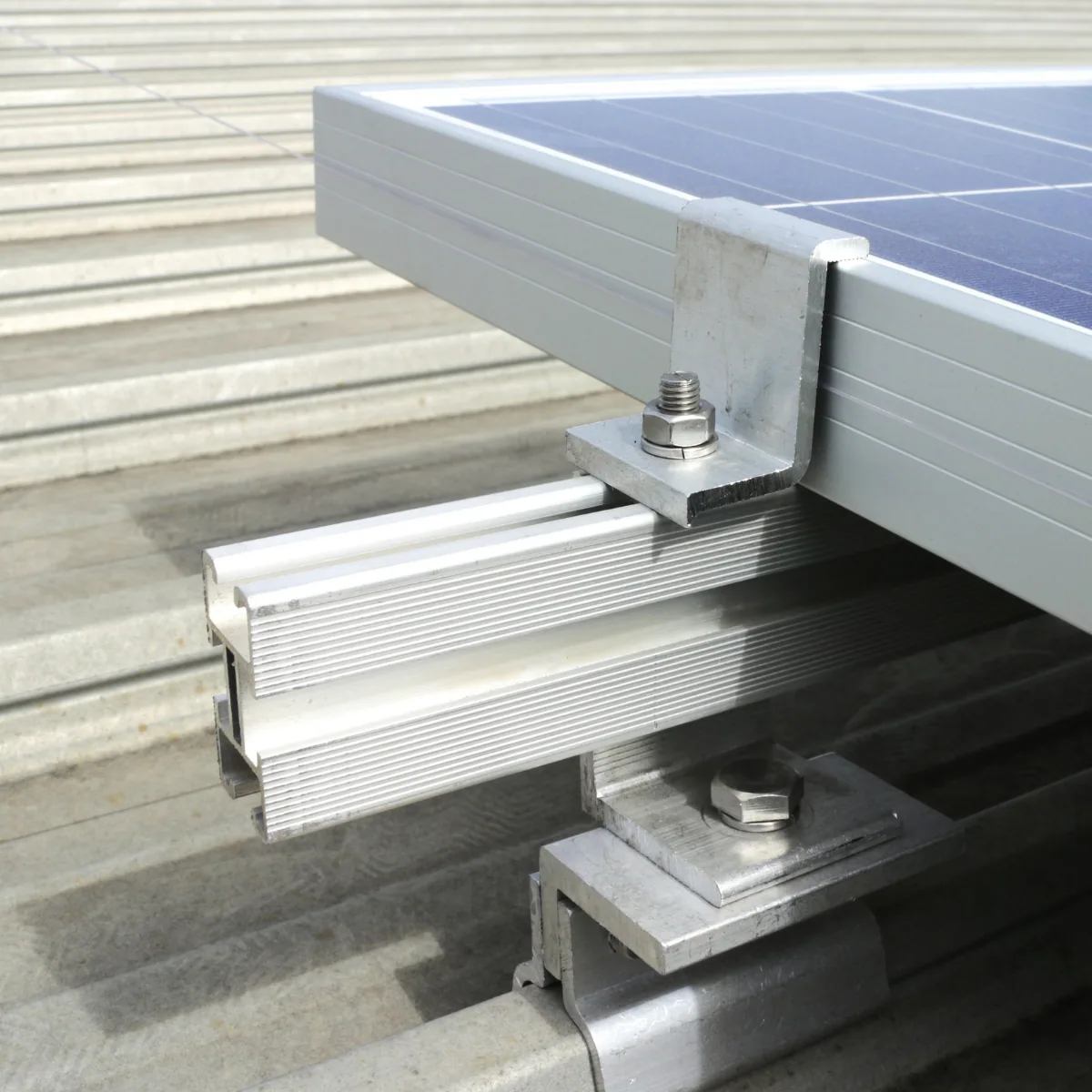
Compatibility depends on the current membrane, coating, adhesive, fasteners, and preparation. We confirm the new system’s attachment method and the condition of the receiving surface before specifying a product. Dust, oxidation, loose coating, or old sealant can interfere with a bond. Fastener pull tests or other project-specific checks may be needed to confirm attachment. Those findings should be included with the proposed assembly, not treated as a separate detail after procurement.
Fontana’s hot summer weather makes surface temperature and application limits part of the daily plan. We check current conditions against the product instructions and protect staged materials from heat and wind. Seasonal wind also makes perimeter attachment and secure storage important, while the actual roof inspection determines whether a detail has failed. The TPO option or a PVC assembly is evaluated against the substrate, use, and project requirements, not selected by color or name alone.
Make the choice traceable
The recover decision should name the evidence that allows existing layers to stay. We record moisture checks, test cuts, attachment observations, drainage review, layer count, and locations where prior repairs change the detail. Exclusions should identify areas not opened or conditions that remain concealed. The owner can then compare the accepted option with replacement using the inspected conditions and clearly defined allowances. A condition inspection documents those limits and provides a reference for later maintenance.
Fontana’s Southwest Industrial Park and Jurupa Industrial Park are broad logistics areas, while the Downtown Fontana project area has distinct commercial corridors. Their context can inform access discussions, but each property has its own roof assembly, security rules, and receiving plan. Share leak locations, roof records, delivery windows, equipment schedules, and access restrictions before the review. We can map the work zones and show which detail must be ready before installation begins.
Frequently Asked Questions
How do you decide whether the old membrane can stay?
We check its attachment, condition, layer count, moisture, compatibility, drainage, and connection details. The owner receives the observed limits and any test results needed to support keeping existing material.
Can a recover fix standing water?
Only if the project includes a supported drainage correction. We trace the route to drains and overflows and account for low areas before selecting the insulation build-up or new surface.
Will a new layer affect rooftop equipment?
It can raise the finished surface and change curb height or service access. We map equipment and identify the mechanical work, curb changes, and flashing handoffs required before the new sheet is installed.
Does a recover eliminate construction noise and debris?
It generally avoids the full tear-off volume when the roof qualifies, but preparation, fastening, delivery, and detail work still make noise and debris. We define those tasks and protect occupied areas in the phase plan.
What if test cuts find wet insulation?
The scope should state who reviews the opening and how added removal is measured and approved. We document its location and condition, then update the work boundary before closing the area.