PVC Roofing
Review PVC roof repair, replacement, and installation in Fontana, including chemical exposure, membrane separation, welds, drains, and access.
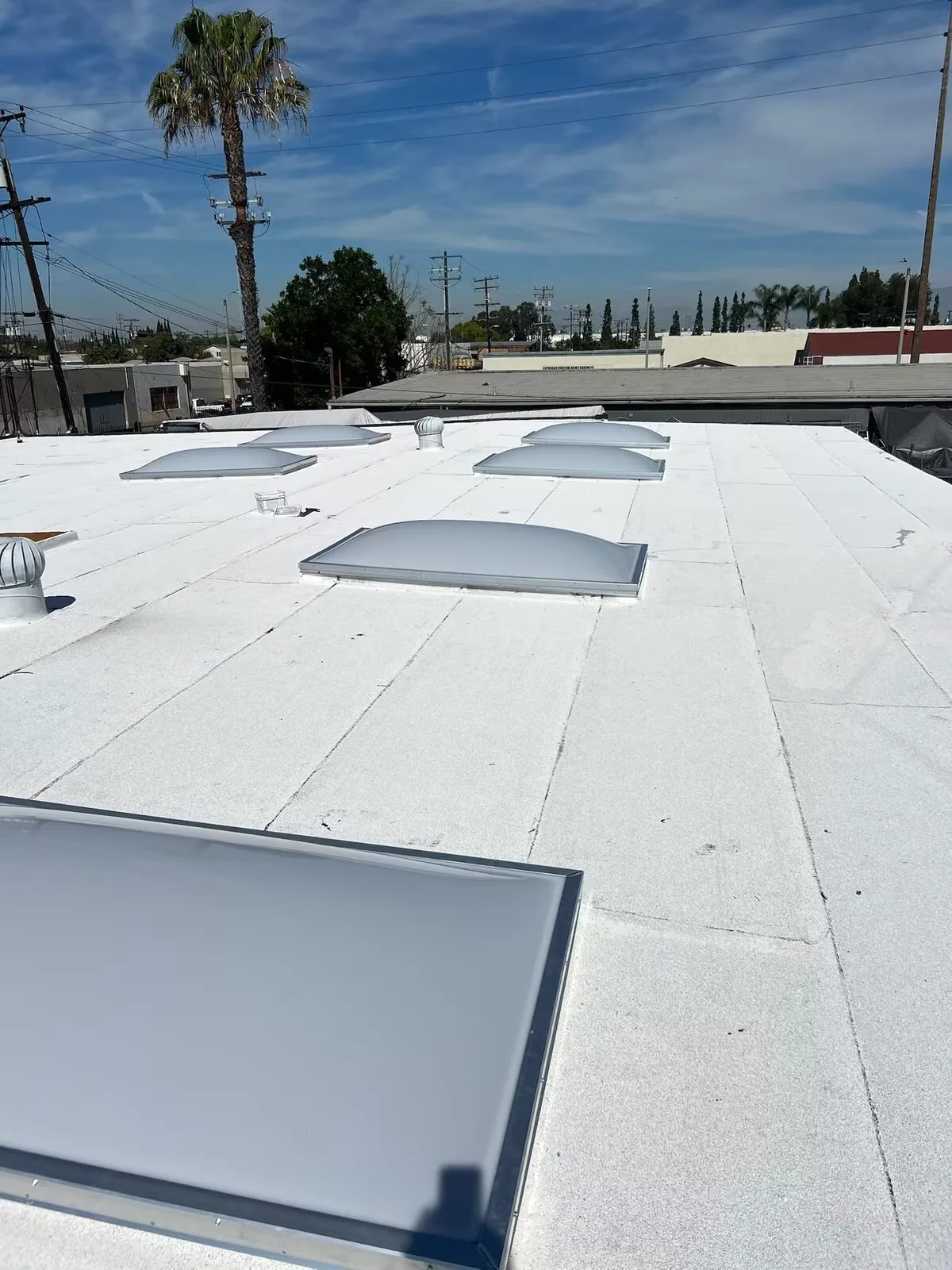
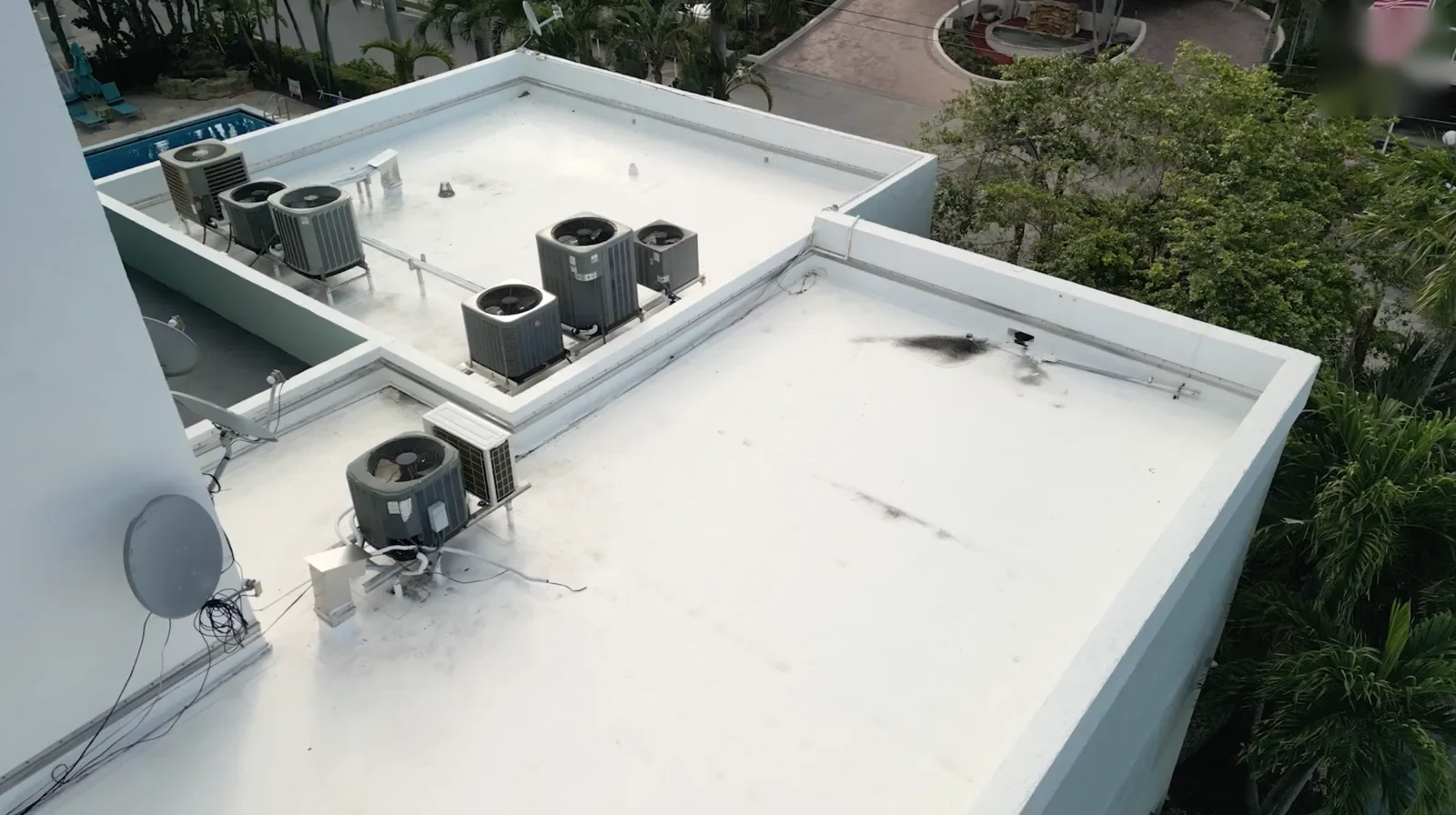
A kitchen exhaust or process vent can change the material question before a PVC membrane is ordered. We review the roof use, existing assembly, drainage, and penetrations in Fontana, CA, then specify work that keeps the sheet and its details compatible. PVC is a heat-welded single-ply material often selected where a project calls for resistance to certain oils, grease, or chemicals. The actual exposure still needs to be identified; one label does not establish suitability for every discharge or cleaning product.
Fontana's commercial mix includes logistics, manufacturing, healthcare, retail, and public properties. Interstate 10, Interstate 15, and State Route 210 connect local activity, making receiving and work-zone control practical parts of a roof scope. We inspect the specific building and operating requirements before choosing sheet, attachment, flashing, or repair method.
Identify what reaches the membrane
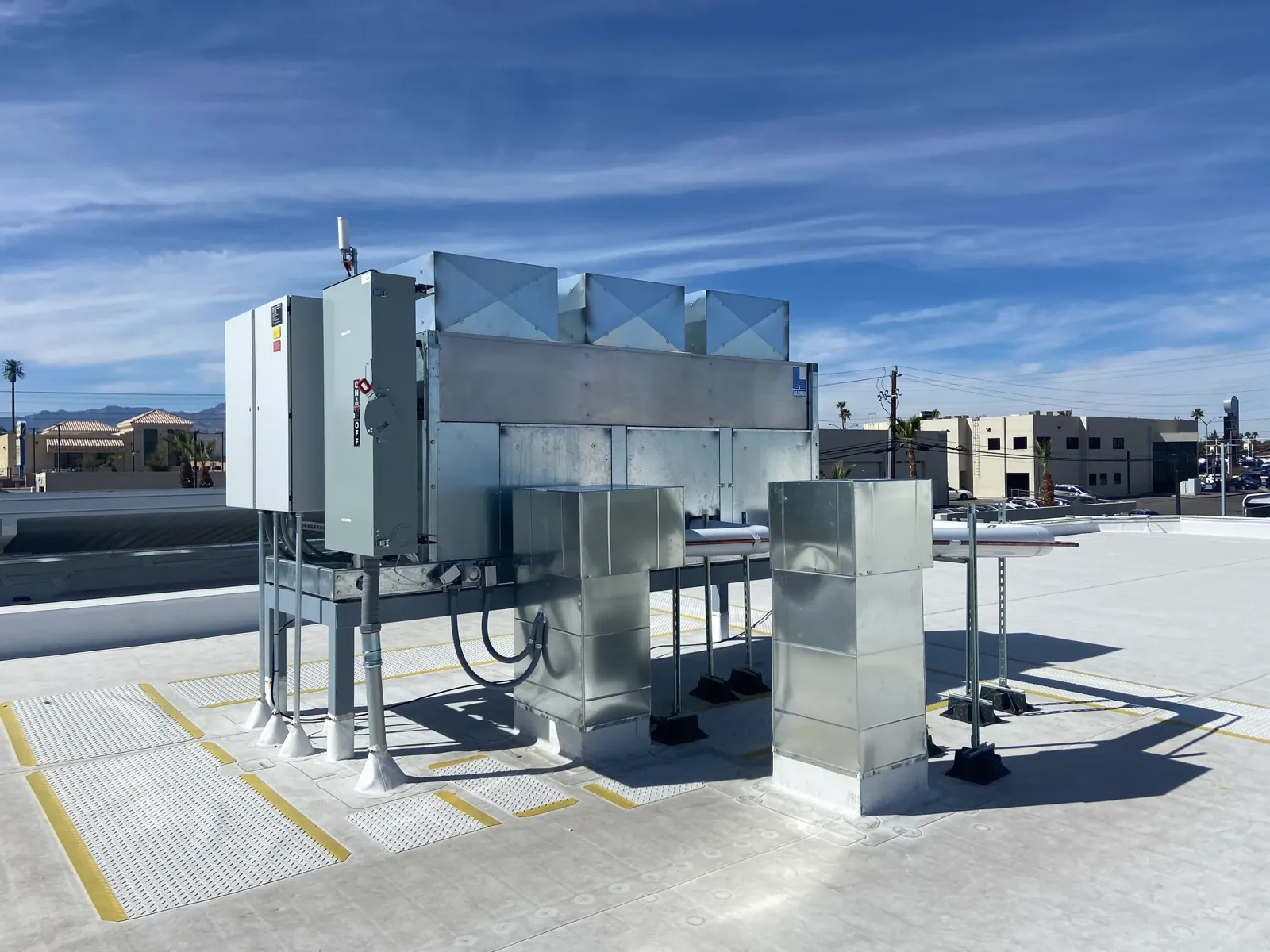
PVC selection begins with the service environment at the roof. We identify what exhausts, spills, or wash water could contact the sheet, where it lands, and how often it occurs. A building type alone does not define exposure. We review the affected zone, process information available from the owner, and the specified product's requirements before matching membrane and accessory.
The boundary matters. An area beneath an exhaust can age differently from the field sheet, while water can carry residue toward seams or drains. Our inspection traces the water-entry path and visible condition so a repair does not treat a symptom far away. If another trade or process specialist must confirm exposure, we mark that prerequisite separately from the roofing quantity.
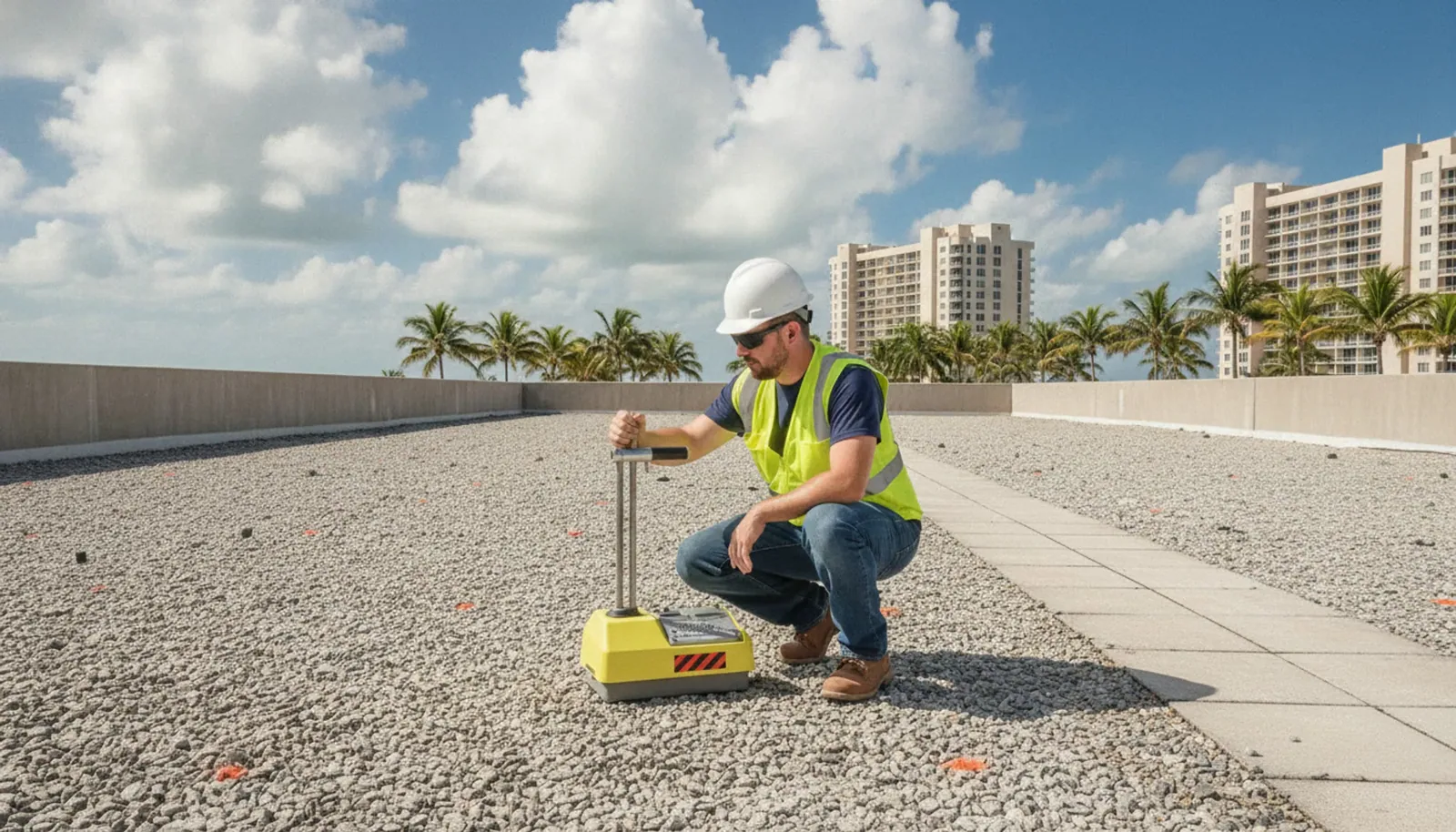
Our commercial roof inspection with mapped findings can record the starting condition. When concealed moisture matters, an infrared moisture survey with marked test areas may show where further confirmation is needed. We state what the inspection supports rather than extending one reading to every roof zone.
Protect PVC from incompatible layers
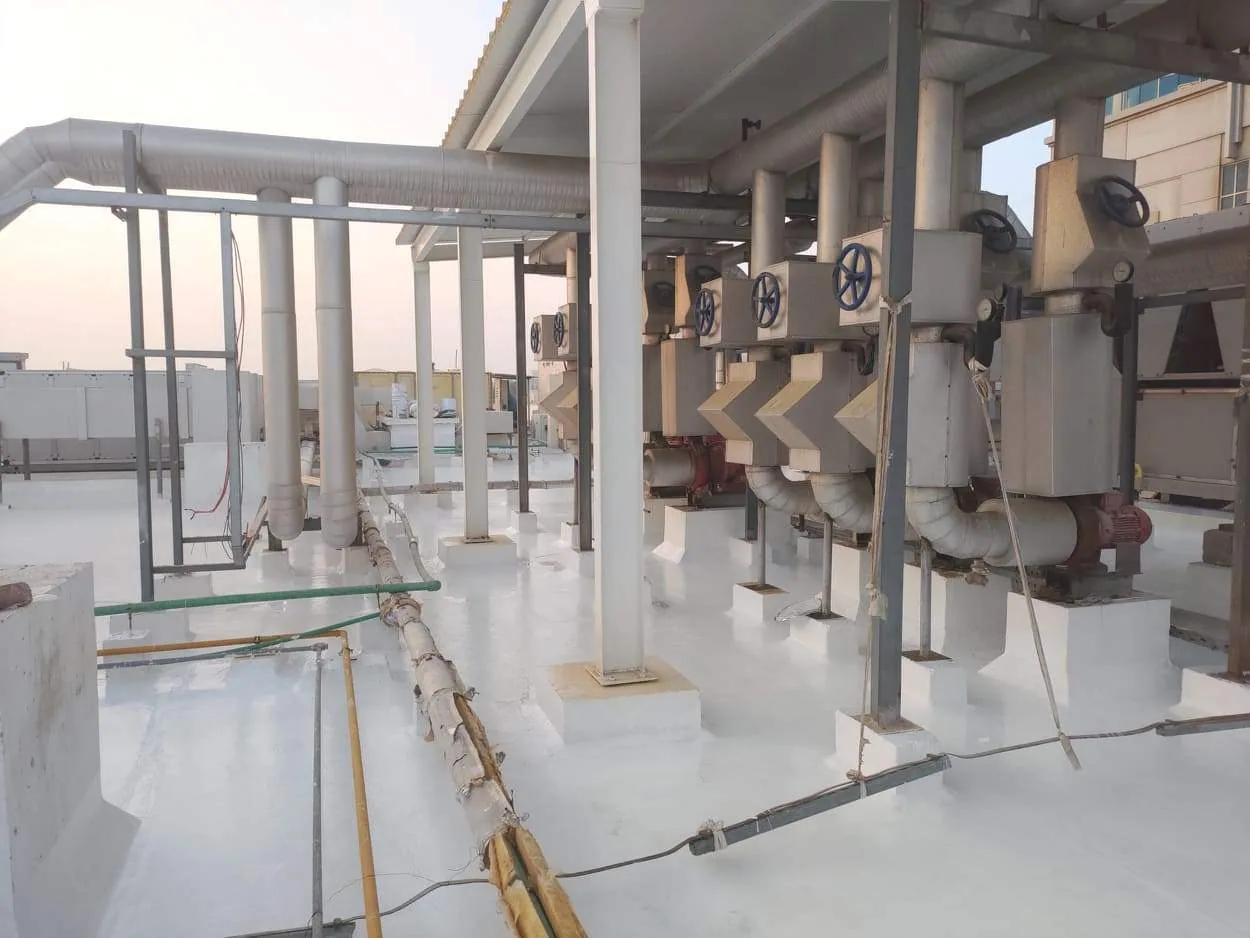
Some roofing materials can react with PVC or create compatibility concerns at direct contact. Asphaltic bitumen, certain sealants, and unknown residue need an assembly-specific review; a separator or cover board may be required. We identify retained layers before installation. The proposal names the separator, insulation, cover board, and attachment instead of describing an undefined build-up as PVC.
Fastening follows the actual deck and design requirements. We identify the substrate where accessible, attachment pattern, perimeter conditions, and areas that need further review. A recover must account for layer count, moisture, uplift design, and finished height. If removal is needed, the scope marks the boundary and the substrate condition required before new material is laid.
A compatible TPO system or KEE membrane may fit a different project requirement. We compare actual assemblies rather than assume one polymer suits every property. When PVC is selected, field sheet, edge metal, and flashing accessories need compatible details so a sound seam is not followed by a weak transition.
Check the weld and the flashing
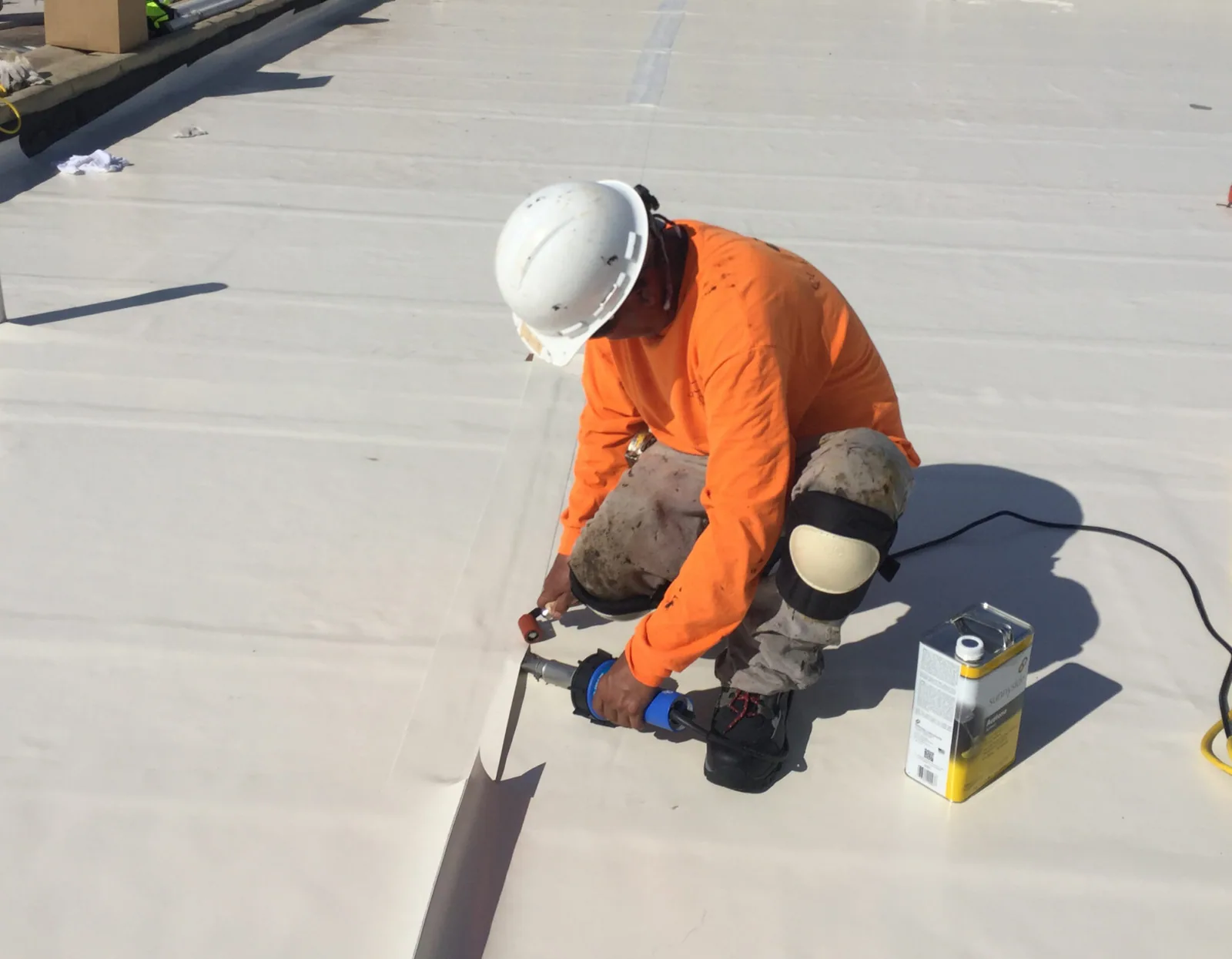
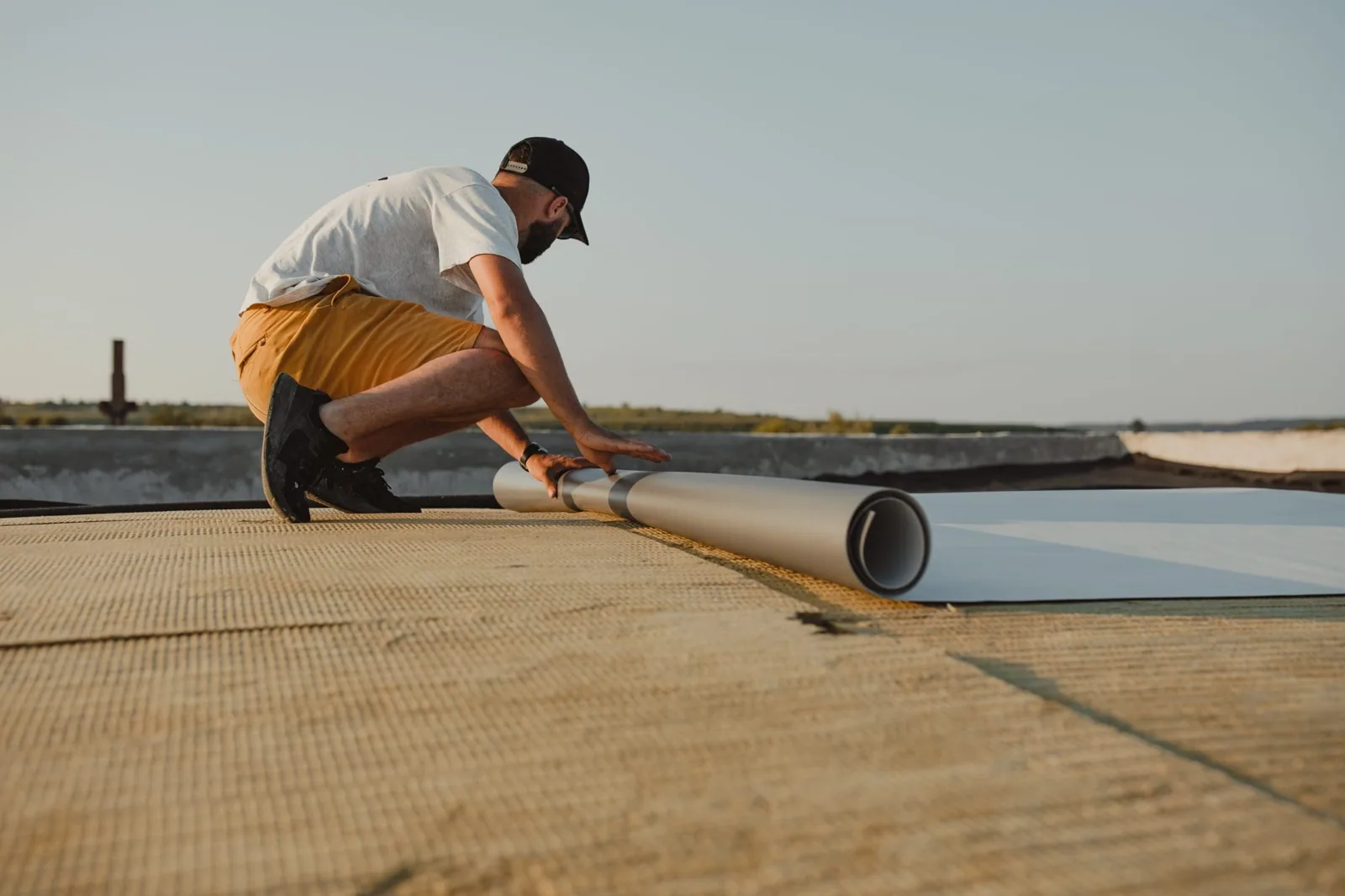
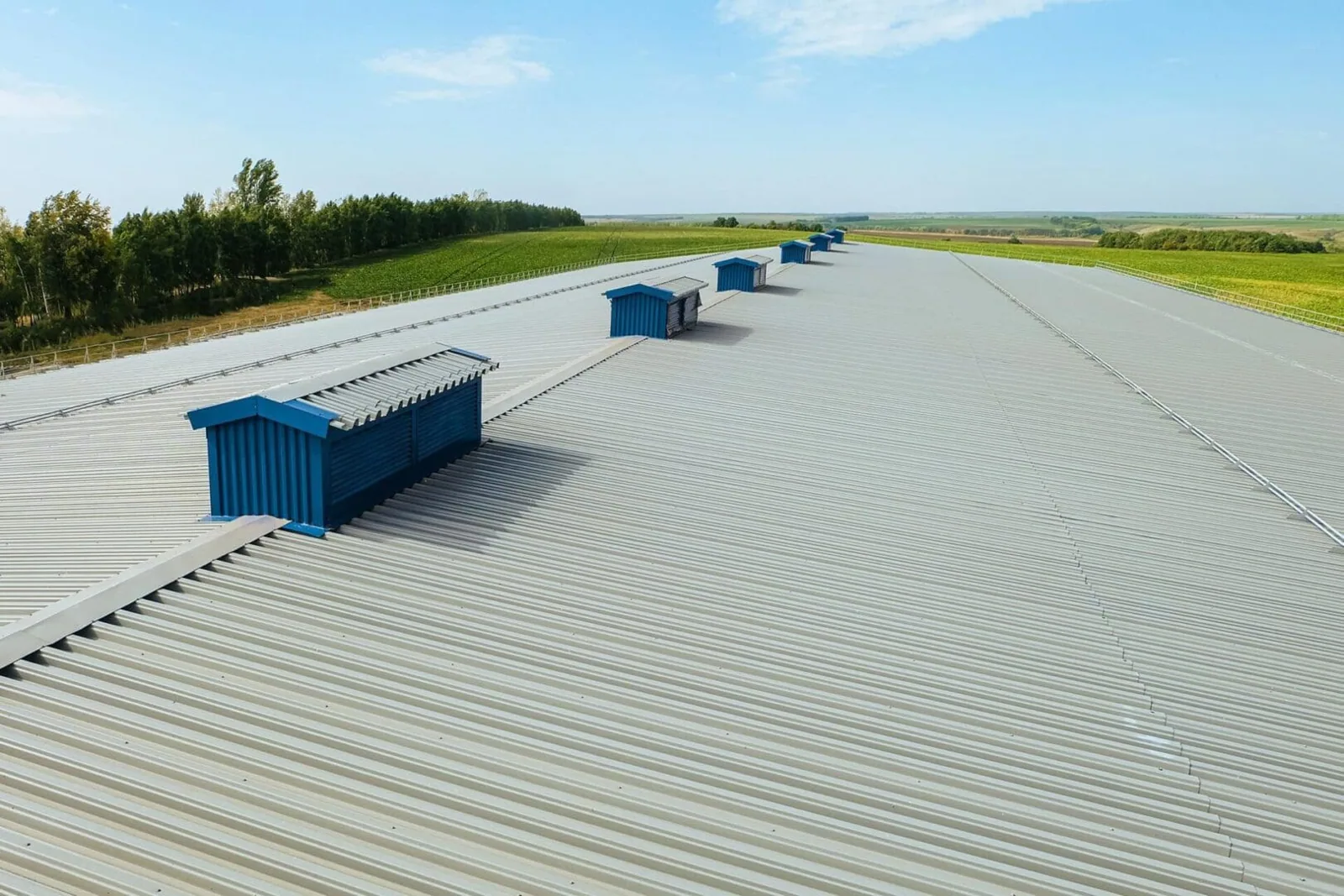
Heat welding fuses prepared PVC sheets into a continuous lap. Moisture, dust, residue, wrinkles, or changing surface conditions can interfere. We establish a test weld in the day's conditions, verify equipment setup for the specified membrane, and inspect representative seams as installation proceeds. A failed test means correcting the condition before production continues.
The quality log notes each sampled area and any correction made before the next sheet was placed. At a wall return, drain, curb, or outside corner, the installer forms a watertight transition with matching PVC flashing and fully welded edges. We review these shaped details independently from the long field laps, since folds and tight turns need careful fitting. The closeout shows the finished transition so the facility team can confirm what the roofing scope covers.
For localized failure, a repair scoped to the installed membrane states compatible patch material, preparation, and tie-in. If equipment work is needed before flashing, we coordinate a defined curb and equipment scope. The patch does not silently include another trade's work.
Keep the finished roof draining
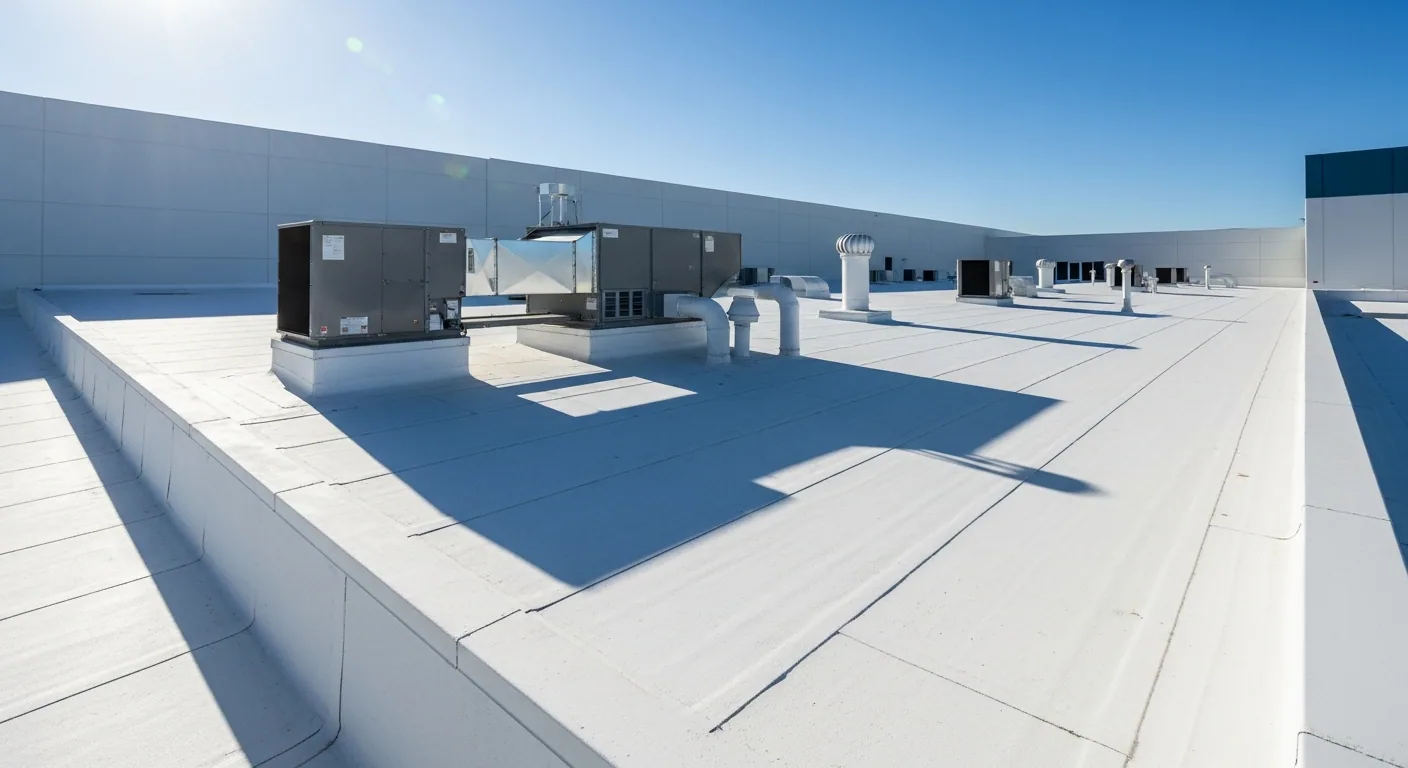
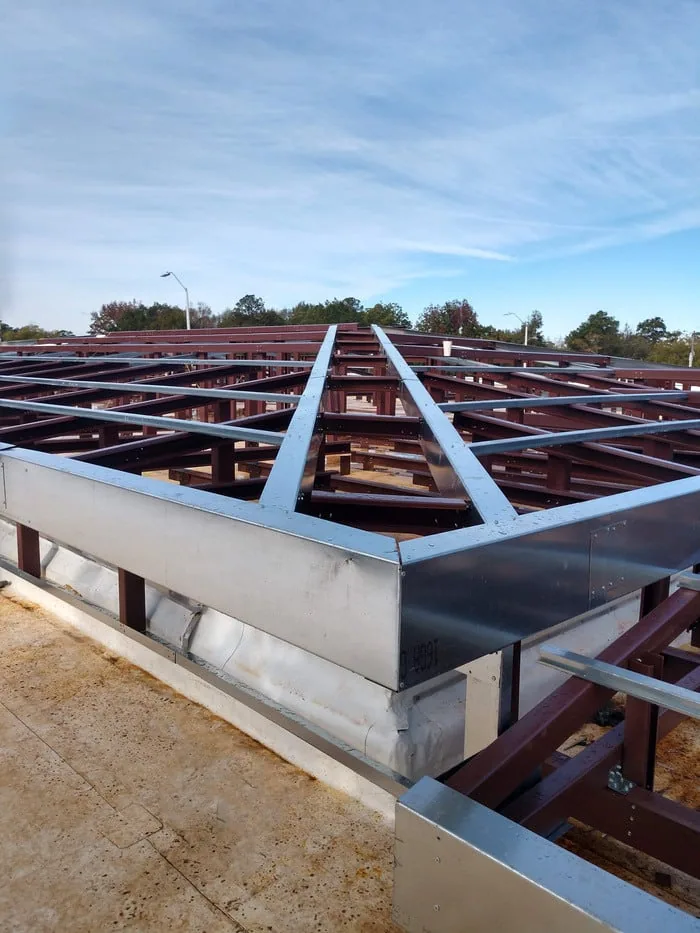
Changing an assembly can change outlet heights and water flow. Before a PVC recover or replacement, we locate drains, scuppers, overflow paths, low points, and transitions at adjacent roofs. Added insulation needs to preserve suitable slope and leave flashing height at curbs and walls. If a low area holds water, the scope should explain whether it addresses slope or only replaces the sheet. New membrane does not resolve an open drainage question.
Fontana's hot, exposed roof surfaces shape the installation schedule. Summer forecasts for the Inland Empire valleys sometimes exceed 100 degrees and may bring extreme-heat advisories. We plan welding and material handling around safe working conditions, then define which section can be left open and how it will be secured if work pauses. The sequence also preserves the property's agreed delivery and access routes.
Our drain and scupper work can define the roofing connection and identify plumbing work outside it. Where membrane meets parapets, gutters, or coping, perimeter metal and flashing needs its own substrate and fastening details. The owner can compare the water path from field sheet through outlet and edge.
Stage the work against the property schedule
Material lead time is one part of procurement. The accepted scope settles sheet, thickness, insulation, cover board, attachment, flashing accessories, and separation layers. A component change can affect compatibility or detail height, so proposed substitutions need review against the whole assembly. We identify what the owner or design team must confirm before release.
At an occupied Fontana property, delivery hours, hoist position, loading lanes, and pedestrian routes influence the sequence. The owner supplies site rules; our plan sets roof zones and temporary protection around them. If several operating areas share a roof, phasing can keep openings small and establish clean handoffs. A heat or weather pause needs a clear close-in boundary before the shift ends.
At closeout we record installed materials, checked seams, flashed penetrations, drain connections, and items outside the roofing scope. The Southwest Industrial Park is one of the broader Fontana areas where commercial facilities need distinct roof and delivery scopes.
Frequently Asked Questions
How do you decide if PVC is suitable for an exhaust area?
We identify the substance, temperature, discharge path, and frequency of contact, then check that exposure against the specified sheet and accessory requirements. The exhaust's presence alone is not enough to choose a product. We can coordinate with the responsible process contact and keep any unresolved exposure question visible in the scope.
Can a new PVC sheet go directly over an old roof?
Only when the existing assembly is suitable for the designed recover. We examine layer count, retained material, moisture, attachment, and height at edges and drains. Asphaltic material or unknown residue may require separation or removal. The proposal states the assembly that supports the recommendation.
What causes a PVC seam to fail?
Contamination, moisture, poor preparation, tool settings, wrinkles, or movement can interrupt a weld. We check test seams and representative work under the day's conditions, then correct an unsound area before it is covered. Flashing transitions and penetrations also need inspection separate from the straight field lap.
Will a PVC recover fix ponding?
A membrane replacement does not by itself change the roof's slope. We locate low points and examine the path to drains and scuppers. If insulation or structural conditions affect drainage, the estimate separates that work from a sheet replacement and identifies the design decision required.
What changes the cost of a PVC project?
Compare tear-off quantity, insulation upgrades, attachment pattern, custom flashing, drain modifications, seam testing, and access constraints. Coverage depends on the selected system and the manufacturer's published requirements. The proposal should identify each layer and detail so bids describe comparable construction.