Commercial Roof Seam Failure Repair
Find and repair open commercial roof seams in Fontana with system-specific preparation, compatible tie-ins, controlled access, and documented closeout.
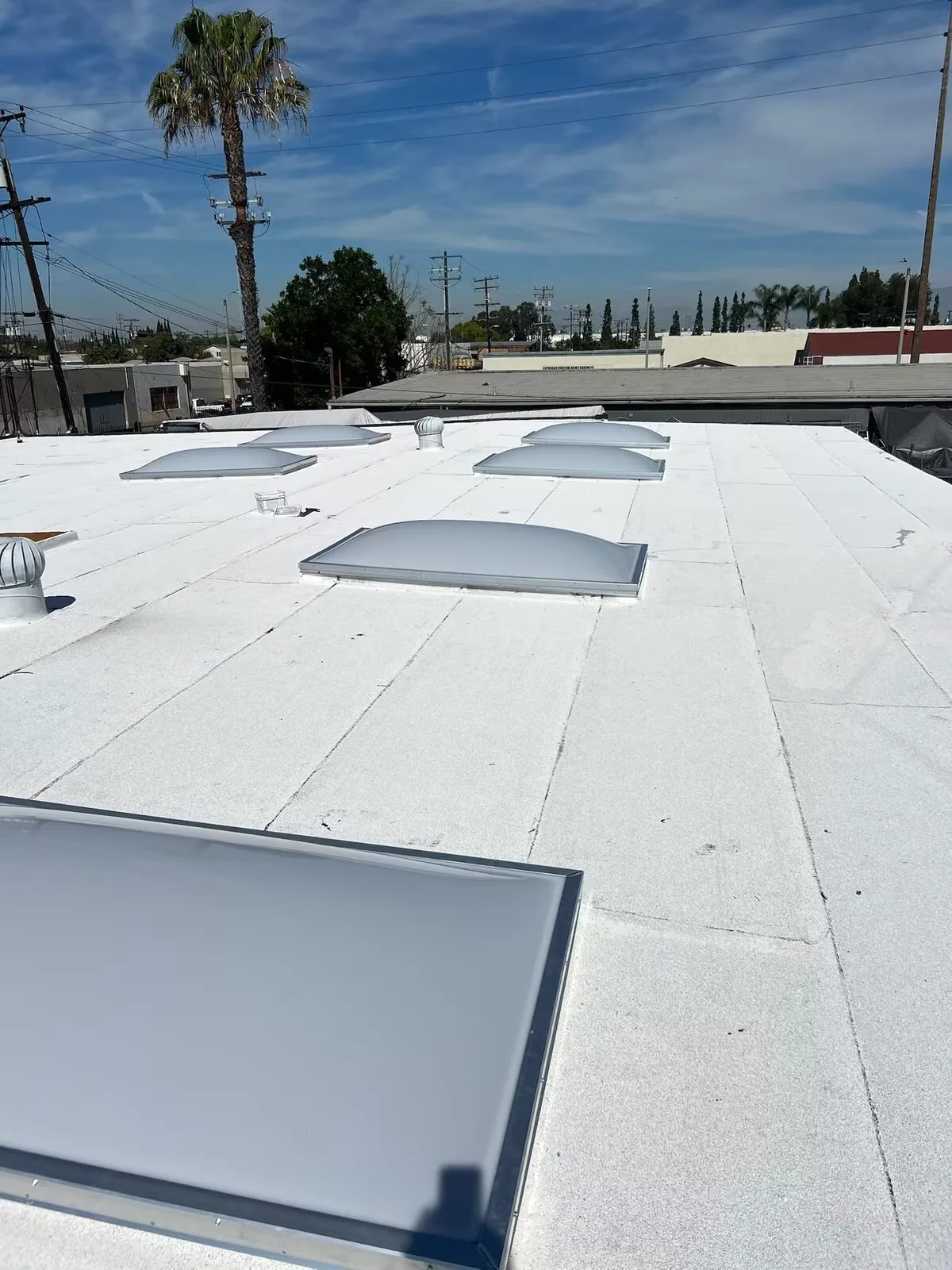
A floor supervisor can release a loading bay for only part of a shift, so a seam repair needs its roof route and ground access set before arrival. We inspect the open lap, surrounding membrane, drainage, and roof edge to learn whether failure is local or continuing along a longer run. The repair method follows the system: welded seams, adhered laps, taped joints, and bitumen transitions do not share one repair recipe. Fontana's summer heat affects exposed work windows and material handling, while the property schedule determines where the crew can stage.
An open lap has a measurable boundary
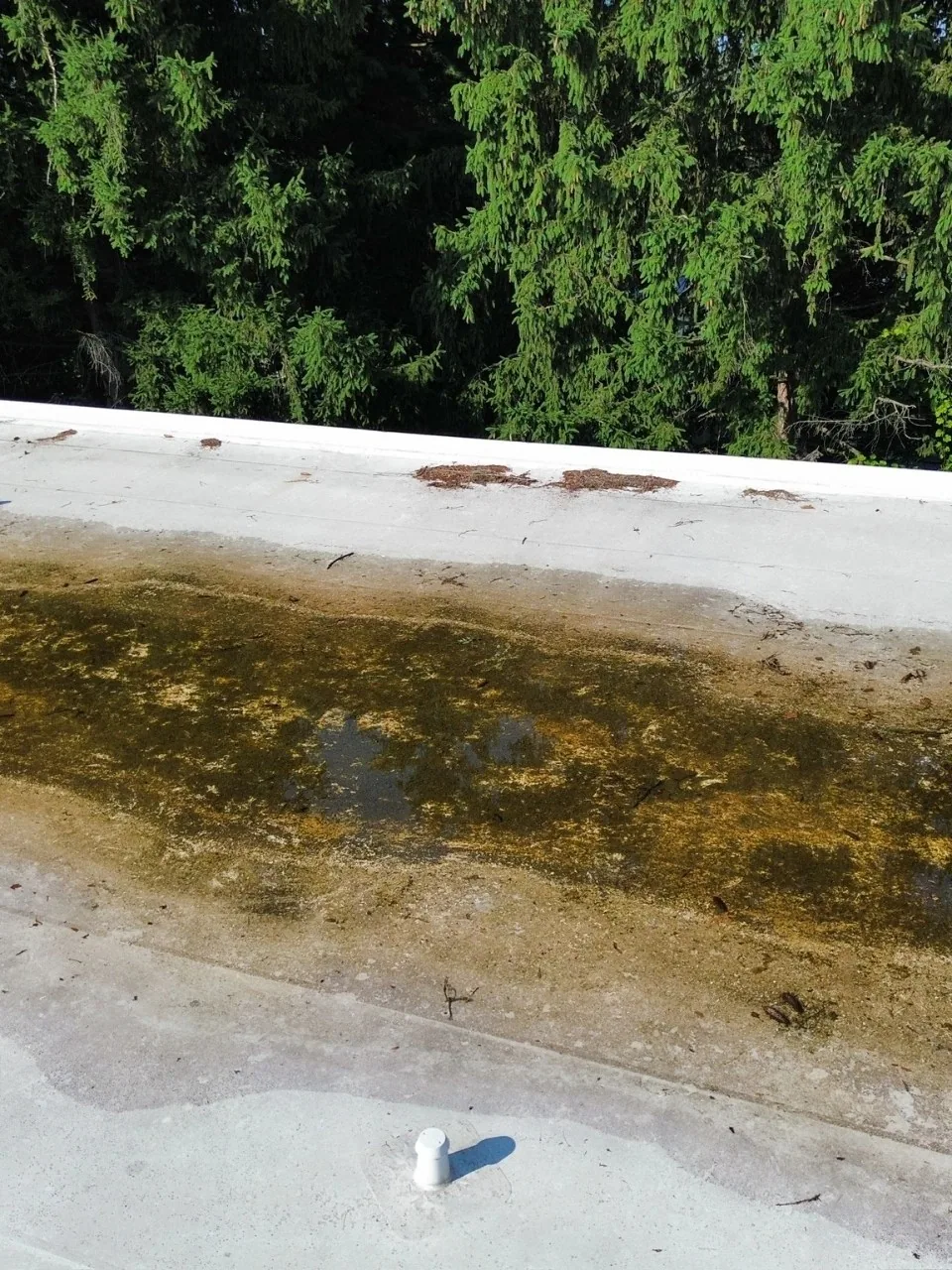
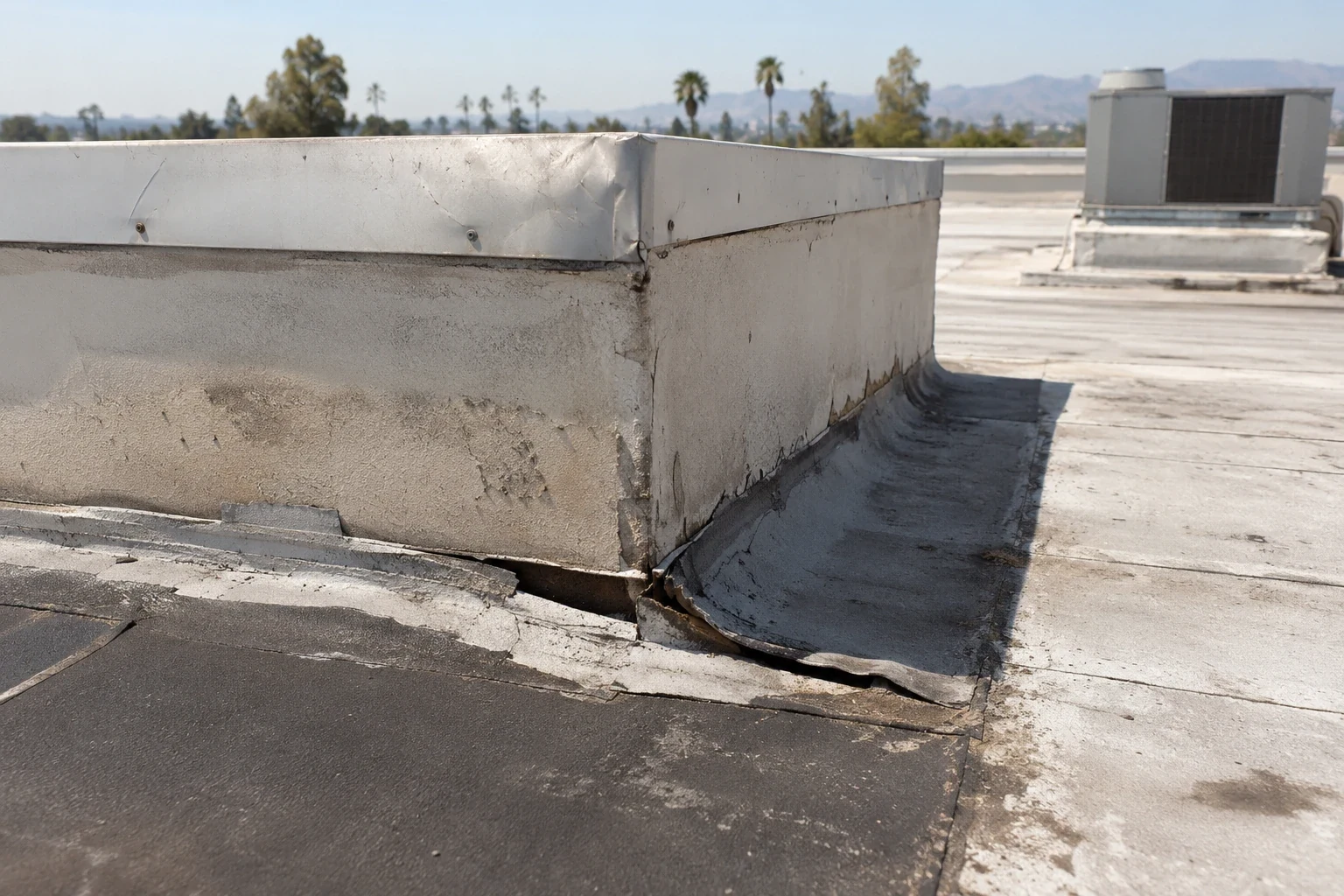
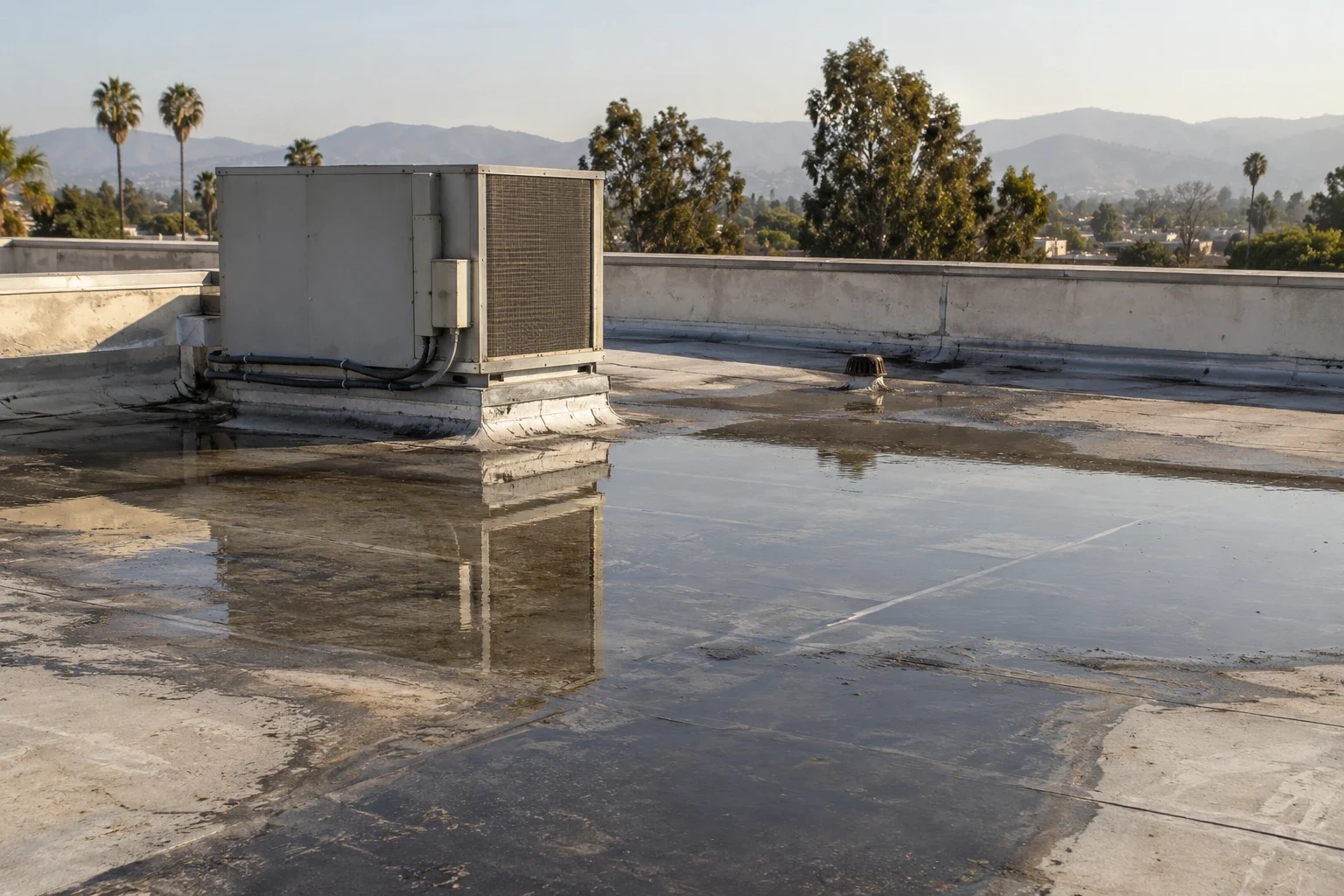
We examine the seam for separation, wrinkles, contamination, fishmouths, edge lift, brittle material, and previous repair attempts. A seam may be open only at one end or along a longer stretch. We mark the visible extent and probe the membrane on both sides in a way that suits the system. The roof plan helps identify the run and nearby penetrations or drainage features. If water is coming in now, interior protection may need to happen before the full repair is scheduled. The leak log, the affected room, and how long it has been since rain help us pick the right area to check instead of testing a seam that has nothing to do with the leak.
Fontana forecasts often exceed 100°F in summer. Heat and sun exposure are relevant to installation timing, but they do not explain why one seam failed. We look at the actual assembly, preparation, attachment, and condition of the surrounding sheet. A commercial roof inspection can map other open seams and roof details, while leak repair can address interior water entry as a separate immediate need.
Material and method must match
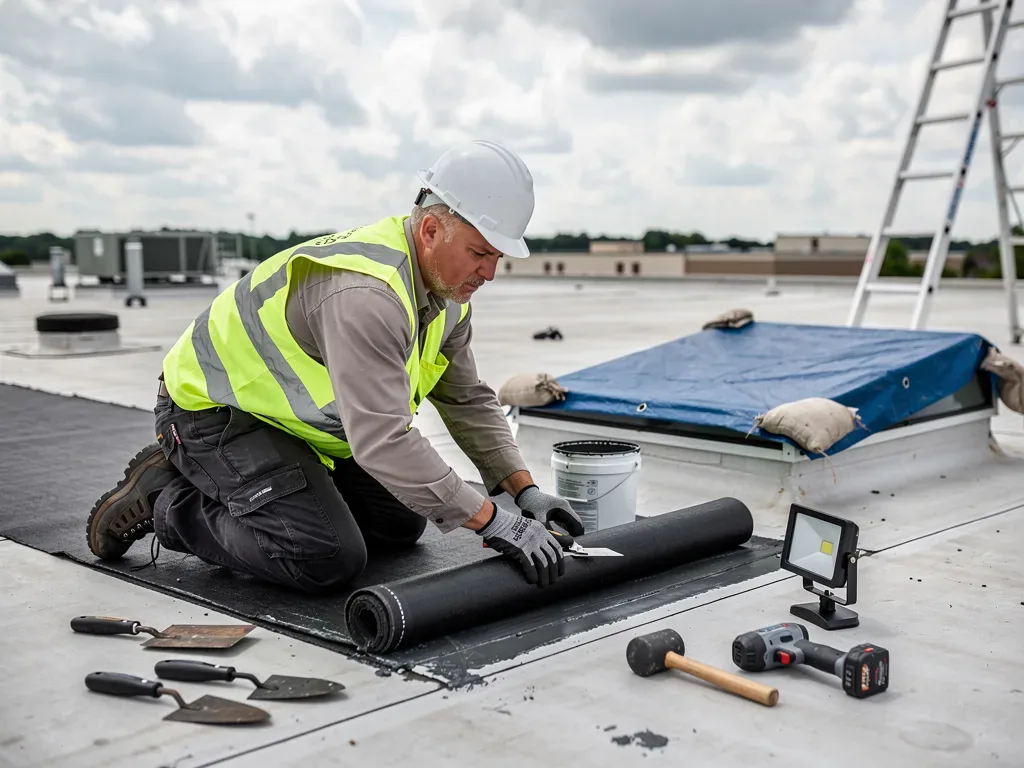
Thermoplastic seams such as TPO or PVC are typically joined with hot air welding; EPDM seams use adhesive or seam tape according to the system; built-up and modified bitumen assemblies have their own lap and surfacing details. We verify the actual roof material before selecting a repair. Applying a sealant or coating across a seam without system preparation can conceal an open lap while leaving the bond unresolved.
We clean and prepare the repair area, remove loose or contaminated material as required, and make the tie-in to sound membrane. The repaired seam needs an appropriate width and termination, and nearby corners or penetrations may need separate work. If the membrane has been punctured as well, puncture repair should have its own boundary. If a curb transition is open, include flashing work rather than stopping at the field lap.
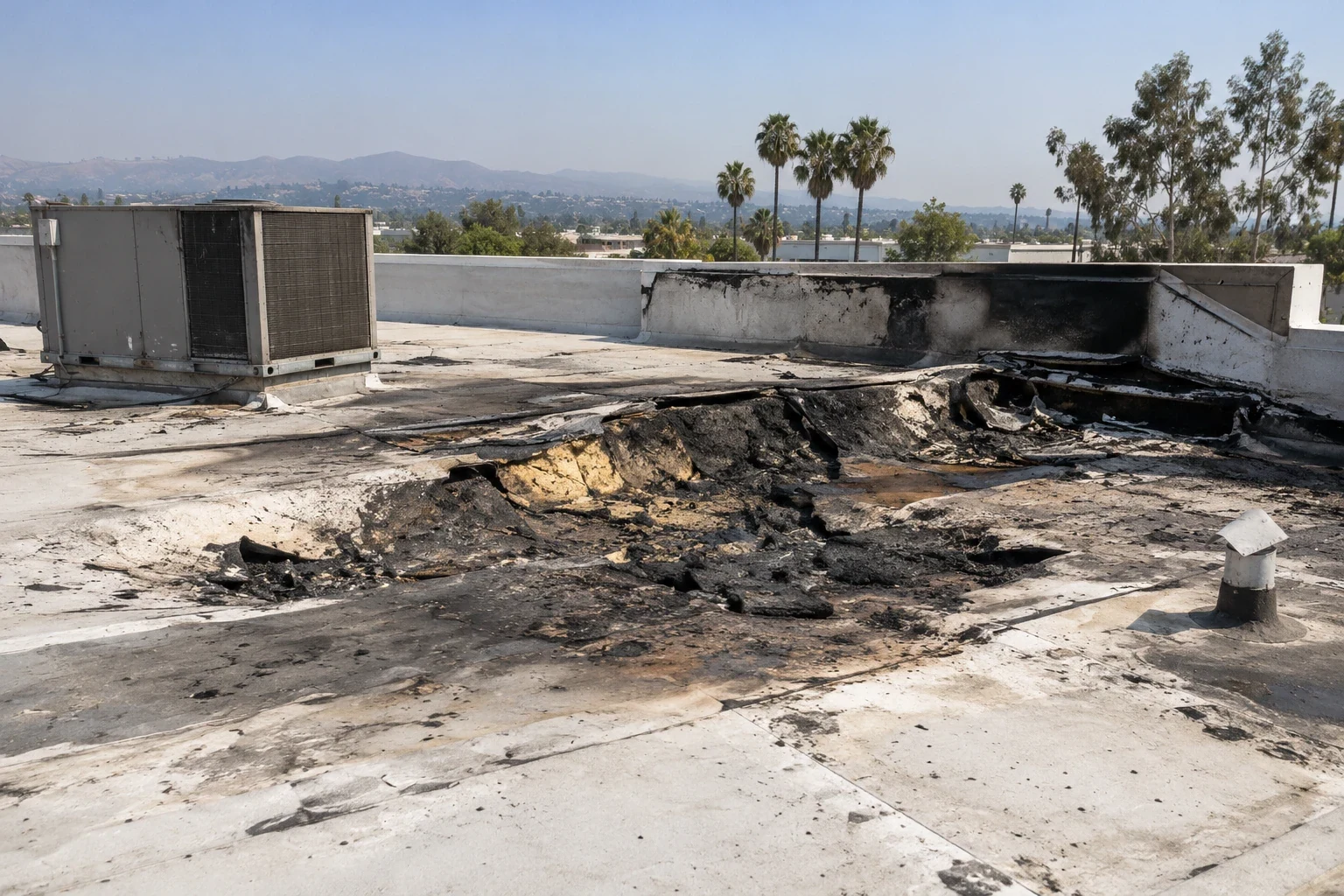
Access is part of the repair
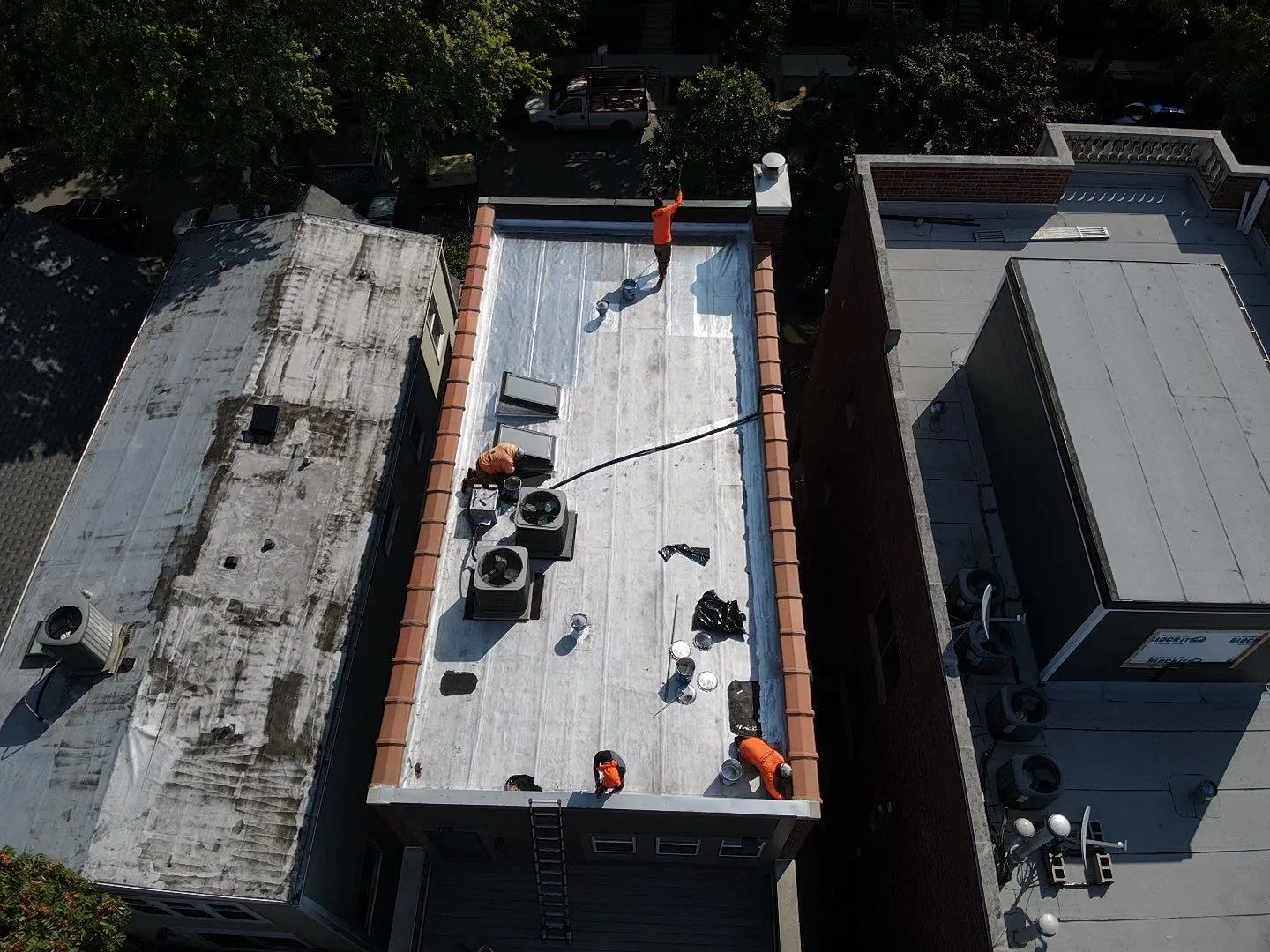
Downtown Fontana's Sierra Commercial Corridor follows commercial activity along Sierra Avenue, while nearby Valley and Foothill corridors have their own tenant and parking patterns. A lift or material drop can block a customer entrance, so we agree on the route and work zone with the property contact. The building's schedule sets the repair window, even when regional freight traffic shifts delivery timing.
On a tight downtown lot, the crew may bring a smaller lift, split deliveries, or work a different sequence to keep parking open. In summer, we plan work hours and roof exposure around heat advisories and the material's installation limits. If a seam cannot be finished before the shift ends, we decide in advance how that area will be covered and kept dry overnight. A Southwest Industrial Park warehouse and a downtown storefront each get their own access plan.
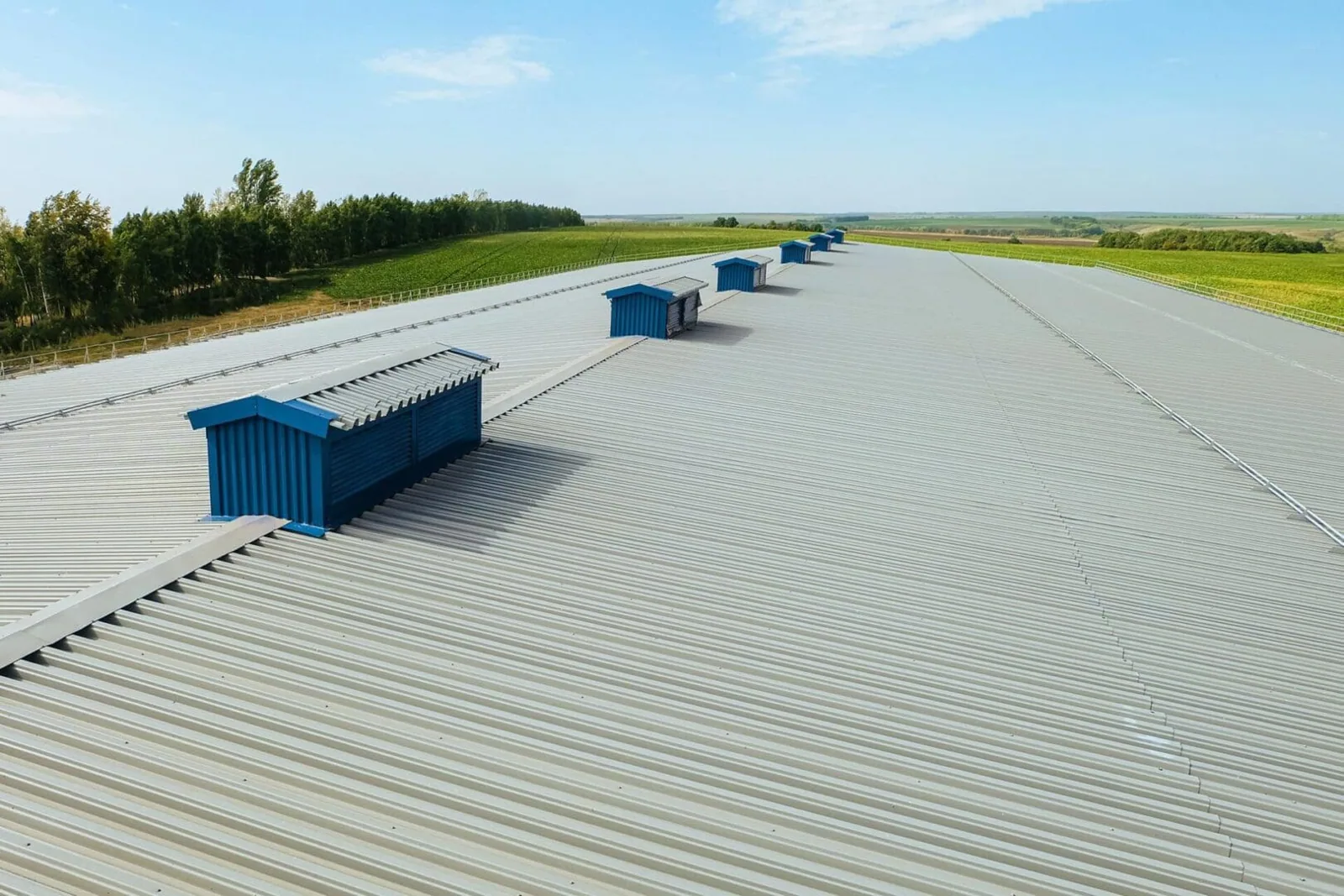
Repair now or address a larger pattern
A single open lap can be a contained repair when adjoining membrane remains sound and attachment is secure. Multiple open seams, brittle sheet, wet insulation, or repeated failures can point to a wider condition requiring more investigation. We record the seam locations and repair history, then compare a patch with restoration, recover, or replacement if the evidence supports that discussion. Roof age or one leak alone does not answer the question.
The repair method may also change where the seam meets a drain, curb, wall, or roof edge. A field lap cannot be treated as an isolated strip if the open line continues into a flashing transition. We trace that connection and set a stop point where the surrounding material remains sound. If the roof has several layers or prior overlays, the attachment and access method may need review before removal. A focused opening can answer a question about the underlying assembly, but the area must be restored and protected as part of the approved scope.
Repair cost depends on the length and number of seams, access, membrane type, preparation, insulation condition, and whether flashings or roof openings also need work. If water has reached insulation, a moisture survey or test opening may clarify the affected area. A condition report can organize observations for the owner, and capital planning can put broader work into a funded sequence. We keep the urgent tie-in scope separate from a future renewal option.
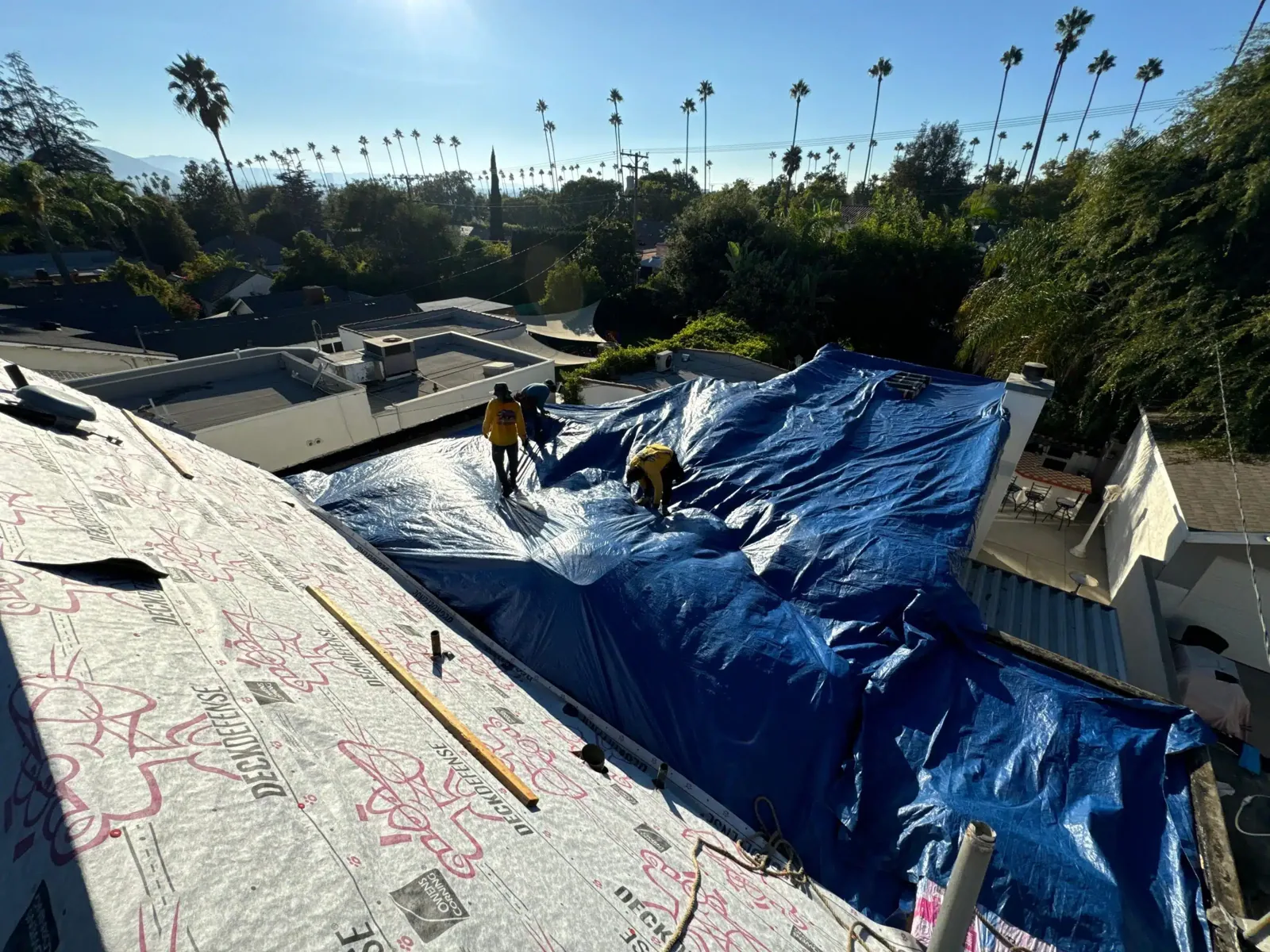
The repaired lap must be traceable
After repair, we check the seam and tie-in for continuity, remove or note any temporary materials, and record the completed location. Photos and material details help the next inspector tell the repaired area from an original seam. If the repair had to stop because nearby material was unsound, we state where it stopped and what comes next. Before the crew leaves, the site contact knows which roof zone was worked, any access limits still in place, and whether a temporary cover remains. The facility manager needs that before traffic resumes below or equipment returns to the area.
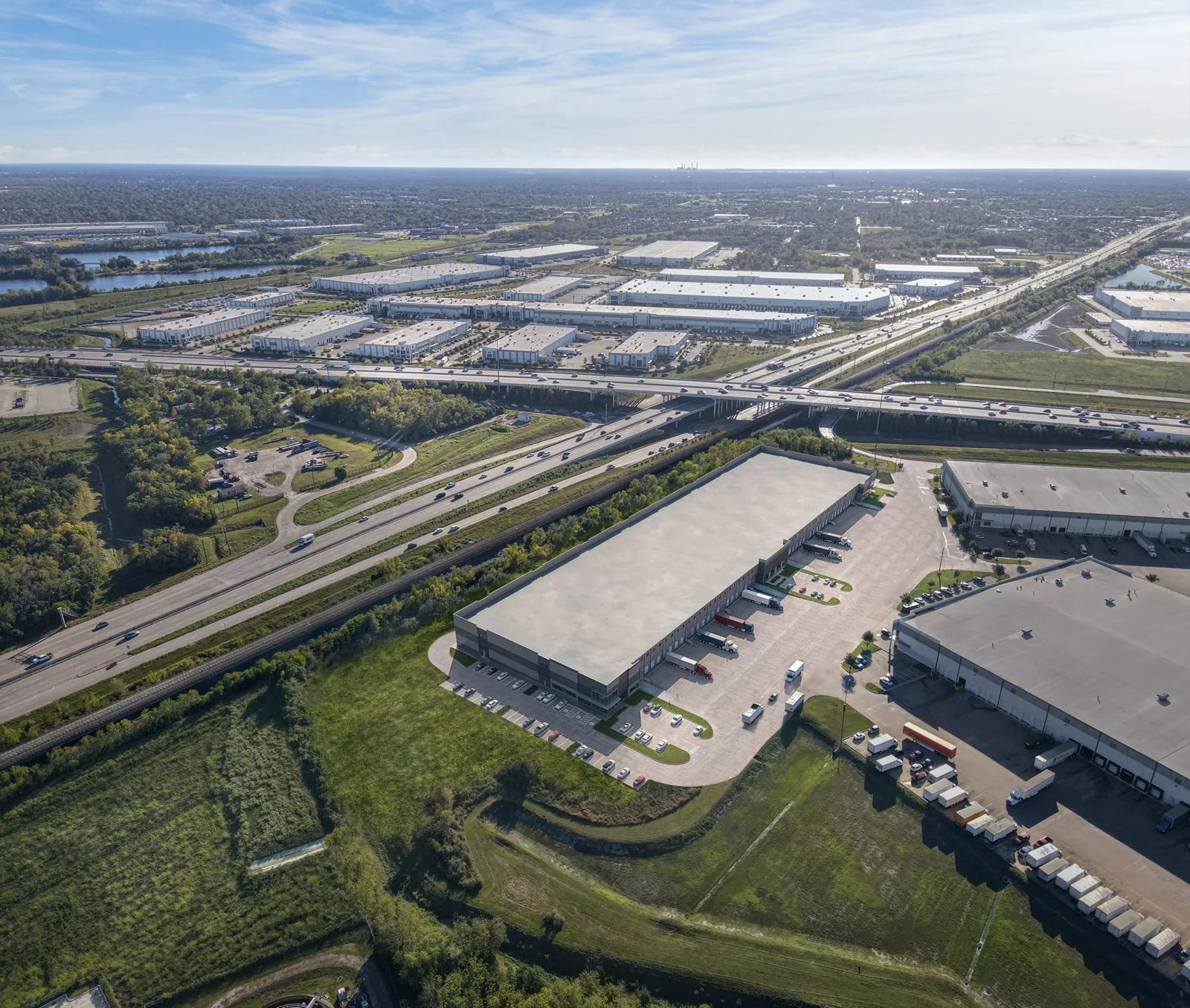
Fontana properties along freight routes and commercial corridors have different access constraints, but every seam repair should identify roof area, system, visible length, method, and closeout. Schedule an inspection with the roof plan, system records, and any leak log. We will locate the seam failure, confirm the compatible repair method, and set a work window that lets the roof be sealed before the area goes back to normal use. Closeout also confirms whether the repair stopped at the marked lap or included connected edge flashing. If moisture testing or a test opening is still pending, we list it with its roof zone and access needs.
Frequently Asked Questions
Can every seam be repaired by welding?
No. Hot air welding applies to compatible thermoplastic membranes, while EPDM, modified bitumen, built-up, and metal systems need their own preparation and joining details. We confirm the material and inspect the existing seam before selecting the method.
How do you know whether the whole seam is open?
We inspect the visible run, check adjoining material, and map the boundary on the roof area. Access and surface conditions can limit what is confirmed during a visit. If the failure continues beyond a safe repair window, we secure the area and schedule a follow-up rather than imply the full run was repaired.
Could a seam leak be caused by a nearby curb?
Yes. Water can enter at one detail and appear near another, so we check penetrations, curbs, edges, and drains around the reported area. The report separates the observed entry point from the interior symptom when evidence allows.
Does Fontana heat make seam failures worse?
Fontana summer heat affects exposed roof surfaces and safe installation windows; seam condition depends on material, preparation, movement, attachment, and repair history.
What should operations prepare?
Confirm hatch access, loading or tenant restrictions, lift placement, and the area below the repair. Provide the roof plan and any records of prior work. That lets us set the work zone and closeout timing before materials arrive.