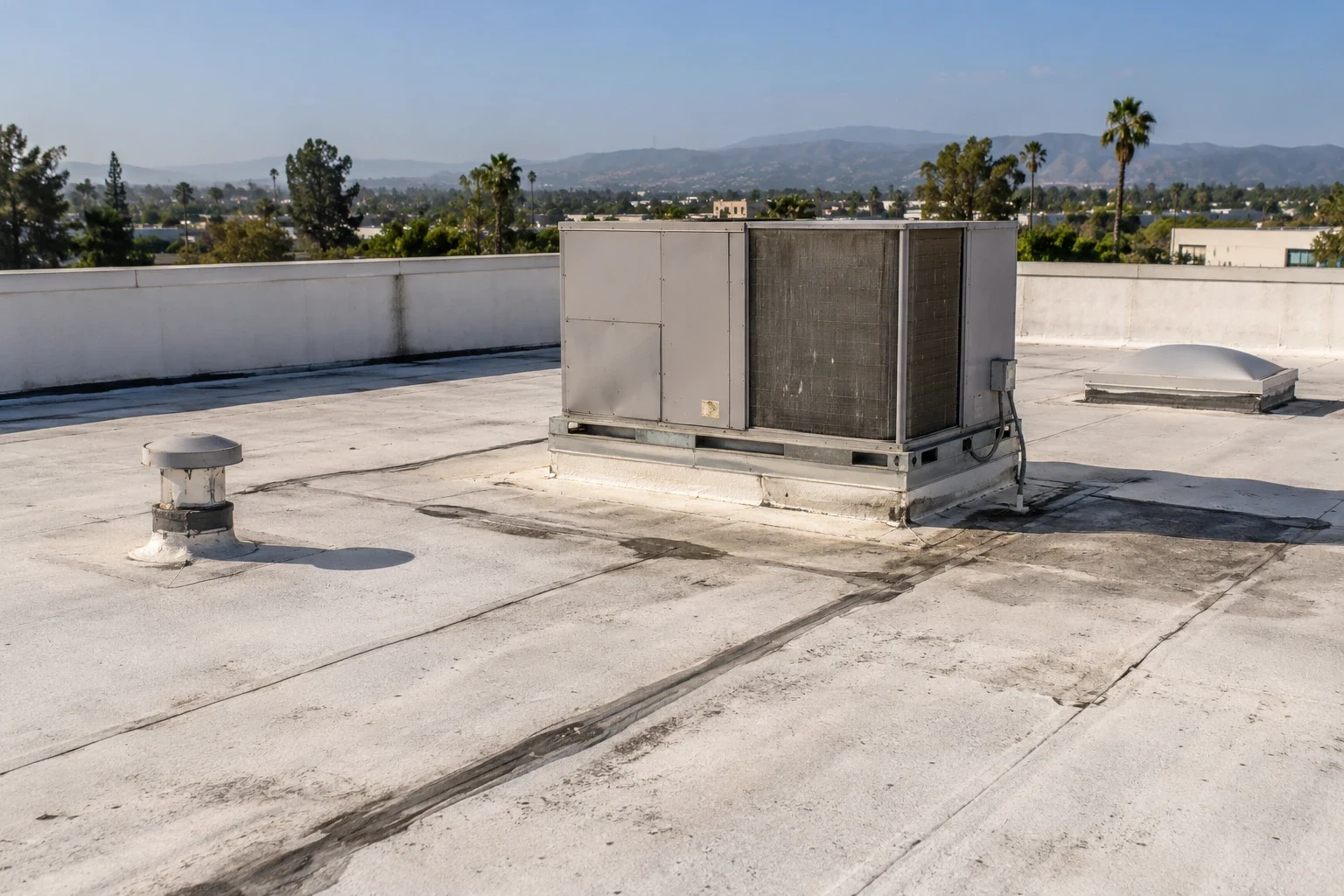
Edge Metal, Coping and Gutters
Edge metal, coping and gutter work in Fontana, CA: measured profiles, sound wood blocking, proper attachment, drainage connections and membrane tie-ins planned before fabrication.
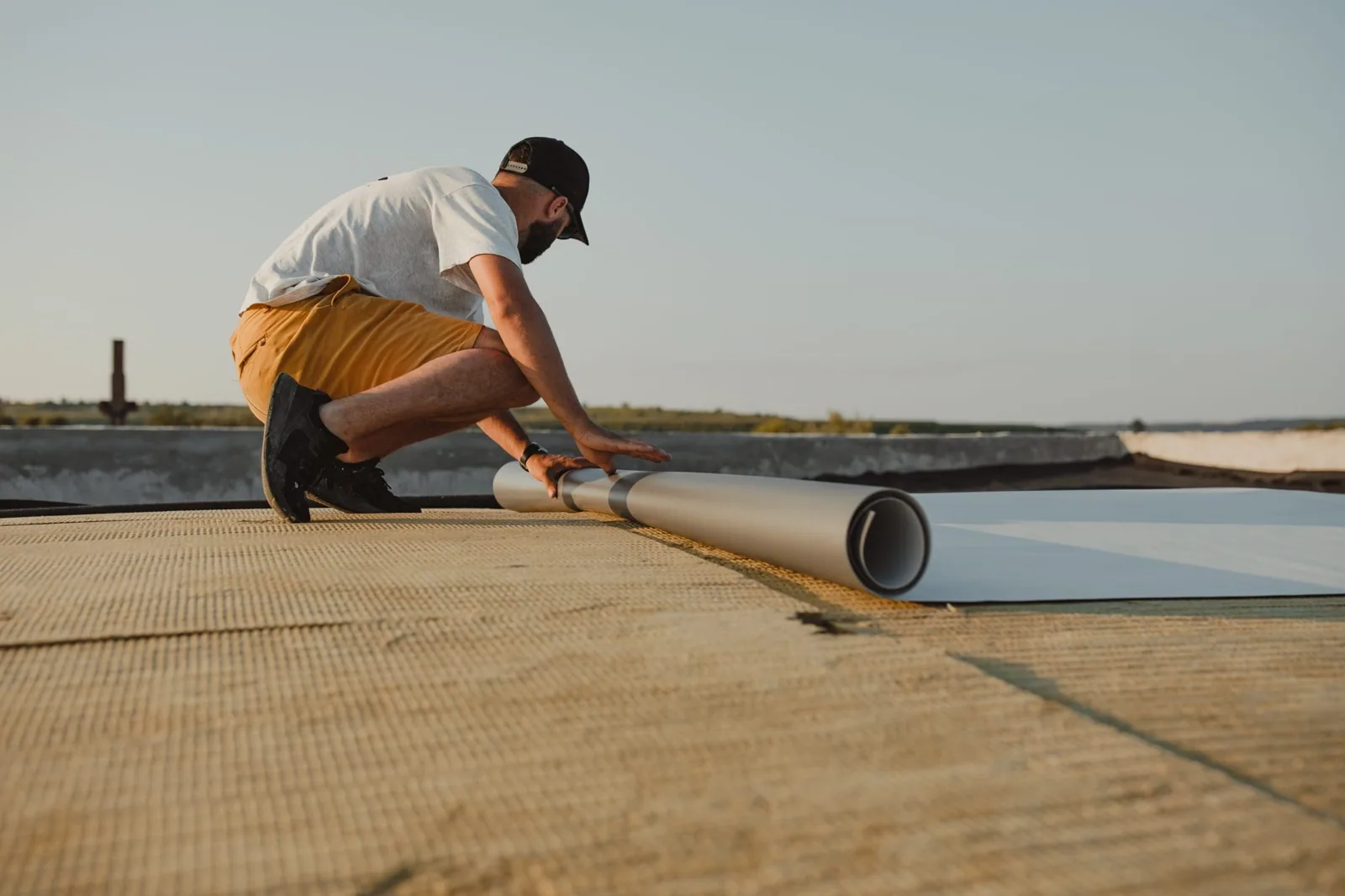
A 10-foot or longer coping piece that will not fit through the building's delivery route can change fabrication, handling and the work schedule before the first edge is opened. Commercial Roofers Fontana plans edge metal, coping and gutter work in Fontana, CA, by measuring the existing profiles, checking what the metal attaches to, and confirming how material will get to the roof. Owners get pricing for the new metal and for the wood blocking and membrane work underneath it, not a metal-only allowance that assumes everything below is in good shape.
Edge metal, coping and gutters each do a different job, so we sort out which detail the work will actually fix and where the roofing crew and sheet metal crew each take over. New metal over rotted blocking or a loose membrane edge will not stop the leak. We inspect those layers before ordering and explain how prep, piece sizes and site logistics affect the price and timing.
Measure the existing profiles
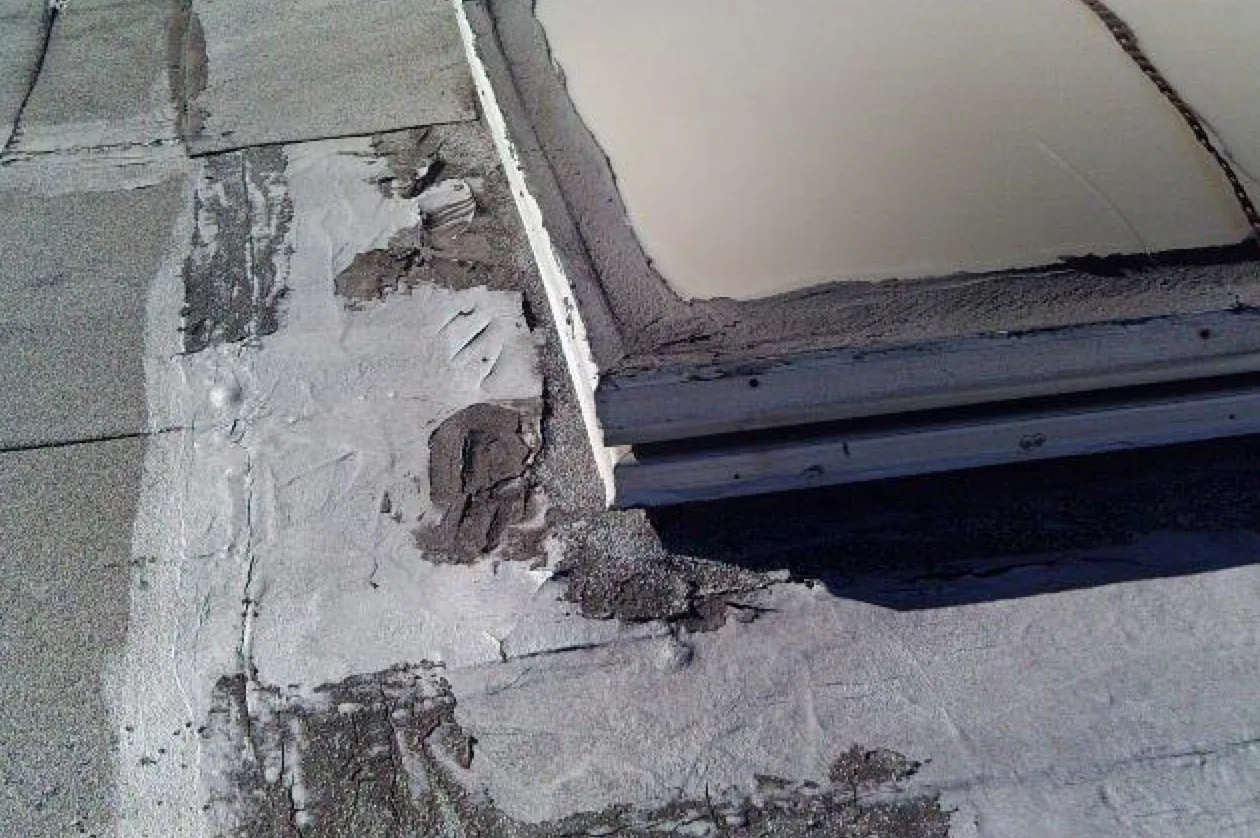
We compare any drawings or past repair records with the actual edges, copings, gutters and downspouts, noting where a different roof level or old repair changes the profile. We photograph each defect and the area around it, so the new metal is fabricated to fit what is really there. Profiles, exposed blocking and the membrane tie-in are measured before fabrication, and any area that needs closer access is flagged.
A perimeter roof inspection records how the membrane ends at the edge, the condition of the metal and any blocking we can see, and notes what we were able to inspect before proposing a full replacement. The new profile may need to be taller if the roof is getting new insulation, or reshaped where an old wall detail changed. We size the metal and the prep work up front, rather than ordering metal first and solving fit problems on the roof.
Repair the blocking and attachment underneath
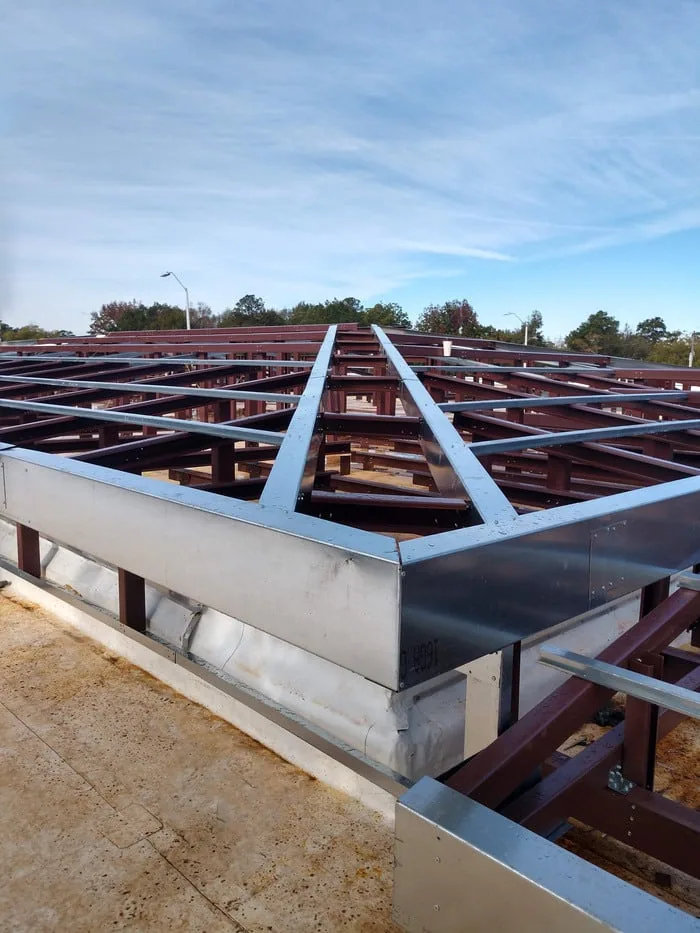
New edge metal has to fasten into sound wood blocking with the right attachment pattern, and getting there may mean cleaning, pulling or replacing rotted blocking first. Driving extra screws into a loose edge is not a fix; the roof system and wind design set the fastening. If an engineer needs to weigh in on attachment, that review is scheduled before we lock in the repair approach.
Where the edge problem runs into the roof field, commercial roof repair may be needed to tie the membrane in properly, and a damaged wall or parapet above may need a mason or siding contractor. The estimate lists those tasks alongside the metal footage instead of assuming new coping fixes everything around it. If the repair area gets larger, the estimate explains what extra material it reaches and why.
Follow the water from gutter to downspout
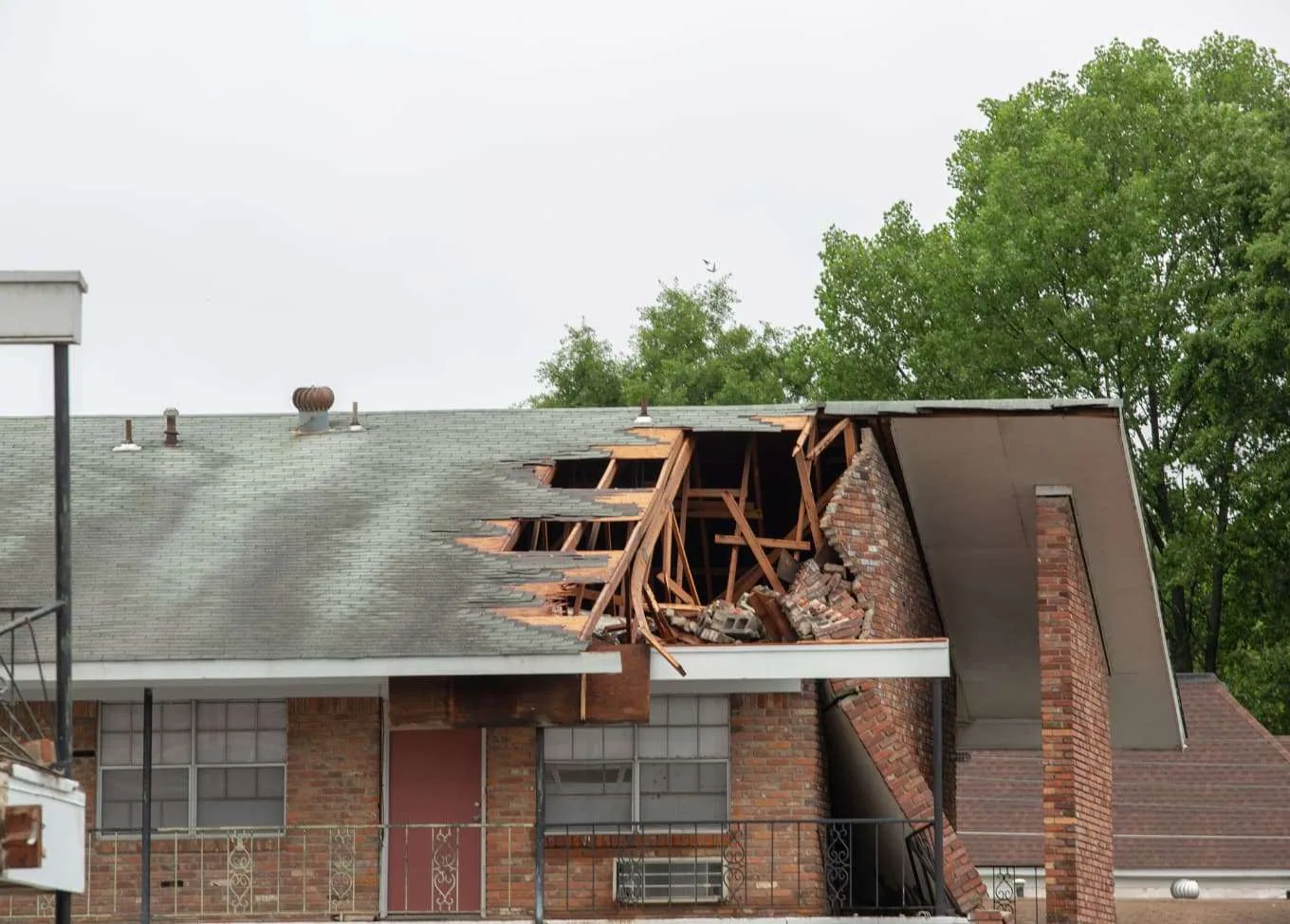
We look at each gutter together with the roof edge that feeds it and the downspouts that drain it. Clearing debris is a different task from replacing damaged gutter sections or fixing a gutter that is too small or pitched wrong. A new gutter does not prove the downspouts and underground lines work. We trace the route we can see and refer plumbing or structural issues to the right trade before calling the drainage fixed.
Roof drain and scupper work compares the finished roof and metal heights with where the water needs to go, using field measurements and design review before any slope or outlet change. The detail has to suit both the existing edge and the new roof system. The owner can compare a full metal and roofing repair with a simple cleaning visit, knowing which one actually addresses a recurring overflow or leak.
Test what is hidden before deciding
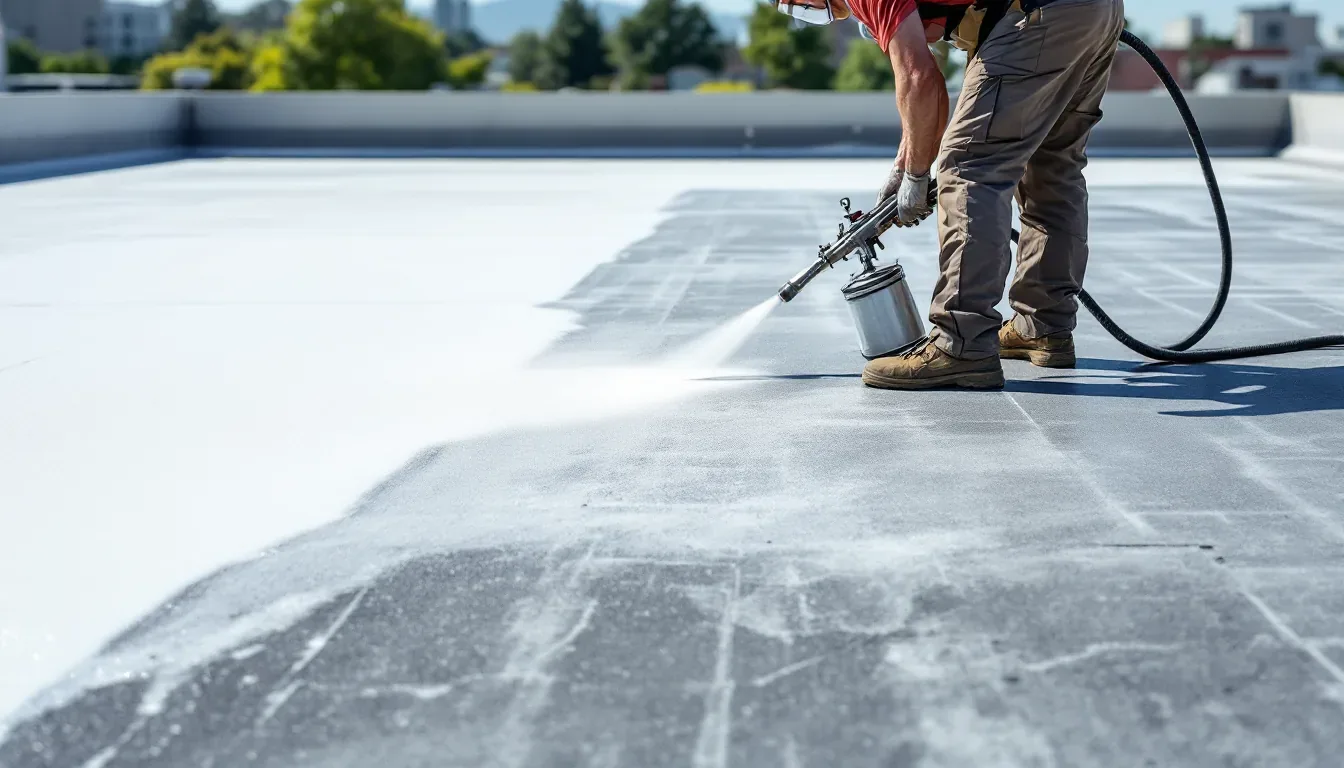
When hidden layers could change the repair, we decide what we need to know, then plan approved test cuts and same-day patches. Each test shows conditions at that spot; a larger repair or replacement needs enough test locations to back it up. An edge that looks intact from the field does not prove the blocking and insulation are sound, or that a new system can go on without an attachment review.
Infrared scans can point to wet areas when conditions are right, but surface finishes and rooftop units affect the readings, so we confirm with cores before recommending removal. When staff report water inside, we note when and where it appeared separately from what we find outside, because the nearest damaged edge may need fixing without being the whole leak path. If a wall or equipment issue is still unresolved, it stays on the list for the right trade.
Plan fabrication, delivery and site access
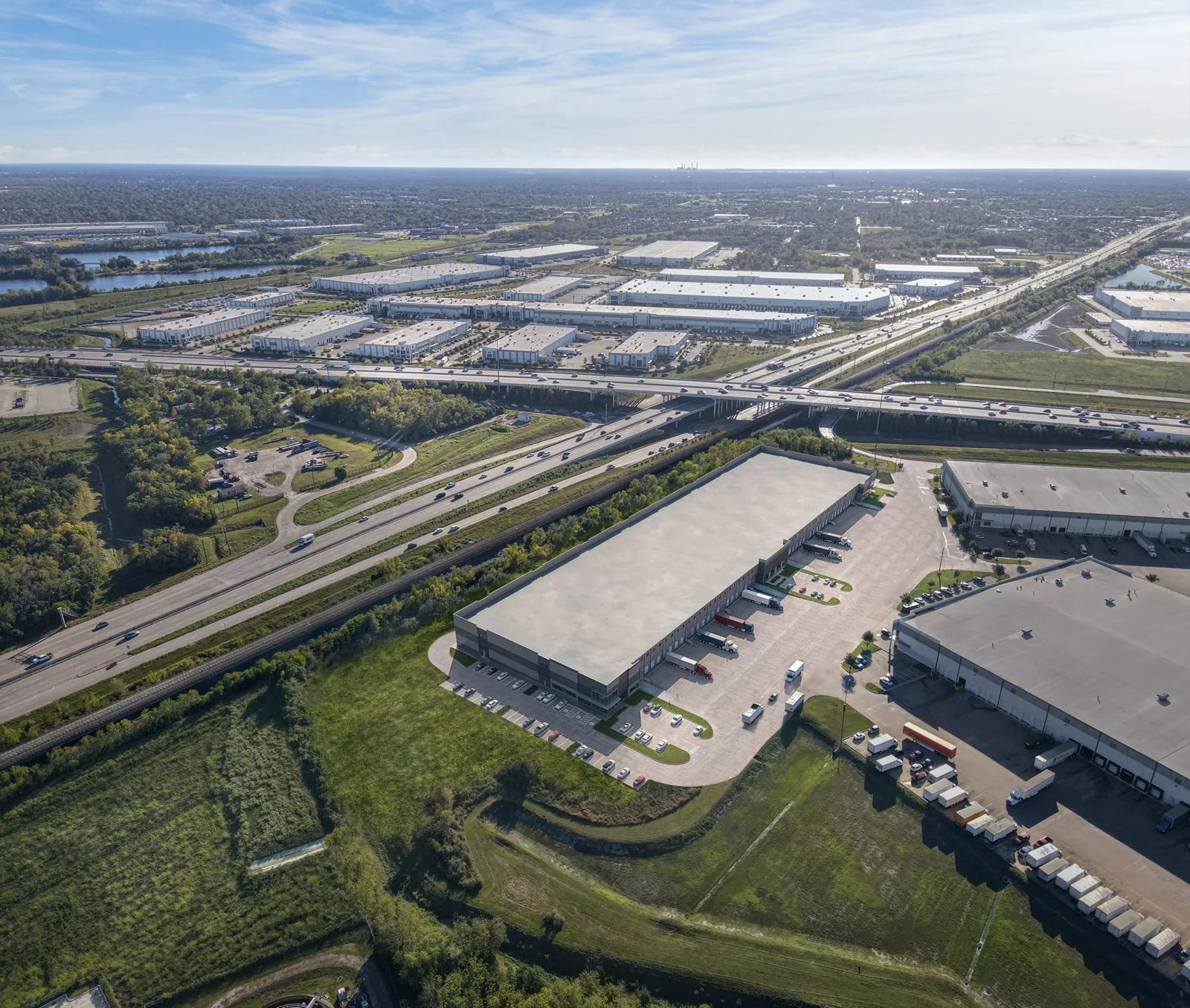
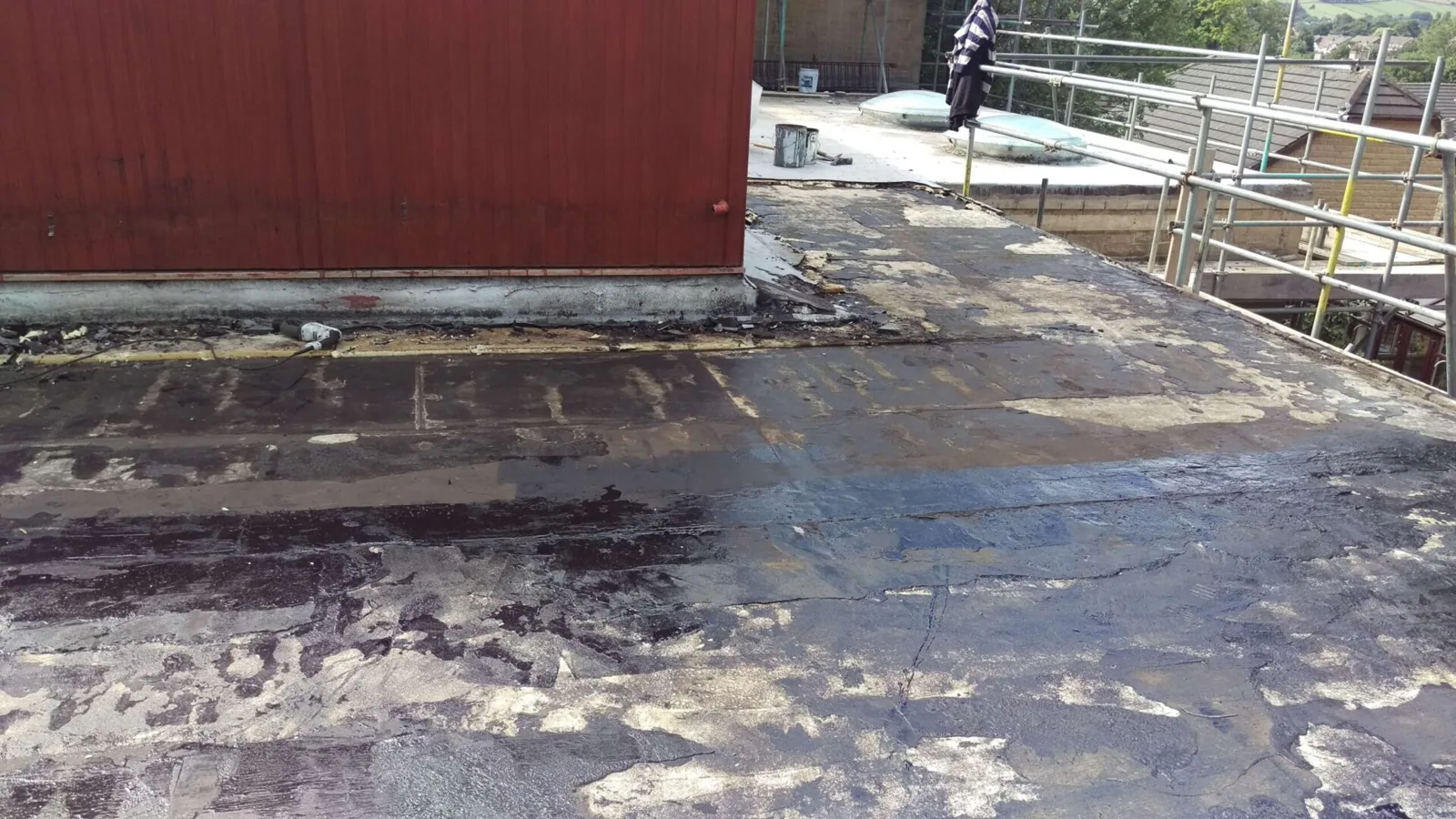
At a Southwest Industrial Park building, trucking and distribution traffic means we confirm the receiving contact before long metal pieces or old material move through the yard. The site contact confirms the approach, staging lane and activity below the roof edge. Piece lengths, lift requirements and approved routes may mean extra trips or setups, and that time belongs in the price along with fabrication and prep.
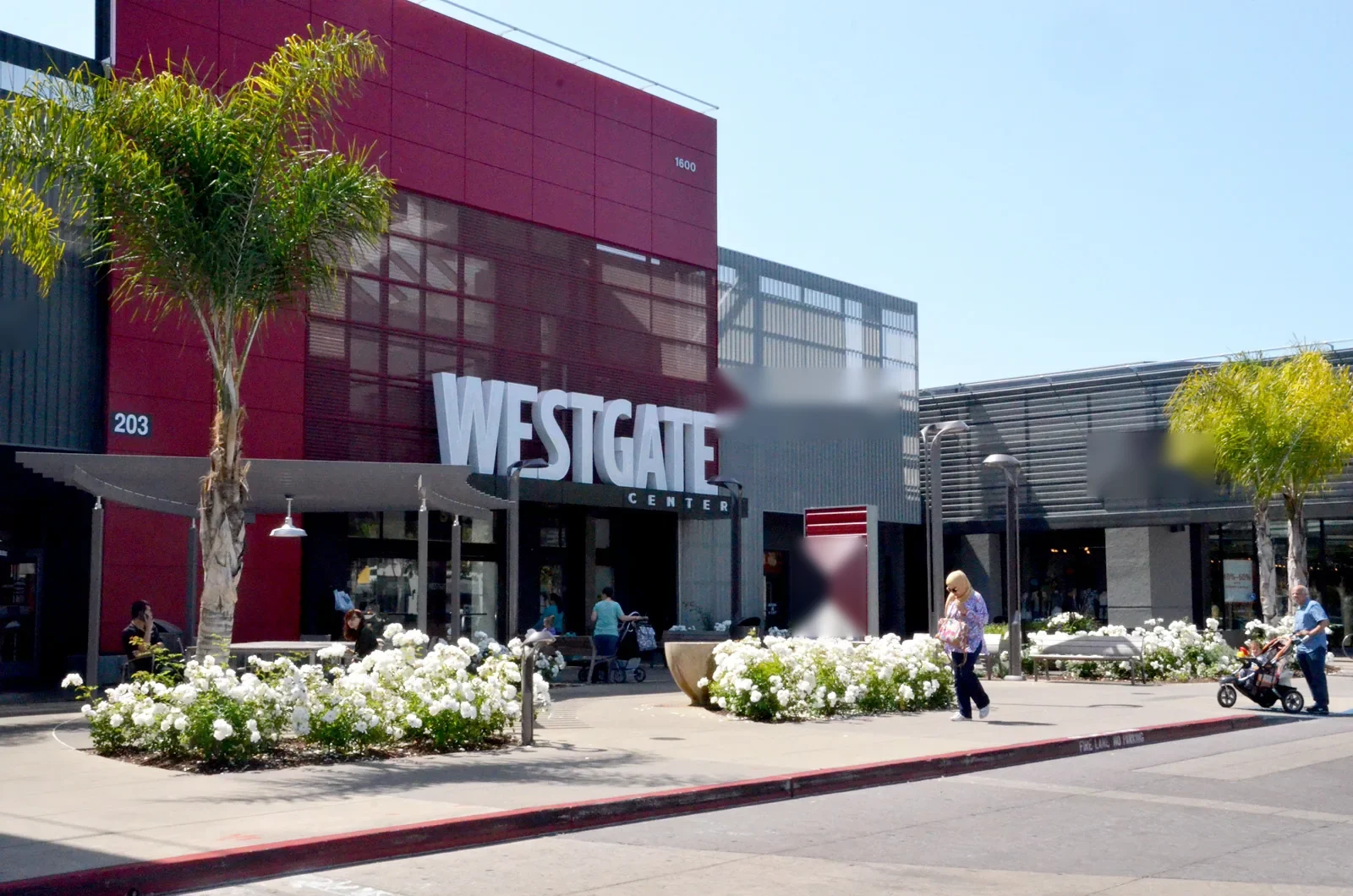
At West Gate, business park, office and retail tenants raise questions about entrances and working near occupied areas, and each property's manager answers them. Mechanical contractors handle any unit shutdowns with the facility. Our crew keeps air intakes clear during the work. If an HVAC unit near the edge needs to be shut off, its contractor schedules that, separately from our access to the roof.
Schedule the tie-in when the prep is ready
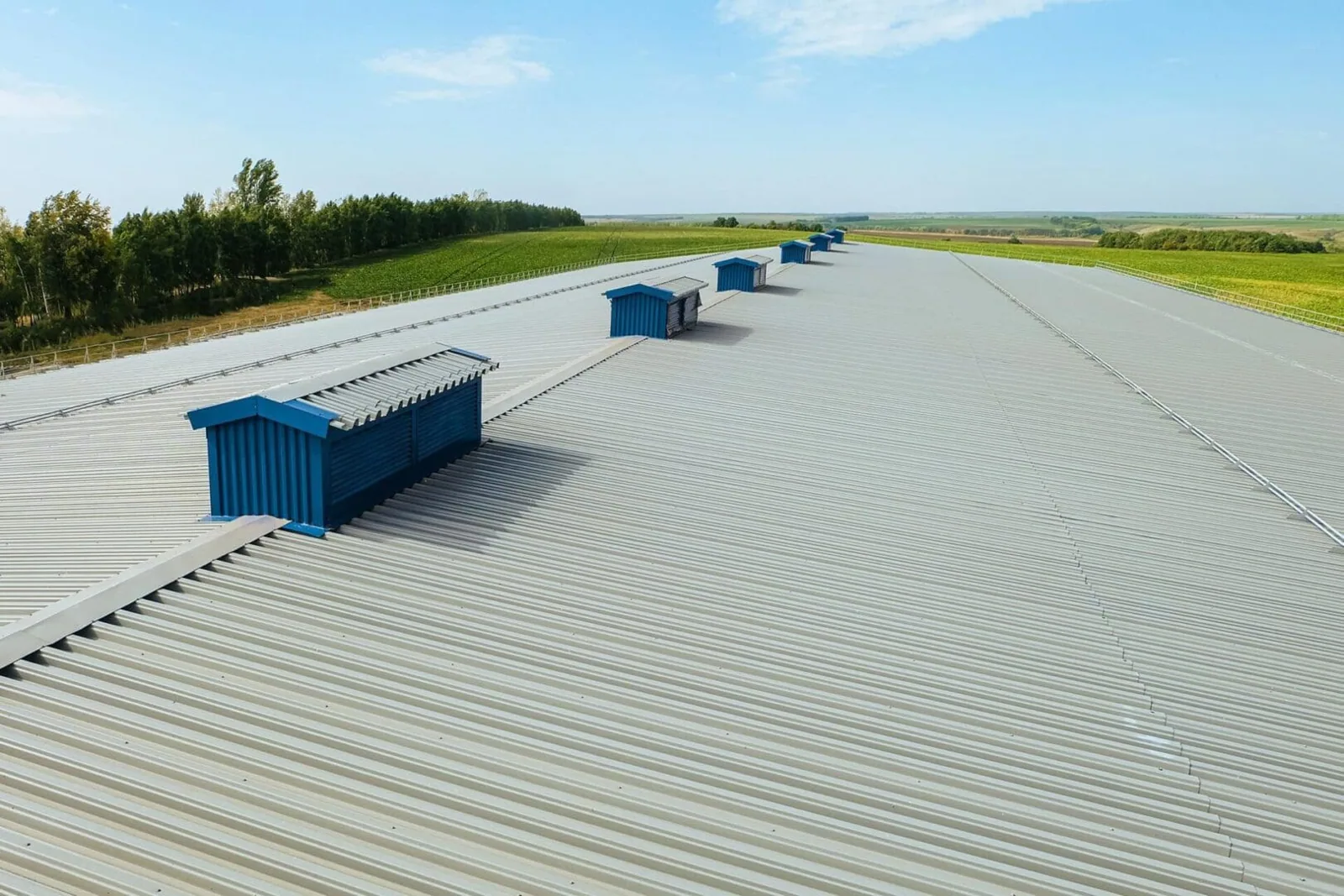
We line up shop drawings, material lead times and prep work before setting the install date, because delivered metal cannot make up for missing blocking or an unfinished wall flashing above. Each day's work area needs temporary protection and a finished stopping point. Fontana's summer heat makes surface temperature and sealant or adhesive limits worth checking on the day, while fastening always follows the specified detail.
Occupied-building reroofing plans account for activity below the edge and a workable order for removal, blocking repair and the final roof tie-in. If we uncover more damage, we mark its location, measure it and send the owner the cost and protection plan for approval. The original scope stays clear, so hidden rot does not quietly turn into a bigger bill.
Record the finished perimeter
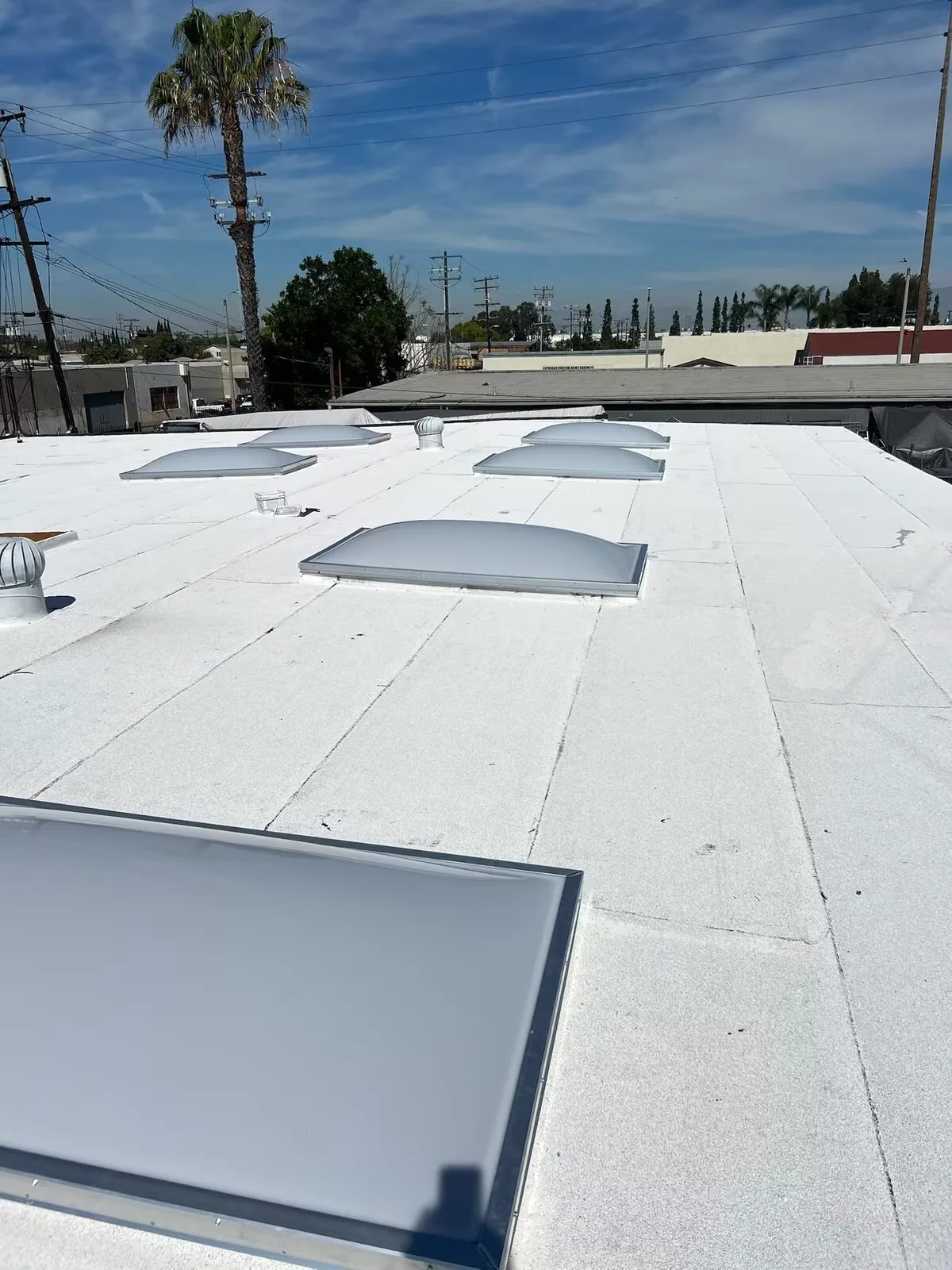
Before ordering, we confirm the permit requirements and any wind, attachment and structural inputs for the work. At closeout, the owner receives photos of the finished profiles and tie-ins, the products installed, approved changes and the inspections performed, with notes on what each covered. Any equipment, wall or downspout piping work that was outside roofing is listed separately, so it is clear exactly what the perimeter job included.
The roof condition report keeps the before findings and finished details on file for future service, along with manufacturer care and warranty terms. A future reroof or equipment change should check how it affects the new edge before anyone alters it. If a new leak or loose piece is reported later, it is dated and checked against work done since, rather than blamed on the old problem or assumed fixed by the new metal.
Frequently Asked Questions
Does new coping fix everything underneath it?
No. We inspect the blocking, attachment and the roof and wall tie-ins before pricing. If the wood is rotted or the wall detail is failing, that repair is included, and work for other trades is listed separately.
Can a loose roof edge just be fixed with more screws?
Usually not. We check the blocking and the specified edge detail first. The fastening pattern comes from the roof system and wind design, so the fix is a proper attachment, not extra screws added by eye.
What affects metal fabrication and delivery timing?
Profile sizes, piece lengths, the delivery route, lift needs and the property's access rules. We confirm those before ordering so the metal arrives when the blocking and membrane are ready for it.
Will replacing a gutter solve every drainage problem?
Not always. A new gutter fixes the gutter itself, but clogged downspouts, underground lines or poor pitch may still need attention. If the visible metal work does not cover the full drainage route, we say so and refer the rest.
What should future roof work use from the closeout records?
Profile details, photos of the finished edges and approved changes, plus manufacturer care and warranty terms. Before a new roof layer or equipment change, check how it affects the edge metal.