Chino
Scope commercial roof repair, replacement, and maintenance in Chino, CA, with property access, drainage, occupied-site phasing, and work limits defined.
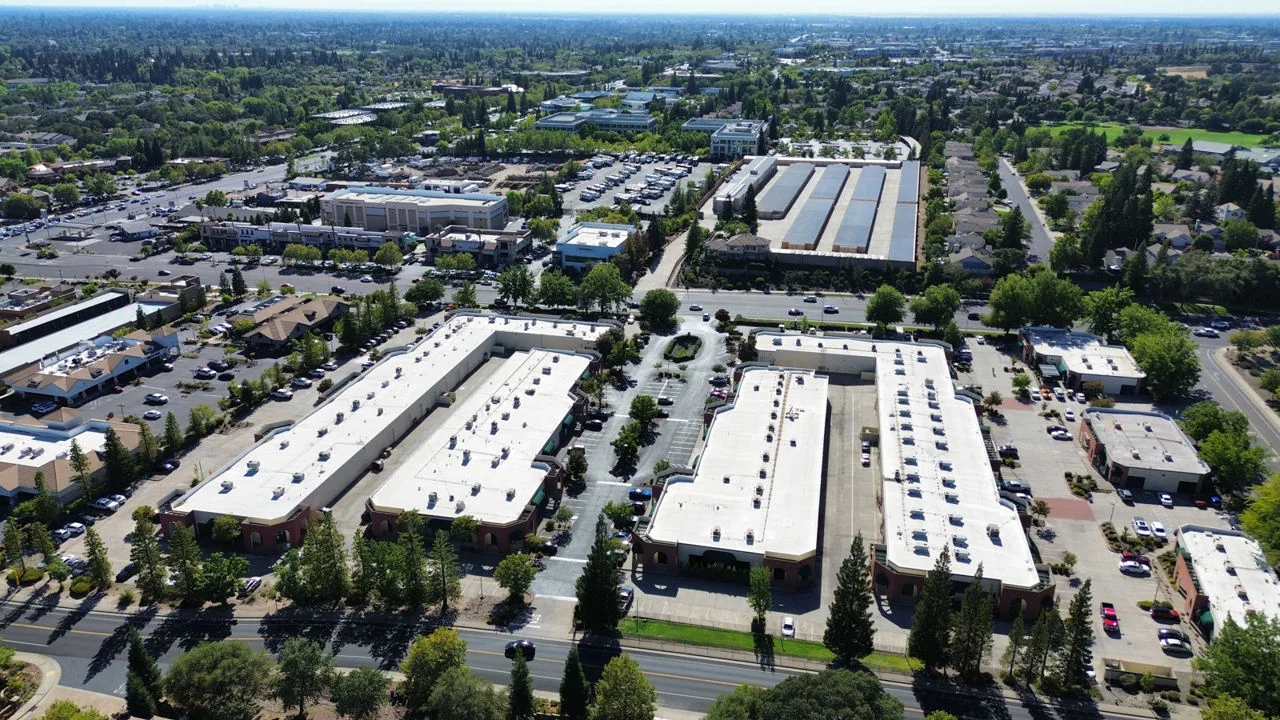
Retail, restaurant, office, and industrial properties give Chino a varied commercial roof mix. We inspect the assembly, leak history, drainage, and operating requirements before setting repair or replacement work in Chino, CA. A roof plan identifies where materials arrive, which area opens first, and how the building stays protected at each shift change. That sequence matters when tenants, customers, staff, and deliveries use the property below.
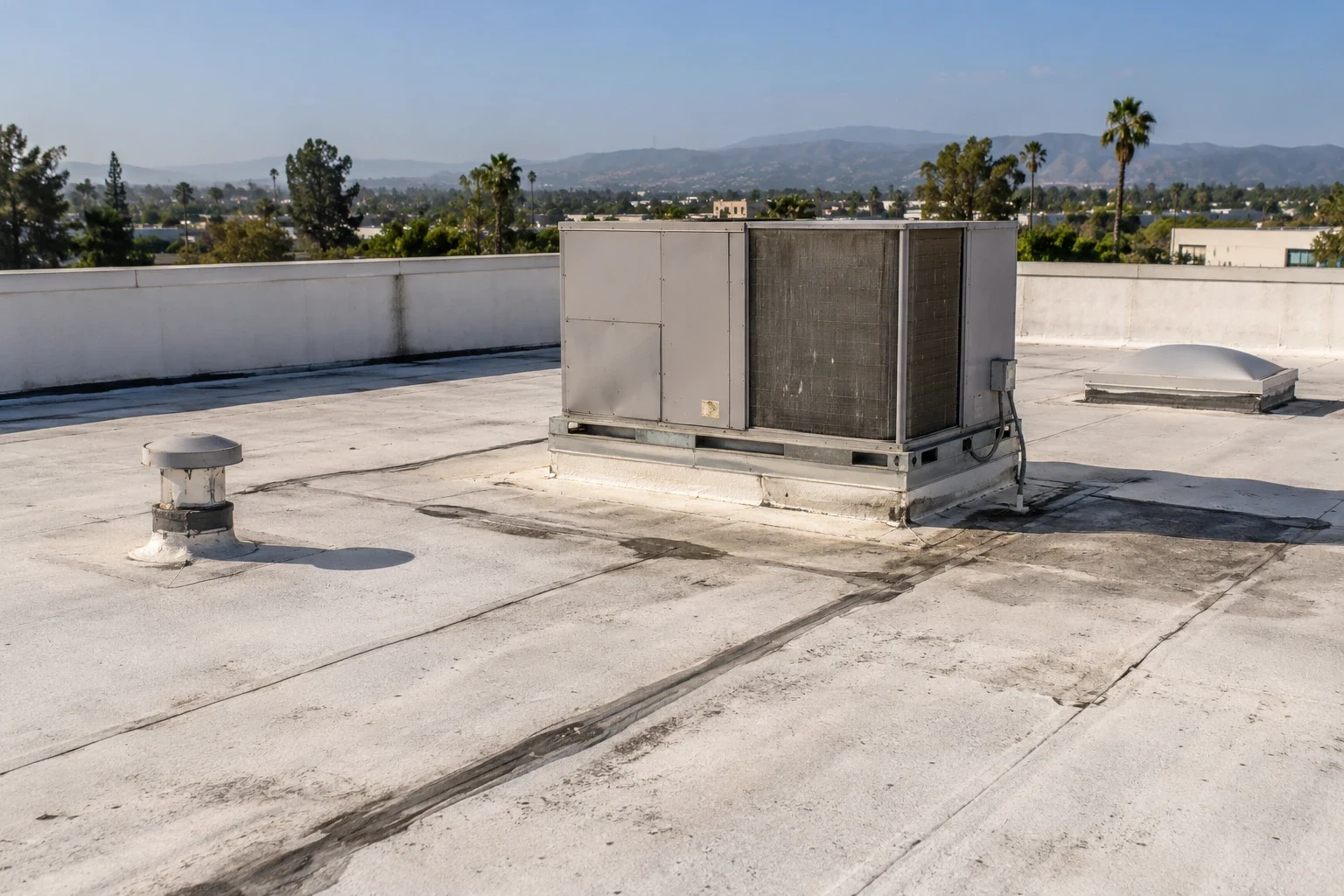
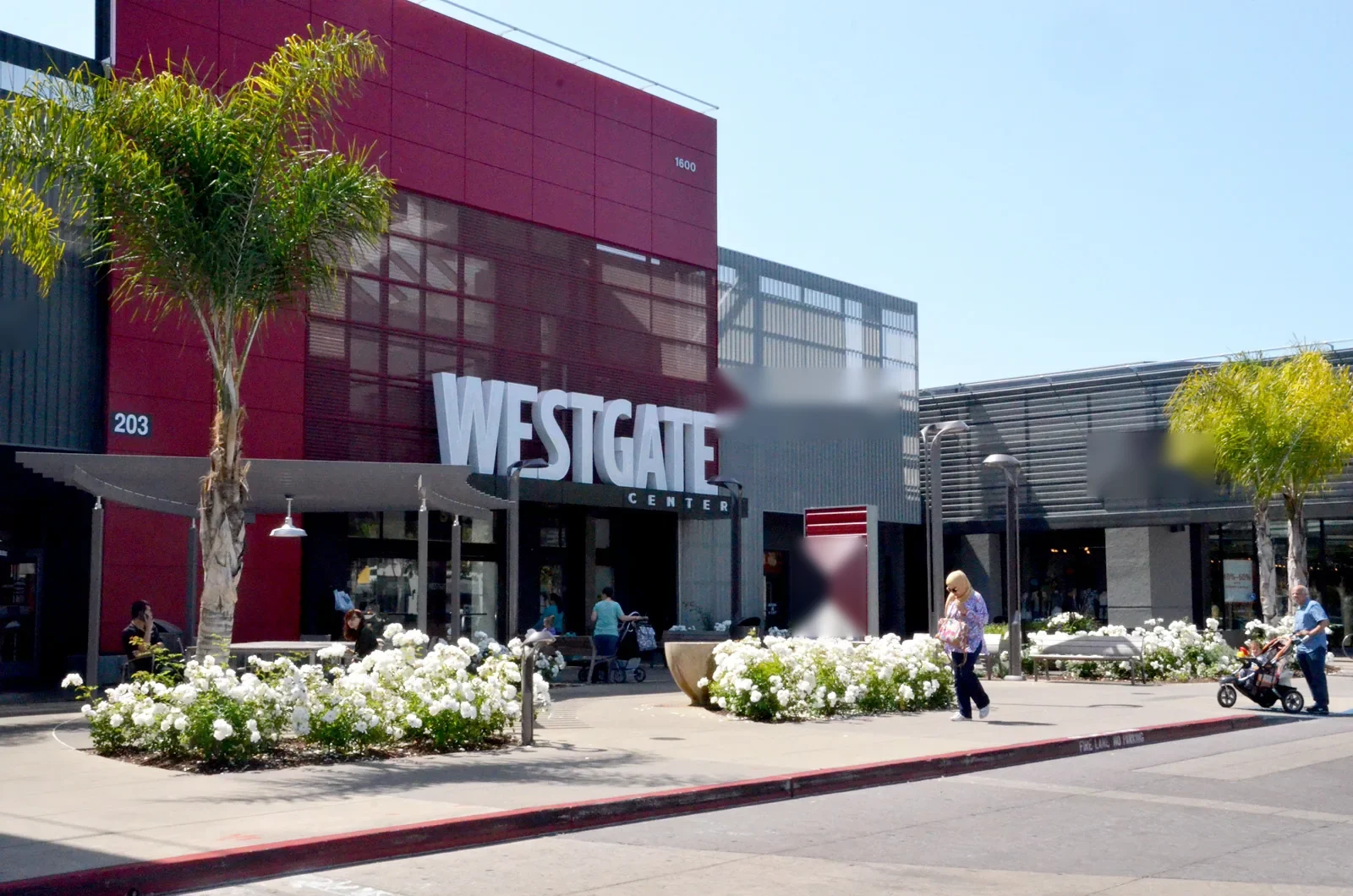
Chino has more than four million square feet of retail, restaurant, and entertainment space, alongside industrial, office, and developable business uses. That mix makes property-level inspection essential: we identify the installed membrane or metal, insulation, flashing, and deck before setting scope.
Fit the roof work to the property
A retail center, restaurant building, and industrial property can share a city while needing different access and phasing. We confirm business hours, delivery windows, parking or truck routes, lift placement, and pedestrian detours with the site contact. The work plan names the staging area and keeps emergency paths open. If several tenants occupy the site, each roof zone gets a schedule and protection plan that reflects the activity below.
Before a roof opening, we identify sensitive interior areas, equipment that needs shutdown, air intakes, and any work by another trade. The crew limits exposed area to what can be closed securely within the shift. If a concealed condition changes removal quantity, work stops at a weather-tight boundary while the owner reviews the finding. This keeps an inspection result separate from an unapproved scope increase.
A phased reroofing plan for an occupied property can help coordinate customer access and building operations. When a Chino site is part of a broader Inland Empire program, we align delivery and reporting with the owner's other properties without assuming their roofs are identical.
Find the source before setting the repair
A ceiling stain marks where water appeared indoors, not necessarily where it entered the roof. We inspect the membrane, seams, wall transitions, penetrations, curbs, drains, and past patches along the likely path. Where insulation may be wet, testing can help establish the removal boundary. Findings are tied to roof zones, and any area that was inaccessible remains outside the inspection conclusion.
For a contained seam or flashing failure, commercial roof repair with a defined tie-in can correct the material and explain what stays. If the roof has several leak areas, recurring patches, or moisture below the field membrane, a wider scope may fit better. Our roof inspection with photographs and marked conditions gives the owner a clear basis for comparing repair, recover, and replacement.
Water management is part of the investigation. We check drain bowls, scuppers, overflow paths, and places where debris can hold water against a seam. A blocked outlet and an inadequate slope need different corrections. For Chino retail and industrial roofs, outlet and scupper service starts by separating a blocked drain from poor slope; we then coordinate membrane repairs with any plumbing correction.

Set the layers and removal limit
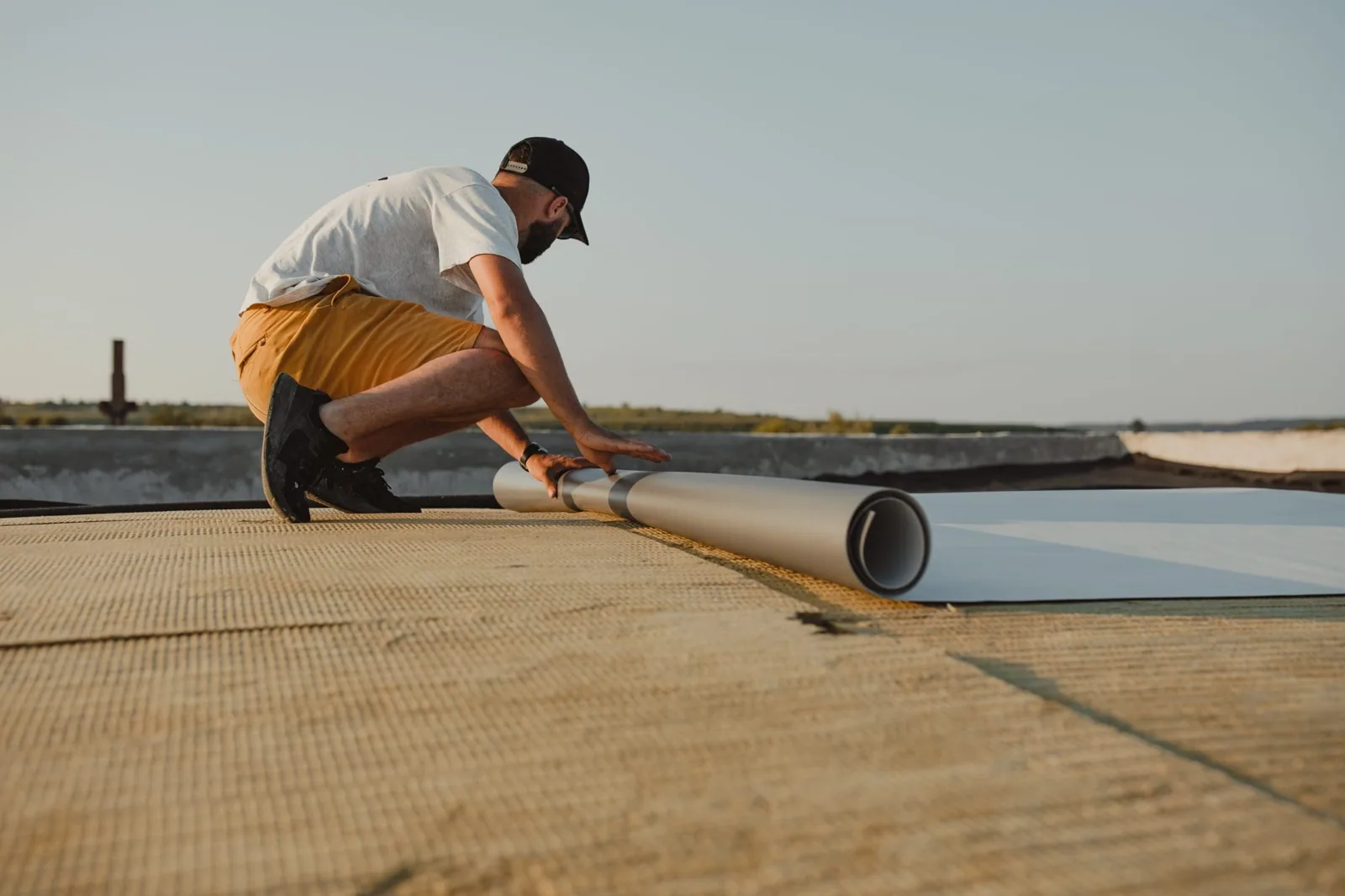
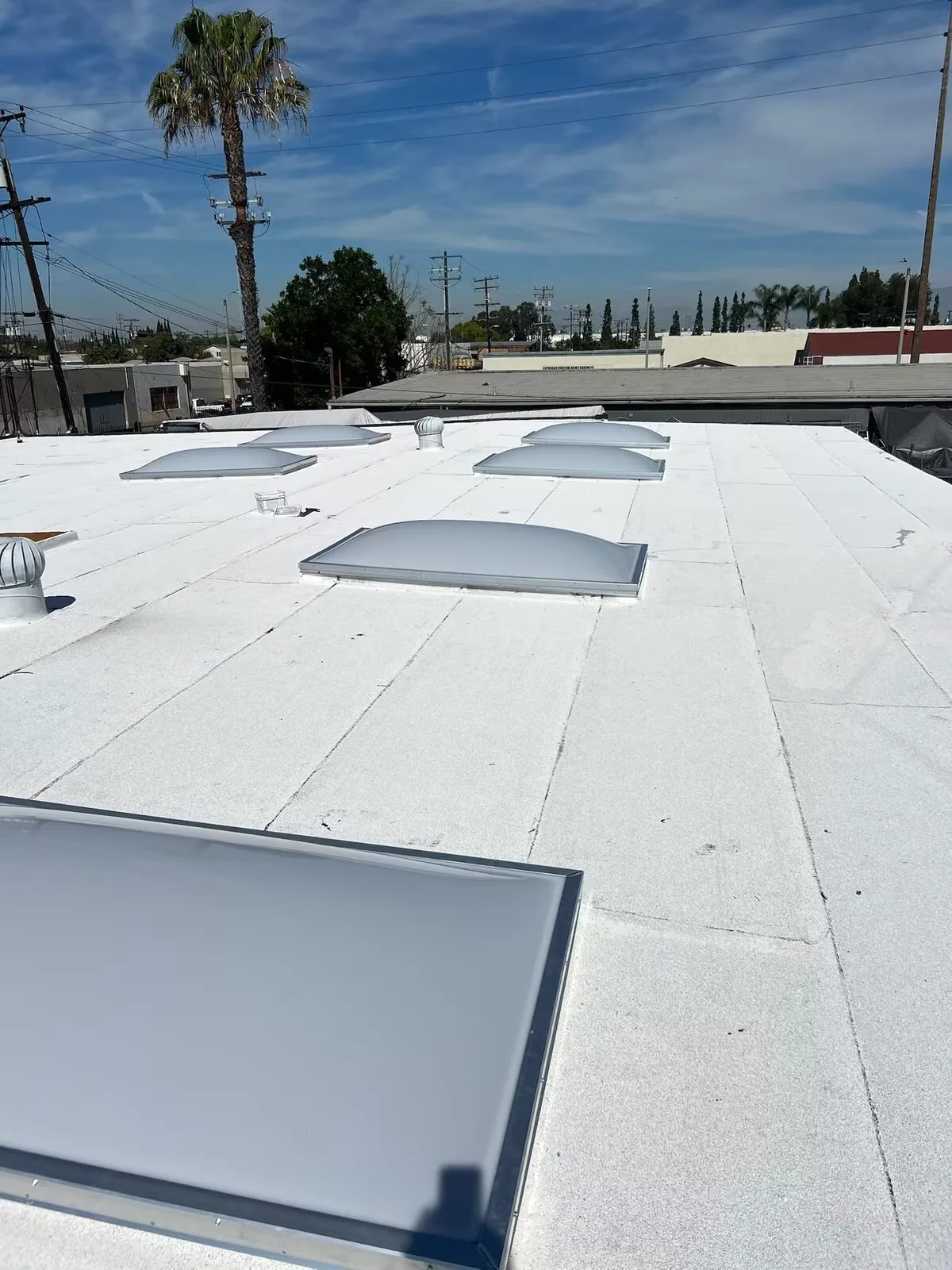
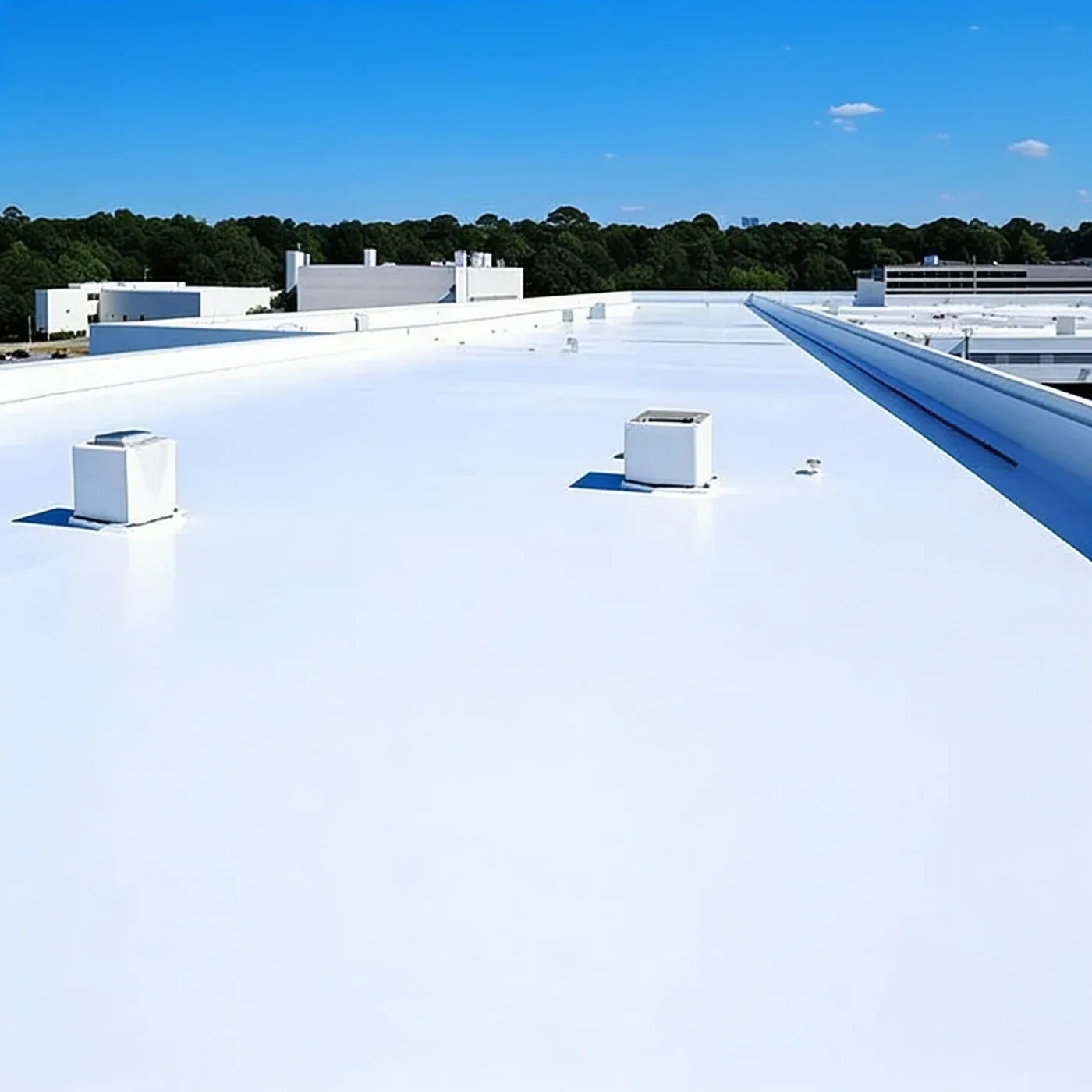
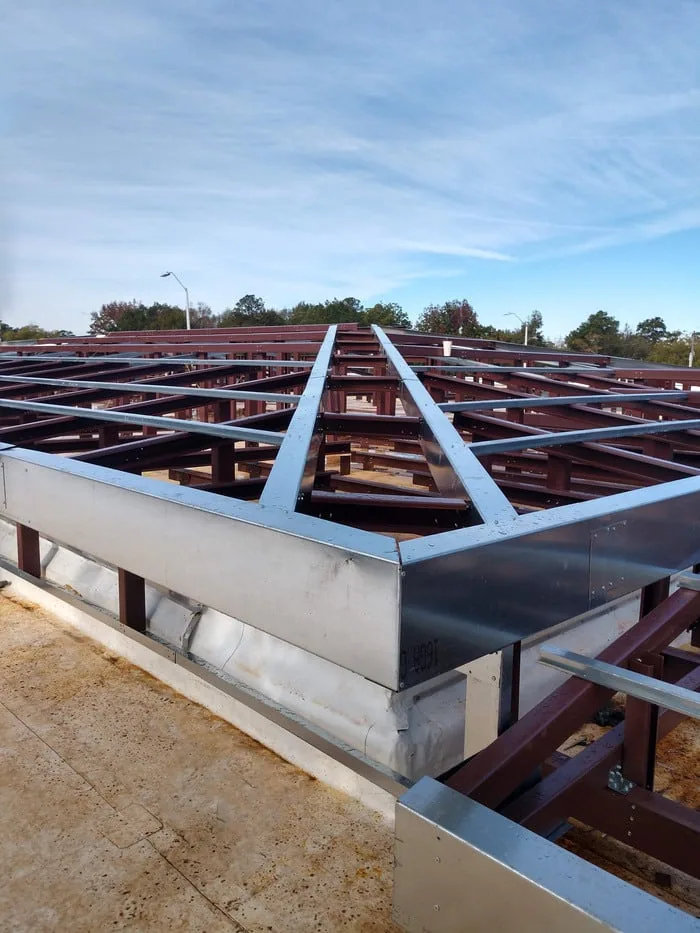
A replacement estimate describes the existing layers to remove, new insulation and membrane, and the details that close the system at walls, drains, and curbs. Where the deck is concealed, the proposal states the assumed condition and how damaged substrate will be handled if exposed. Selective removal can be used where inspections show different roof zones have different conditions. That gives the owner a priced boundary for each area rather than a single label for the whole building.
Recover work is considered only if the retained assembly can support the new design. We review attachment, moisture, layer count, roof height, and drain details before specifying another layer. The roof's finished height can affect doorway clearances, edge metal, and equipment transitions. If those conditions do not support retention, replacement with stated tear-off limits provides the full removal and close-in sequence.
Chino plans modern parcels and infrastructure for business and industrial areas while calling for older commercial corridors to be rehabilitated. We inspect each roof to assess its current substrate, attachment, and flashing, then identify the design decision needed for the selected work.
Coordinate work across the local market
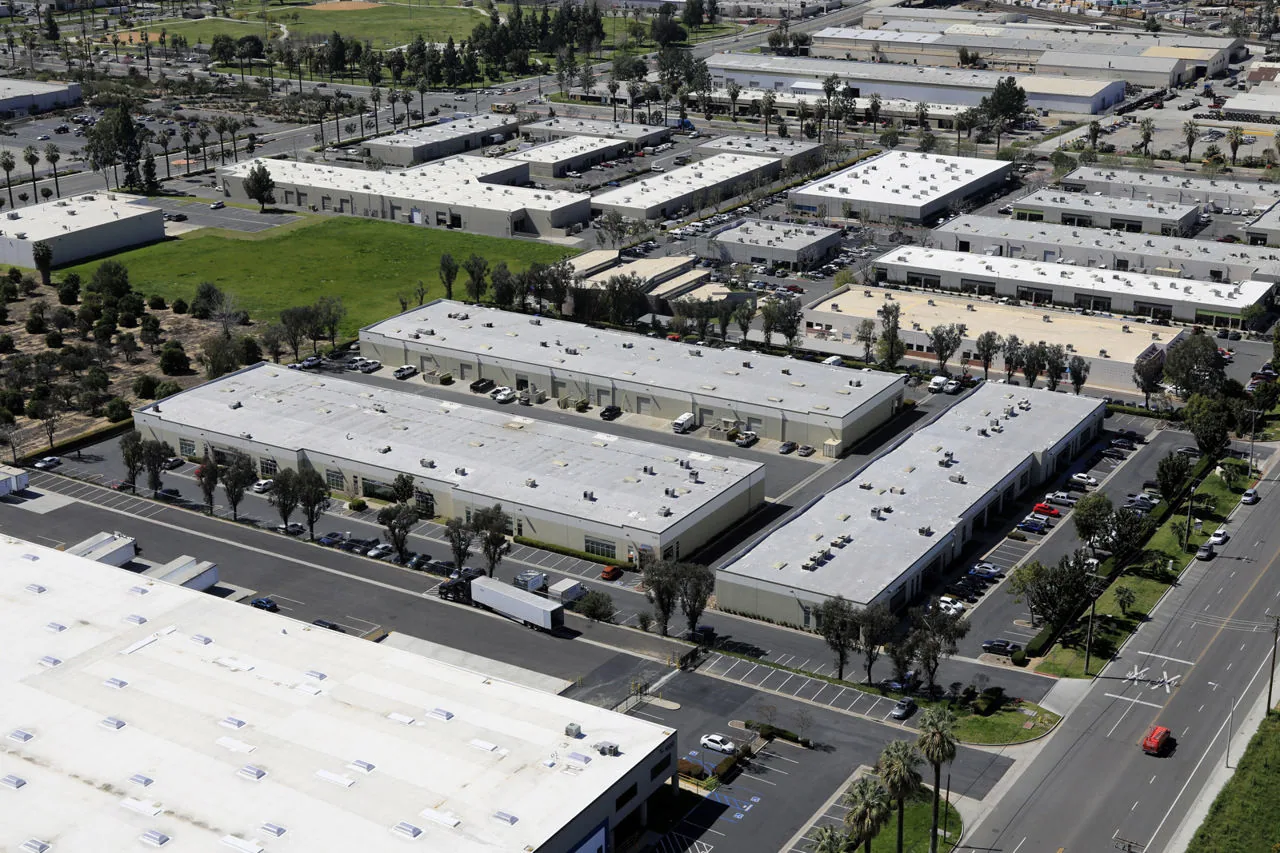
Fontana and Chino sit within the broader Inland Empire service area, and each property sets its own receiving and access rules. Ontario connects logistics properties with I-10, I-15, SR-60, two Class I railroads, and freight operations. Those regional routes can inform delivery planning for multi-city work, while each site controls its own approach and lift schedule. We confirm truck approach, unloading, staging, and roof access before ordering material.
Alongside Chino, our service area includes Ontario commercial and industrial properties and Rialto business locations. Ontario's logistics sector and Rialto's retail, warehouse, and industrial activity make multi-site scheduling a practical topic for some owners. Each site receives its own roof inspection, quantity, and work sequence rather than carrying one property's findings to another.
Fontana summer forecasts can exceed 100°F, a nearby regional reference for planning exposed roof work in Chino. The property's current surface temperature, product requirements, and site conditions determine the practical shift. Cooler-season rain also makes a secure temporary closure necessary whenever roofing is removed.

Leave the owner with a usable record
At completion, we record repaired or replaced zones, installed layers, checked flashings, drain connections, and any item outside the roofing work. Photographs and marked roof areas help a property manager plan maintenance and coordinate later service trades. If additional repair was recommended but not included, the closeout identifies its location and the next access or budget decision.
For a Chino portfolio that includes different property types, consistent zone labels make records easier to compare while keeping each conclusion tied to the inspected building. We record changes between bid and installation, such as a hidden wet area or unexpected deck condition, and the disposition the owner approved. That gives future inspections a starting point without implying the same condition exists elsewhere.
Before a visit, available plans, leak dates, business hours, equipment schedules, and delivery restrictions help us focus the inspection. The owner can also identify roofing, plumbing, HVAC, or electrical work already planned so we can coordinate penetrations and avoid reopening completed areas.
Frequently Asked Questions
Which commercial properties do you roof in Chino?
Our service includes commercial and industrial buildings, including retail, restaurant, office, and warehouse properties. Chino includes retail, restaurant, office, industrial, and warehouse properties. A building's use does not determine its roof assembly, so we inspect the actual membrane or metal before scoping work. We assess the membrane or metal, drainage, access, and operating requirements at the specific property before scoping work.
Can repair work be scheduled outside business hours?
We coordinate access hours with the owner and site operations. A night or off-hour shift may require different lighting, security, noise controls, lift access, and material staging. The sequence states which roof zone can be completed and protected during the approved window.
How do you decide between a recover and replacement?
We inspect moisture, attachment, layer count, deck condition where accessible, and finished heights at drains and edges. A recover is considered only when the existing assembly can support the design. If it cannot, the proposal sets the tear-off boundary and the substrate condition required for new installation.
Can you coordinate several Chino buildings under one project?
Yes. We can schedule visits and work phases across multiple properties, while keeping each roof condition, quantity, and closeout record separate. The owner provides the property access rules and operating calendars so deliveries and crews can be sequenced without assuming one site matches another.