Big-Box Retail Roofing
Coordinate big-box retail roof work around long runs, receiving doors, inventory protection, lift placement, drainage, and phased daily closure.
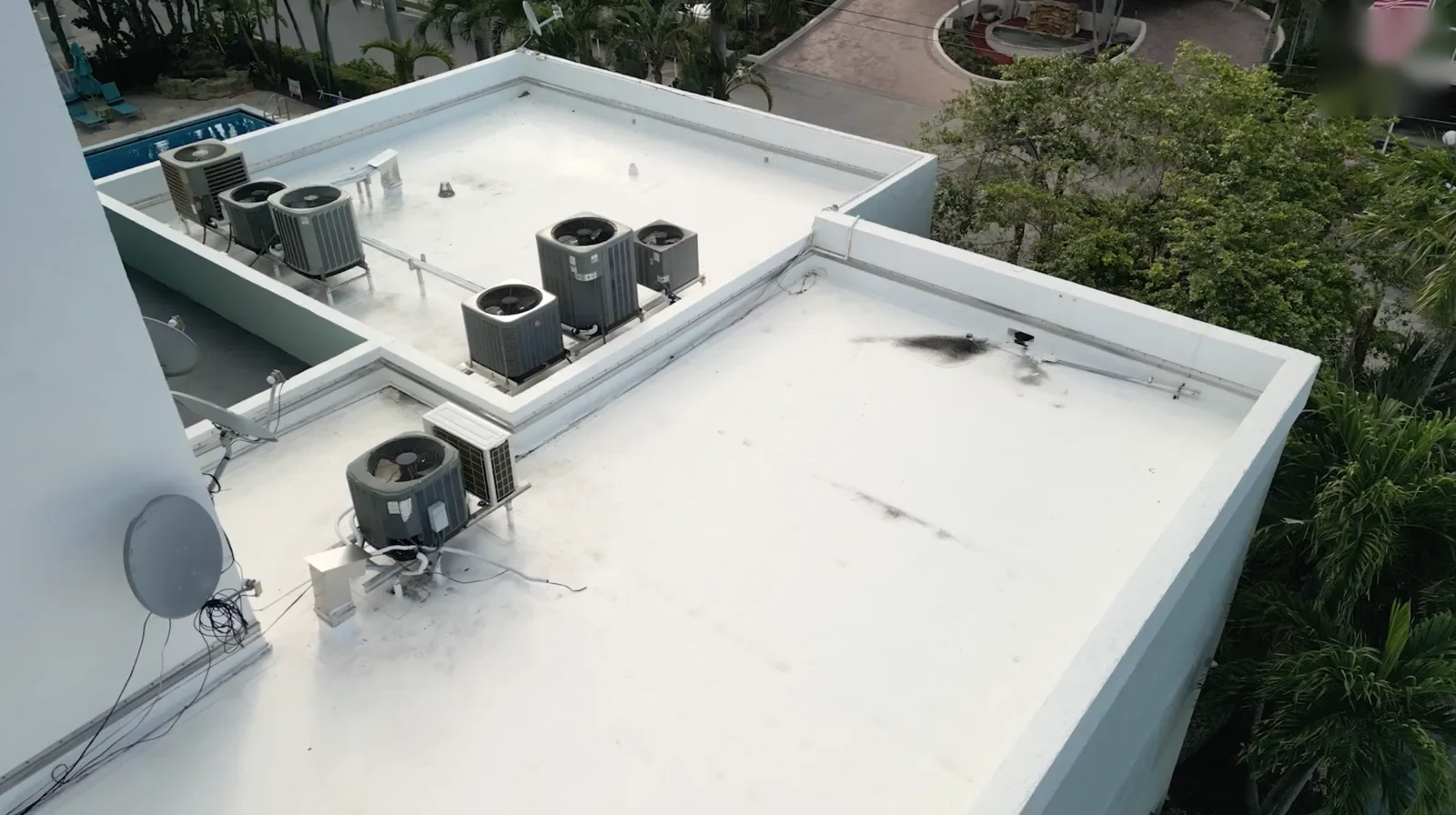
On a large retail roof, production speed depends on where the crew can stage and how far materials must travel. We trace the delivery path from the approved entrance to the roof, mark receiving doors that need to stay clear and divide the field into sections that can be closed in as planned. The store manager can compare that sequence with truck appointments, customer traffic and inventory handling before equipment arrives. In Fontana, CA, summer heat on an exposed roof also affects the hours available for installation and the area that can safely remain open.
The city has broad commercial corridors along Sierra Avenue, Valley Boulevard and Foothill Boulevard, alongside industrial districts served by I-10, I-15 and SR-210. Each property still has its own roof and operating plan. Our retail roof inspection documents field conditions, perimeter details, drains and the logistics needed to reach the work area.
Keep receiving operations in the sequence
Big-box buildings can have multiple loading doors, a truck court and customer entrances on separate sides of the same roof. The staging area that works for roofing may compete with a live receiving lane, compactor pickup or fire access. We ask the property contact to identify time-sensitive routes and note which ones cannot be restricted. That information shapes the lift position, delivery size and sequence for moving materials from the ground to the designated roof zone.
Where the owner prefers after-hours handling, the proposal should state the actual access window and the work that can be completed within it. Long membrane runs may be split so an end-of-shift seam can be completed without leaving a large exposed area. The occupied-retail phasing plan identifies each active section and the person who accepts the area at close of shift. This gives store operations a specific boundary rather than a broad promise that all activity will remain unnoticed.
Measure the roof instead of extrapolating
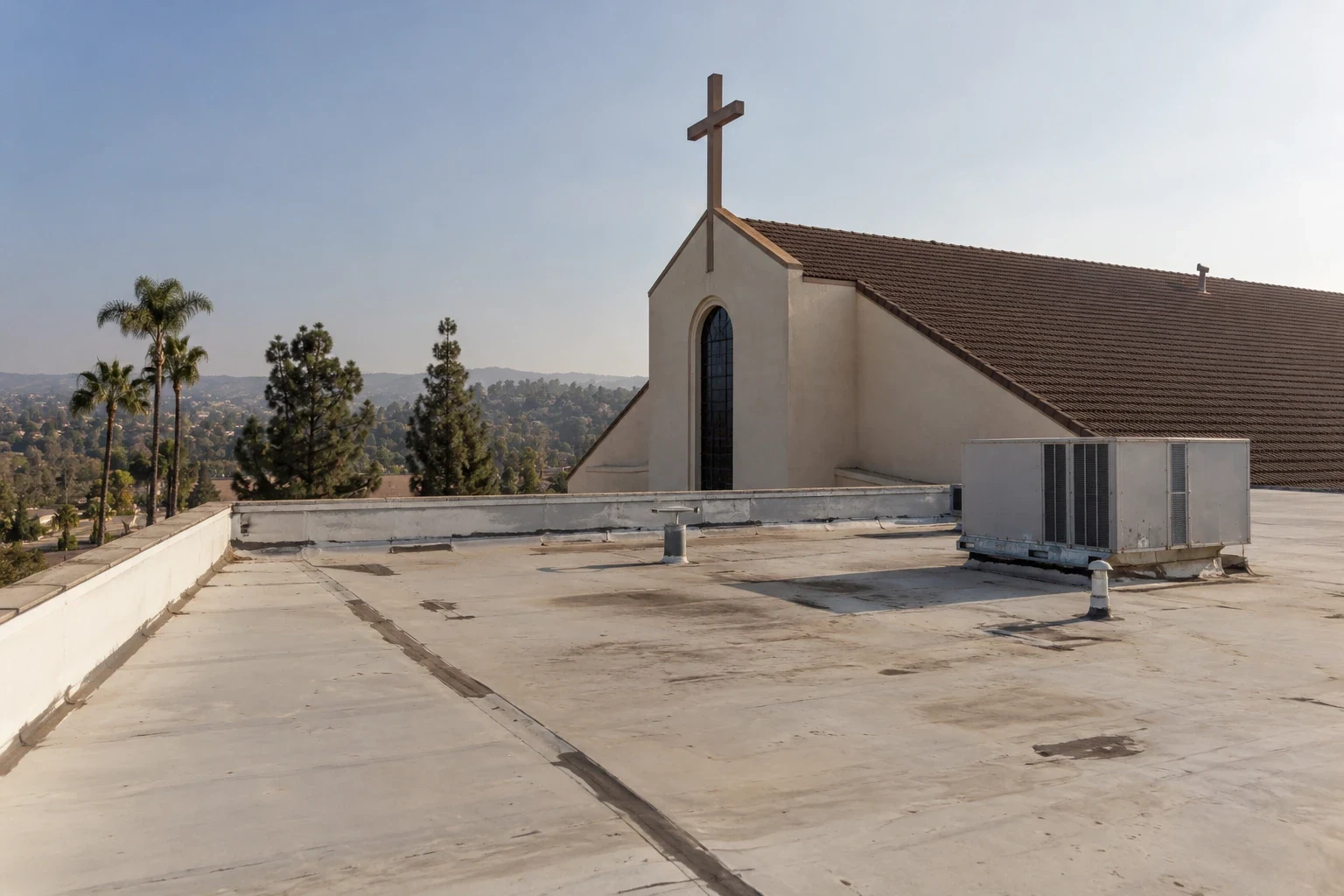
A large footprint can hide several construction eras. An addition may have a different membrane, insulation package, deck or drainage direction than the original store. We record the observable assembly by roof section and keep measured quantities tied to a marked plan. If one section cannot be reached or tested, the proposal names that limitation and prices it separately rather than carrying an assumed condition across the entire building.
Leak reports from sales, storage or receiving areas are compared with the nearest field seam, curb, expansion joint, wall and drain. The route water takes can differ from the room where it appears, so a test opening may be useful where surface evidence is inconclusive. A roof condition report can pair the location, photograph and next step for each observation. A shopping-center scope may share tenant coordination concerns, but a large-format store often has a different delivery scale and roof phasing plan.
Plan long seams and perimeter transitions
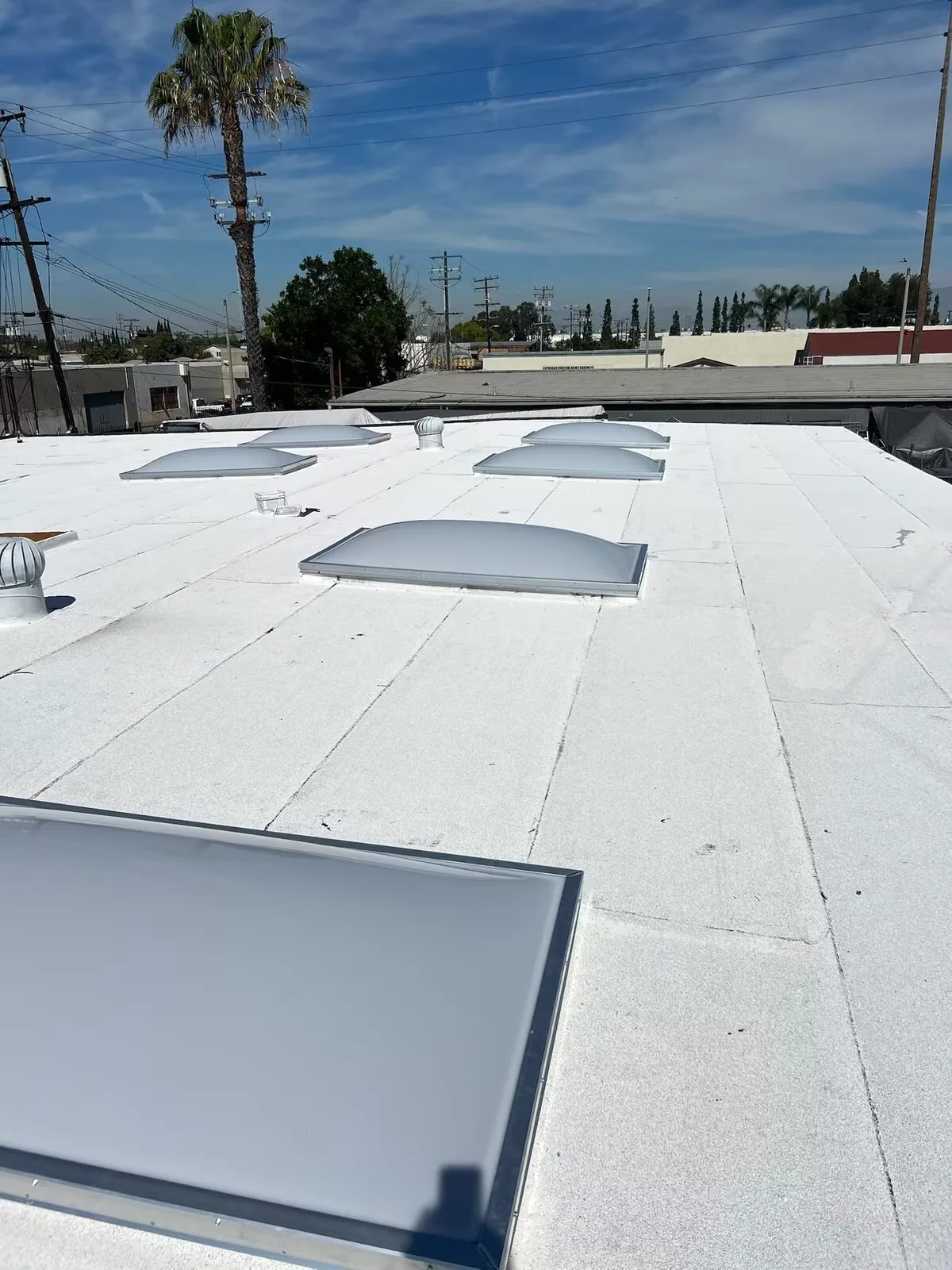
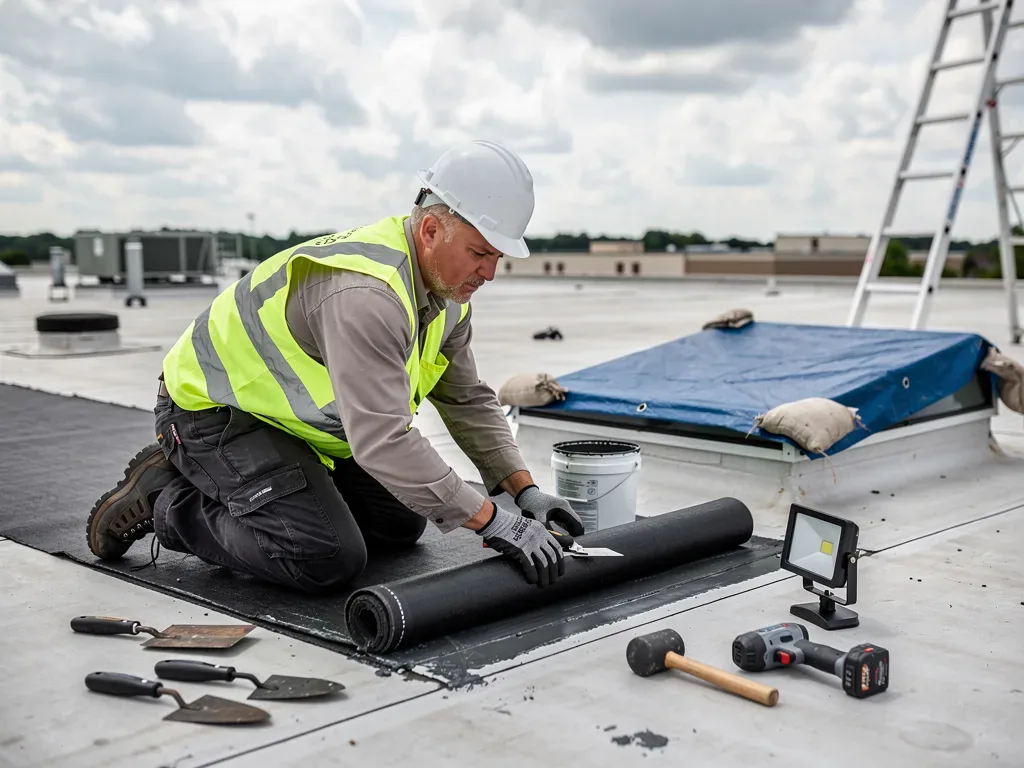
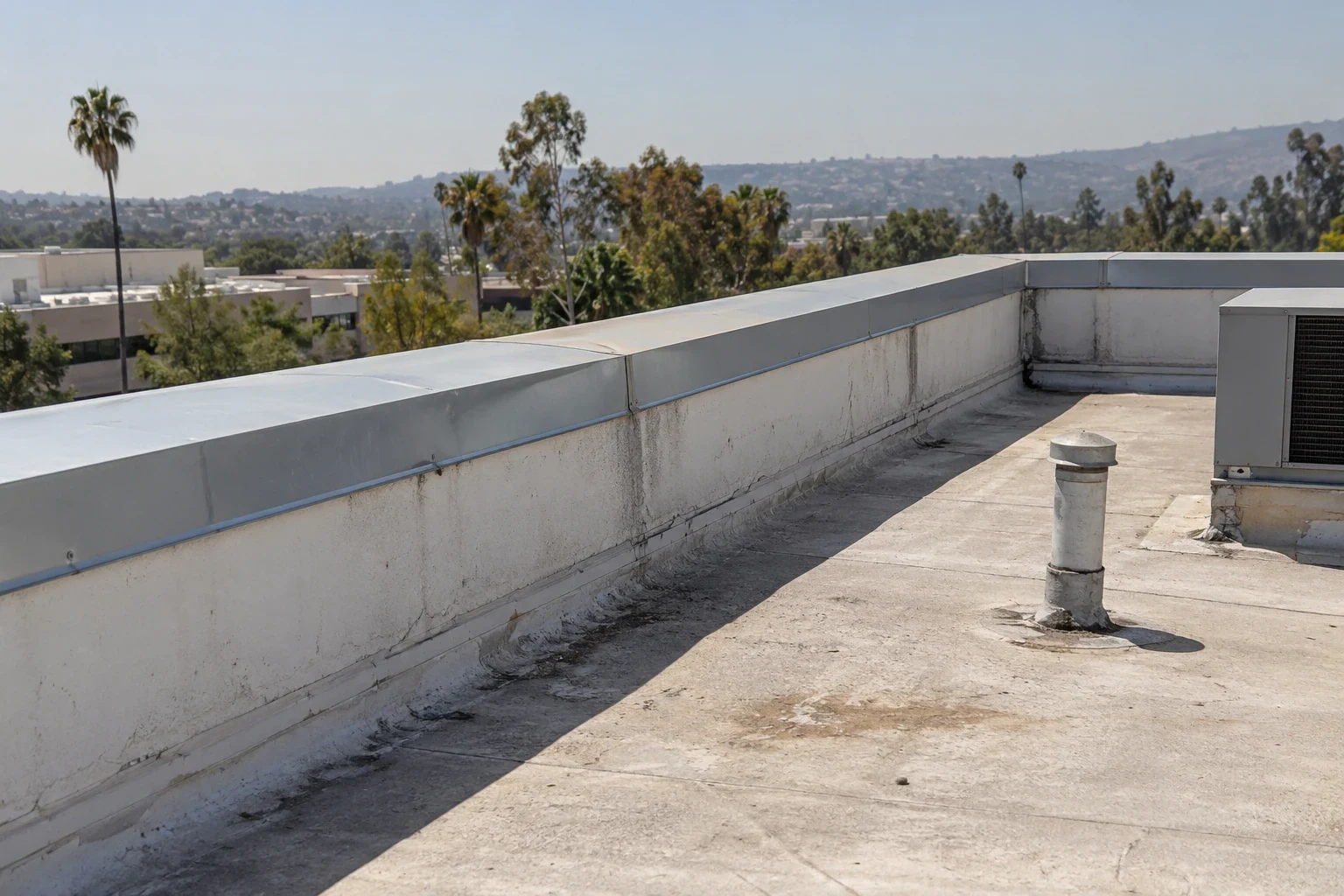
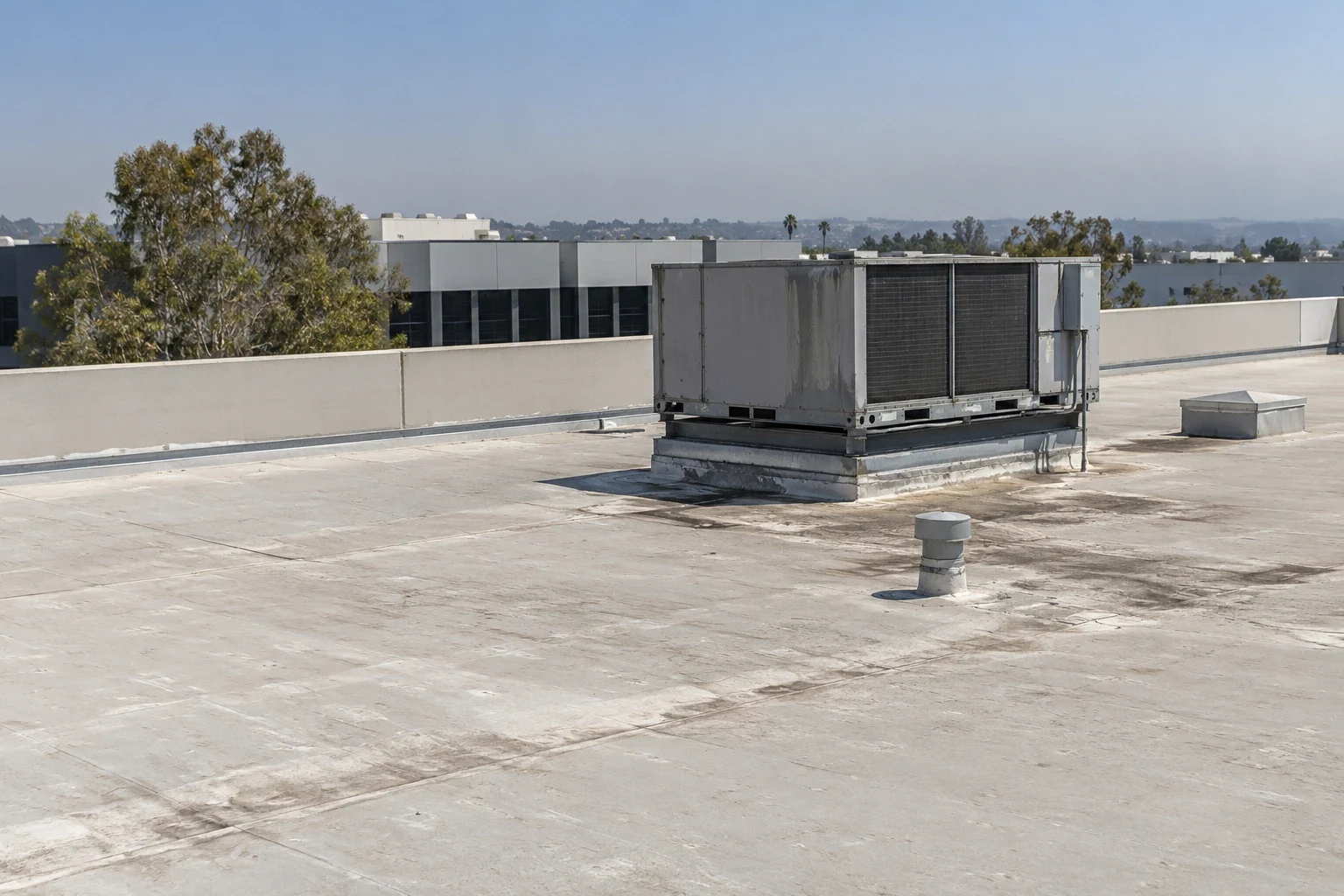
Long roof runs require the selected system, seam layout and attachment to work together. We inspect the field, parapet edges, expansion conditions, equipment curbs, skylights and penetrations before deciding how a replacement boundary should end. The scope identifies where existing material is removed, where an approved recover might begin and what backing or edge preparation is needed. When the selected system depends on a test for attachment or moisture, the proposal names the test area and how it will be restored.
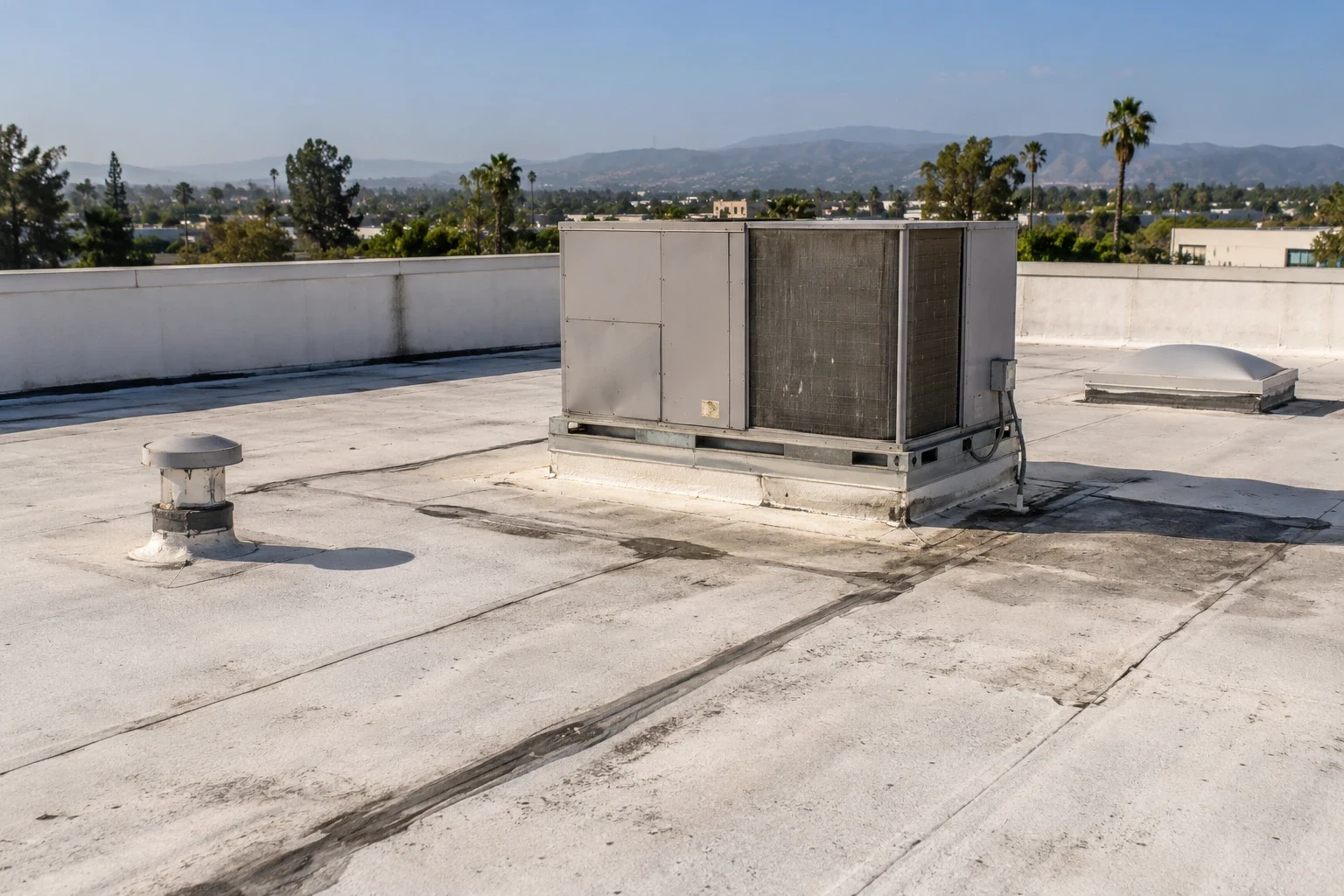
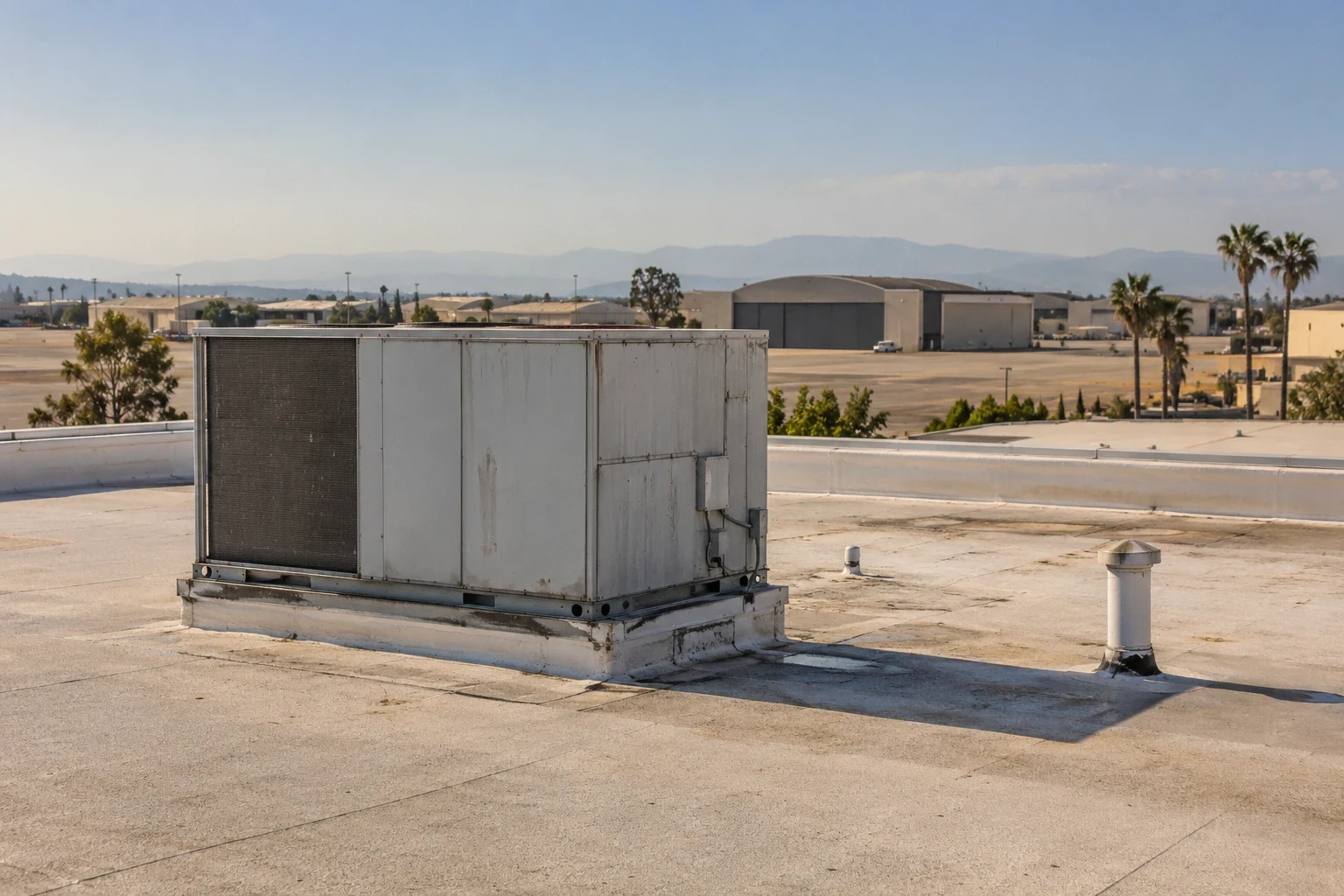
A full membrane field can still fail at a short termination or a curb that was not included in the repair quantity. We detail those transitions and show how the finished roof meets metal, walls and rooftop equipment. The perimeter metal work calls out the edge or coping section and its supporting conditions. Where a TPO roof system is considered, we compare its compatibility and connection details against the actual deck and project requirements.
Protect inventory and maintain a clear water path
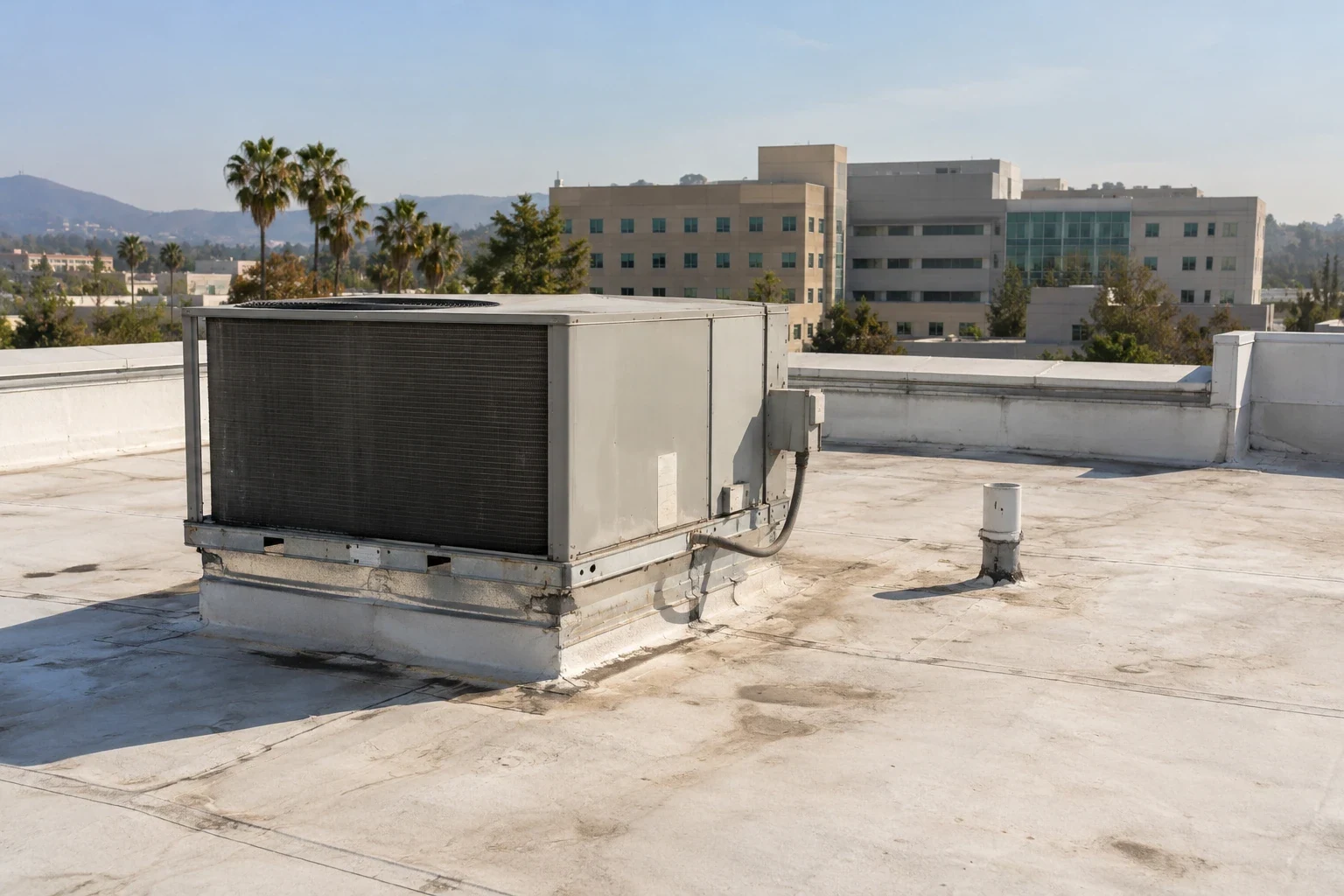
Before opening the roof, the owner should identify inventory zones, racks, sensitive equipment and any interior area that needs a temporary protection measure. We state what our roofing crew will cover, how the opening closes at the end of the shift and who moves or protects stock below. If unexpected wet insulation is exposed, we stop at the approved boundary, document the measured condition and present the added quantity before expanding the work.
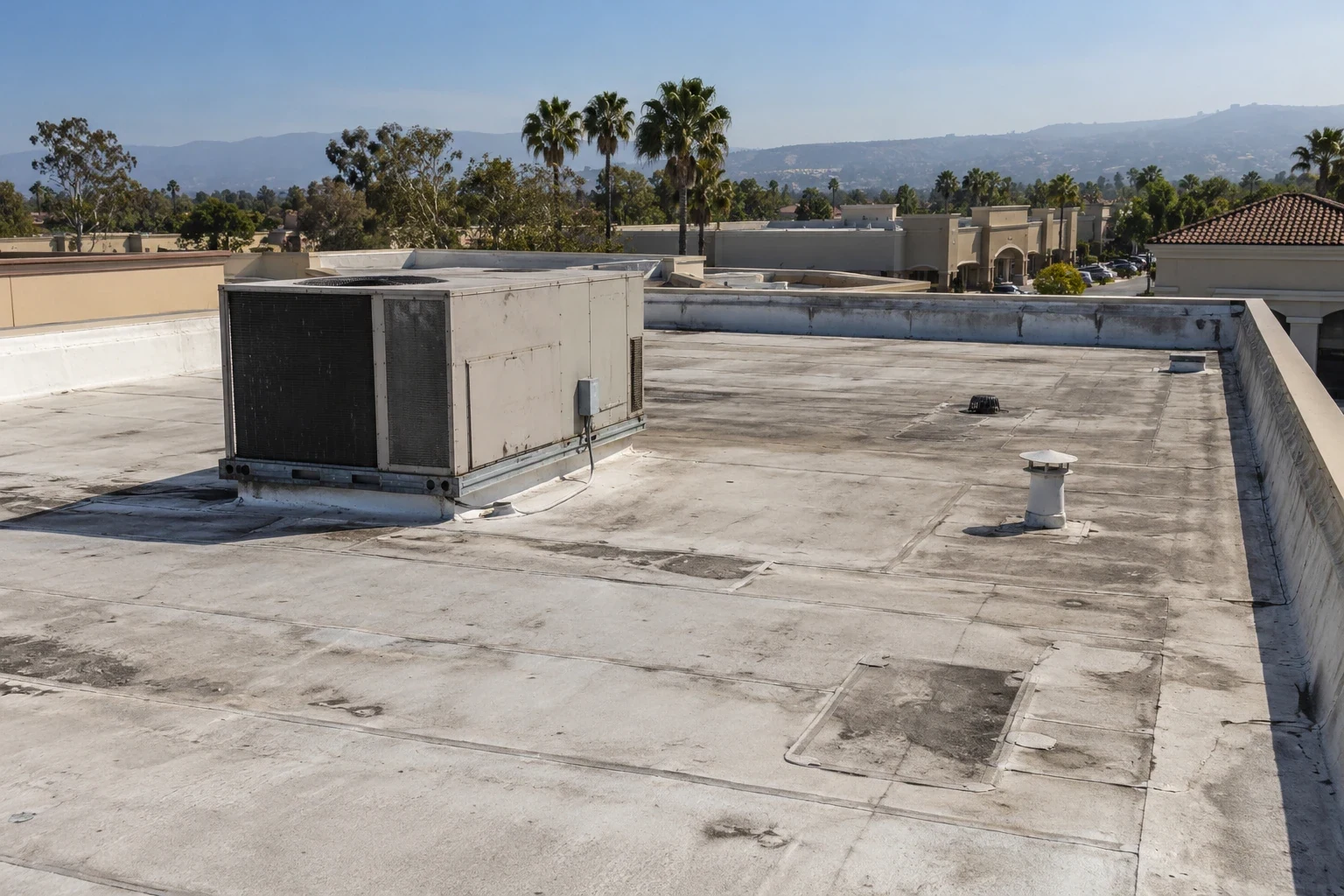
Drainage review follows the roof’s actual slopes and outlets. We check accessible drains, scuppers and discharge points for conditions that may affect the proposed detail, while noting any plumbing correction assigned to another trade. A coating or recover plan must not conceal a drainage issue without describing its remedy. The drain and scupper scope identifies the outlets included and any access needed to service them after roofing is complete.
Coordinate deliveries with Fontana’s freight network
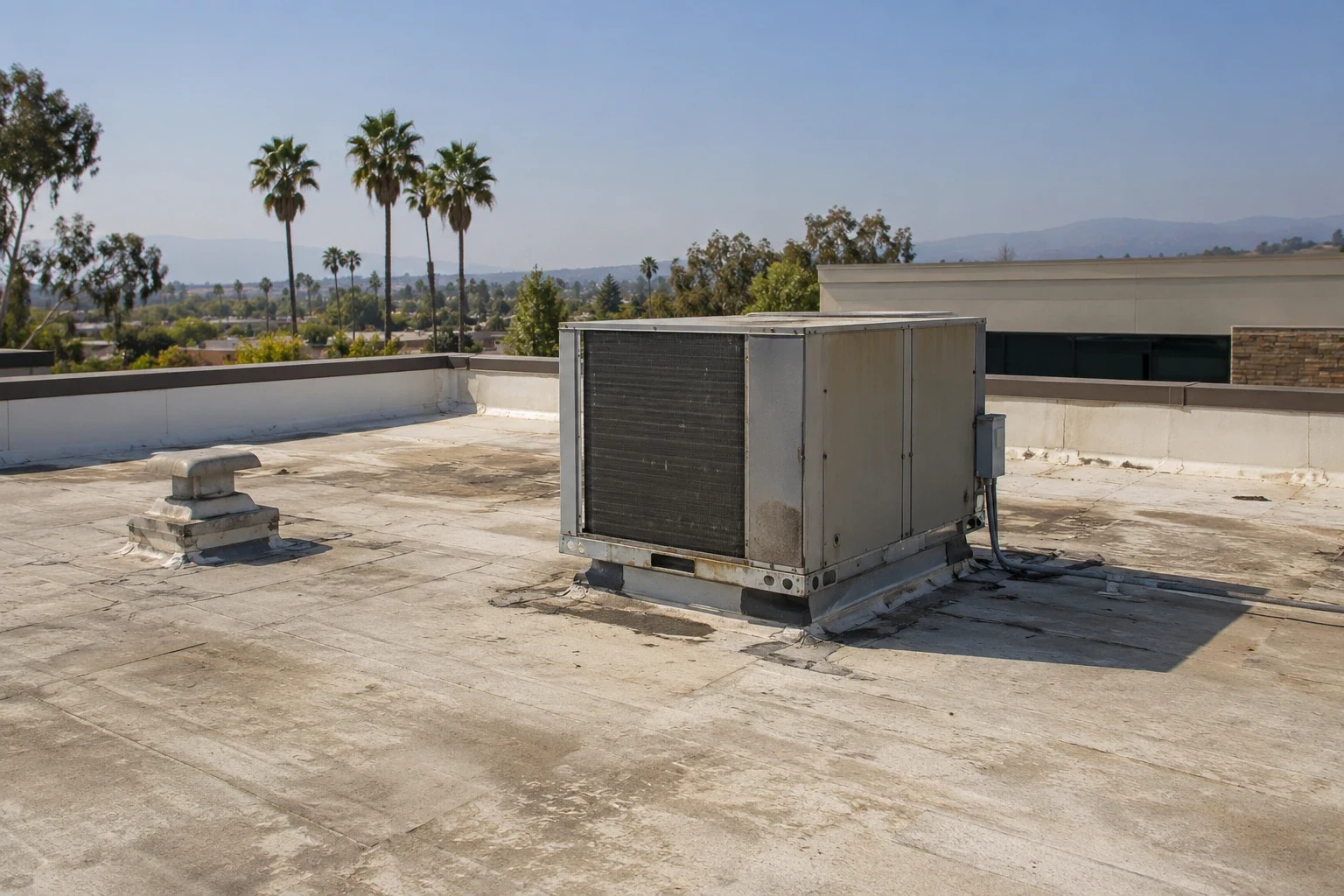
Fontana’s industrial areas connect to the regional freight network through I-10, I-15 and SR-210, and rail infrastructure also serves the city. Those routes are useful context for planning a material delivery, but the receiving entrance and truck path must be confirmed at the individual property. A delivery should arrive in the size, sequence and time window the site can accept, with a place reserved for unloading before the carrier is dispatched.
The Southwest and Jurupa industrial districts include warehouse, distribution and trucking uses, while commercial retail activity also follows established corridors. For a project in Southwest Fontana, the building contact confirms the gate, turning area and unloading rules. Summer heat can affect material storage and working hours, while cooler-season storms make a completed temporary tie-in important. We check current conditions and manufacturer instructions instead of relying on a seasonal average to decide whether a roof should open.
Return a large roof in documented sections
Closeout records each completed section, installed material, measured quantity and detail photographed before it was covered. It also identifies any open item, excluded area or separate trade task so store management does not mistake a finished phase for a full-roof assessment. If the project is split over several mobilizations, the record shows the next access route, temporary transition and material needed to restart.
A clear sequence helps the owner plan future work without repeating discovery. The final roof plan should connect completed quantities to the as-built location, not only a total square-foot figure. Our commercial replacement scope can show how mobilization, staging, removal and permanent close-in relate across the roof. A smaller grocery roof project uses similar evidence principles but may require a distinct refrigeration, delivery and operating schedule.
Frequently Asked Questions
Can a large store remain open during reroofing?
The owner can review a section plan that identifies customer entrances, receiving access, overhead protection and the daily close-in point. Whether normal operations continue depends on those site-specific routes and restrictions.
How do you estimate a large roof accurately?
We measure by roof section, note differing assemblies and include perimeter, drain and penetration details. Inaccessible or concealed areas are identified as separate investigation items rather than assumed to match the visible field.
What should happen if wet insulation extends beyond the planned area?
The crew protects the opening and records the added condition. We measure the additional work and obtain the owner’s direction before extending the accepted boundary or changing the close-in sequence.
Can deliveries use the normal truck entrance?
The property contact confirms turning clearance, schedule, vehicle limits and any receiving conflicts. The roofing delivery plan should reserve an approved unloading point and avoid blocking required access.
What makes a useful retail roof closeout?
It connects the completed phase to a marked roof plan, quantities, materials and detail photos. The manager should also receive any remaining task, excluded area and next mobilization assumption.