Hospitality Groups
Coordinate Fontana hotel and hospitality roof work with guest access, service routes, phased protection, and property-level records.
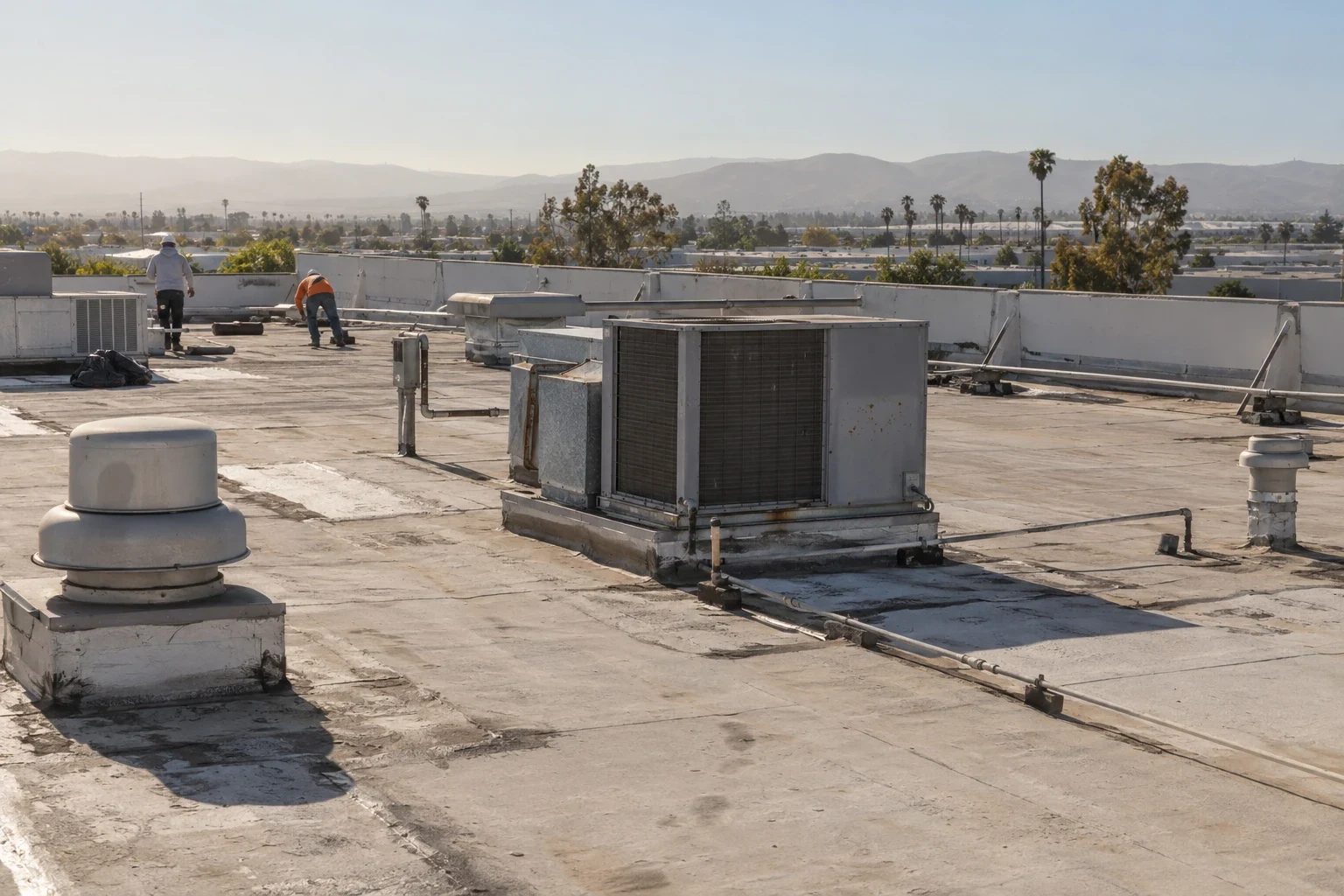
A material lift staged beside a guest entrance can interfere with check-in before roof work begins, so hospitality roofing needs a guest route, service path, and work zone confirmed in advance. Commercial Roofers Fontana plans commercial roofing for hospitality groups in Fontana, CA, by matching roof findings to occupancy, operating hours, deliveries, and the sequence each property can support. The scope states where crews enter, what remains open, and how the finished area is handed back.
Fontana's commercial mix includes office, retail, healthcare, industrial, and civic properties, with restaurants and mixed-use activity in downtown areas. At a hotel, we inspect the roof system in place and coordinate guest, staff, and service access with the property contact. Summer heat also affects roof work timing and material handling.
Guest movement shapes the work boundary
Before estimating, we confirm the property contact, roof entry, check-in and event hours, loading access, staff paths, parking controls, and any route that must stay available. A lift or dumpster can have different consequences at a hotel entrance than at a service court. We identify a receiving point and staging lane that the operator can approve, then place the roof zone against that plan.
Hospitality sites may include guest rooms, food service, meeting space, back-of-house areas, and multiple roof levels. Roof sections can differ in assembly and operating restrictions, so we check each work zone with the property contact. The site team identifies quiet periods, delivery peaks, service access, and protections needed below. The scope then shows where work can be isolated and what notice or coordination is required before a temporary restriction.
Property management teams may coordinate the landlord and facilities side, while restaurant operators can have separate service and exhaust activity. The property contact confirms which party grants roof access and approves the schedule. We record that authority before material is ordered.
A guest complaint is a starting location
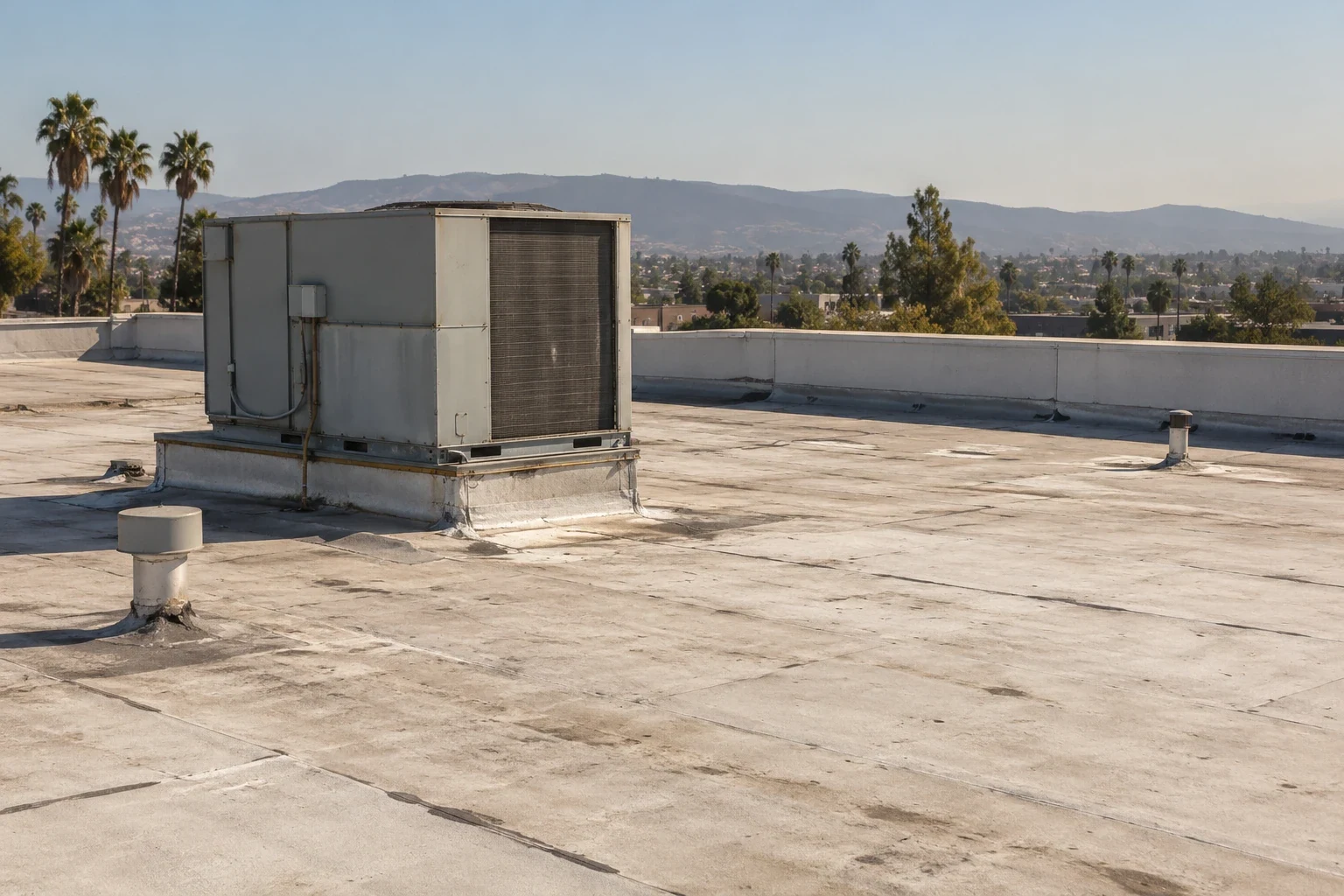
A ceiling mark, odor concern, or maintenance ticket tells us where to investigate, but not the roof entry point or area of concealed moisture. We compare the report with drains, seams, skylights, curbs, penetrations, roof transitions, and visible interior conditions. Photographs and a roof plan help engineering and operations find the observation. The record states what was accessible and which question remains unresolved.
A commercial roof inspection can document visible conditions and the limitations of the visit. If more evidence is needed, we identify the proposed test or opening, protection below, and how the roof will be closed. A thermal indication, a stain, and confirmed wet insulation are different findings. Keeping those distinctions clear helps the operator decide whether to authorize further examination.
If active water entry affects an occupied space, the property team can protect the room or route while the roof is assessed. We document temporary measures separately from permanent repair. The operational record should state whether the affected space can return to service and what inspection or correction remains.
Select work by the condition found
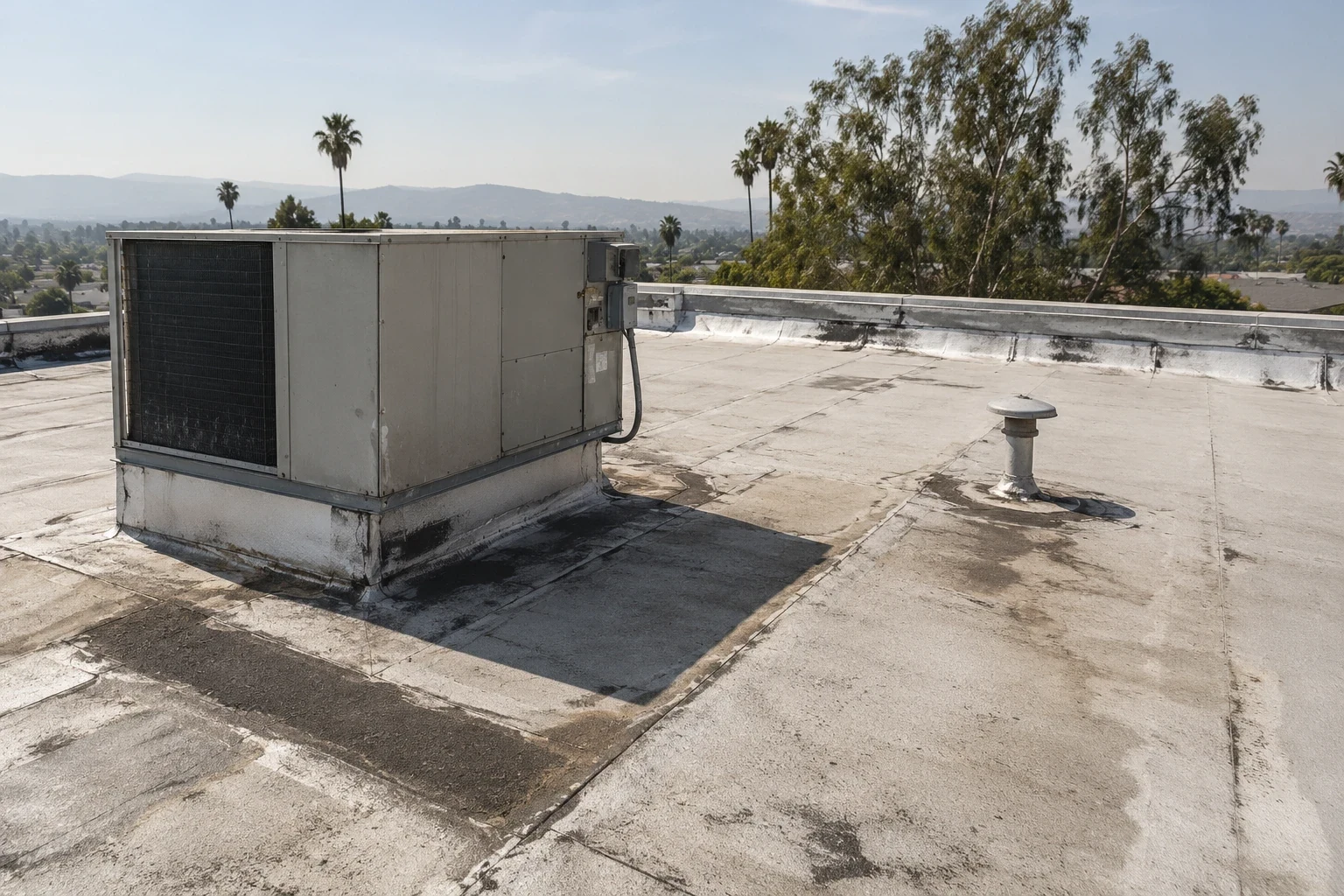
A local flashing or seam failure may be repairable when surrounding layers support the correction. Broader deterioration, wet insulation, or uncertain attachment can require additional examination before a recover or replacement is scoped. We identify the roof area, observed defect, assembly assumptions, drainage, edges, equipment interfaces, and the limit of proposed work.
A localized repair states the detail to be corrected, access, protection, and closeout. If a larger option is considered, a recover assessment explains which layer remains and what preparation it needs. Replacement includes separate decisions about removal, insulation, drains, curbs, edges, tie-ins, and disposal. The property can compare complete work packages with the same roof area, preparation, and access requirements.
Coating or recover is not a substitute for correcting an unsuitable receiving layer or drainage issue. When a concealed layer could change the scope, we identify the test opening, protection, and approval needed before removal proceeds.
Work windows protect service continuity
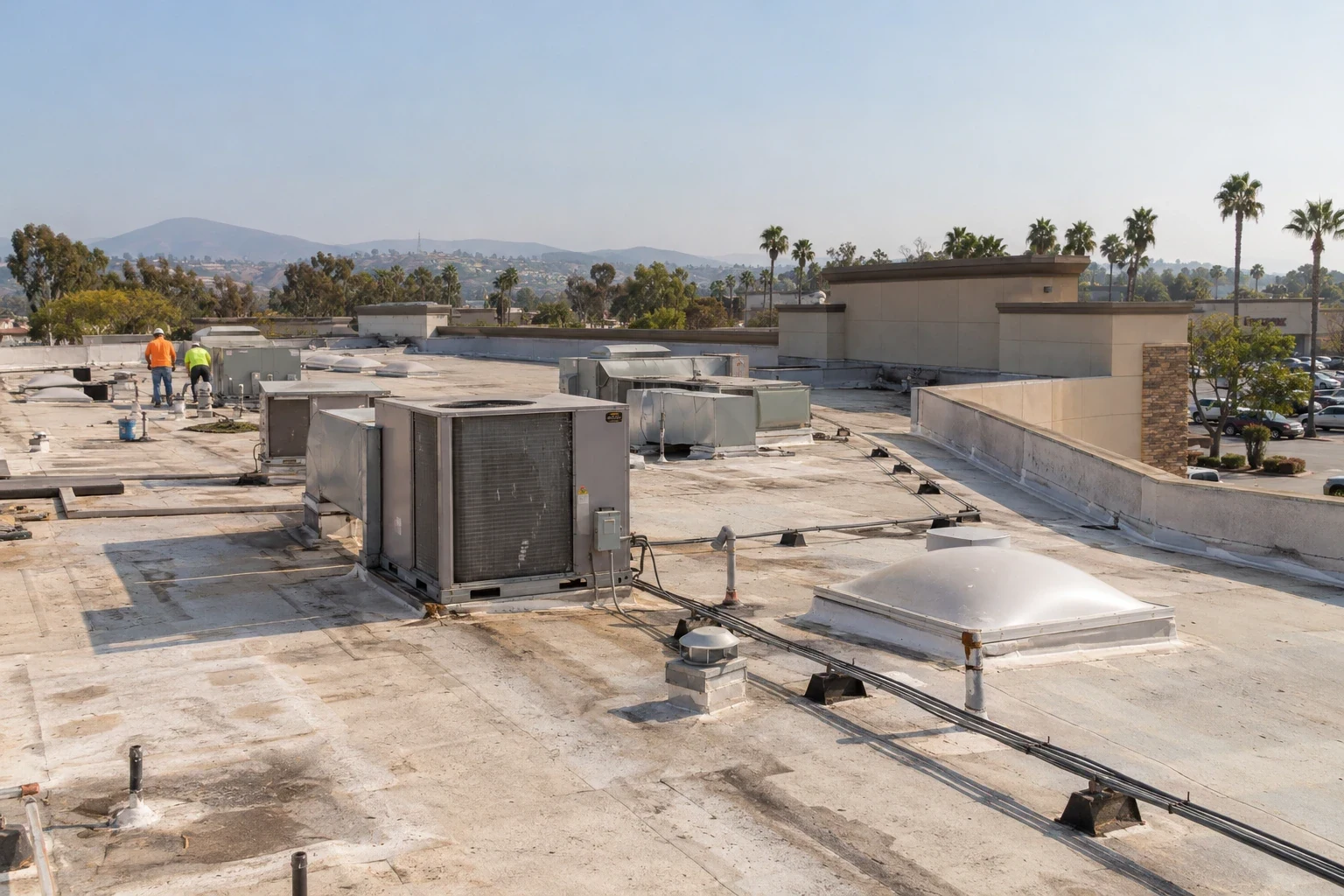
Outdoor roof surfaces at Fontana properties face summer highs that can surpass 100°F, with more severe heat advisories at times. The plan accounts for safe roof access, material handling, and exposed work that may fit earlier hours. We confirm guest and service windows, then identify how each zone opens and closes. If the property has an event or occupancy peak, the operator can provide it before the schedule is finalized.
I-10, I-15, and SR-210 connect Fontana to regional freight and commuter movement. Downtown plans include restaurant and evening-oriented businesses, while the city also has retail and office corridors. These are broad market facts, not assumptions about a specific hotel's location or guest pattern. The site contact confirms delivery appointments, vehicle paths, and any neighboring tenant restrictions.
Downtown Fontana is a broad district with commercial areas along Sierra Avenue, Valley Boulevard, and Foothill Boulevard. Fontana Promenade is a multi-property mixed-use area with retail, restaurants, office, and entertainment uses. A location context does not replace site-specific guest access planning.
The portfolio record needs a property handoff
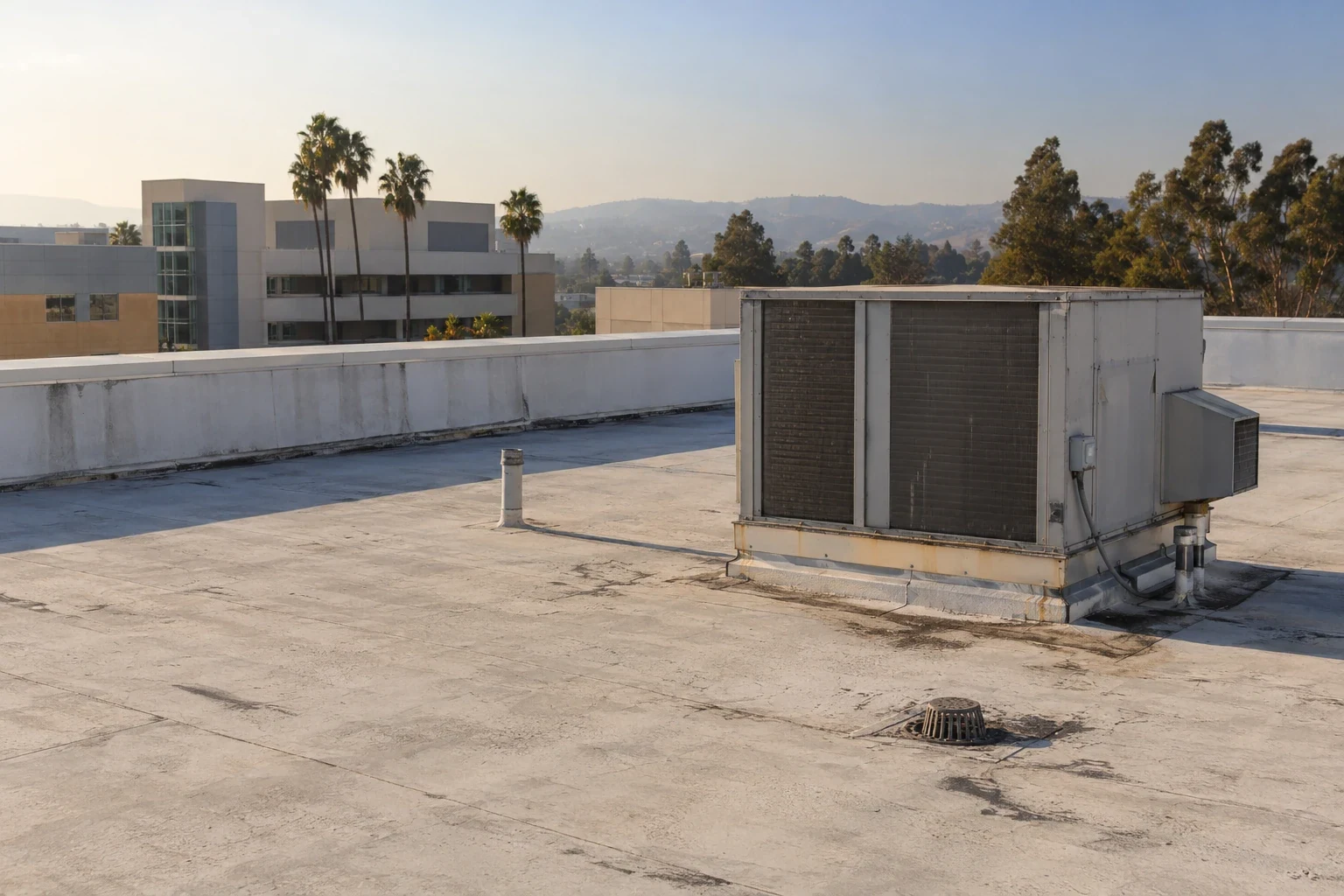
A hospitality group may want comparable records across its hotels, but each property still needs an individual roof map, access details, photographs, work status, and responsible contact. We record the area inspected, material installed, repair completed, approved changes, and questions that remain. That lets a regional facilities lead compare urgency without suggesting one site's findings apply to another.
A multi-site roof program can organize recurring review and approvals. A dated condition report gives the next engineer or operator a location-specific record. Planned maintenance can revisit drains, flashings, seams, and rooftop equipment details before a small condition complicates the next guest season.
Closeout should state which space or route can return to normal, whether a temporary protection remains, and who accepted the work. If an observation requires another visit, the file gives the property team a distinct follow-up item. That makes a future service call easier to coordinate without reconstructing the previous sequence.
Plan around the property's operating calendar
Schedule an inspection or scope review and share the property contact, guest and service hours, delivery rules, roof plan, active leak reports, and any planned event or occupancy constraint. We will document accessible conditions and return the work boundary, material sequence, protection plan, and closeout. For a group review, identify each site's local contact and keep its roof records separate.
Emergency response is available around the clock, including weekends and holidays, when water entry requires prompt attention. Immediate protection can be defined separately from permanent repair or renewal. We will identify the area affected, the work authorized, and the next decision needed from the operator.
Frequently Asked Questions
How can roofing work avoid disrupting hotel guests?
The operator identifies guest routes, check-in peaks, service access, quiet periods, and event schedules. We use those constraints to place staging and sequence roof zones. If a temporary route restriction is needed, the property approves its timing and notice before work begins.
Does a ceiling stain identify the roof section that needs repair?
It identifies an interior observation, not necessarily the entry point or full moisture area. We compare it with roof drains, seams, penetrations, and accessible details, then record what evidence is visible. Further examination may be needed before estimating concealed removal.
Can roof work be completed while rooms remain occupied?
Work may be isolated by zone when the roof, access, and protection allow it. We coordinate guest routes and service access with the property's contact and state which areas may be affected. A change in roof condition can alter the approved sequence.
What information should a regional hospitality team receive after repairs?
The closeout should identify the hotel, roof zone, materials installed, photographs, approved changes, status, and any follow-up. Regional reports can summarize priorities, but the underlying evidence remains property-specific. We can record who accepted the area and which route returned to service.
How does Fontana heat affect a hotel roof schedule?
Summer forecasts often exceed 100°F, which can affect safe roof access and handling of materials. We coordinate an appropriate work window with hotel operations and specify delivery and closure points. The property contact confirms current guest and service restrictions.