GAF Commercial Roofing
GAF commercial roofing in Fontana, CA: identifying EverGuard TPO, PVC or asphaltic systems, drain and curb height checks, fair bid comparisons and occupied-site staging.
If a roof drain sits lower than the new insulation will, that drain has to be dealt with before a GAF membrane order becomes an install date. Commercial Roofers Fontana scopes GAF commercial roofing in Fontana, CA, by checking the new roof build-up against the drains, walls and equipment it has to tie into. We show the owner which repairs can be done on their own and which bigger options need prep work first, then plan tear-off and deliveries around how the building operates today.
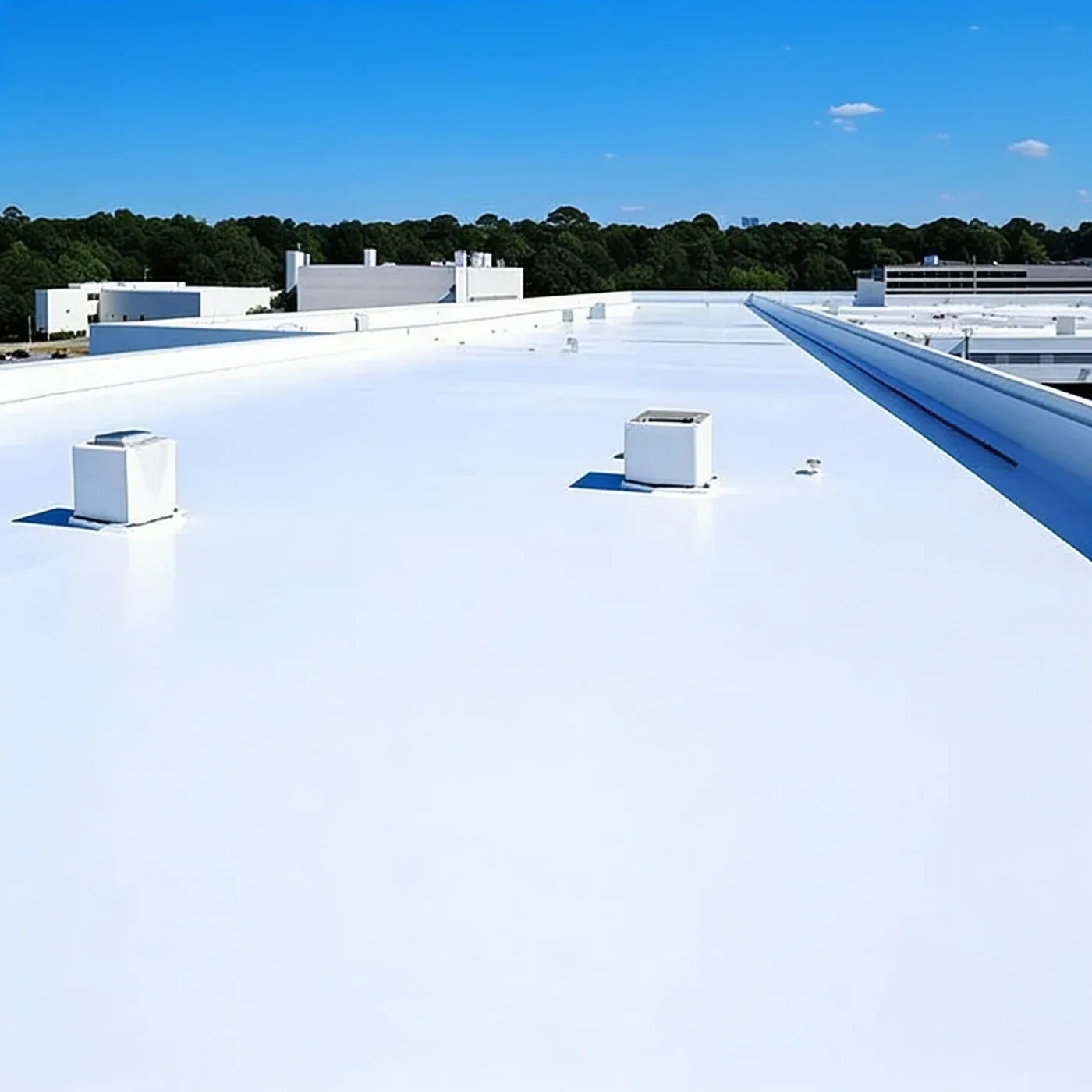
GAF sells TPO and PVC single-ply systems along with asphaltic and coating systems, so an existing roof needs more than the name on an old invoice to identify it. EverGuard TPO and EverGuard PVC are different thermoplastic membranes with their own installation rules. We confirm the actual system and any past repairs before choosing a repair method, and we pick components for the roof they have to bond to, not by how the surface looks.
Follow the outlet geometry
A drain clogged with debris and a drain sitting in a low spot are two different problems. We clear what is blocking the drain when that is the issue, then check the membrane flashing and the slope around it. Fixing the drain does not automatically fix the low area beside it, and rebuilding the surrounding roof can change how water reaches the drain. The scope keeps those findings apart so the owner pays for the fix that actually solves the problem, not a bigger patch nobody explained.
When we plan drain and scupper repairs, we keep the roof's designed drainage path, and we bring in the right review if a drain needs to move or be rebuilt. We measure elevations against the finished roof height before materials arrive. Any plumbing or structural piece goes to the trade that does that work. The roofing crew then has a ready drain to flash, and the inspection point is set before the detail is covered up.
Select the right GAF system
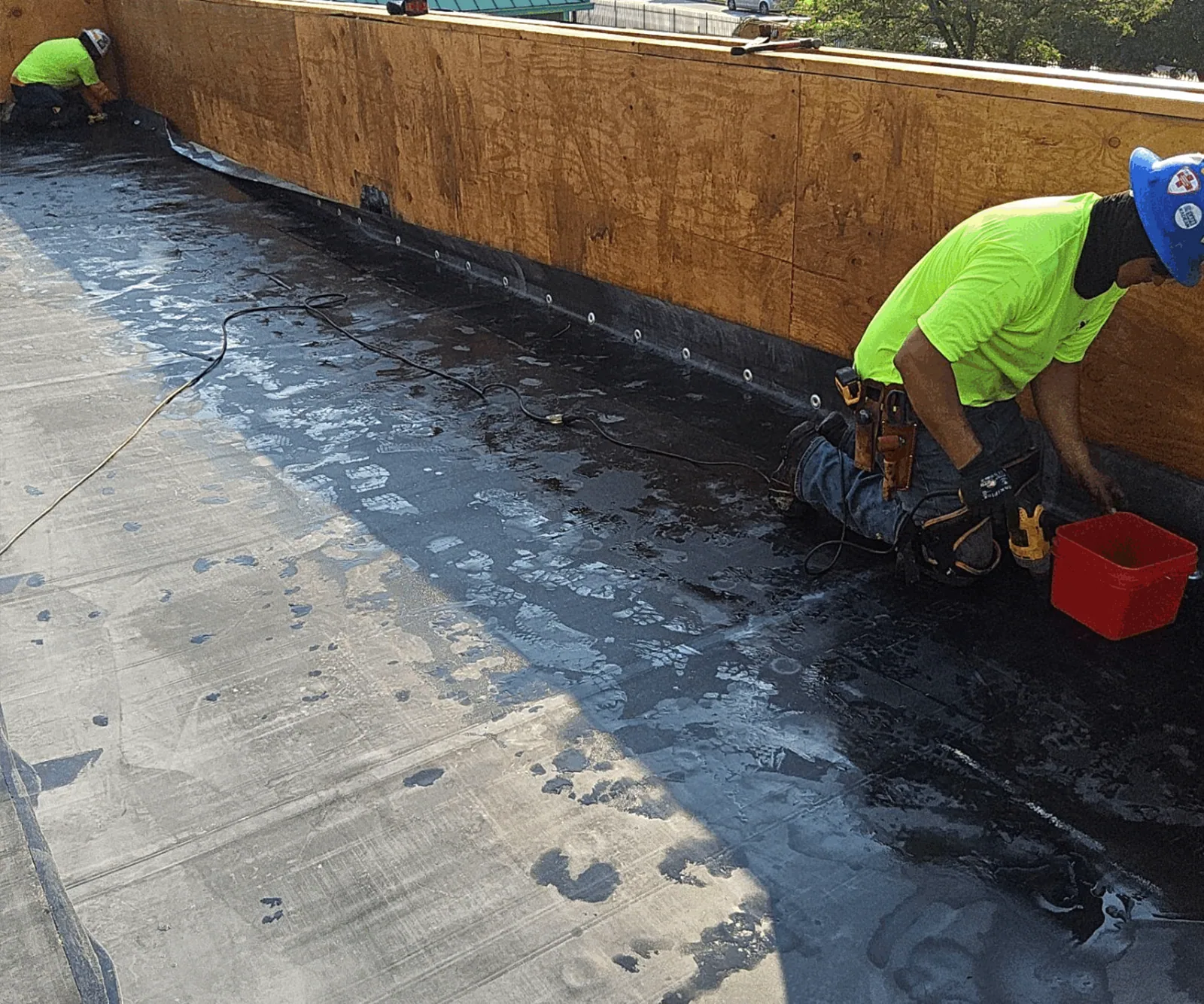
A roof with old asphalt layers needs a different prep plan than a bare TPO roof. We check what is actually installed and keep the repair of the existing roof separate from any change to a new system type. Depending on the assembly, a separator sheet, partial tear-off or other surface prep may be required. Being a GAF product does not mean every item in the catalog can go over every existing surface, so prep stays part of the decision.
On an existing PVC roof, repairs are hot-air welded with matching accessories, and we check the condition of the sheet before welding. TPO has its own requirements even though the tools look similar. We find the edges of older repairs and see whether cleaning gets us back to membrane that will take a weld. If the material is too far gone to bond, we explain how much needs to be cut out and rebuilt instead of laying another patch over a weak seam.
Price the preparation
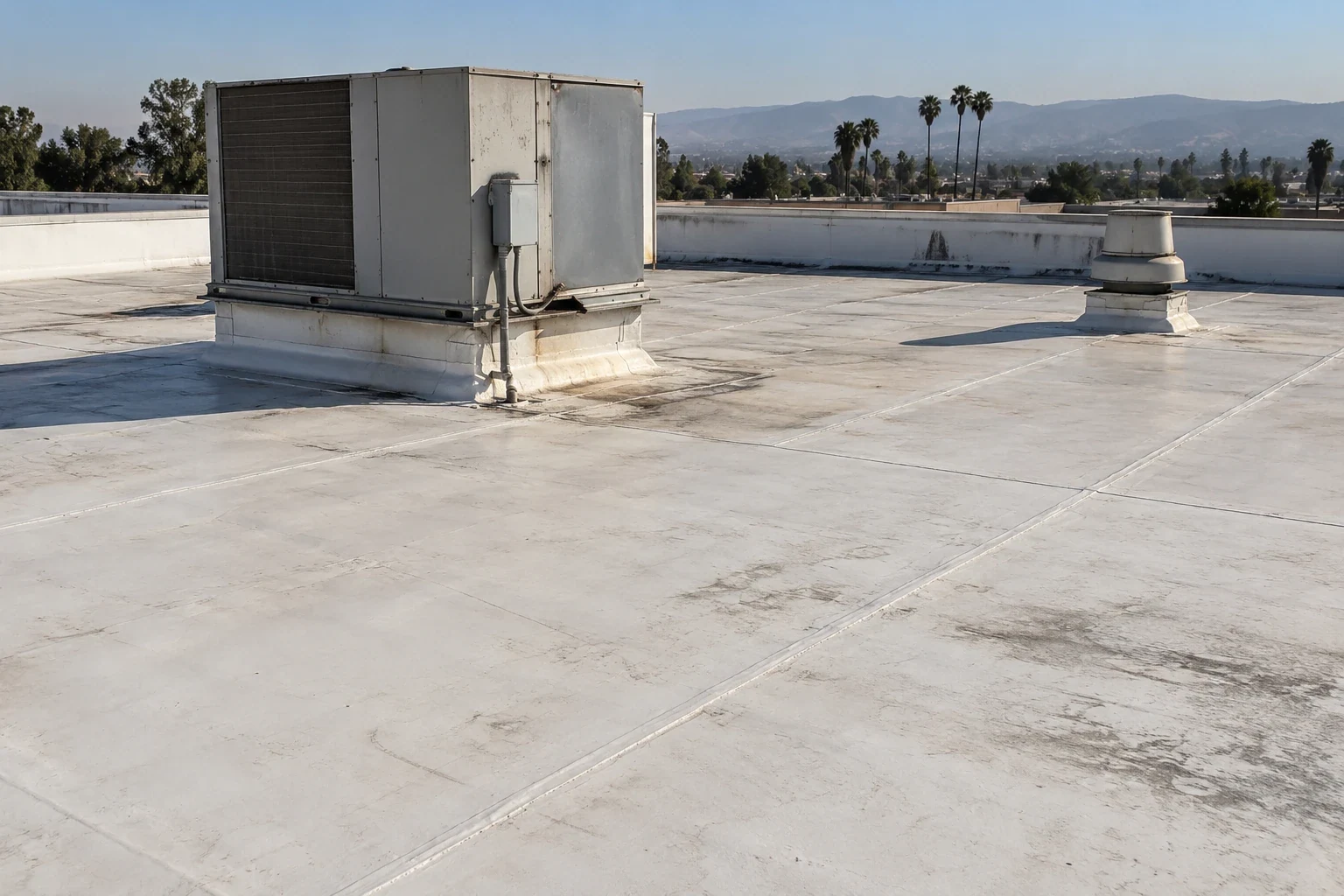
A full comparison covers what goes on the deck, the insulation and the cover board, not just the top sheet. Recover, restoration and replacement are separate options with different requirements and different work. We test the roof that would stay in place as far as each option needs, and we bring in an engineer or fastening review when it is called for. A walk-over finds the visible defects, and a test cut shows what is under one spot; neither answers every question for the whole roof.
If you are comparing a Carlisle membrane system with a Holcim Elevate roof, every bid should use the same measured roof area and the same assumptions about how the building operates. We show the differences in prep, curb and drain work and labor instead of comparing membrane brochures. An extra mobilization, a longer debris route or a curb rebuild can change the total. The owner sees all of that before deciding what to approve.
Fit the occupied premises
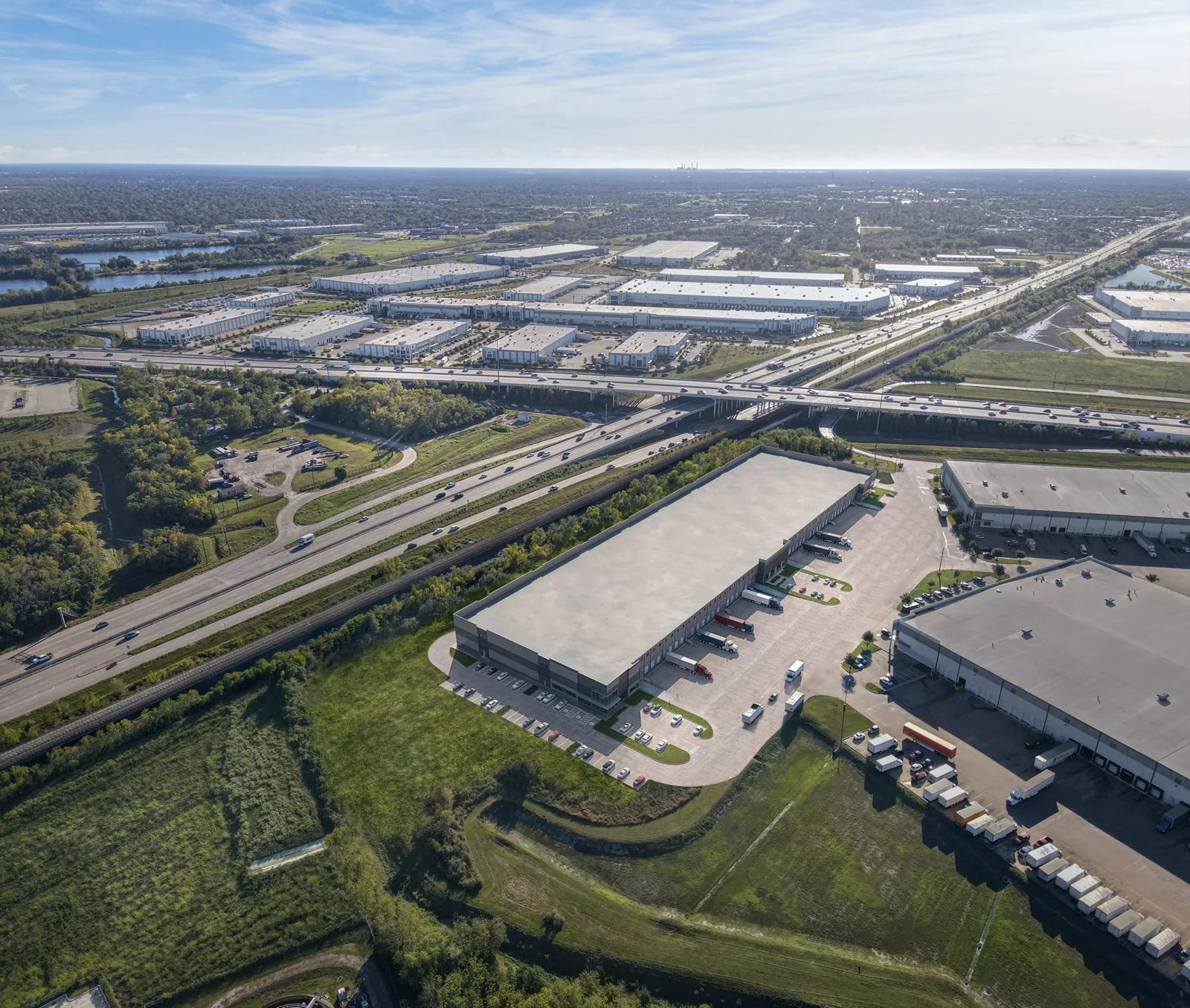
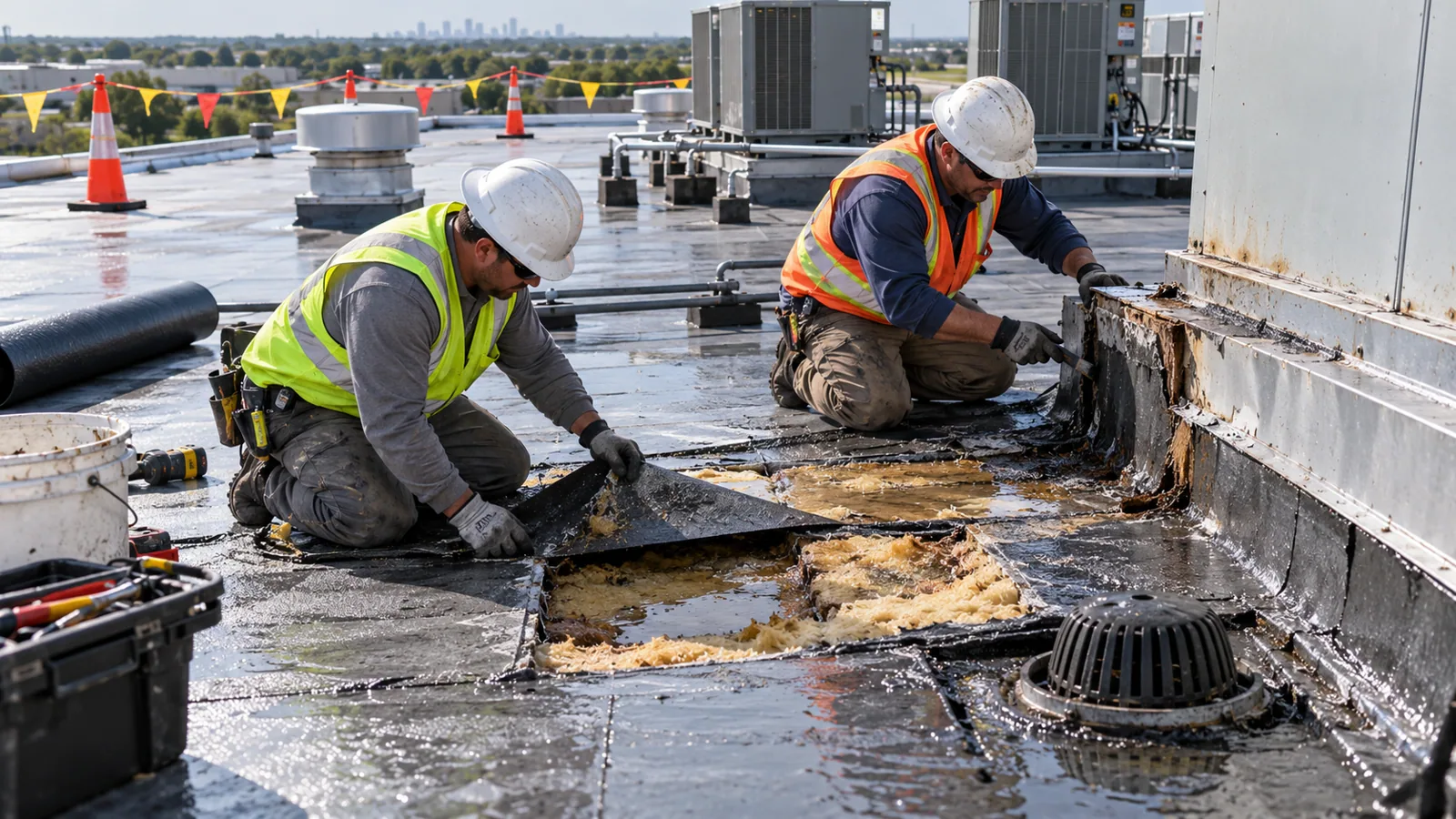
Material carts and torn-off roofing need a path that stays out of the way of the business below. Fontana's Southwest Industrial Park has warehouses, vehicle storage and trucking yards, so knowing which lanes are active matters before we mobilize. We ask the tenant for current routes and receiving hours. The crew plans hoisting around those rules, including a different lift or extra handling if the agreed spot cannot reach the work area directly.
At a Downtown Fontana commercial property along Sierra Avenue, Valley Boulevard or Foothill Boulevard, access looks very different. Storefront entrances and occupied suites limit where protection, dumpsters and materials can go. We confirm the setup for that specific building instead of borrowing an industrial staging plan. The work sequence shows where each day's section will be sealed and what is underneath it, so the property manager can coordinate with tenants.
Check the work underfoot
An infrared scan shows temperature differences that have to be interpreted; it is not a map of every wet layer. When moisture testing affects a GAF recover or replacement bid, we pick the right method for the roof and the weather and confirm with cores where needed. Every core is approved in advance and located on the roof plan, with a plan to patch it the same day. The report separates the spots we tested from the larger quantities we are proposing, so more testing can be done where it would change the decision.
Fontana heat matters on the roof too. We check the surface condition and the adhesive, coating or membrane instructions against real conditions, including prep and cure times. A sunny week does not on its own mean the roof is ready. Crew size and protection decide how much roof can be opened at once, and the building manager gets an updated schedule if the prep for the next step is not done yet.
Keep interfaces ahead of procurement
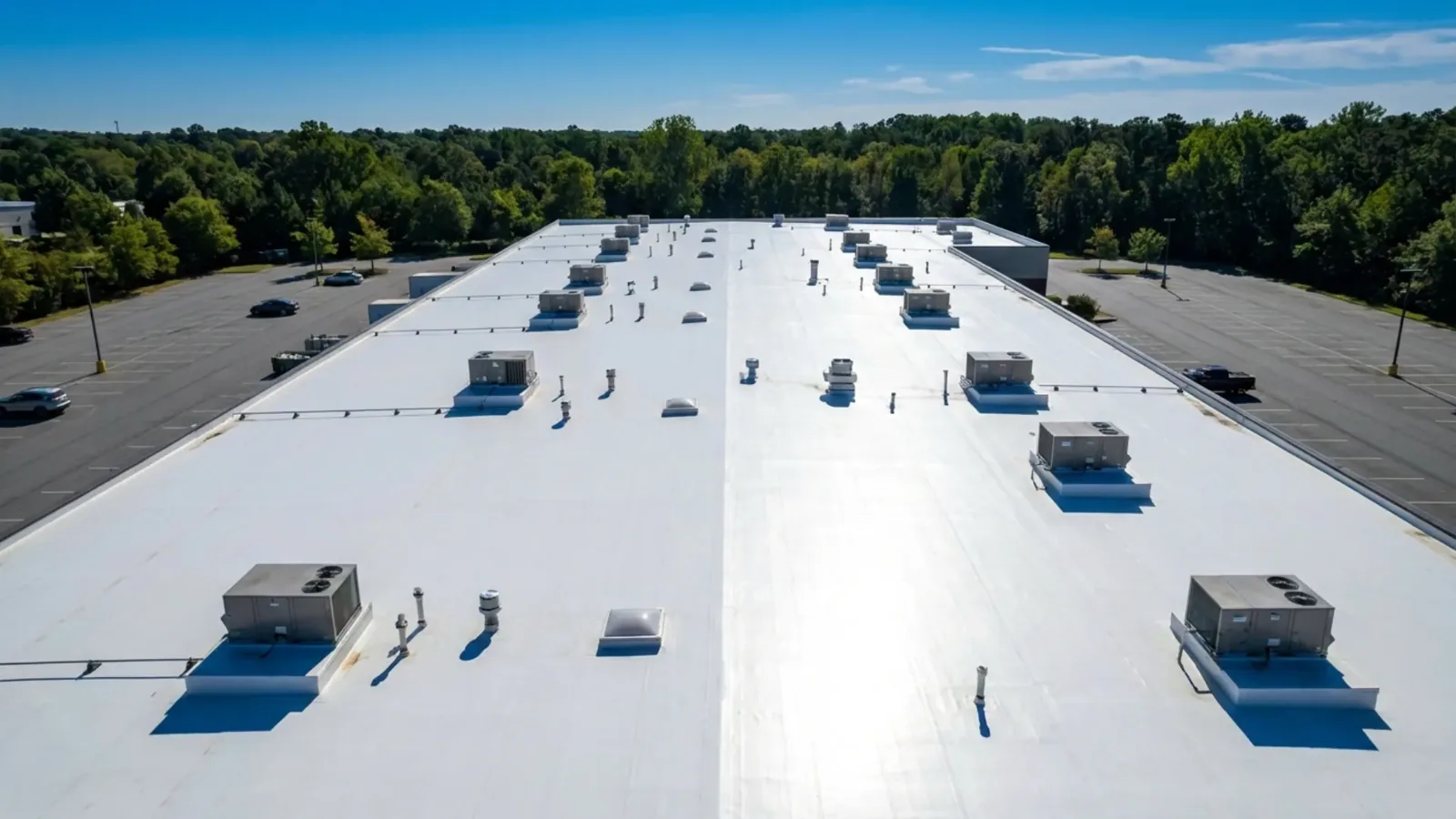
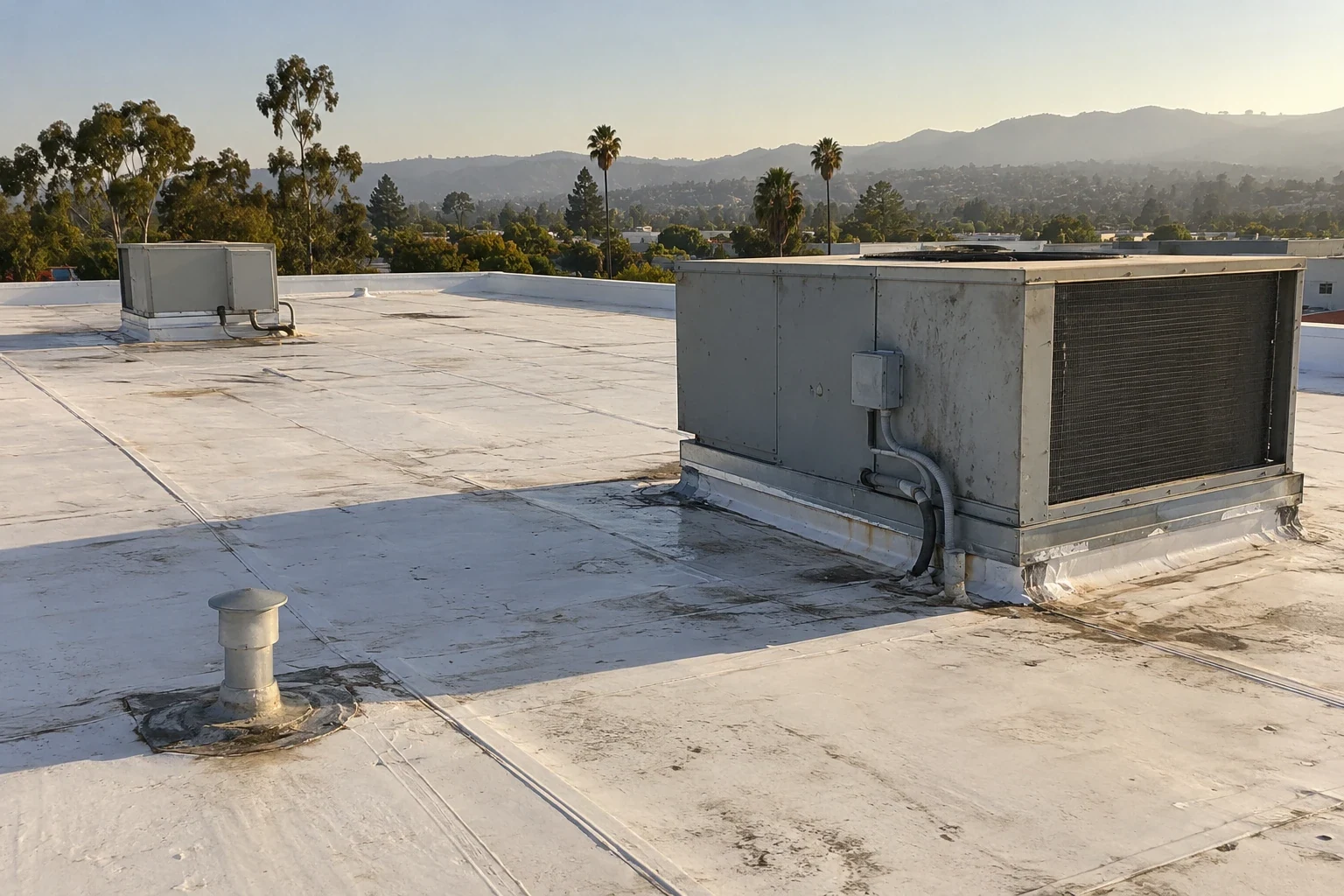
A thicker roof can leave too little flashing height at a curb or change how the field drains to an outlet. We compare the final build-up with those measurements and schedule any curb or drain adjustment before another trade sets equipment in its final position. Structural, HVAC and electrical contractors keep their own design and shutdown responsibilities. Being allowed on the roof is not the same as permission to shut down a system, and any planned shutdown needs an agreed window and someone responsible for restarting it.
Fontana posts its current California building and energy code set, and the scope of the job decides which permit and assembly requirements apply. We settle that before committing to material. A color choice or a catalog page does not prove code compliance. The schedule includes any engineering or trade work the chosen roof still needs, and the owner sees those items with each option instead of getting a start date that assumes they are already done.
Preserve the roof record
Closeout photos and product details should let a future crew find the GAF flashings and seams without tearing into unrelated work. We record prep, seam checks and approved changes. If more damage turns up during tear-off, we describe the repair and its effect on cost and protection before going further. Work completed by another trade stays listed separately, so the roofing closeout does not suggest we signed off on more than we did.
Care and warranty terms come from the documents issued for the installed roof. We keep those documents with the detail record, along with the maintenance requirements. Servicing rooftop equipment can disturb a flashing or add a penetration, so the building should schedule matching roof work whenever that happens. If a leak shows up later, we can compare it with what was installed and what has changed since, and go straight to the real cause.
Frequently Asked Questions
Can an old GAF invoice tell you how to repair the roof?
It is a good starting point, but we still confirm which system is installed and its condition. GAF makes several types of roofs, and additions or old repairs on the same building can need different prep.
Why does a drain repair involve measuring roof levels?
The height of the roof around the drain decides how the finished flashing and water flow work. Clearing debris is a different job from changing that height, so we identify which one is needed before assigning materials and trades.
How do I compare two manufacturers' proposals fairly?
Make sure both use the same roof area and the same building operating limits. Tear-off, insulation, accessories, handling and curb or drain work should all have clear quantities, so a different membrane choice does not hide a different scope.
Should an infrared scan decide how much roof gets torn off?
Not on its own. The scan needs to be read for that roof and those conditions, then confirmed with cores. The tear-off quantity should follow those confirmed findings, not every similar color on the image.